Number comprehension Addition and Subtraction Word Problems Worksheets for 3-Year-Olds
6 filtered results
-
From - To
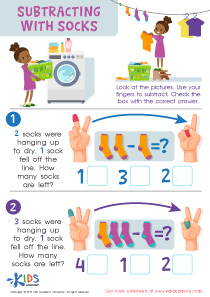
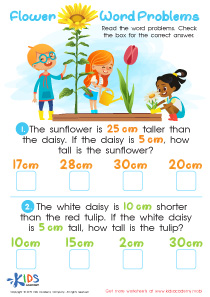
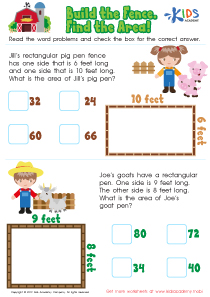
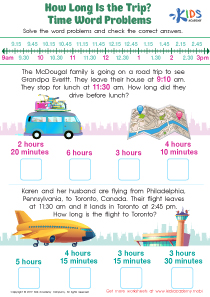
Introduce your little ones to the world of math with our engaging "Number Comprehension Addition and Subtraction Word Problems Worksheets" designed specifically for 3-year-olds. These fun and interactive worksheets encourage critical thinking as children explore basic addition and subtraction concepts through relatable scenarios. Each activity features colorful illustrations and simple word problems, helping young learners develop essential math skills while nurturing a love for numbers. Perfect for early childhood education settings or home learning, our resources provide parents and educators with effective tools to support early cognitive development. Foster your child's number comprehension skills today—let the math adventure begin!
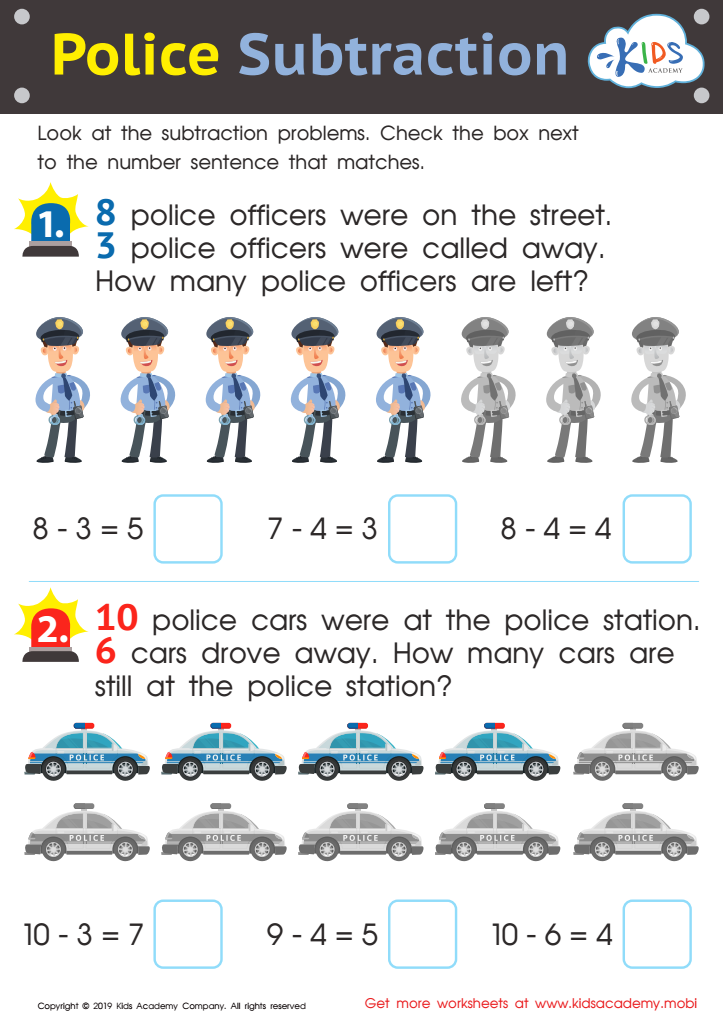
Police Subtraction Worksheet
 Assign to My Students
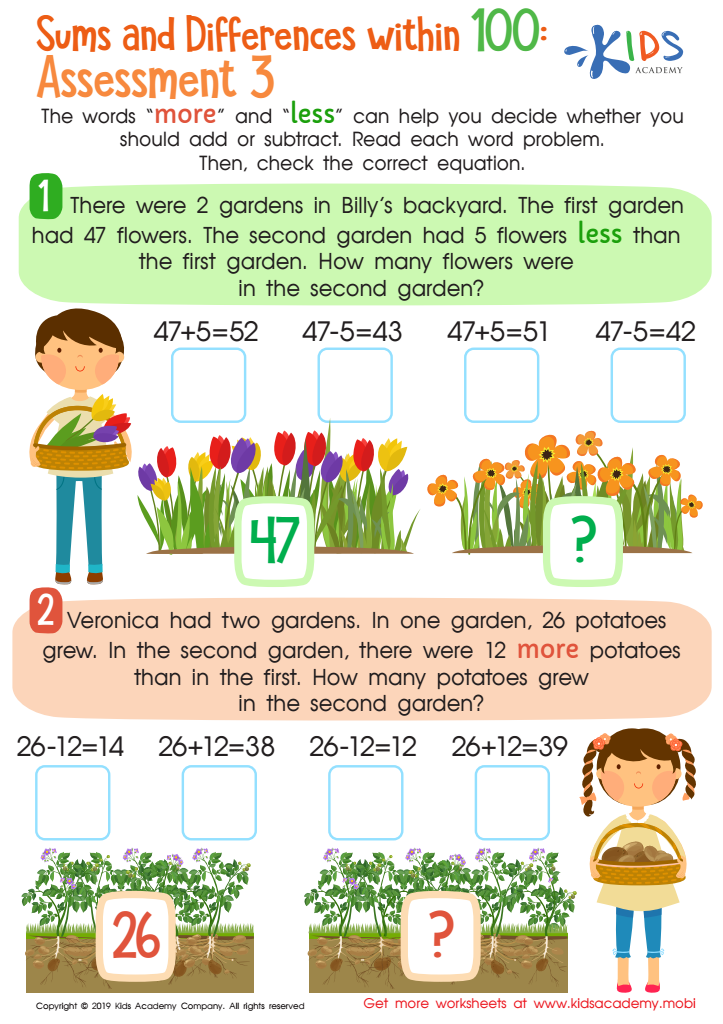
Sums and Differences Within 1 - Assessment 1 Worksheet
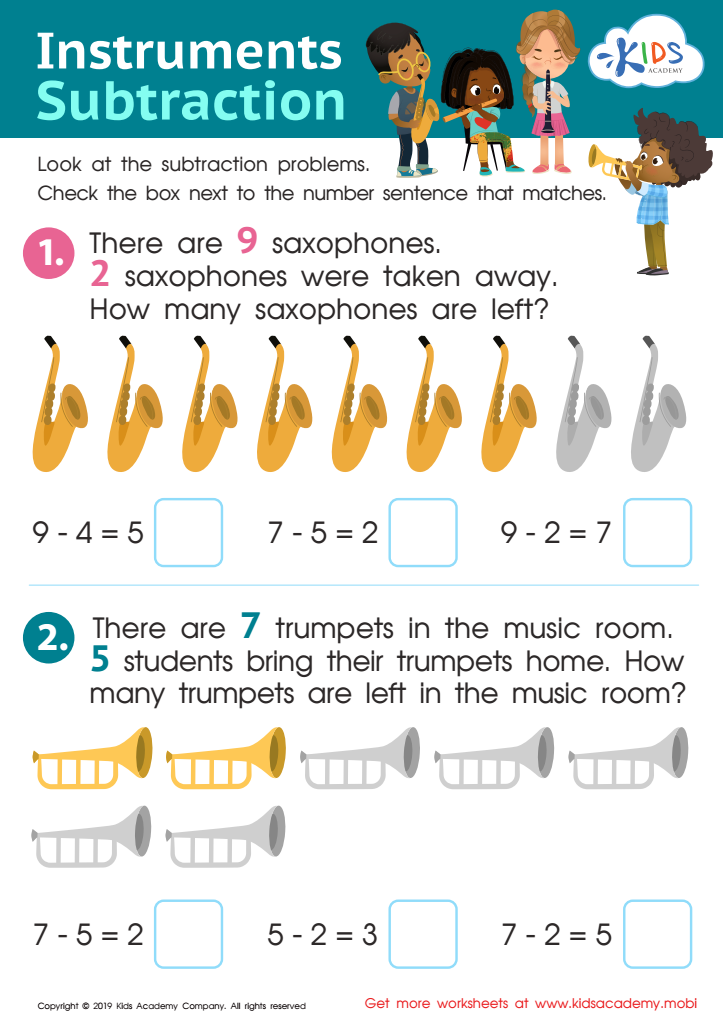
Instrument Subtraction Worksheet
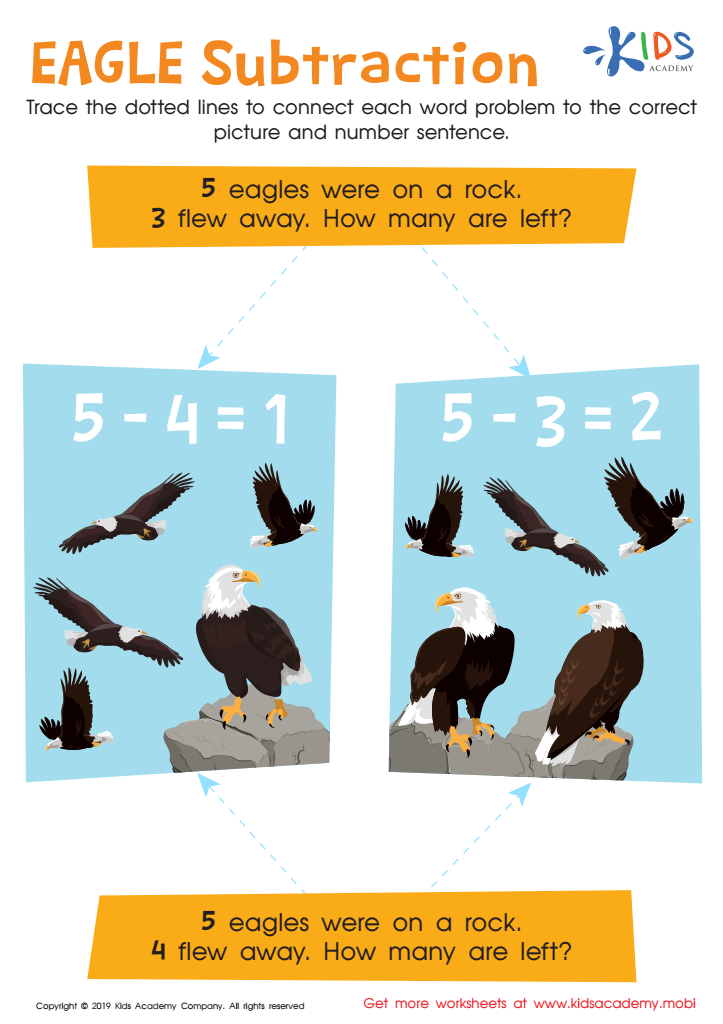
Eagle Subtraction Worksheet
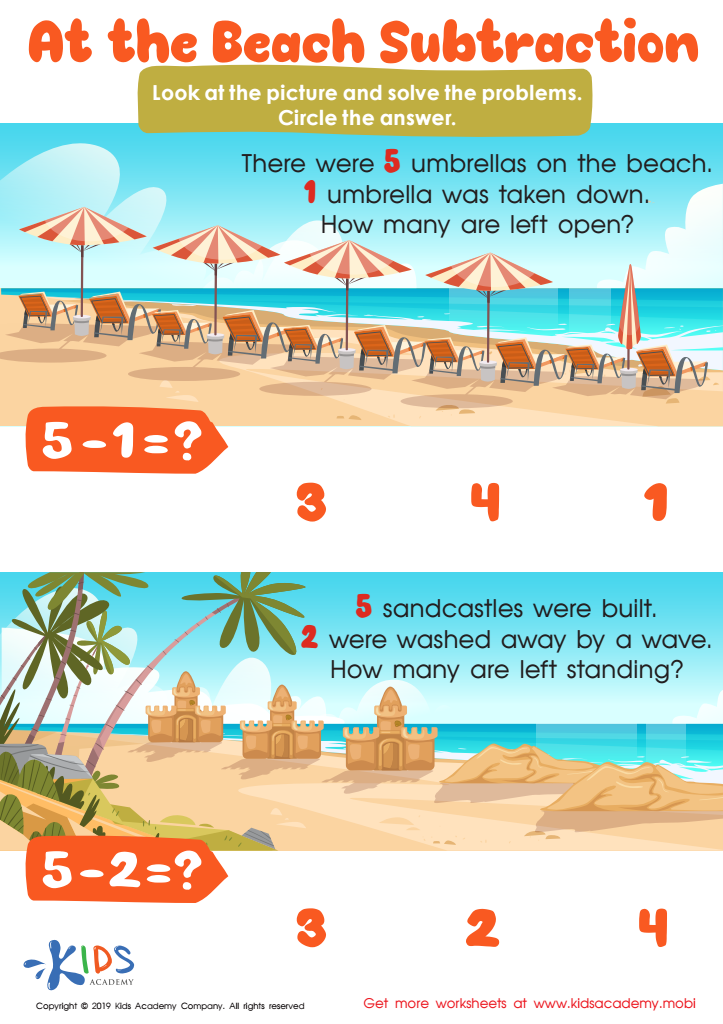
At the Beach Subtraction Worksheet
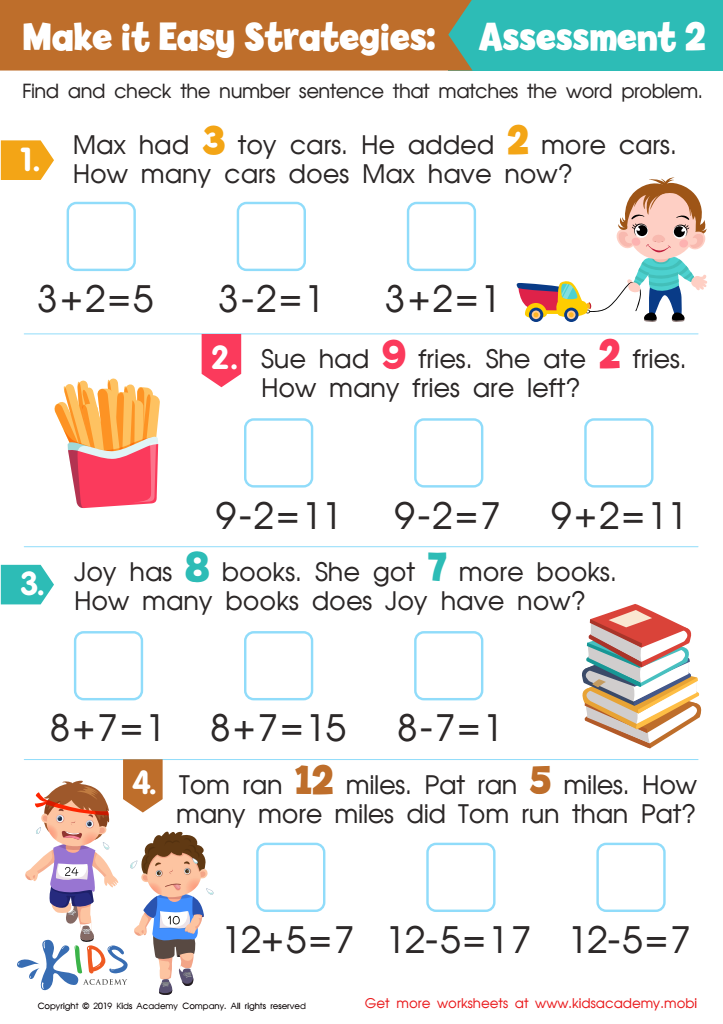
Make it Easy Strategies: Assessment 2 Worksheet








Understanding number comprehension, especially through addition and subtraction word problems, is essential for three-year-olds. At this age, children are developmentally primed to start grasping basic mathematical concepts. Engaging in word problems helps build critical thinking and problem-solving skills early on. When parents or teachers introduce these concepts through relatable scenarios—like adding toys or subtracting snacks—they create a fun learning atmosphere that makes math approachable.
Word problems also enhance language skills as children learn to interpret and verbally express their thought processes. This dual focus on vocabulary and numerical understanding lays a foundation for more complex math skills needed as they progress in their education. Moreover, involving children in simple math activities fosters a sense of accomplishment and boosts their confidence in their ability to confront challenges.
Additionally, early experiences with math can positively correlate with later academic success. By nurturing a child's number comprehension through practical word problems, parents and teachers not only facilitate immediate understanding but also instill a lifelong love for mathematics. Therefore, prioritizing these activities is vital for developing young learners' cognitive and social skills, ensuring they view math as an engaging and integral part of their lives.