Visual Learning Addition and Subtraction Word Problems Worksheets for 3-Year-Olds
5 filtered results
-
From - To
Discover engaging visual learning addition and subtraction word problems worksheets designed specifically for 3-year-olds! These interactive activities enable young learners to grasp basic math concepts through colorful illustrations and relatable scenarios. By incorporating visual aids, children can develop problem-solving skills and enhance their understanding of simple addition and subtraction. Our worksheets encourage exploration and make learning fun while fostering critical thinking. Ideal for parents and educators alike, these resources support early childhood development by promoting math literacy and cognitive growth. Dive into the world of numbers with creative exercises that captivate young minds and lay a strong foundation for future learning!
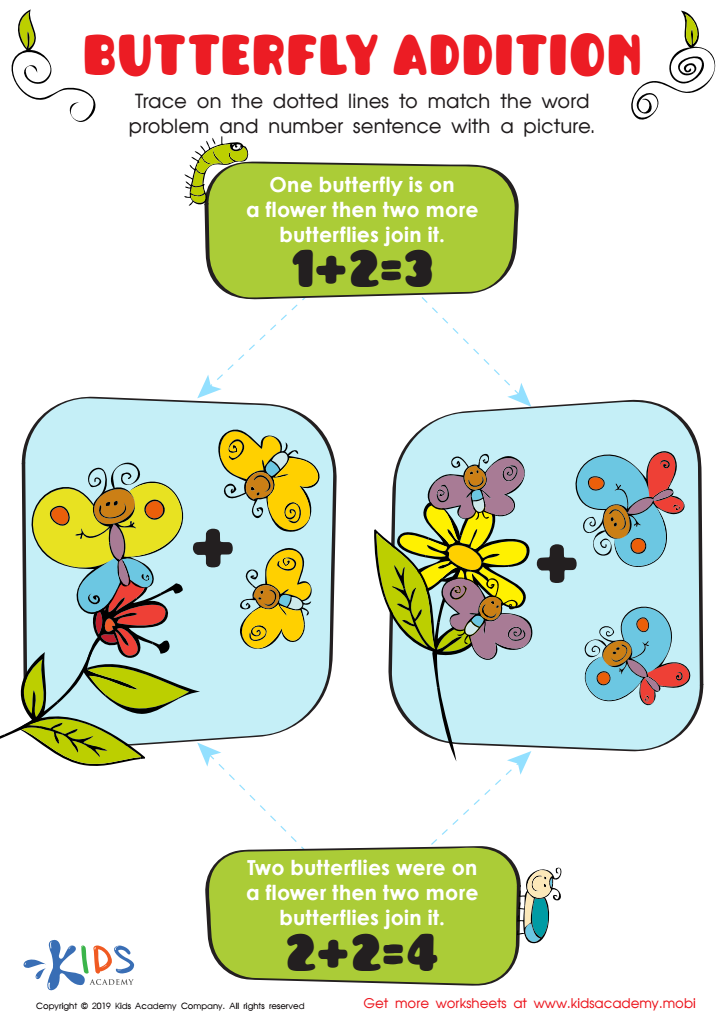
Butterfly Addition Worksheet
 Assign to My Students
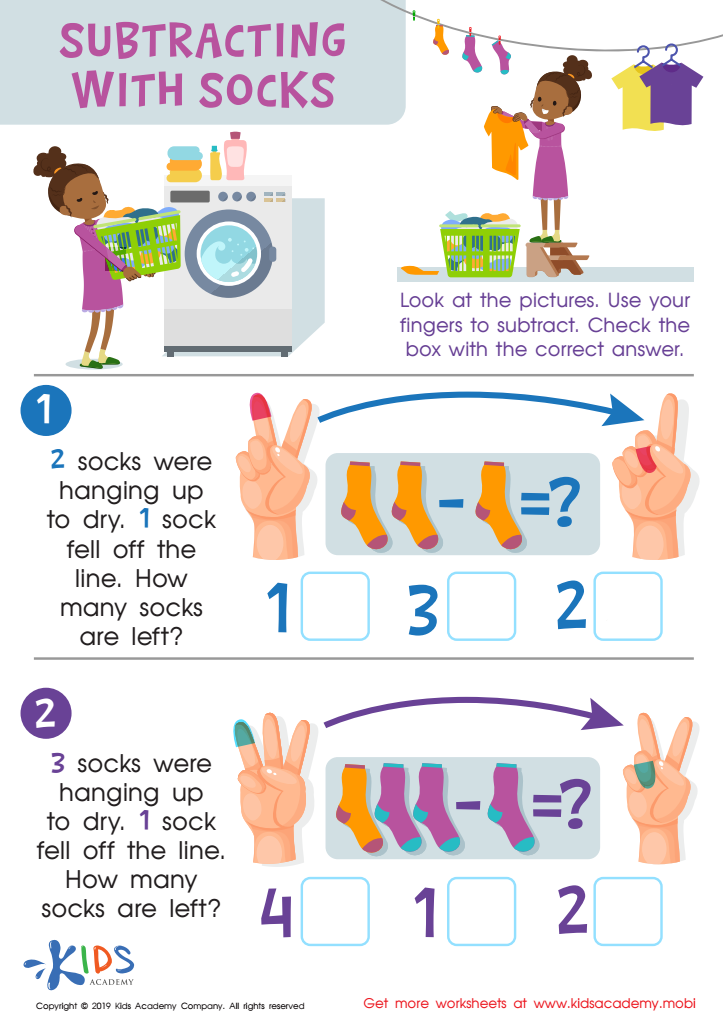
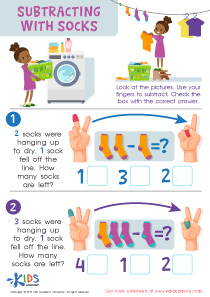
Subtracting Socks Worksheet
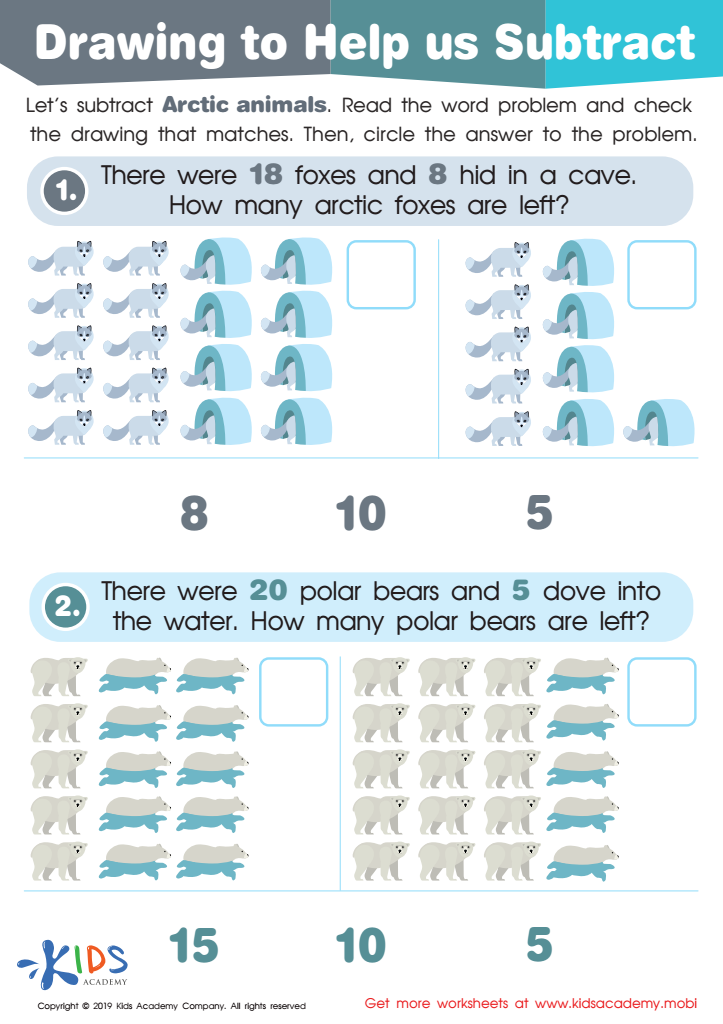
Drawing to Help Us Subtract Worksheet
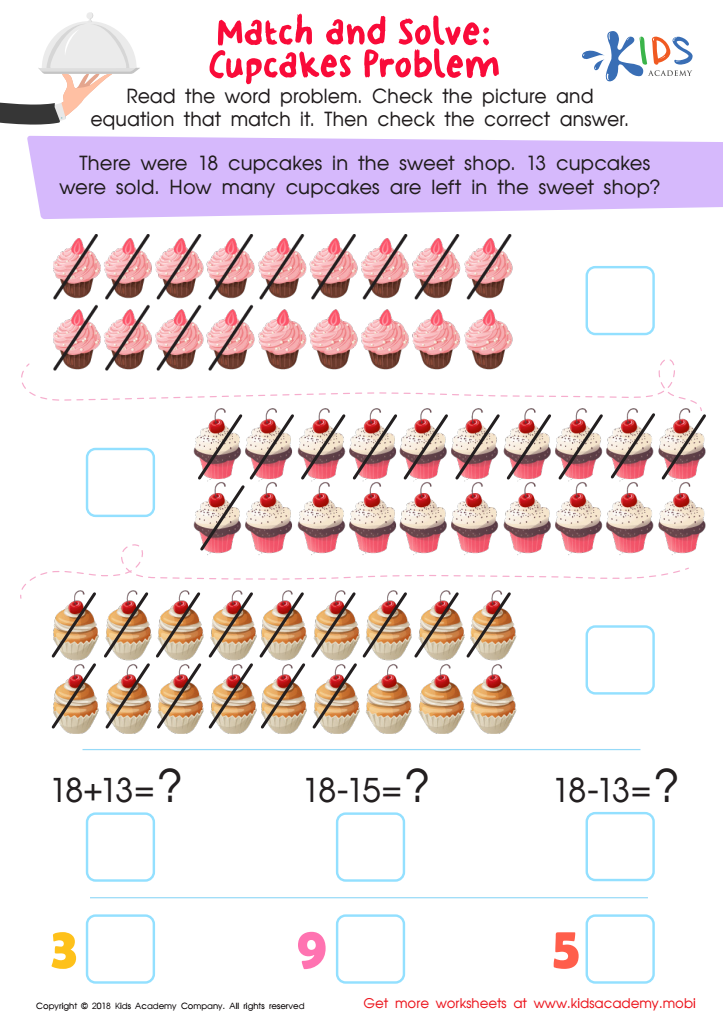
Match and Solve: Cupcakes Problem Worksheet
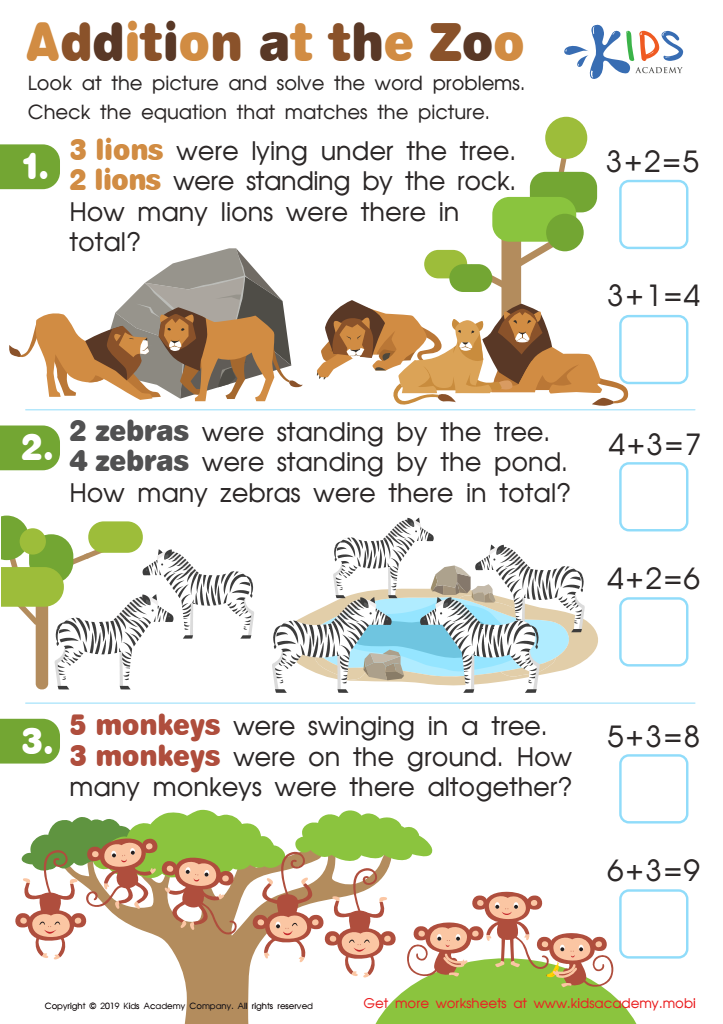
Addition at the Zoo Worksheet








Parents and teachers should care about visual learning for addition and subtraction word problems for 3-year-olds because it lays a crucial foundation for early mathematical understanding. At this age, children are naturally curious and eager to explore their environment. Visual learning engages their imagination by using pictures, objects, and hands-on experiences, making abstract concepts more tangible. For instance, using blocks to represent problems helps children visualize math in a concrete way.
Furthermore, developing problem-solving skills early is essential. Word problems encourage critical thinking; they require kids to interpret language and identify mathematical relationships, which are foundational skills for later academic success. Engaging in such activities also promotes language development, enhances vocabulary, and fosters comprehension skills, as children learn to connect words with quantities.
Additionally, fostering a positive attitude toward math at a young age can cultivate a lifelong appreciation for the subject. When children experience joy and success in solving problems through visual means, it boosts their confidence and willingness to tackle more complex challenges in the future. Ultimately, incorporating visual learning strategies makes math approachable and enjoyable, ensuring that 3-year-olds develop a solid foundation for their educational journey ahead.