Mathematical reasoning Addition & Subtraction Worksheets for 3-Year-Olds
8 filtered results
-
From - To
Discover our engaging Mathematical Reasoning Addition & Subtraction Worksheets designed specifically for 3-year-olds! These fun-filled resources aid in developing foundational math skills in young learners. With colorful illustrations and interactive activities, children will explore basic addition and subtraction concepts in a playful environment. Our worksheets encourage critical thinking, enhance problem-solving abilities, and promote cognitive development, ensuring that toddlers grasp essential mathematical concepts early on. Perfect for parents and educators alike, these worksheets make learning math enjoyable and effective. Help your little ones embark on their exciting mathematical journey today with our specially curated addition and subtraction worksheets!
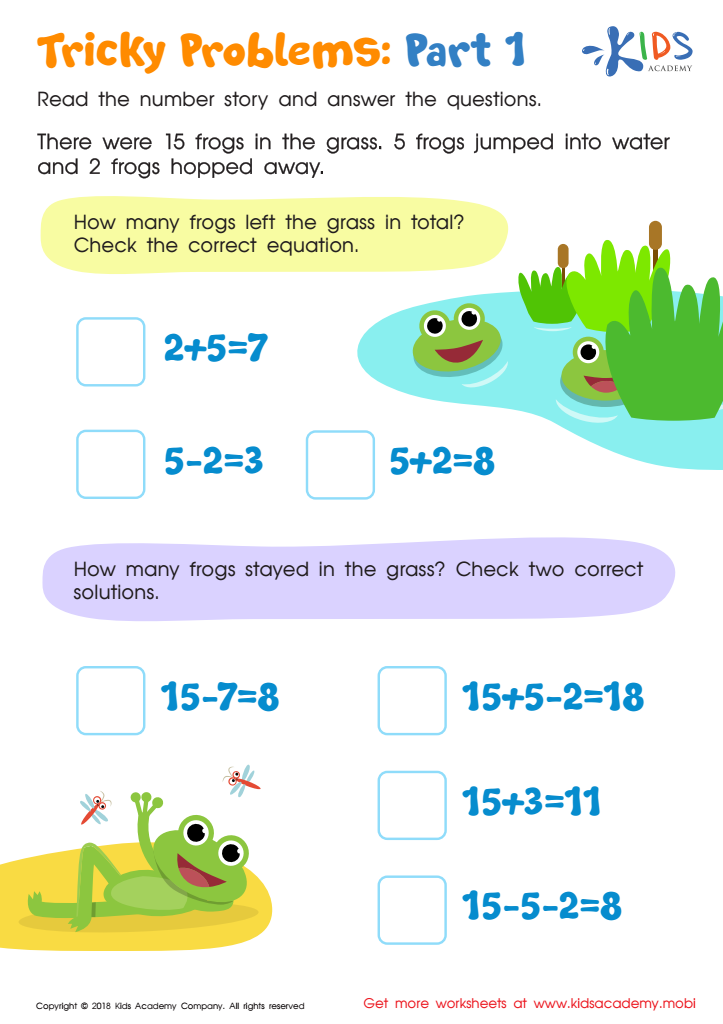
Tricky Problems Worksheet: Part 1
 Assign to My Students
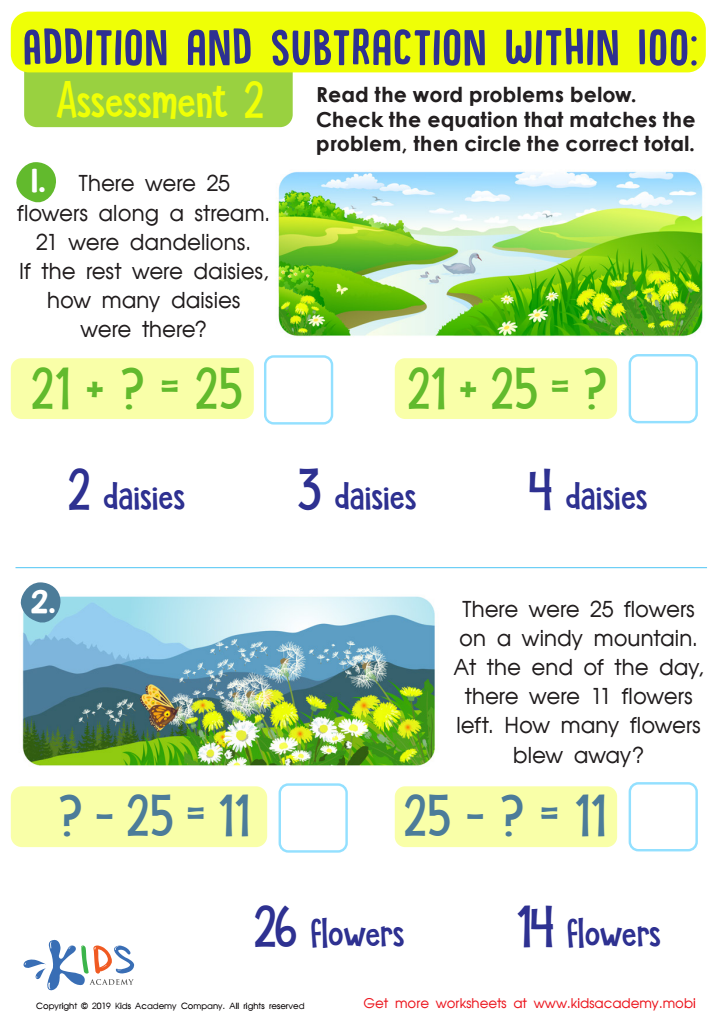
Assessment 2 Math Worksheet
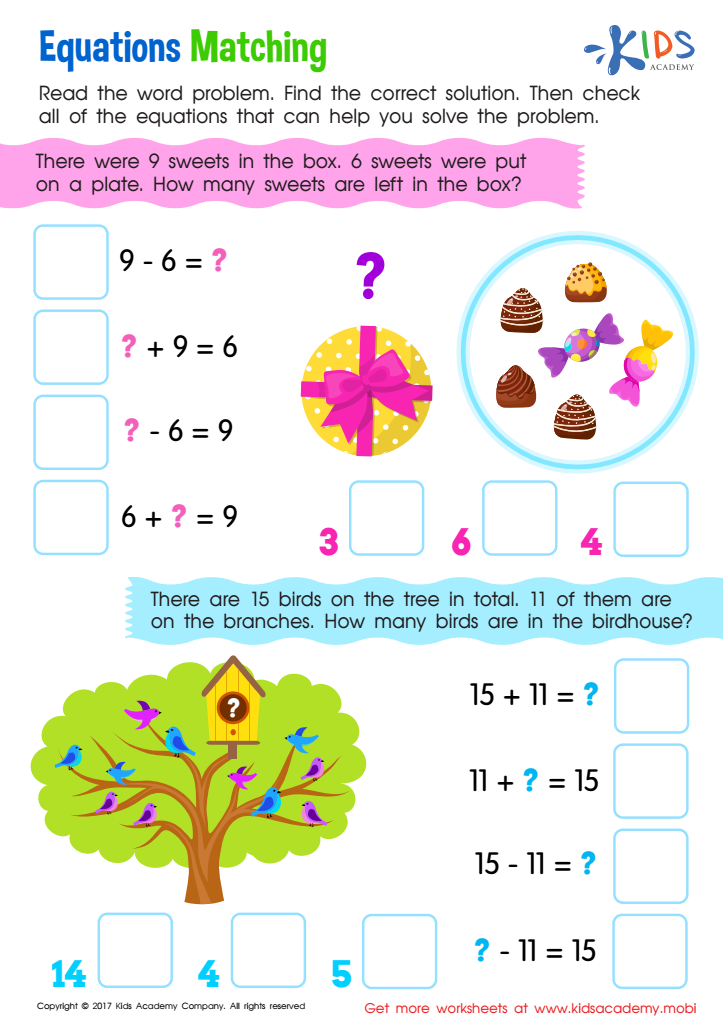
Equations Matching Word Problems Worksheet
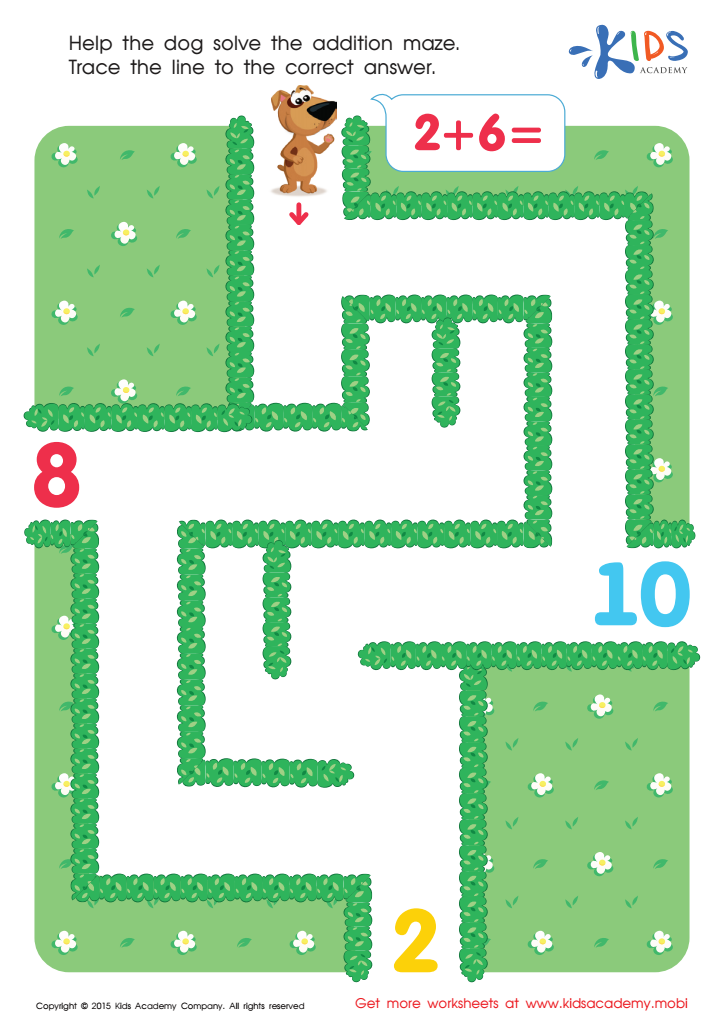
Two Plus Six Addition Worksheet
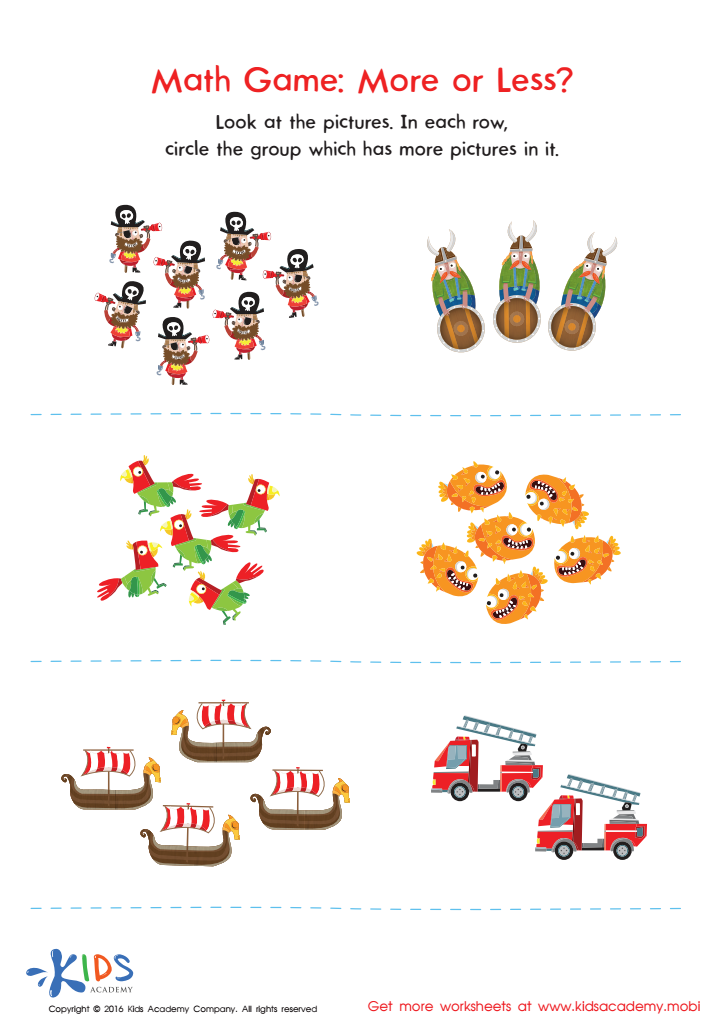
More or Less Worksheet
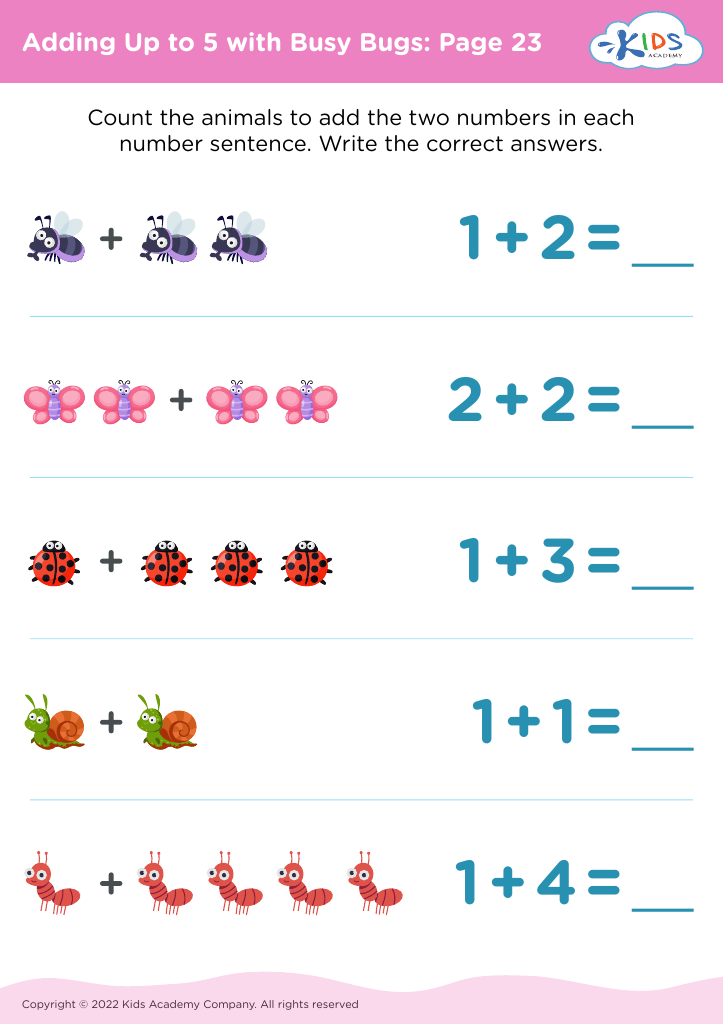
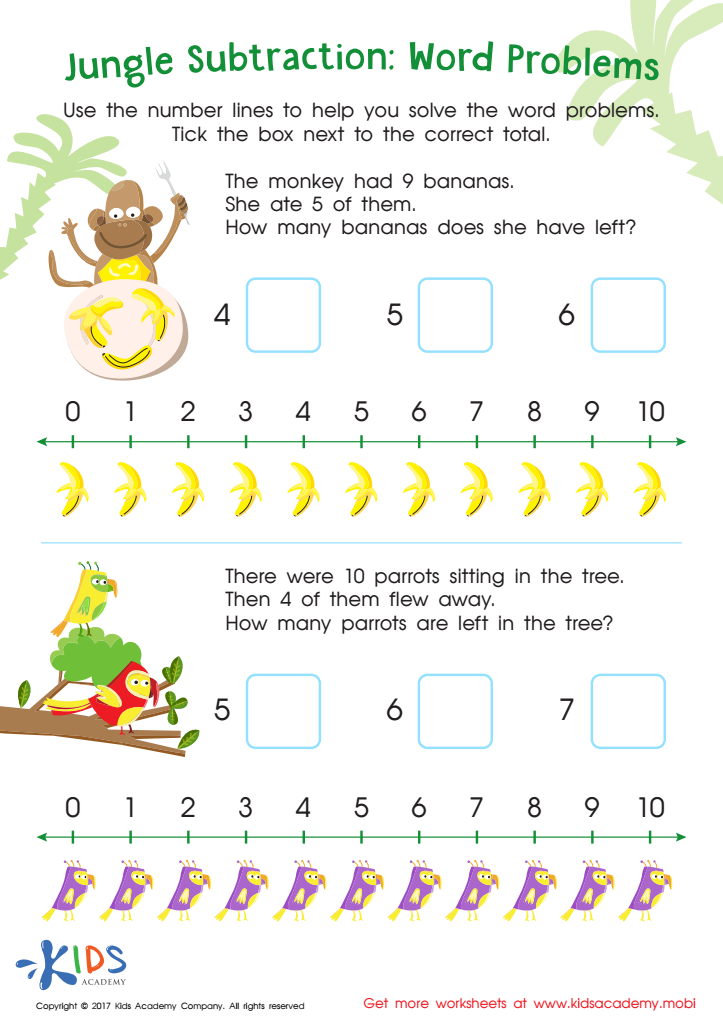
Jungle Subtraction Word Problems Substraction Worksheet








Mathematical reasoning in early childhood, especially regarding addition and subtraction, is crucial for the cognitive development of 3-year-olds. At this age, children are naturally curious and eager to explore patterns, quantities, and relationships. By introducing basic addition and subtraction concepts, parents and teachers help lay a solid foundation for future mathematical learning.
Engaging young children in these activities encourages critical thinking and problem-solving. For instance, counting blocks or sharing toys fosters an understanding of numbers and basic operations. Through interactive play, children learn to recognize relationships between quantities, which ultimately enhances their reasoning skills. These early experiences with numbers also contribute to a broader understanding of the world around them, from understanding measurements in cooking to recognizing patterns in everyday activities.
Moreover, cultivating mathematical reasoning helps boost confidence and competence in math, making it less intimidating in future endeavors. This early engagement supports development across various subjects, as math skills are integral not only to academic success but also to life skills, such as financial literacy. Thus, both parents and teachers should prioritize these fundamental concepts to nurture a well-rounded educational foundation that promotes lifelong learning and curiosity.








