Understanding number value Addition & Subtraction Worksheets for 3-Year-Olds
3 filtered results
-
From - To
Explore our engaging "Understanding Number Value Addition & Subtraction Worksheets for 3-Year-Olds" designed to introduce early math concepts. These worksheets help young learners grasp essential number values through fun, interactive exercises that encourage counting, identifying numbers, and basic addition and subtraction. By using colorful visuals and playful scenarios, children will develop a solid foundation in mathematics while enhancing their critical thinking skills. Ideal for parents and educators, these resources support early childhood learning by making math enjoyable and accessible. Start your child’s math journey today with our thoughtfully crafted worksheets that lay the groundwork for future success!
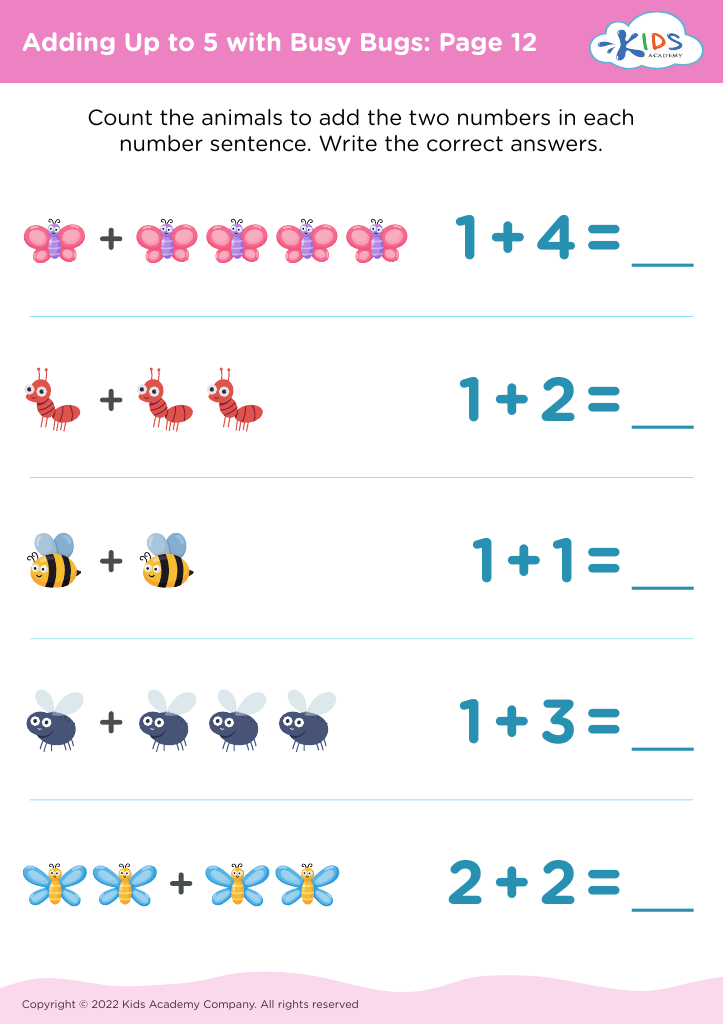
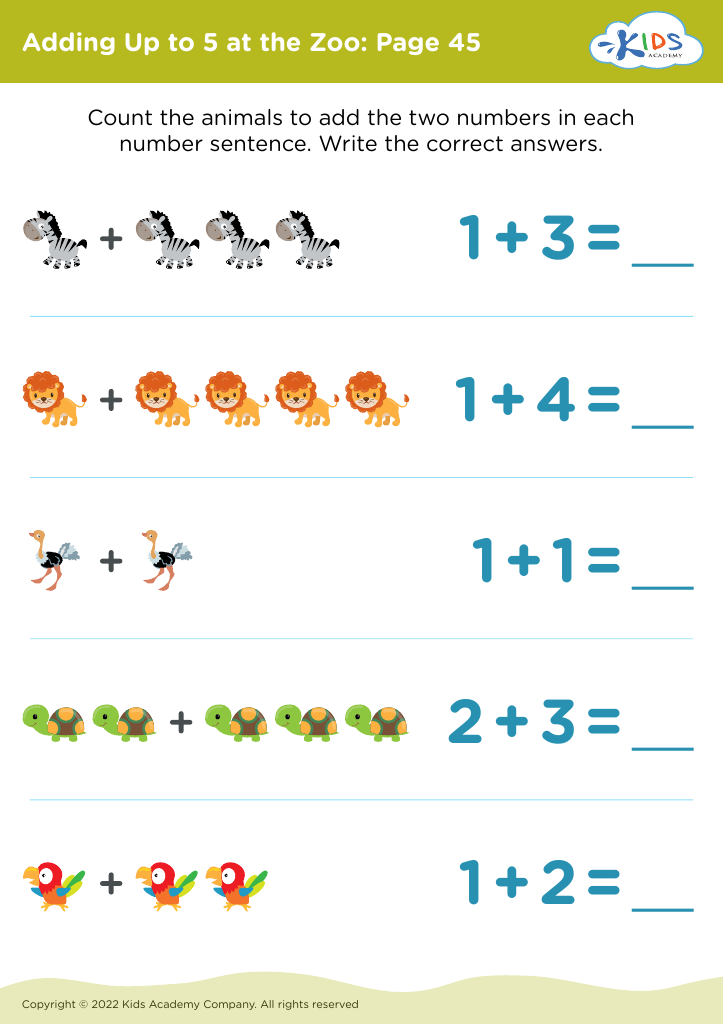
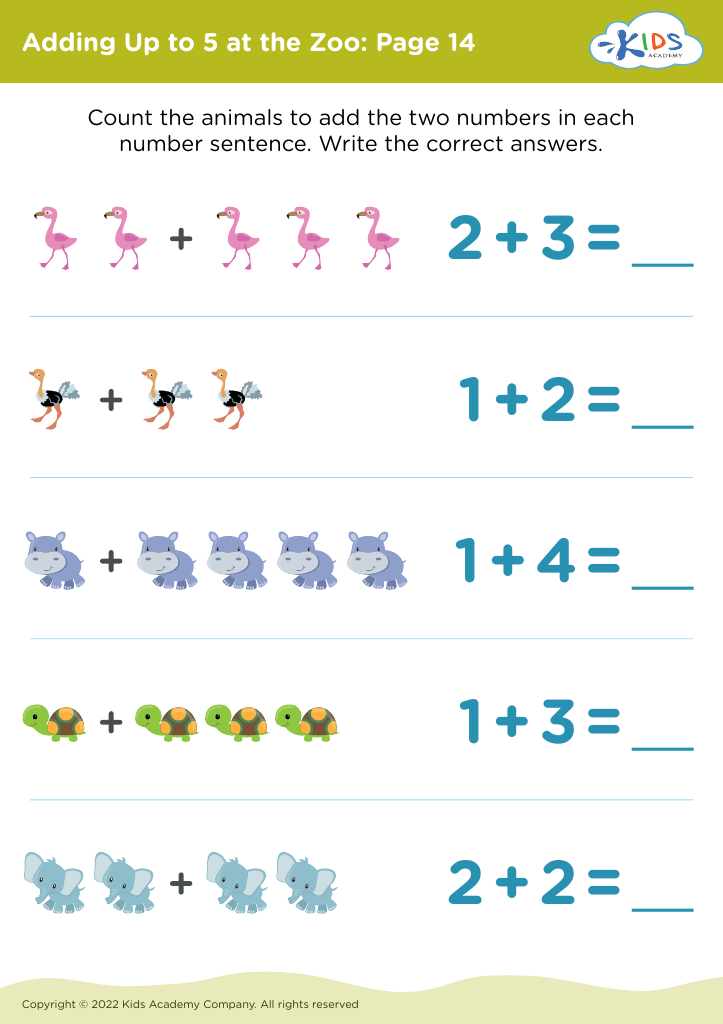








Understanding number value, addition, and subtraction is crucial for the cognitive development of 3-year-olds. At this age, children are naturally curious about their world, and introducing foundational math concepts fosters a positive attitude toward learning. By engaging with numbers, children develop essential skills such as counting, recognition of quantities, and basic problem-solving—an early gateway to mathematical literacy.
Additionally, grasping these concepts enhances critical thinking and improves cognitive skills. When children play with toys, sort objects, or share snacks, parents and teachers can integrate simple addition and subtraction, making math tangible and relatable. This exploration not only strengthens their mathematical understanding but also encourages language development as children describe their actions and thoughts.
Early exposure to number value, addition, and subtraction can mitigate future math anxiety, fostering confidence as they delve deeper into these subjects later on. Moreover, it supports emotional development through sharing, taking turns, and collaboration during group activities. Ultimately, laying this groundwork empowers children, setting them up for academic success and positive self-esteem in their learning journey. Parents and teachers play a vital role in creating enriching environments that cultivate early math skills, underscoring the importance of engaging young learners in this essential lifelong domain.








