Basic addition practice Addition Worksheets for 3-Year-Olds
9 filtered results
-
From - To
Explore our engaging Basic Addition Practice Worksheets designed specifically for 3-year-olds! These fun and interactive worksheets help young learners develop essential math skills through playful activities. Suitable for early learners, our resources encourage children to grasp fundamental addition concepts with colorful visuals and simple exercises. Parents and teachers can easily incorporate these materials into daily lessons, ensuring a hands-on approach to learning. Watch as your child's confidence and counting skills flourish while they enjoy these thoughtfully crafted worksheets. Start your child’s math journey today with our basic addition practice sheets and lay the foundation for a love of learning!
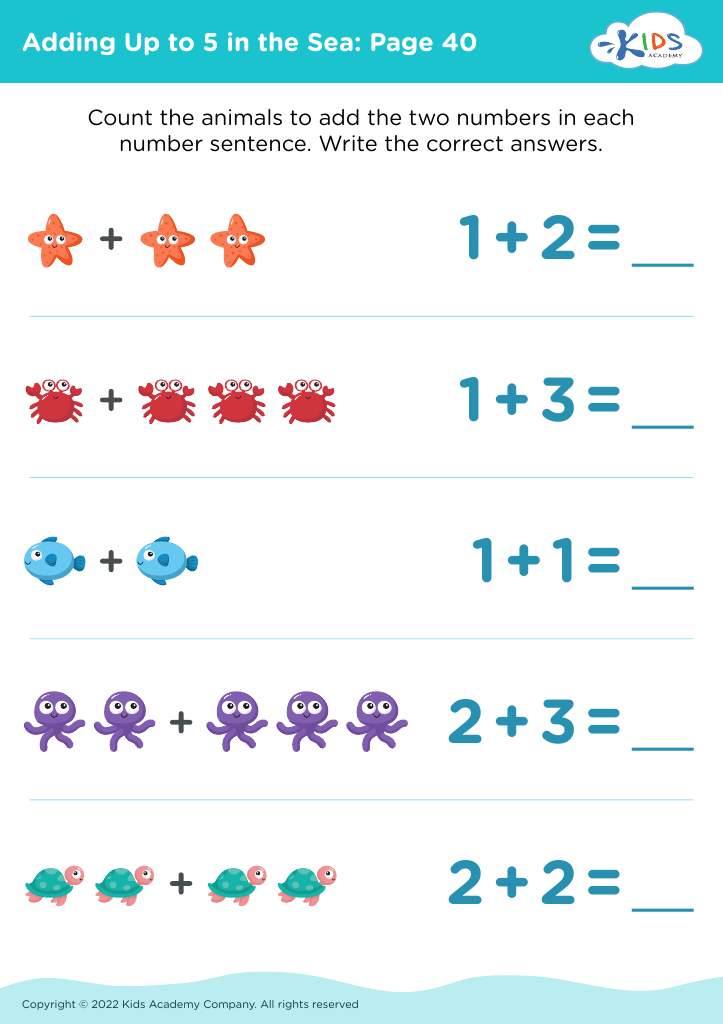
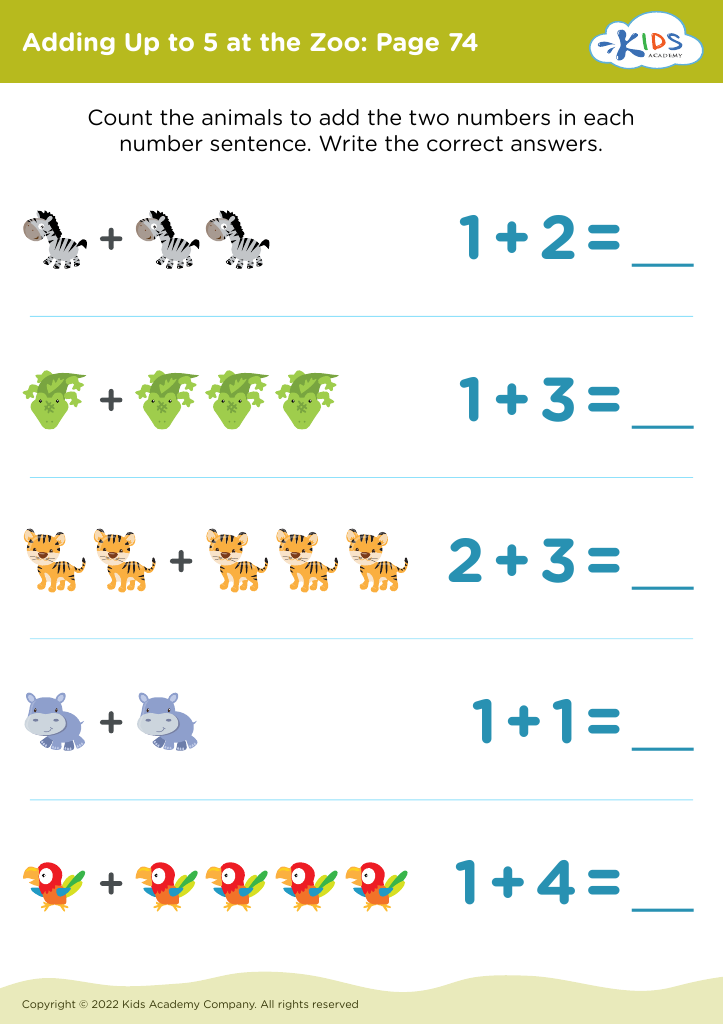
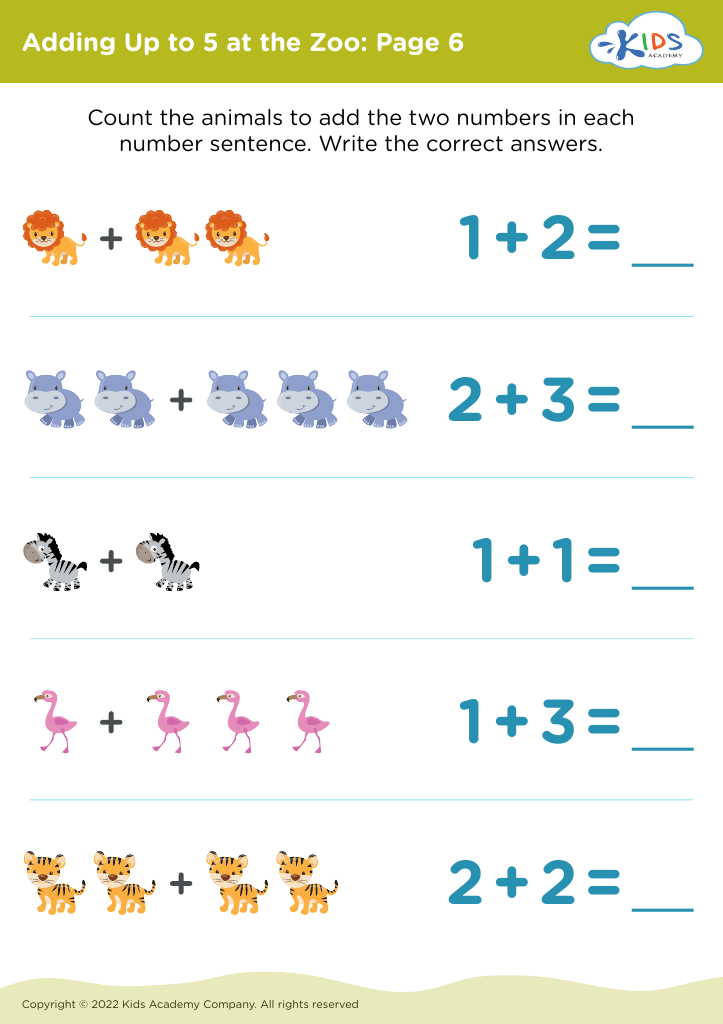
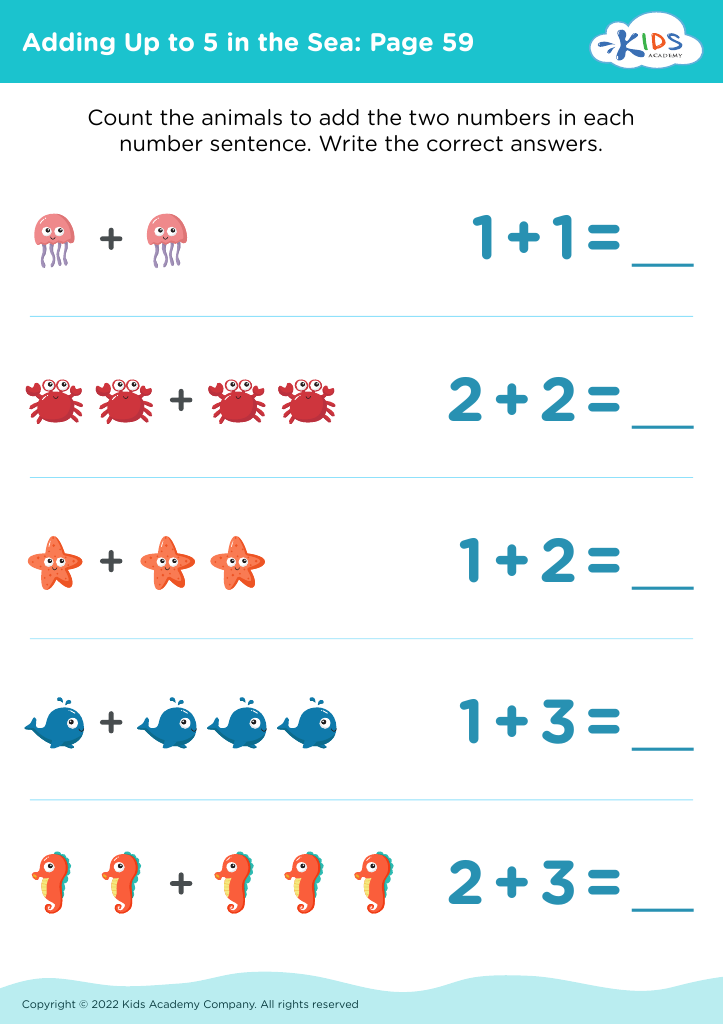
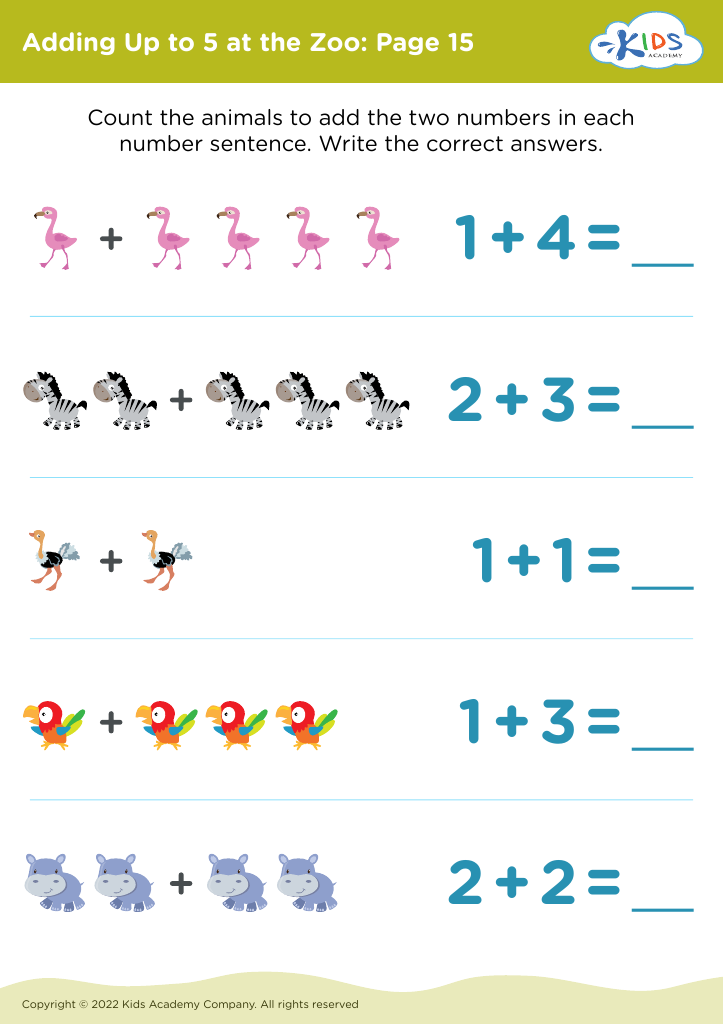
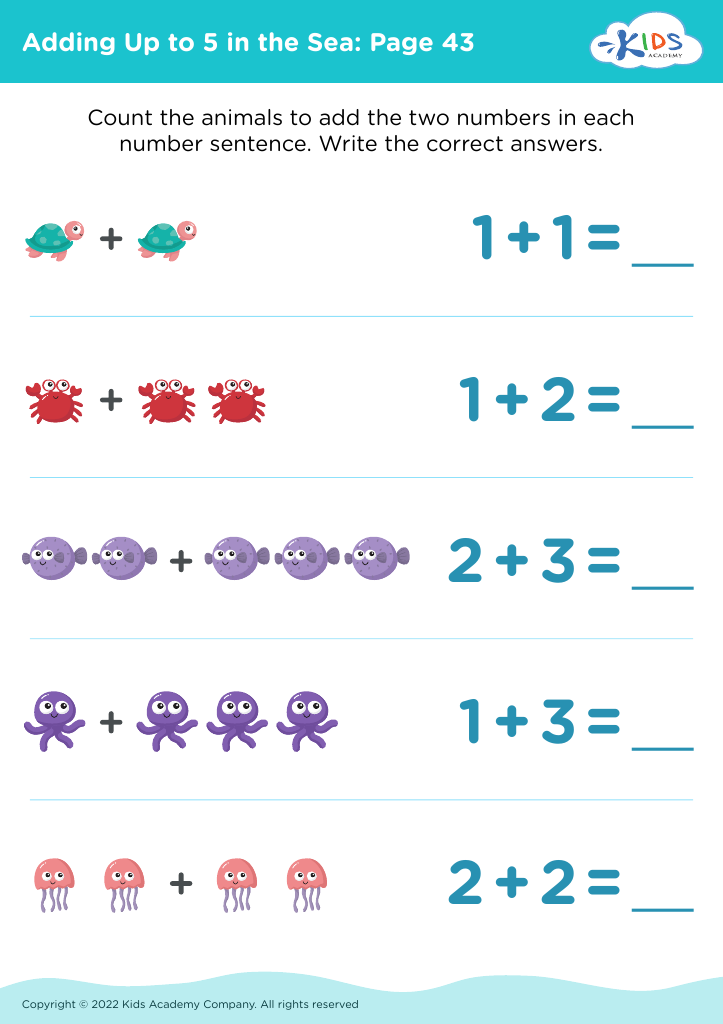
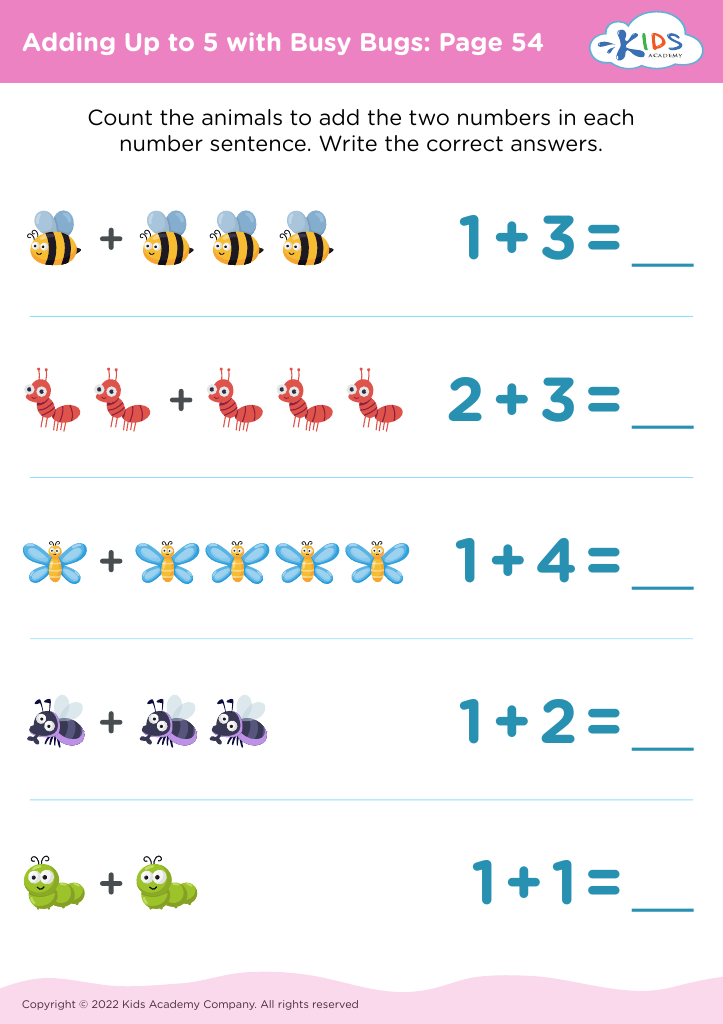
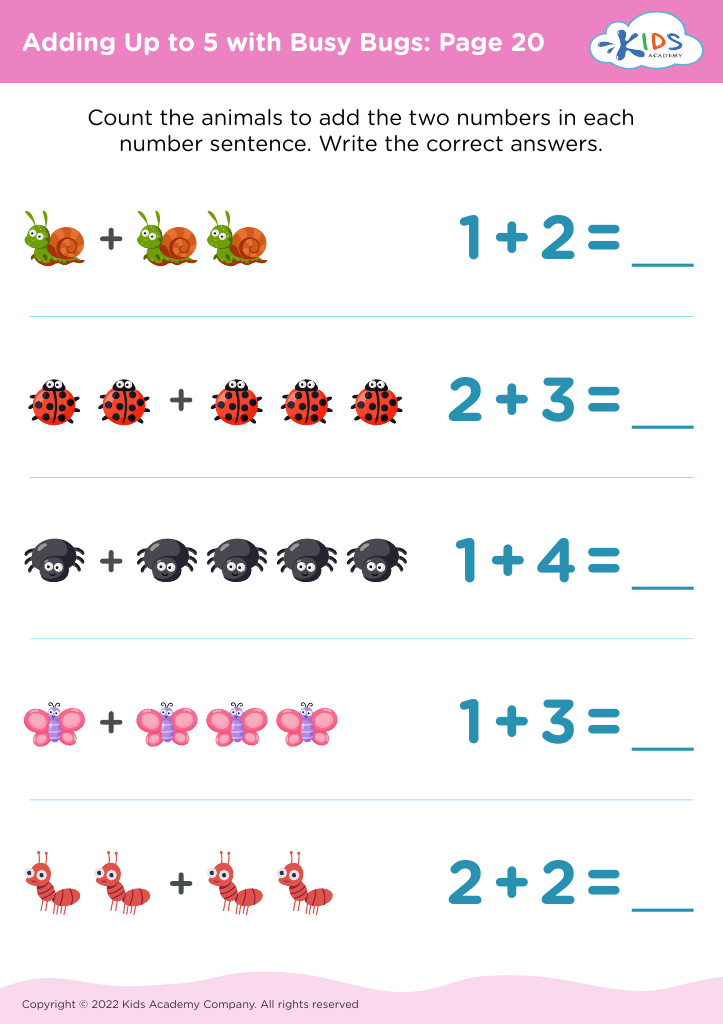
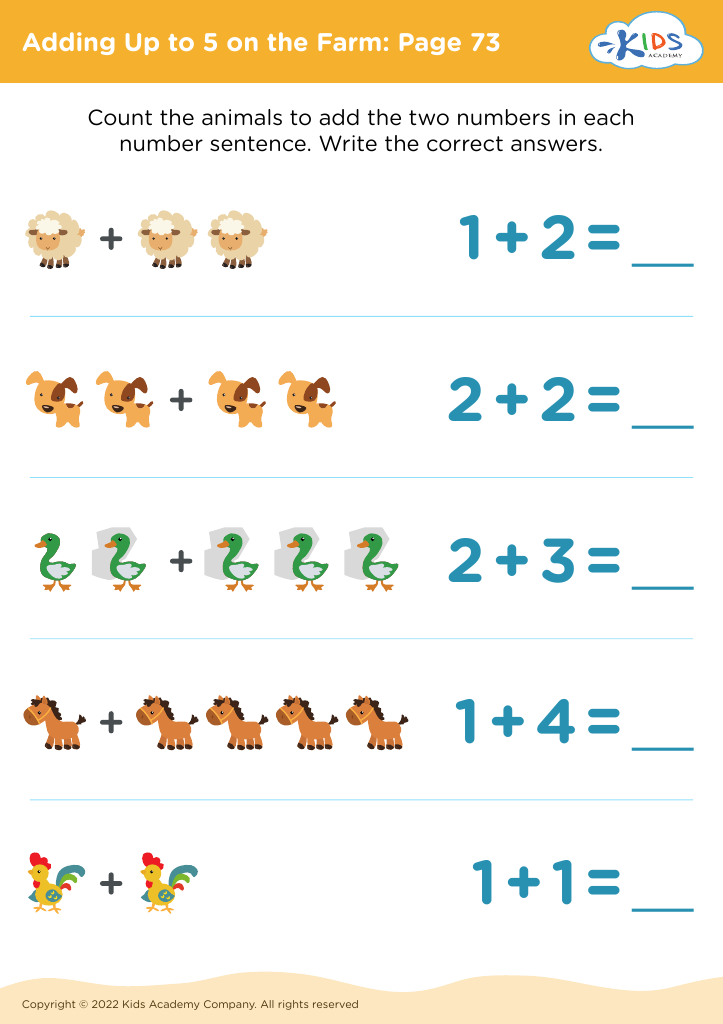




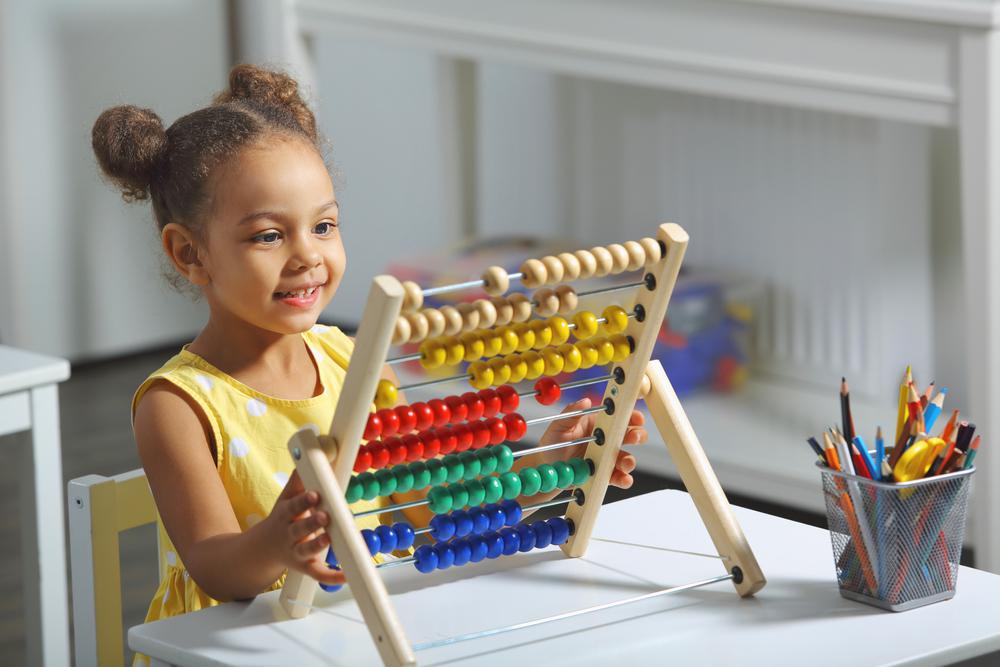



Basic addition practice for 3-year-olds is crucial for a variety of reasons. First and foremost, it lays the foundational skills necessary for more advanced math concepts later in life. At this age, children are naturally curious and eager to explore numbers, making it the perfect time to introduce addition in a fun and engaging way.
Additionally, practicing addition helps develop critical cognitive skills such as problem-solving, logical reasoning, and memory. Activities that involve counting objects, like toys or snacks, can turn everyday moments into valuable learning experiences. When parents and teachers engage children in these practices, they not only teach math but also promote social skills as they often learn to share, take turns, and cooperate during group activities.
Moreover, the confidence children gain from mastering basic math lays the groundwork for a positive attitude towards learning. Positive early experiences with mathematics can lead to a lifelong love of learning. Ultimately, incorporating basic addition into play and learning routines fosters a well-rounded development and prepares children for future academic success, ensuring they are not only proficient in math but are also enthusiastic learners in their educational journey.








