Counting proficiency Addition Worksheets for 3-Year-Olds
11 filtered results
-
From - To
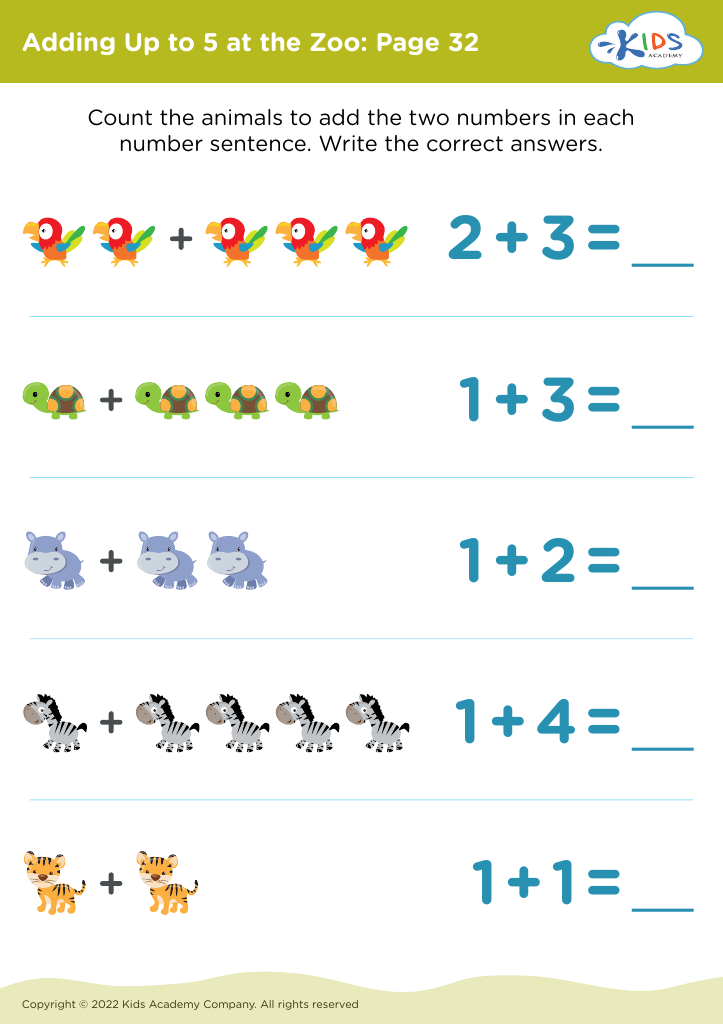
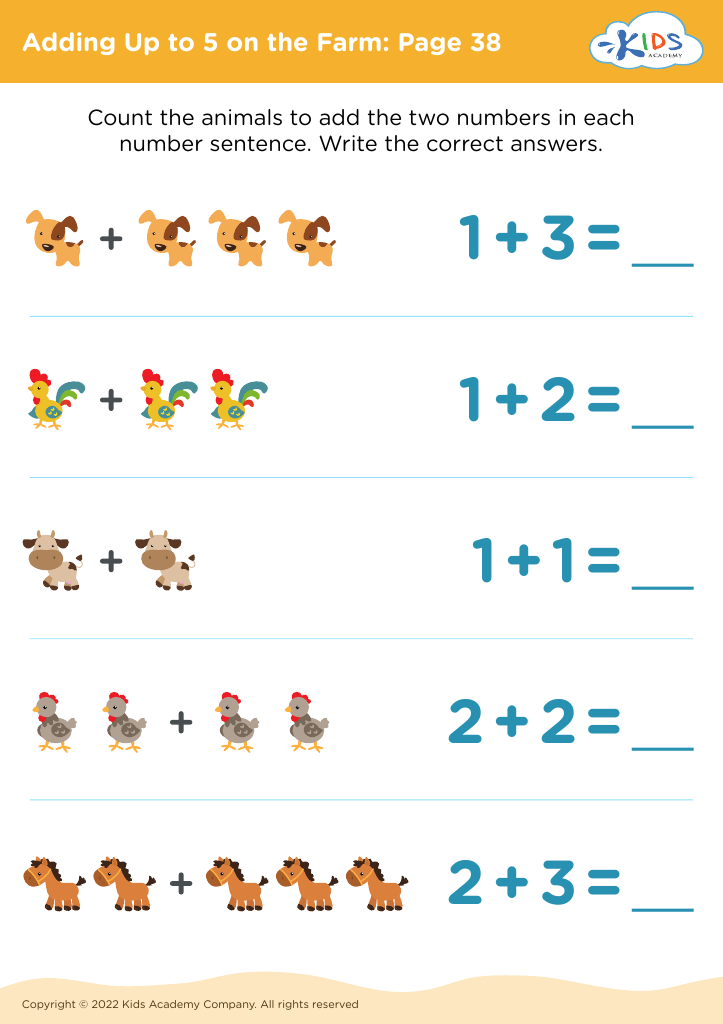
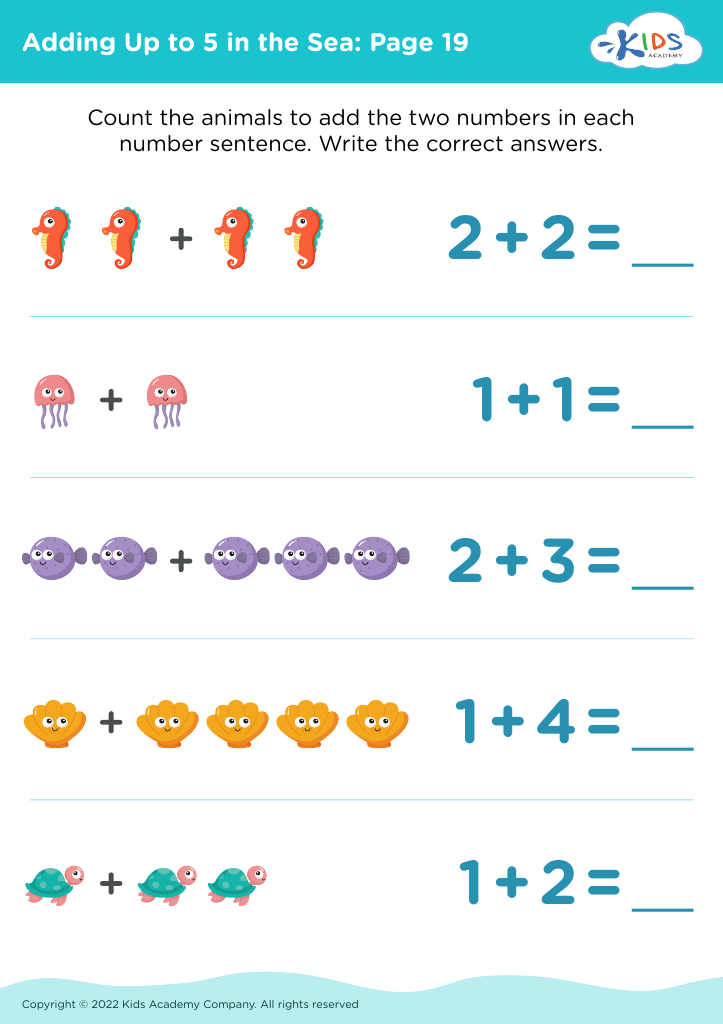
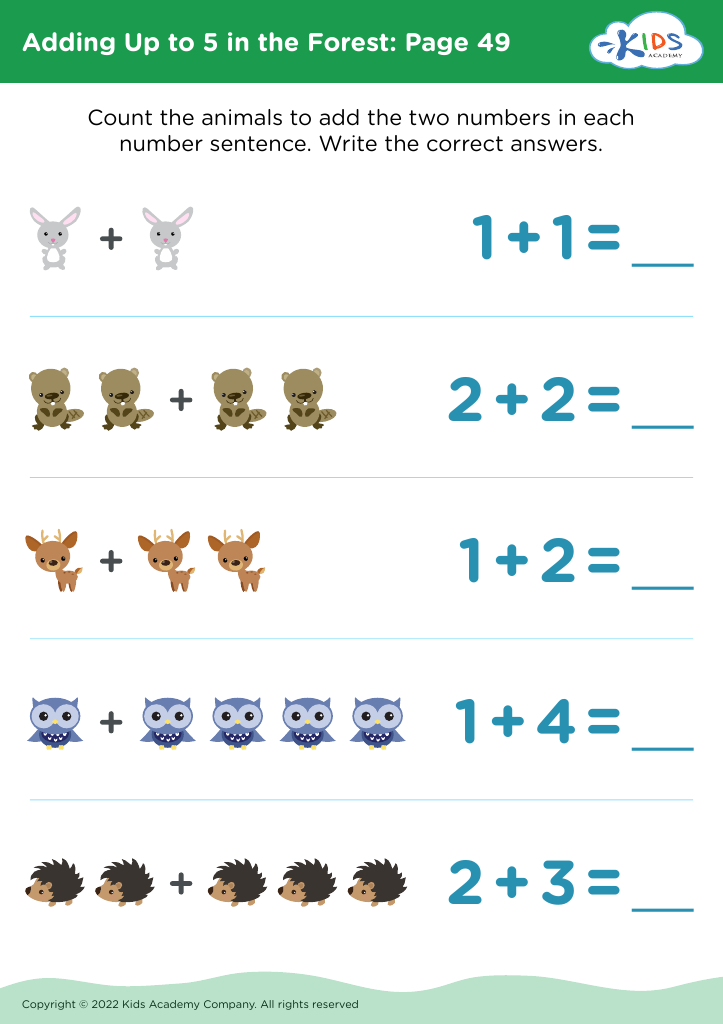
Unlock your child's mathematical potential with our "Counting Proficiency Addition Worksheets for 3-Year-Olds." Designed with toddlers in mind, these engaging worksheets make learning fun and interactive. Each worksheet contains vibrant illustrations and simple activities to help young learners grasp the basics of addition through counting. Perfect for parents and educators, these tools offer a structured yet playful path to early arithmetic skills. Our worksheets encourage cognitive development and boost counting confidence, laying the foundation for future math success. Download today and watch your child thrive in a joyful learning environment!
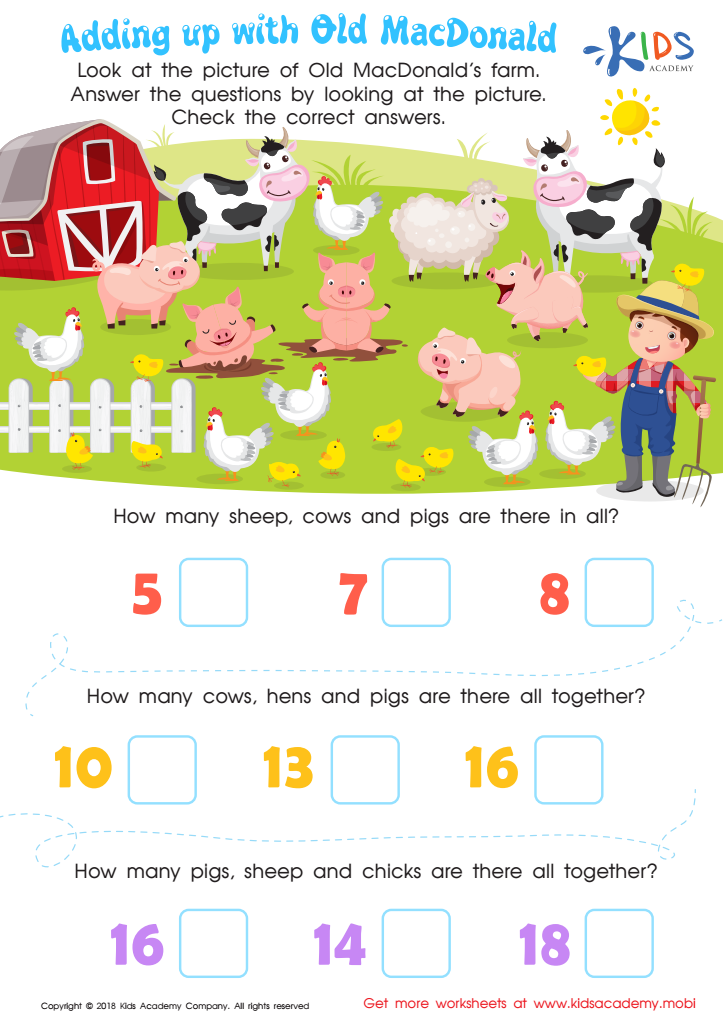
Adding Up with Old MacDonald Worksheet
 Assign to My Students
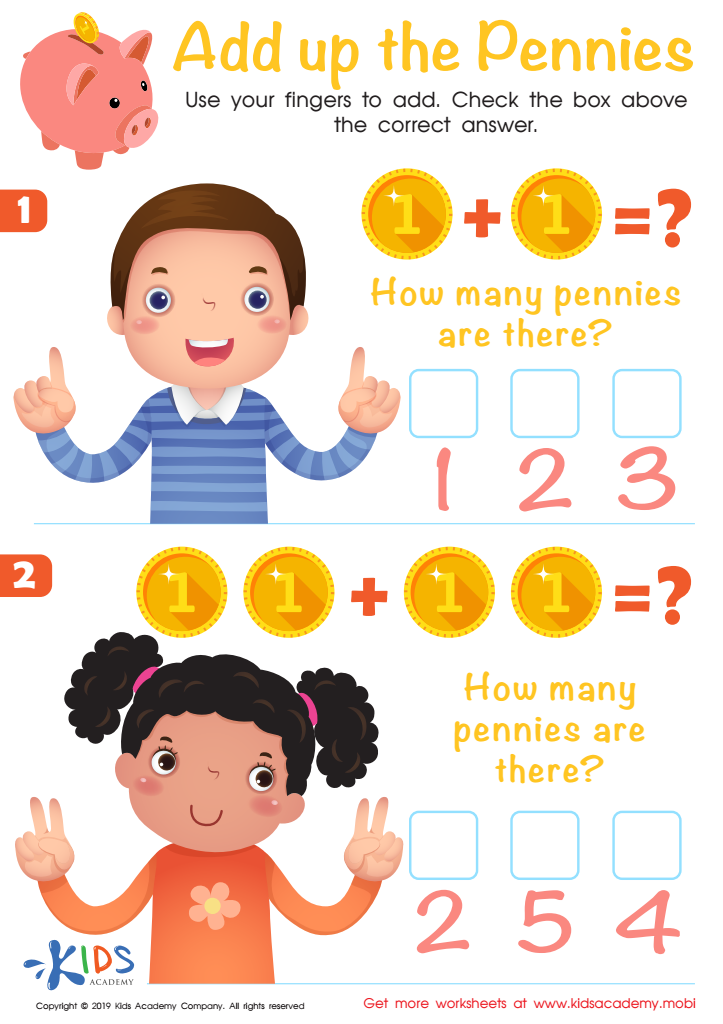
Add up the Pennies Worksheet
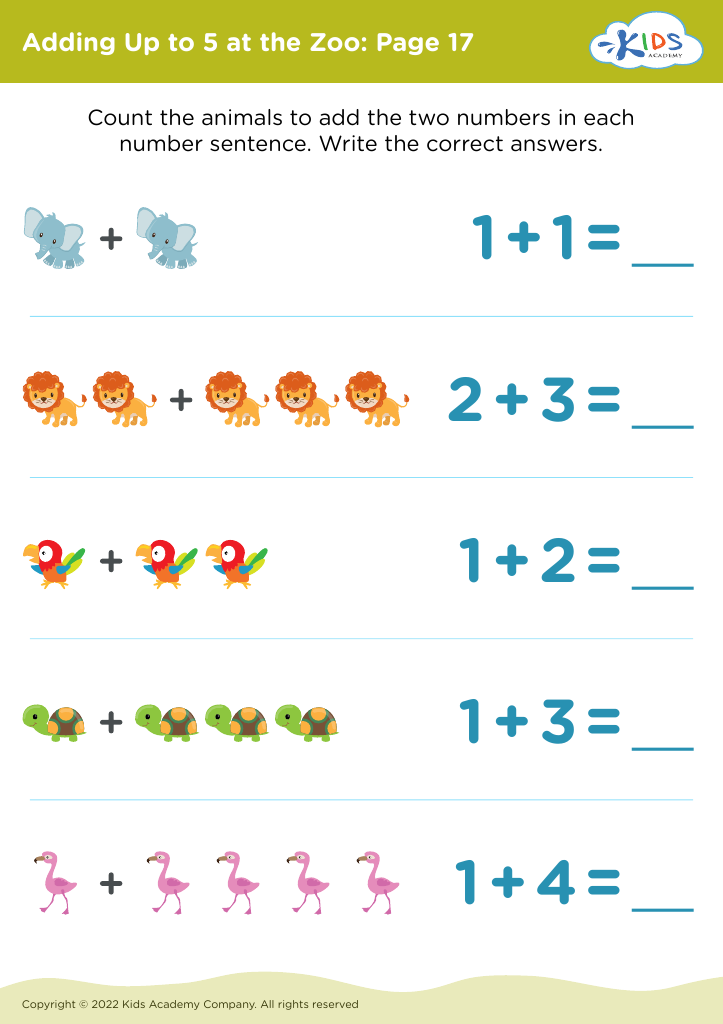
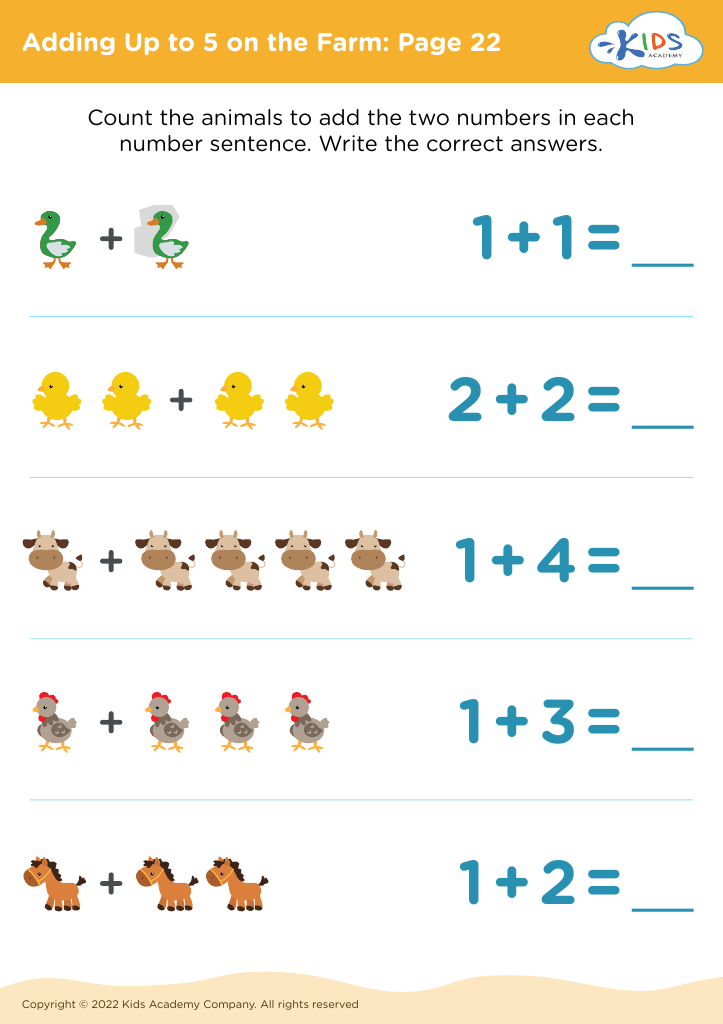
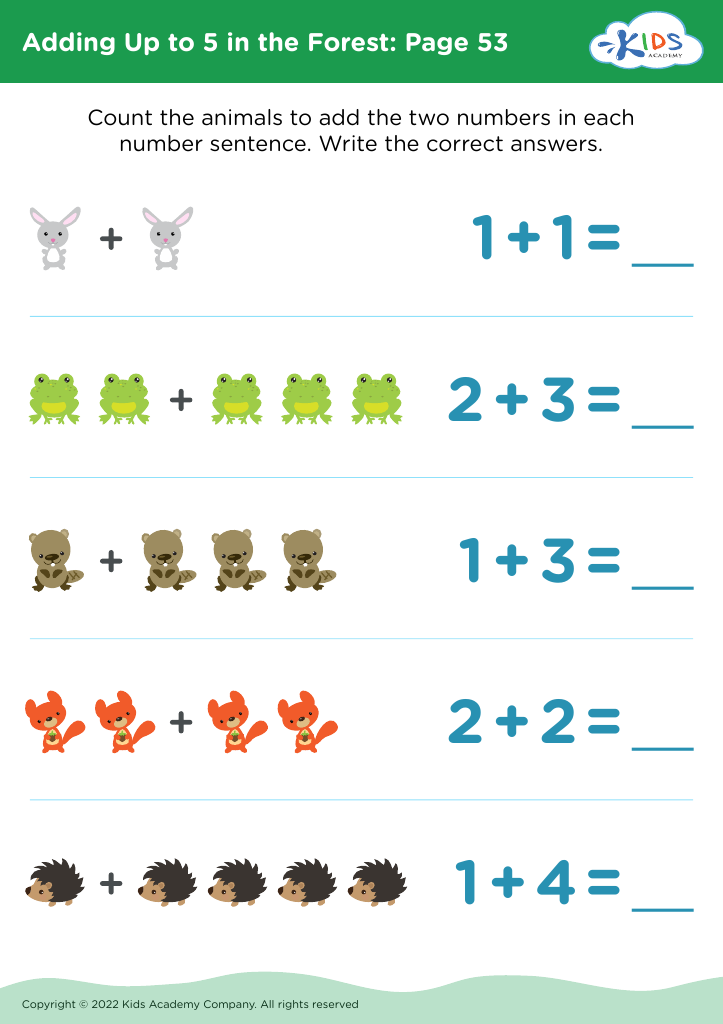
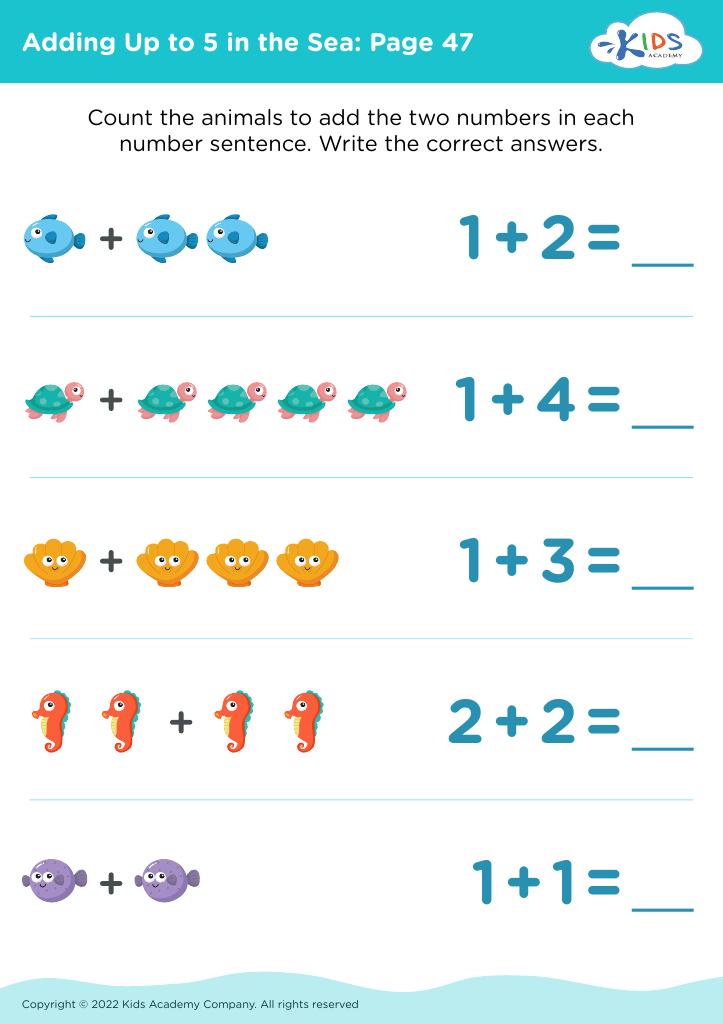
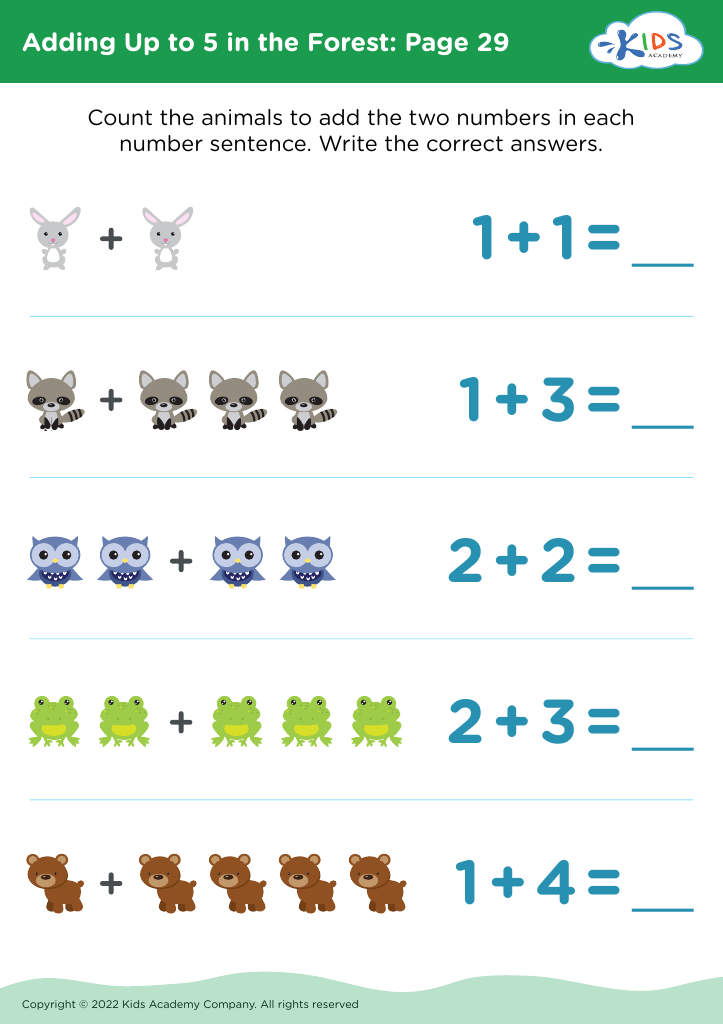








Counting proficiency and basic addition skills in 3-year-olds lay a vital foundation for future mathematical understanding, critical thinking, and problem-solving abilities. Early mathematical experiences activate sections of the brain associated with number recognition and reasoning, setting the stage for more complex concepts. When young children engage in counting and simple addition, they enhance their cognitive development, including memory and attention to detail.
Parents and teachers should care about these skills because early math proficiency correlates positively with academic success in later years. By nurturing counting skills and basic addition at an early age, we foster a child's confidence and interest in math, preventing anxiety and frustration that can arise if foundational skills are weak.
Moreover, early math skills are not just about numbers but also about understanding patterns, sequences, and relationships. These skills extend beyond math, aiding in language development and daily life skills, like recognizing shapes and understanding the passage of time.
By integrating counting and addition into playful activities, stories, and songs, adults can make learning enjoyable while promoting a sense of curiosity and discovery. Valuing and supporting early math fluency provides children with the tools they need to succeed both academically and in everyday life.








