Fine Motor Skills Counting Worksheets for 3-Year-Olds
7 filtered results
-
From - To
"Fine Motor Skills Counting Worksheets for 3-Year-Olds" from Kids Academy engage young learners by blending counting exercises with activities designed to enhance fine motor skills. These expertly crafted worksheets encourage preschoolers to trace numbers, connect dots, and handle crayons and markers skillfully. Every worksheet offers a fun and interactive way to develop crucial counting abilities while simultaneously strengthening hand-eye coordination and hand muscle control. Perfect for early learners, these enjoyable tasks foster a strong foundation in math skills while preparing children for future writing and drawing activities. Make learning and skill-building a delightful and integrated experience!
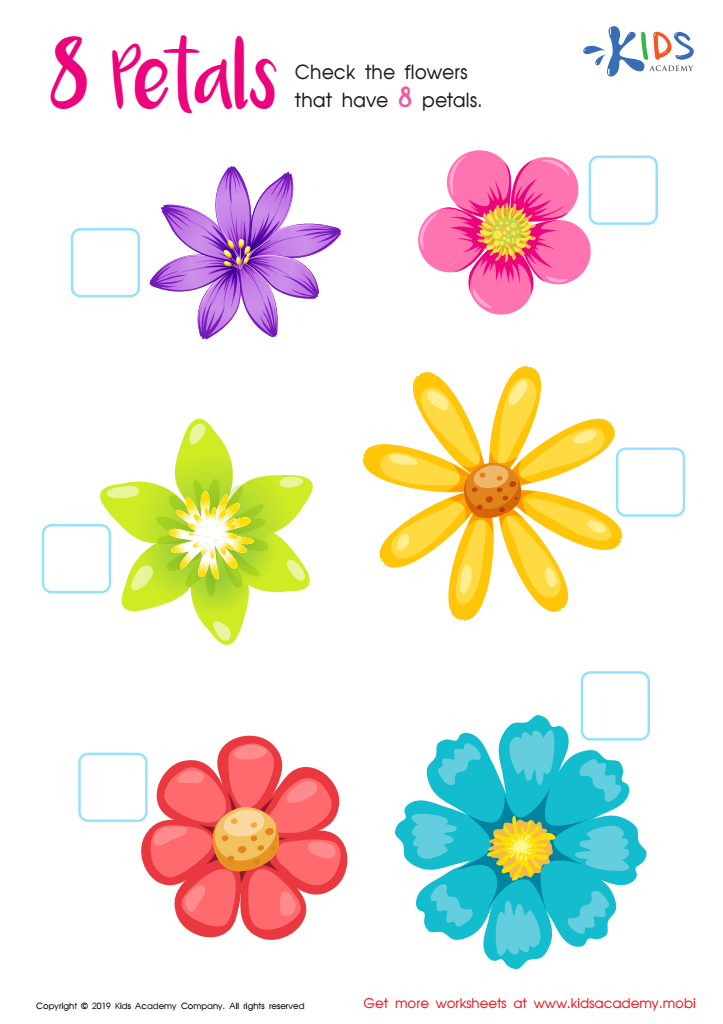
8 Petals Worksheet
 Assign to My Students




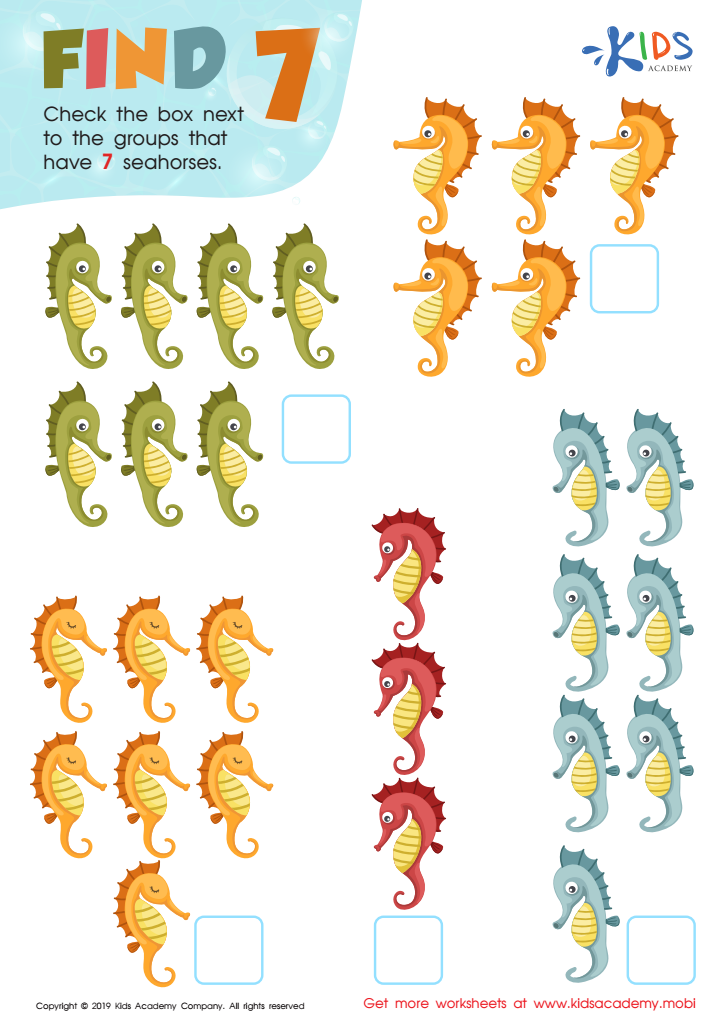
Find 7 Worksheet
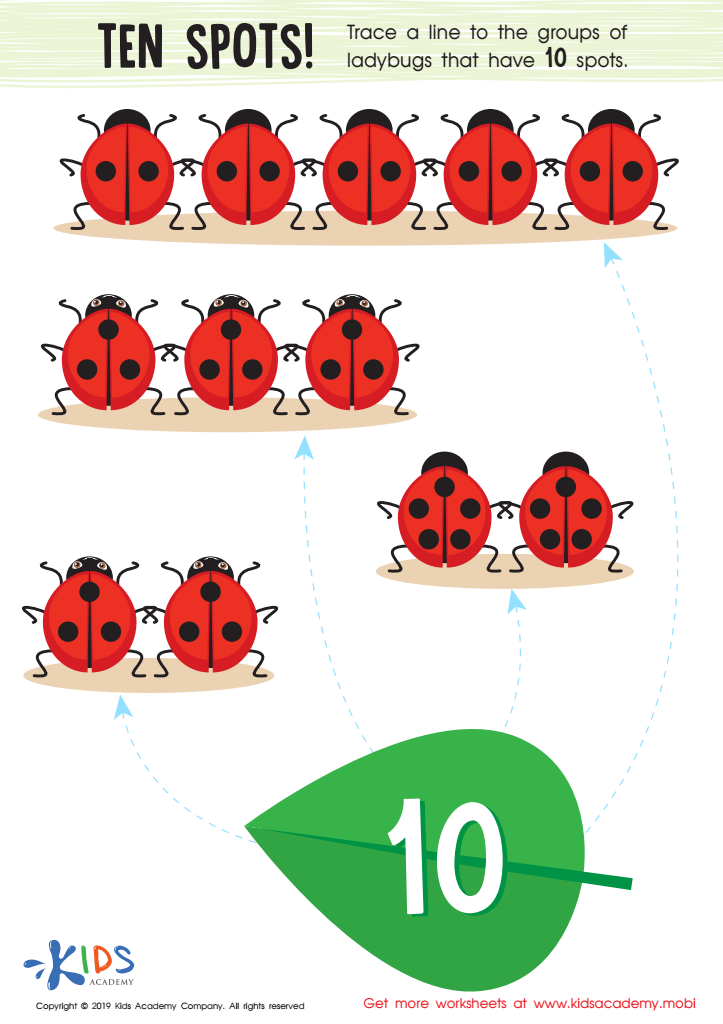
Ten Spots Worksheet
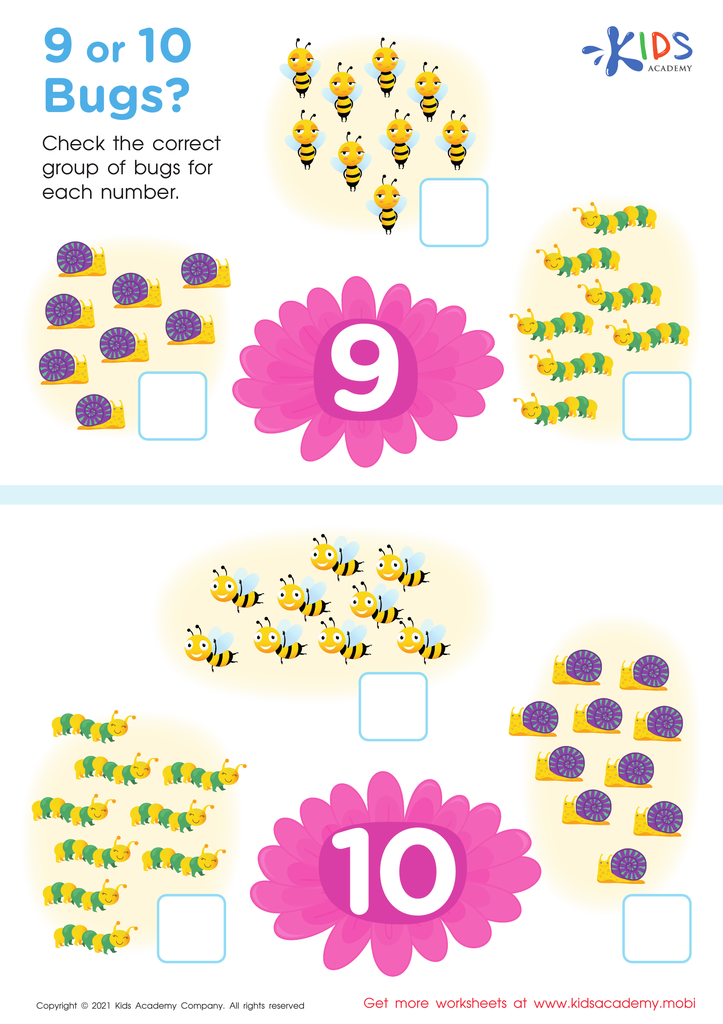
9 or 10 Bugs Worksheet
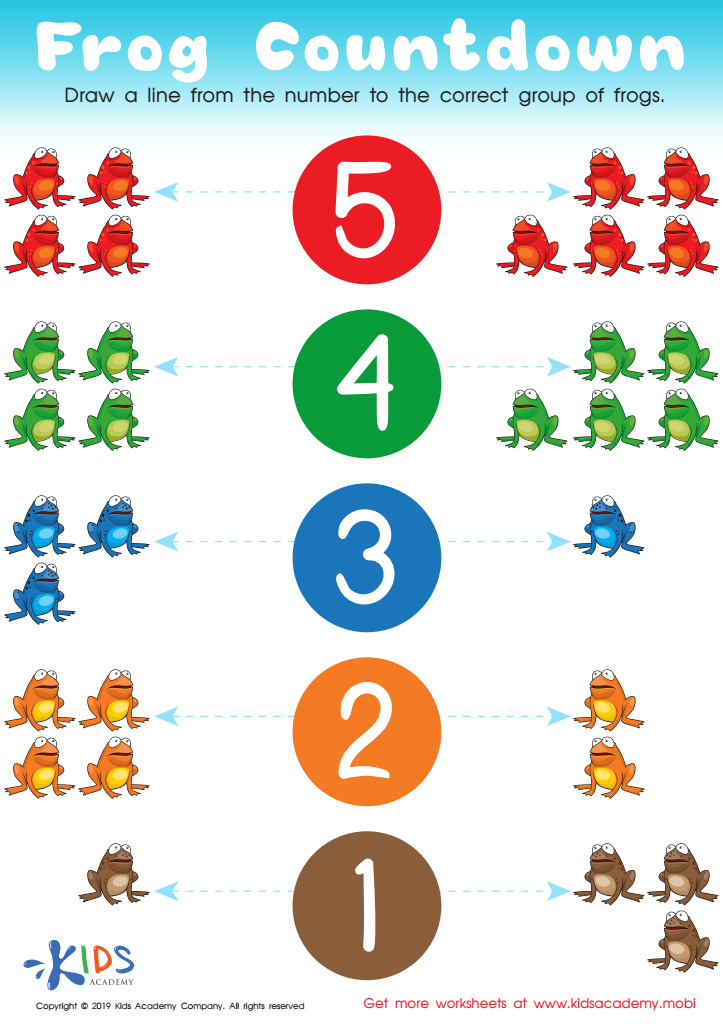
Frog Countdown Worksheet
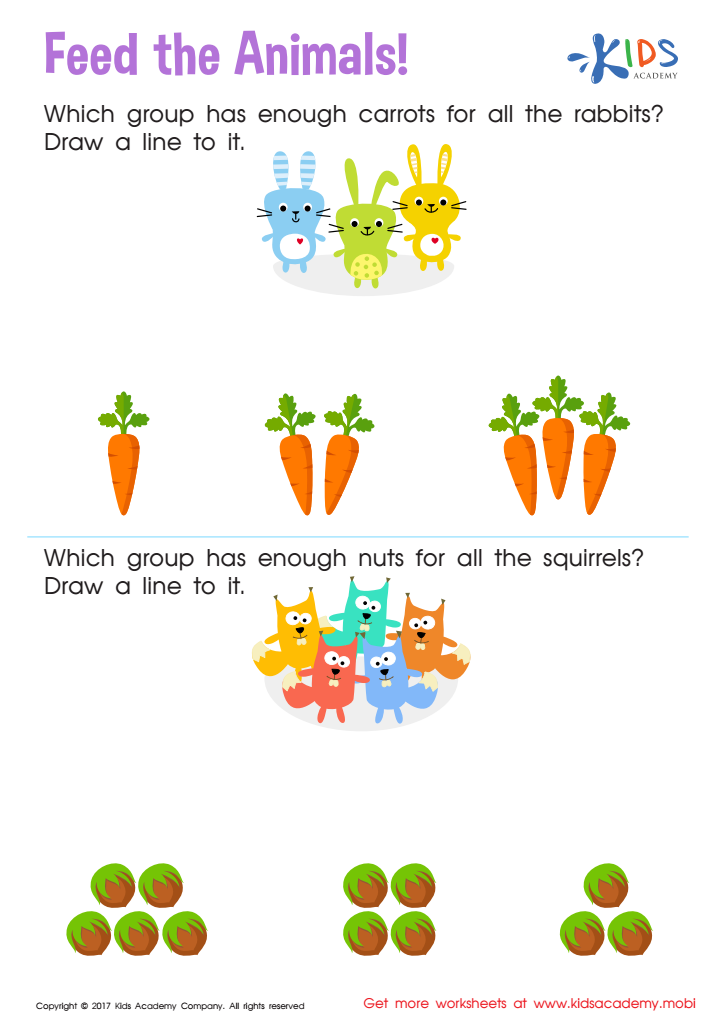
Count and Match: Feed the Animals Worksheet
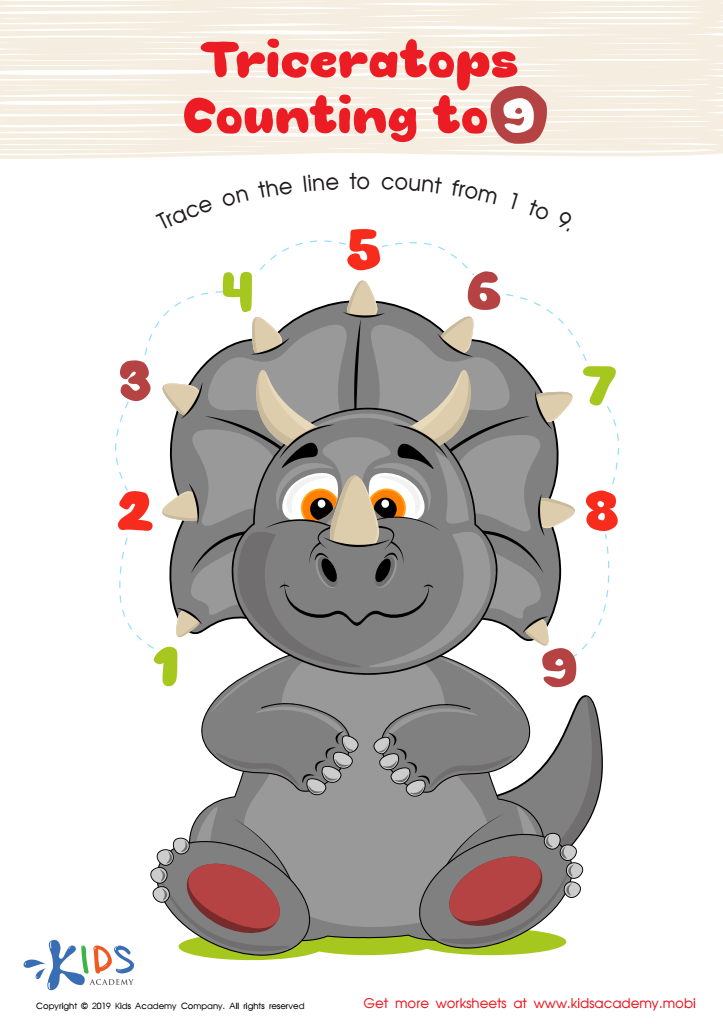
Triceratops Counting to 9 Worksheet








Fine motor skills counting is a crucial developmental milestone for 3-year-olds, deserving significant attention from both parents and teachers. This process involves the use of small muscle movements in the hands and fingers, which are essential for tasks like writing, buttoning clothes, and using utensils. By engaging in fine motor skills counting activities, children refine their hand-eye coordination, which translates to better overall dexterity and independence in daily tasks.
For educators and parents, fostering these skills through counting activities provides a dual benefit. Firstly, it lays the groundwork for mathematical understanding. When children manipulate objects while counting, they develop a tangible sense of numbers and quantities, enhancing their cognitive and numerical abilities. This hands-on experience is fundamental as it shapes their early math concepts, critical thinking, and problem-solving skills.
Moreover, integrating counting with fine motor tasks like sorting beads, stringing cheerios, or stacking blocks also encourages concentration and patience, qualities that are vital for academic success. Structured play that targets fine motor skills prepares children for more complex tasks in their educational journey, ensuring they possess the necessary foundation to excel in school.
In sum, fine motor skills counting taps into multiple developmental domains—cognitive, motor, and emotional. Prioritizing these skills helps build a well-rounded foundation that supports overall growth, learning readiness, and future academic achievements.








