
Following instructions Geometry Worksheets for 3-Year-Olds
4 filtered results
Difficulty Level
Grade
Age
-
From - To
Subject
Activity
Standards
Spark your 3-year-old's interest in learning with our engaging Following Instructions Geometry Worksheets! Specially designed for preschoolers, these printable worksheets combine fun activities with essential early geometry concepts. Your little one will enjoy identifying shapes, patterns, and colors, all while developing critical thinking and listening skills through easy-to-follow instructions. These worksheets integrate playful tasks with educational objectives, ensuring a joyful introduction to mathematics. Ideal for parents and teachers, our worksheets offer a delightful way to enrich your child's foundational understanding of geometry in a supportive and creative environment. Start their educational journey today!
Favorites
With answer key
Interactive
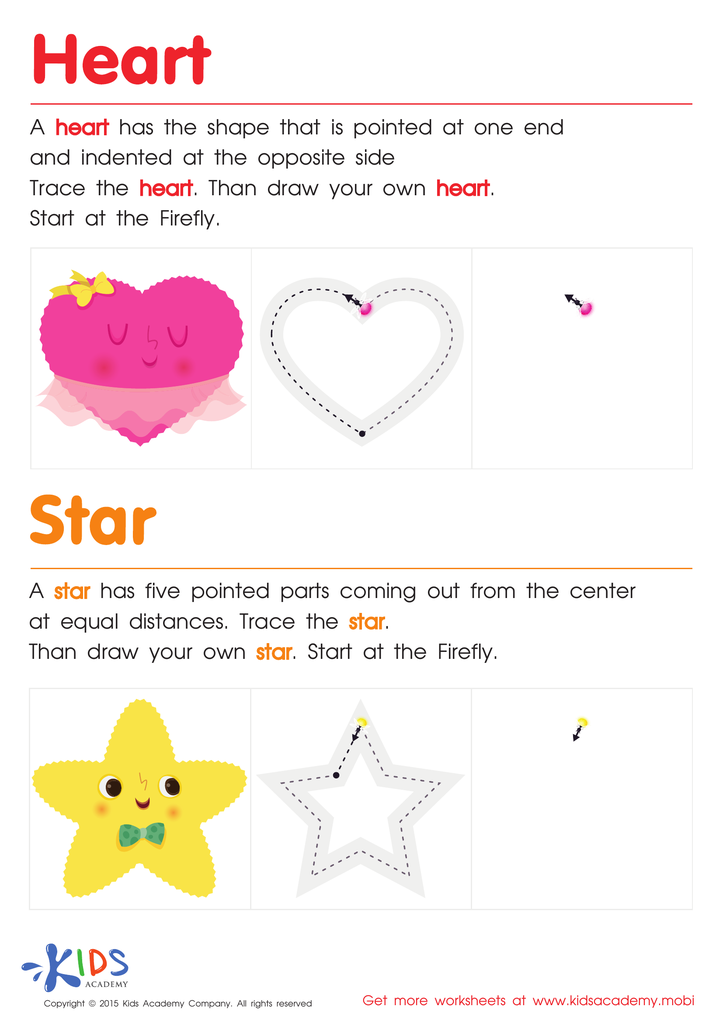
Let's Learn to Draw Hearts And Stars Printable
Trace and draw hearts and stars, learn their names and use them in your drawings. Start with the firefly and be creative!
Let's Learn to Draw Hearts And Stars Printable
Worksheet











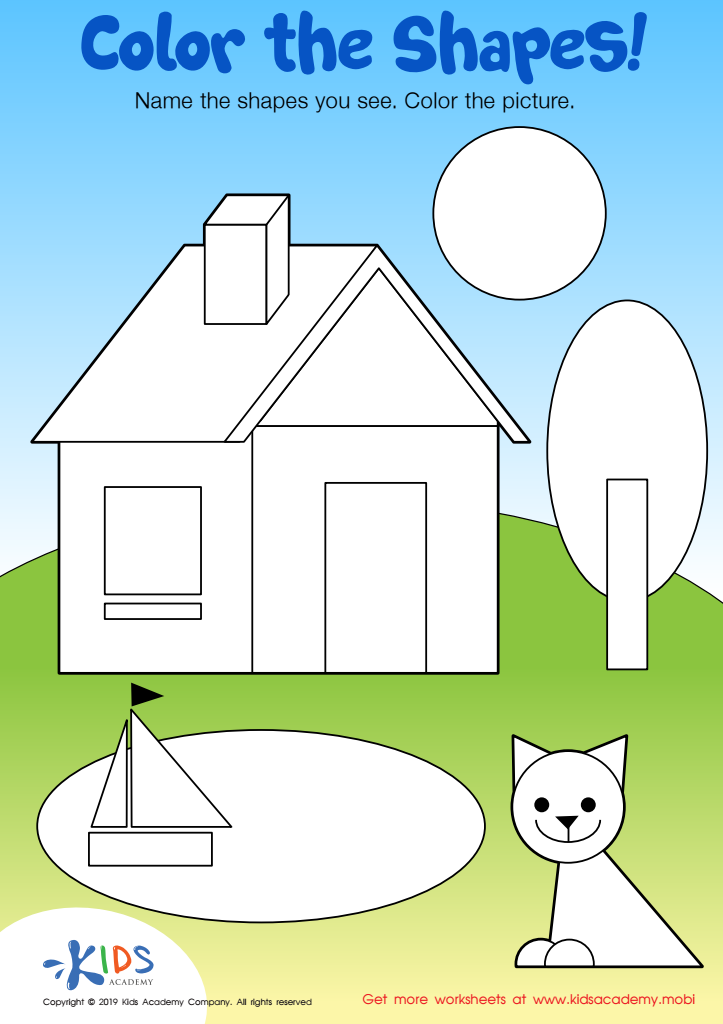
Color the Shapes Worksheet
Help your student master shape identification with this fun worksheet. Ask them to name the shapes in the picture, then color it! Ask questions like "How many squares do you see?" and "How many triangles?" to extend the learning. Identify squares, circles, triangles and rectangles with this enjoyable coloring page.
Download (PDF)
 Assign to My Students
Assign to My Students
Color the Shapes Worksheet
Worksheet
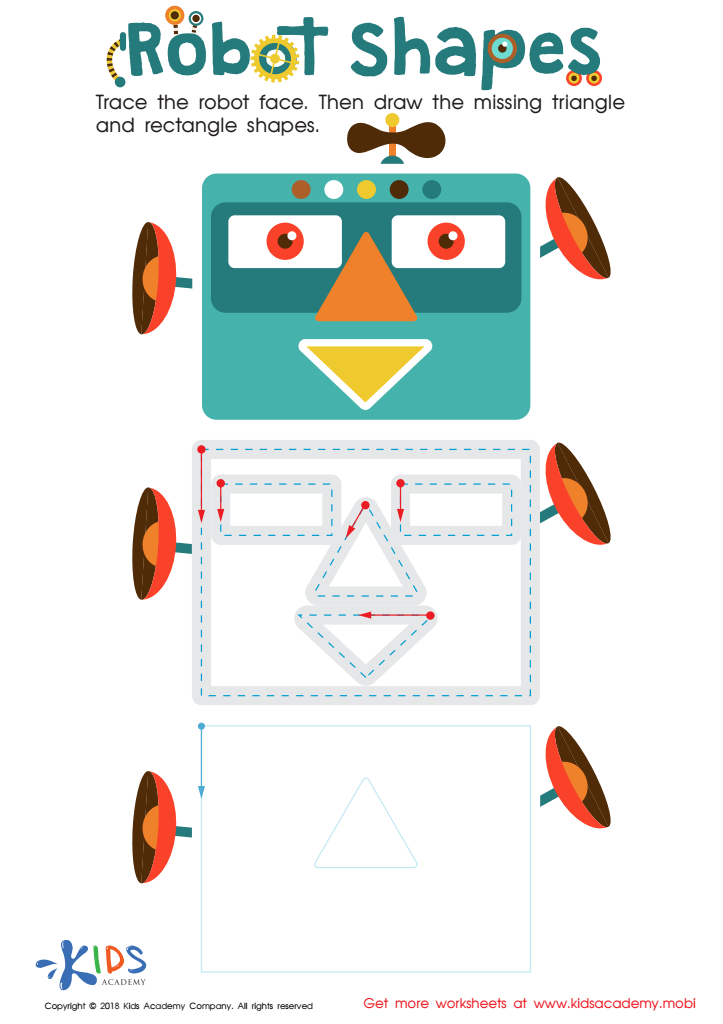
Robot Shapes Worksheet
Help your preschooler get started with math skills while having fun with this shape tracing worksheet featuring a cute robot! Ask them to study the first image, trace the dotted lines to draw the shapes in the second, and color the third. With this activity, they'll learn shapes while enjoying the funny robot pictures!
Robot Shapes Worksheet
Worksheet
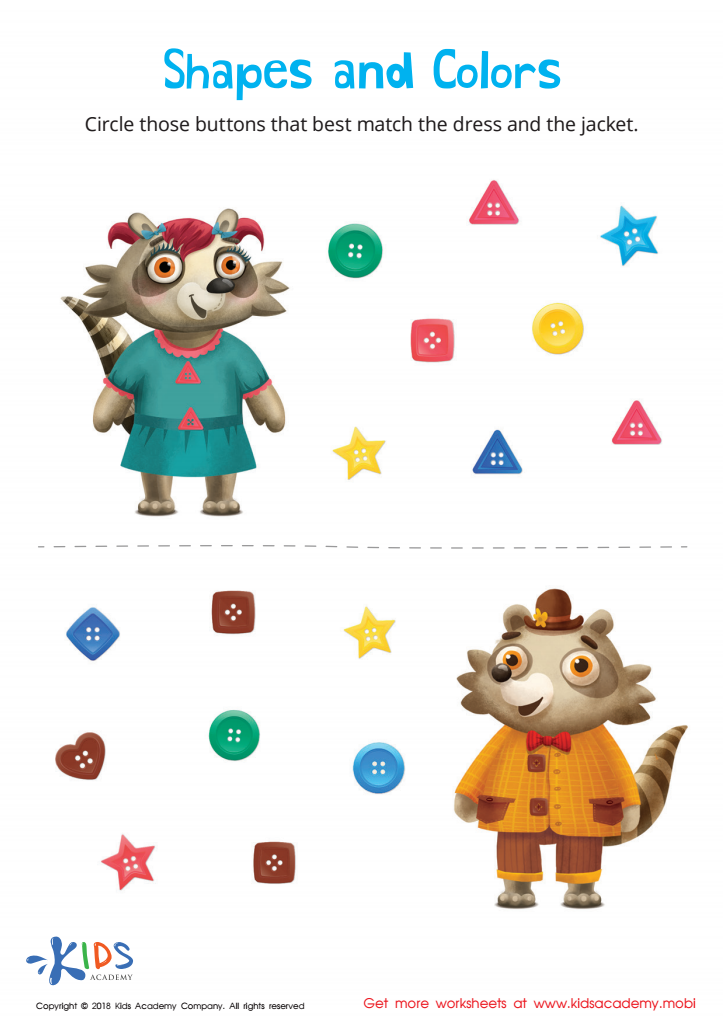
Shapes and Colors Worksheet
This worksheet is a fun way to teach toddlers shapes and colors! It has them match buttons on adorable racoon characters. Encourage your child to note the shape and color of the buttons then sort through and circle the matches. This helps build important attention to detail skills!
Shapes and Colors Worksheet
Worksheet
Learning Skills
Join Kids Academy for Free
Who is primarily going to use this learning content?








Parents and teachers should care about teaching 3-year-olds to follow instructions and early geometry for several important reasons. Firstly, following instructions is a fundamental life skill that helps children understand structure, order, and the importance of listening. It enhances their ability to complete tasks, fosters respect for rules, and builds their confidence to take on new challenges.
Early geometry introduces young children to shapes, spatial relationships, and measurement concepts. At this age, their brains are highly receptive to recognizing patterns and categorizing their environment. By engaging with geometry, kids develop critical thinking and problem-solving skills. For example, sorting blocks by shape or size helps them learn to identify similarities and differences, an essential cognitive development milestone.
Together, these skills build a solid foundation for future learning. Understanding instructions enables better participation in various activities, while basic geometry forms the groundwork for later, more complex mathematical concepts. Additionally, these early educational experiences encourage a love of learning by making the discovery process fun and interactive.
Investing in these aspects of early childhood education can set children on a path of academic success, enhanced social skills, and a curious, explorative mindset. As stakeholders in a child’s growth, parents and teachers play a critical role in fostering these abilities from a young age.








