Pattern recognition Geometry Worksheets for 3-Year-Olds
3 filtered results
-
From - To
Introduce your little ones to the world of shapes and patterns with our engaging Geometry Worksheets designed specifically for 3-year-olds! These fun and interactive resources will help preschoolers develop essential pattern recognition skills while learning about basic geometric shapes. Featuring colorful illustrations and easy-to-follow activities, our worksheets encourage creativity and critical thinking. Children will enjoy matching, sorting, and completing patterns, laying a solid foundation for future math success. Perfect for home or classroom use, these worksheets provide an excellent opportunity for hands-on learning and skill-building. Spark your child's curiosity and prepare them for a lifetime of mathematical adventures!
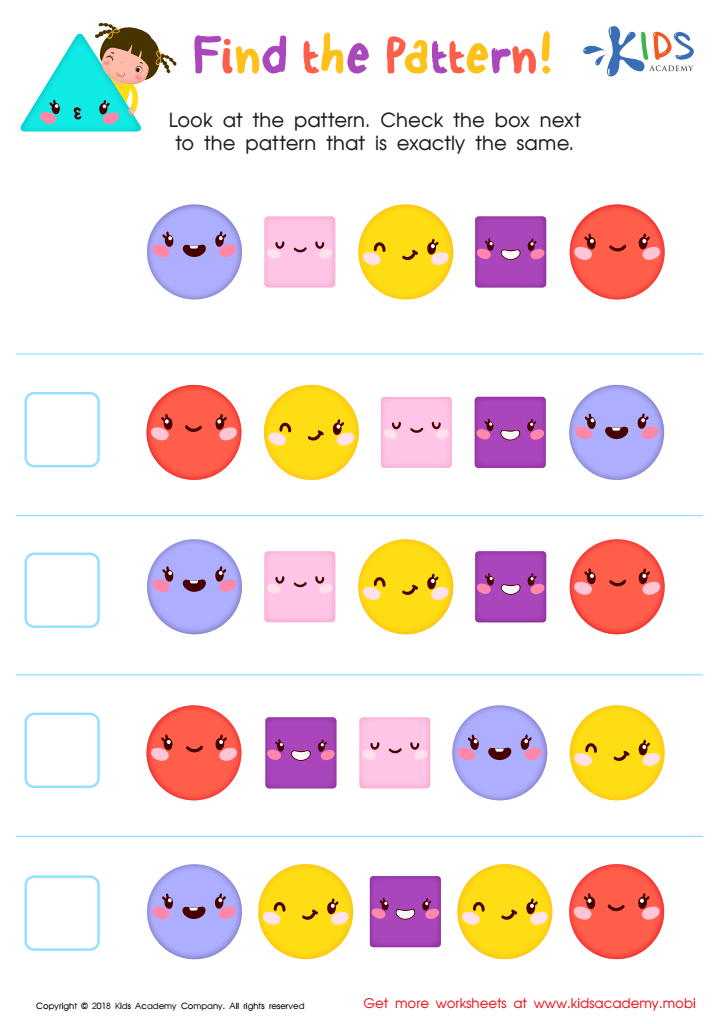
Find the Pattern Worksheet
 Assign to My Students











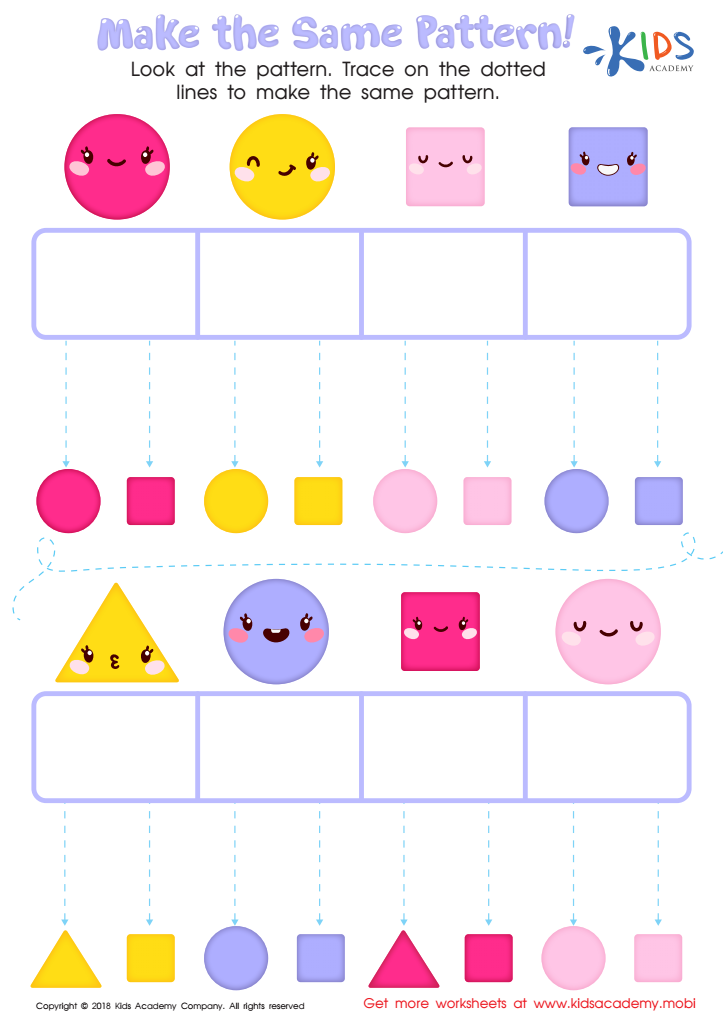
Make the Same Pattern Worksheet
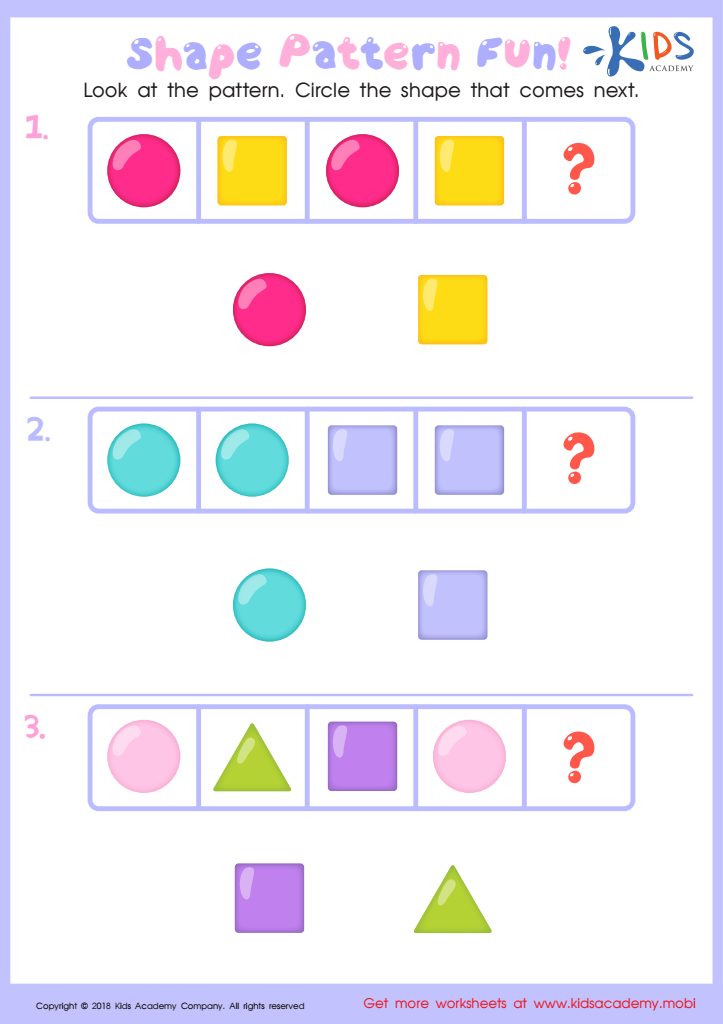
Shape Pattern Fun Worksheet








Pattern recognition is a fundamental skill that lays the groundwork for a child's overall cognitive development, especially in geometry. For 3-year-olds, understanding patterns helps them make sense of their environment, recognize relationships, and develop critical thinking skills. Parents and teachers should recognize its importance because this skill fosters creativity, problem-solving abilities, and logical reasoning, all essential components of early math education.
When young children engage with patterns, such as sorting objects by color, size, or shape, or identifying repeating sequences in music and art, they enhance their ability to observe and describe the world around them. This foundational understanding promotes spatial awareness, which is critical in geometry, as children learn to recognize shapes and their properties.
Additionally, pattern recognition positively impacts language development. Children use language to describe patterns, making connections between words and concepts. By nurturing these skills early on, educators and parents cultivate a love for learning that can lead to future academic success. Engaging children in playful activities that highlight patterns also strengthens their social skills, as they often work collaboratively in exploring and discussing various pattern challenges. In essence, fostering pattern recognition in young children sets the stage for a lifetime of curiosity and learning.








