Understanding Quantities Numbers Worksheets for 3-Year-Olds
3 filtered results
-
From - To
Nurture your little one's number sense with our "Understanding Quantities Numbers Worksheets for 3-Year-Olds!" Tailored to young learners, these engaging and colorful worksheets from Kids Academy help children grasp the concept of quantities and numbers through fun activities like counting objects, matching numbers, and identifying groups. Designed to build foundational math skills, our worksheets seamlessly blend learning with play, making it enjoyable for preschoolers to explore numbers. Perfect for parents and educators, these printable resources support early math literacy and foster confidence as children embark on their educational journey. Boost your child's numerical understanding today!
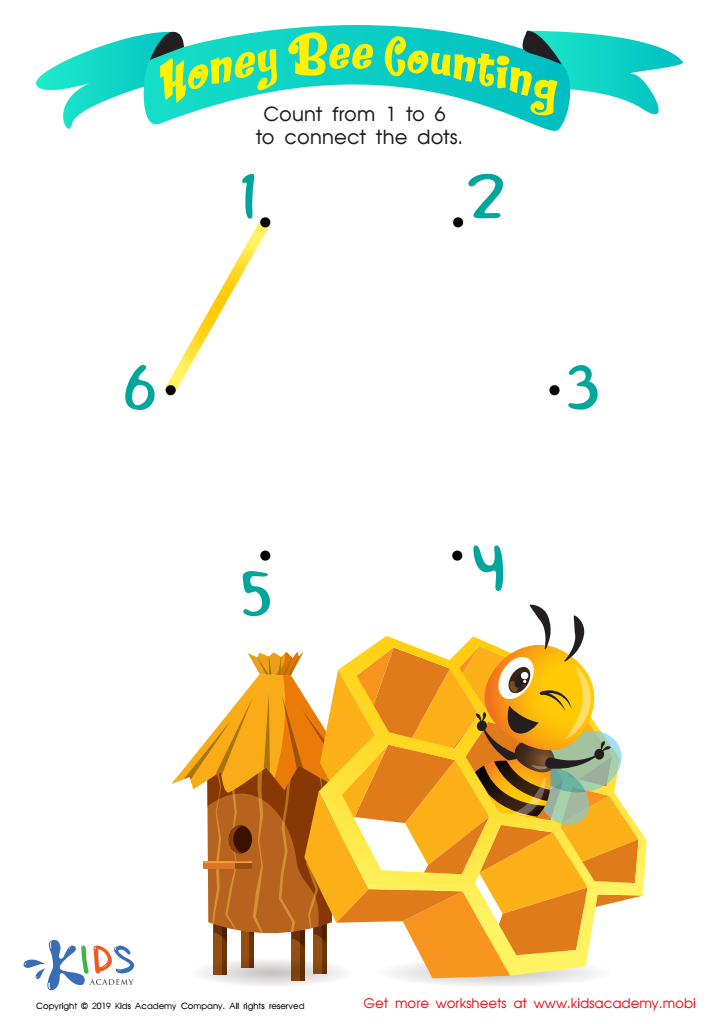
Honey Bee Counting Worksheet
 Assign to My Students
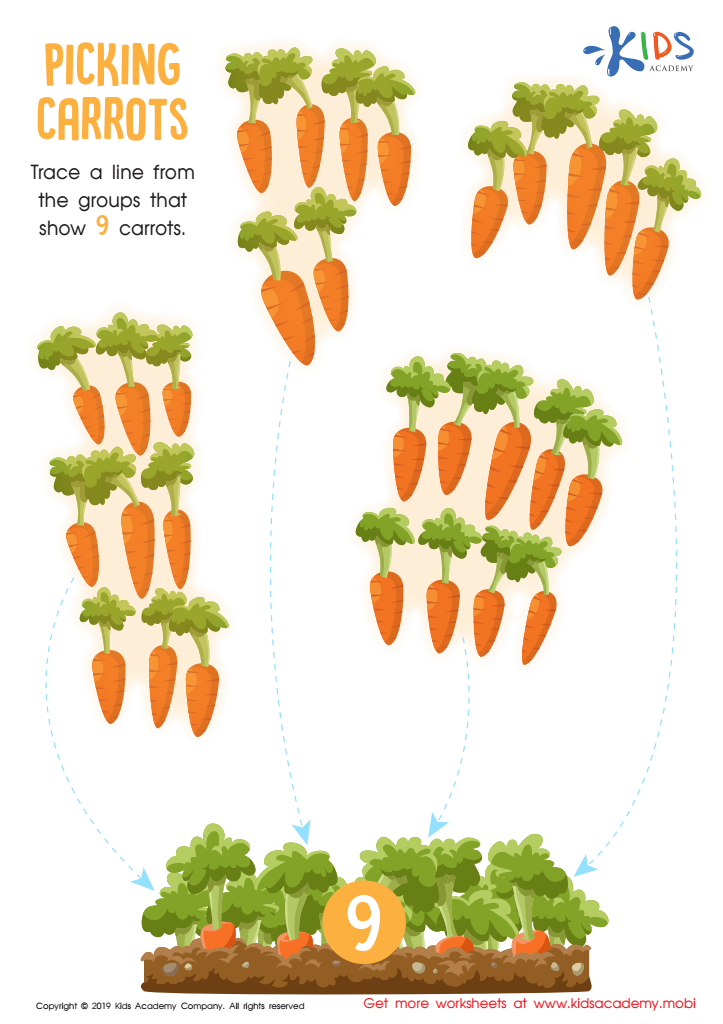
Picking Carrots Worksheet
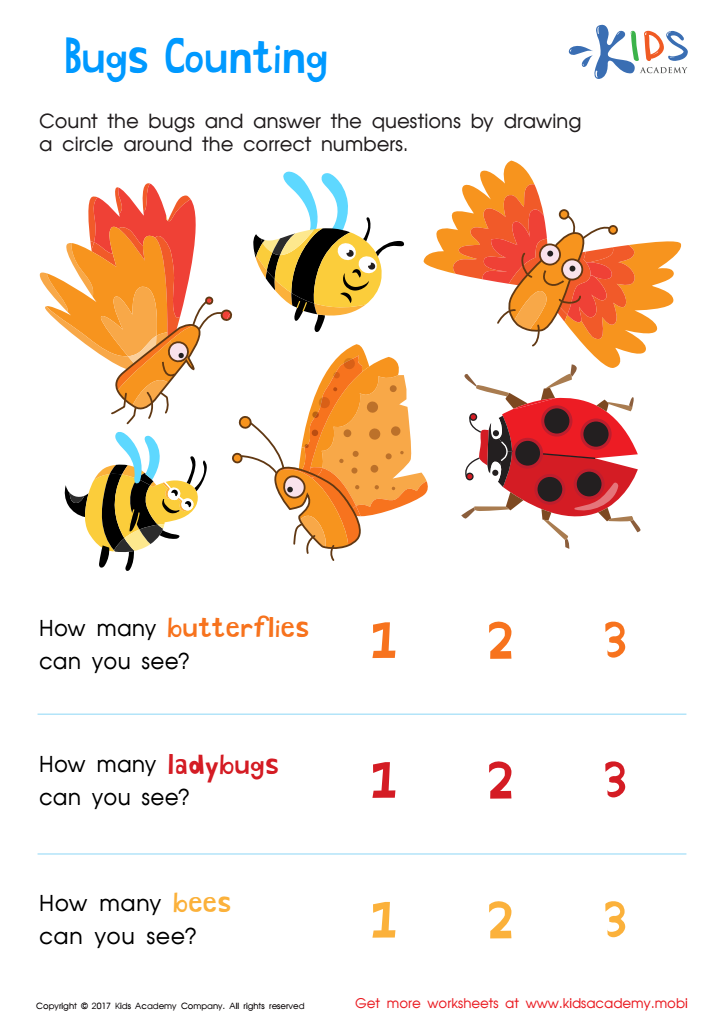
Bugs Counting Worksheet








Understanding quantities and numbers at three years old is a crucial foundational skill that underpins later mathematical learning and cognitive development. At this tender age, children begin to form early concepts of numbers that set the stage for more formal arithmetic in subsequent years.
When parents and teachers invest time in helping children grasp these ideas, they nurture their natural curiosity and fascination with the world around them. This early engagement can manifest in daily interactions—through play, storytelling, or counting everyday objects. Such activities help children develop a sense of order, pattern recognition, and logical thinking, all of which are key components of broader cognitive skills.
Furthermore, early familiarity with numbers and quantities aids in strengthening neural pathways necessary for higher-order thinking and problem-solving. Children learn to make sense of their environment, for instance, by understanding differences in size, quantity, and shape. This primes them for academic achievement, as studies have shown a strong correlation between early number sense and higher numeracy skills later in school.
Moreover, the socio-emotional growth fostered through these activities is indispensable. As children succeed in mastering counting and recognizing patterns, they build confidence and a sense of accomplishment. Thus, focusing on number sense in early childhood not only facilitates academic success but also nurtures overall developmental well-being.








