Understanding Sequences Numbers Worksheets for 3-Year-Olds
3 filtered results
-
From - To
Explore our "Understanding Sequence Numbers Worksheets" designed specifically for 3-year-olds! These engaging and interactive worksheets help young learners grasp the concept of number sequences in a fun and approachable way. Through vibrant illustrations and hands-on activities, children will enjoy identifying and arranging numbers, fostering their early math skills. Our resources not only support cognitive development but also enhance fine motor skills as kids complete various sequencing exercises. Perfect for homeschooling or classroom use, these worksheets offer a solid foundation for future mathematical learning. Dive into the exciting world of numbers with our thoughtfully crafted activities that spark curiosity and promote learning!
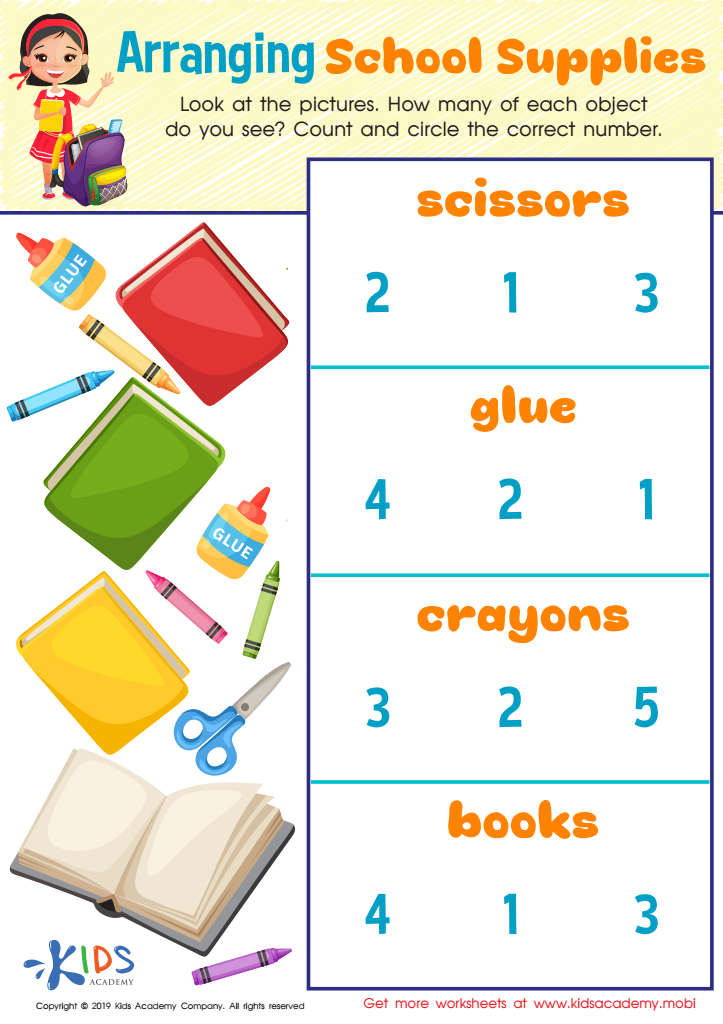
Arranging School Supplies Worksheet
 Assign to My Students
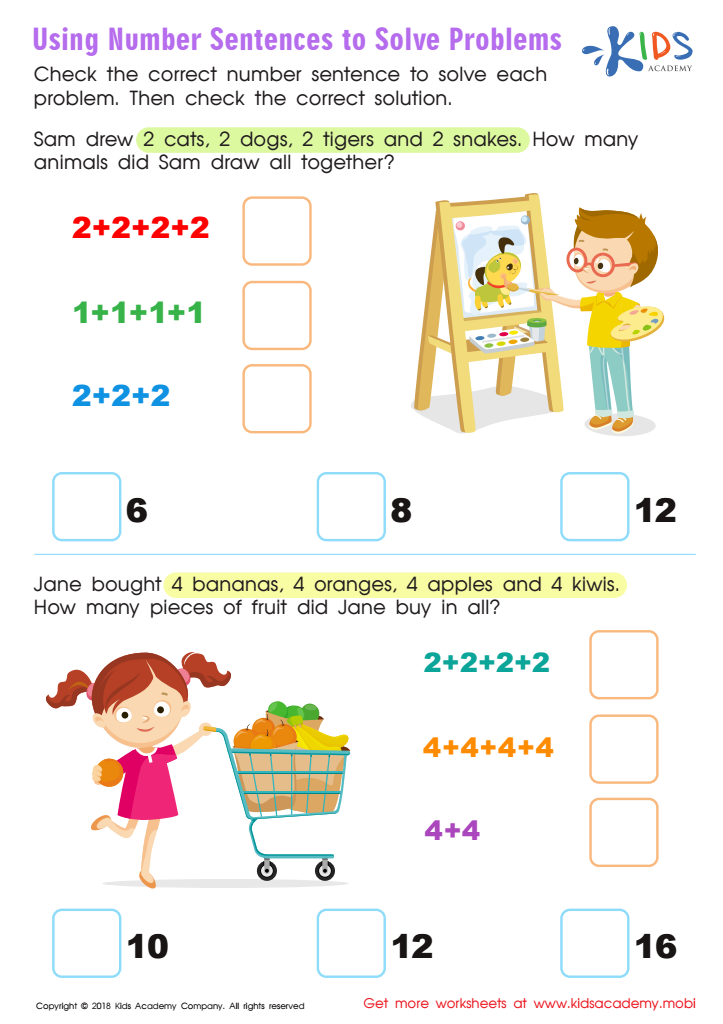
Using Number Sentences to Solve Problems Worksheet
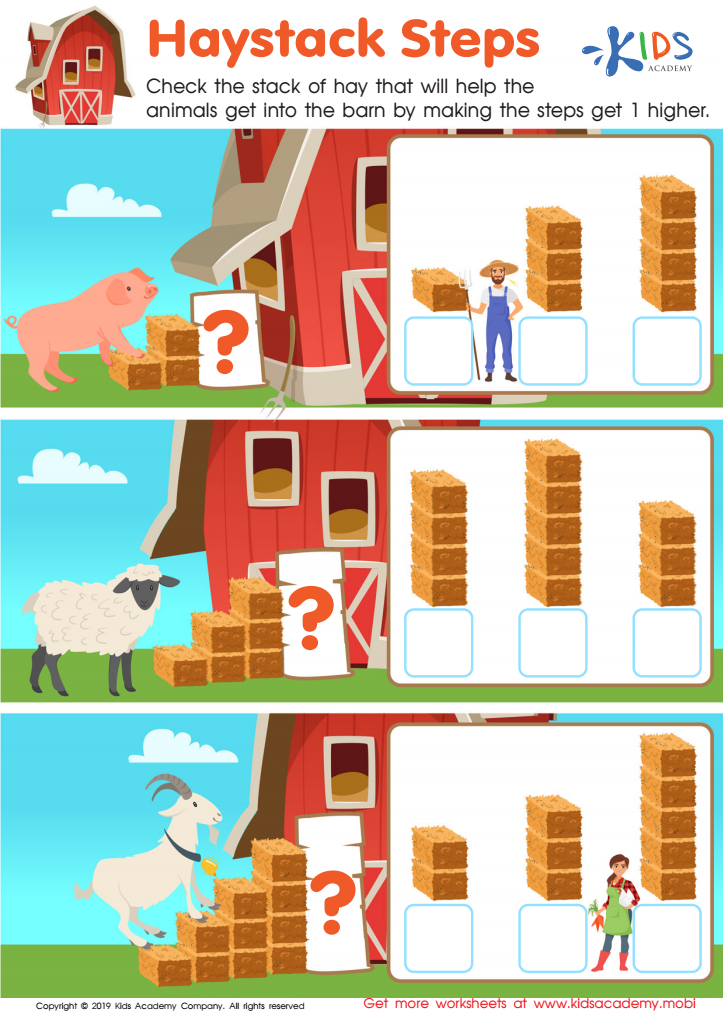
Haystack Steps Worksheet







Understanding sequence numbers is crucial for three-year-olds as it lays the foundation for their future mathematical skills and cognitive development. At this age, children are naturally curious, and engaging them with sequences—such as counting, recognizing patterns, and ordering items—enhances their logical thinking and problem-solving abilities.
For parents and teachers, early exposure to sequence numbers can significantly impact a child's confidence and love for learning. It encourages skills such as memory retention and critical thinking. For instance, when children practice counting objects, they not only learn to recognize numbers but also understand the concept of quantity and ordering, which are essential for mathematics.
Furthermore, introducing size and pattern sequences—like bigger vs. smaller or color patterns—fosters language development and enhances fine motor skills through hands-on activities. Additionally, learning sequences can help bolster social skills, as children often work together on such tasks, promoting collaboration and communication.
In conclusion, integrating sequence numbers into activities for three-year-olds is beneficial for their overall development, preparing them for more complex concepts as they grow. Parents and teachers play a vital role in nurturing these skills, ensuring children are set up for future academic success.








