Vocabulary expansion Building Vocabulary Worksheets for 3-Year-Olds
6 filtered results
-
From - To
Enhance your 3-year-old's language skills with our engaging Vocabulary Expansion Worksheets! Designed specifically for young learners, these worksheets foster language development through fun, interactive activities. Children will explore new words, understand their meanings, and boost their communication skills in an enjoyable way. Each worksheet is age-appropriate, ensuring that your little one stays motivated while learning. Our resources encourage creativity and critical thinking, making vocabulary building a delightful experience. Help your child take their first steps towards literacy with these foundational tools that lay the groundwork for lifelong learning. Unlock the power of words with our downloadable worksheets today!
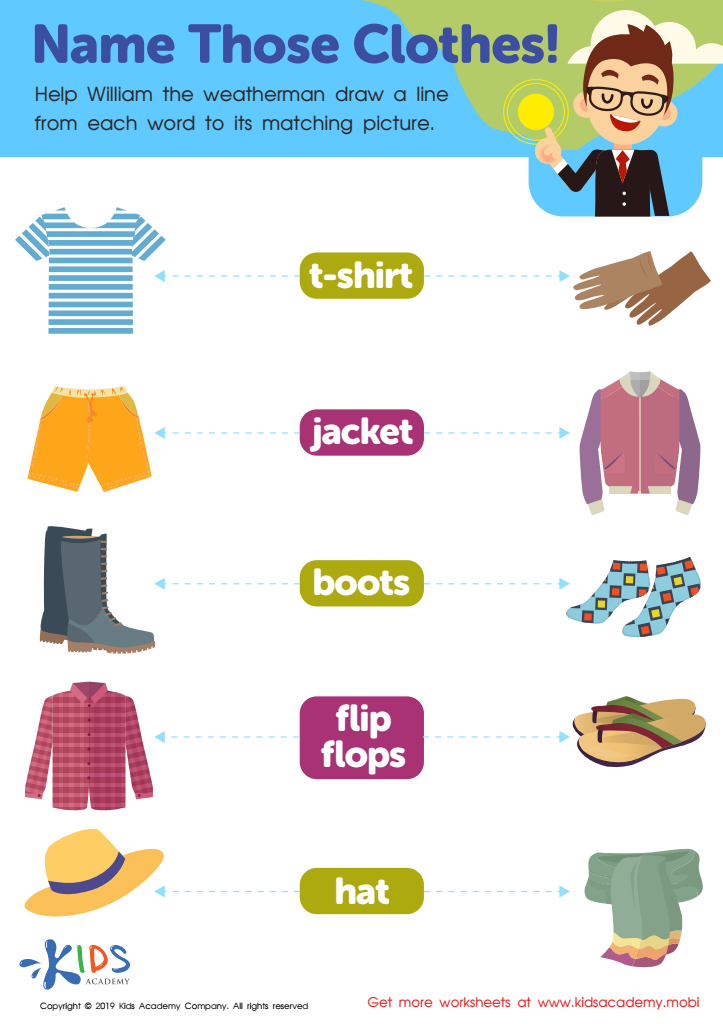
Name Those Clothes Worksheet
 Assign to My Students











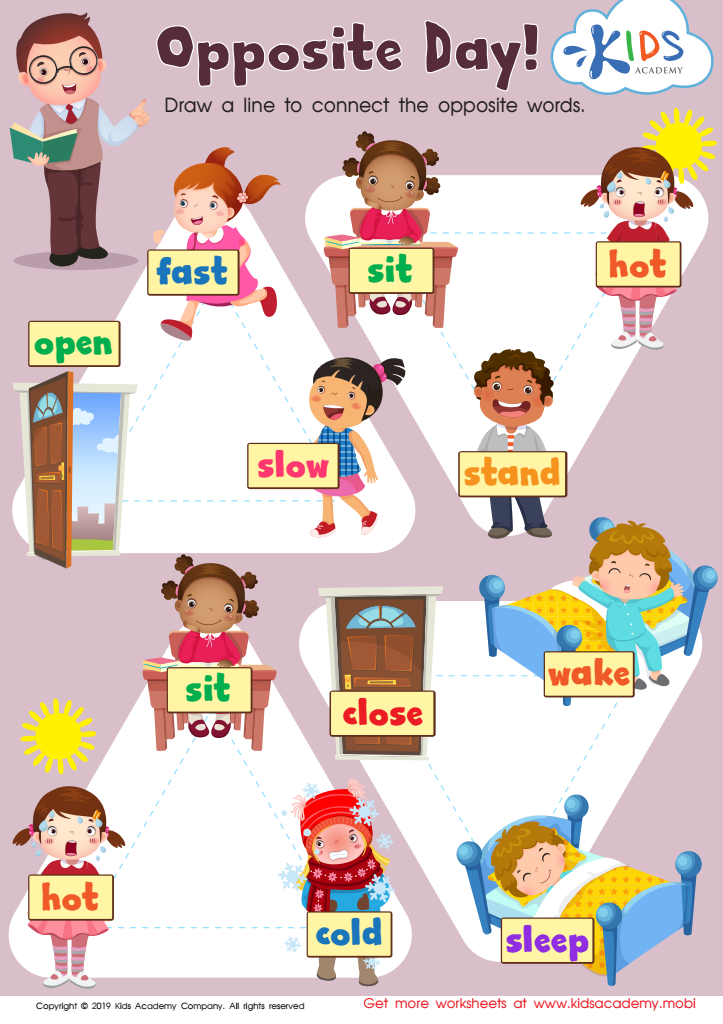
Opposite Day Worksheet
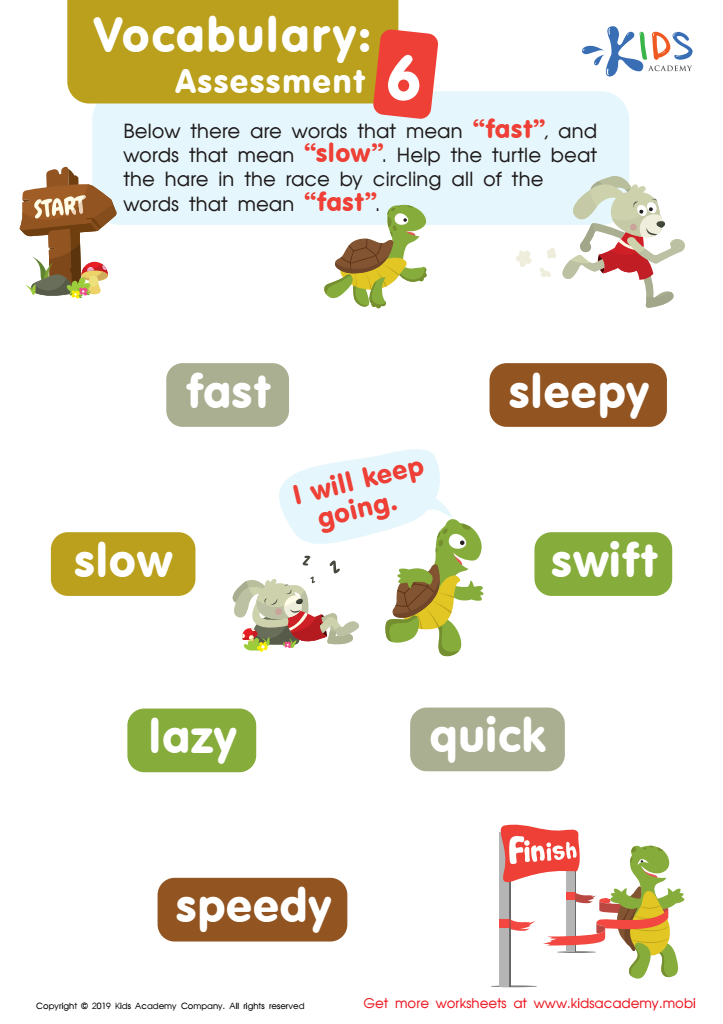
Vocabulary: Assessment 6 Worksheet
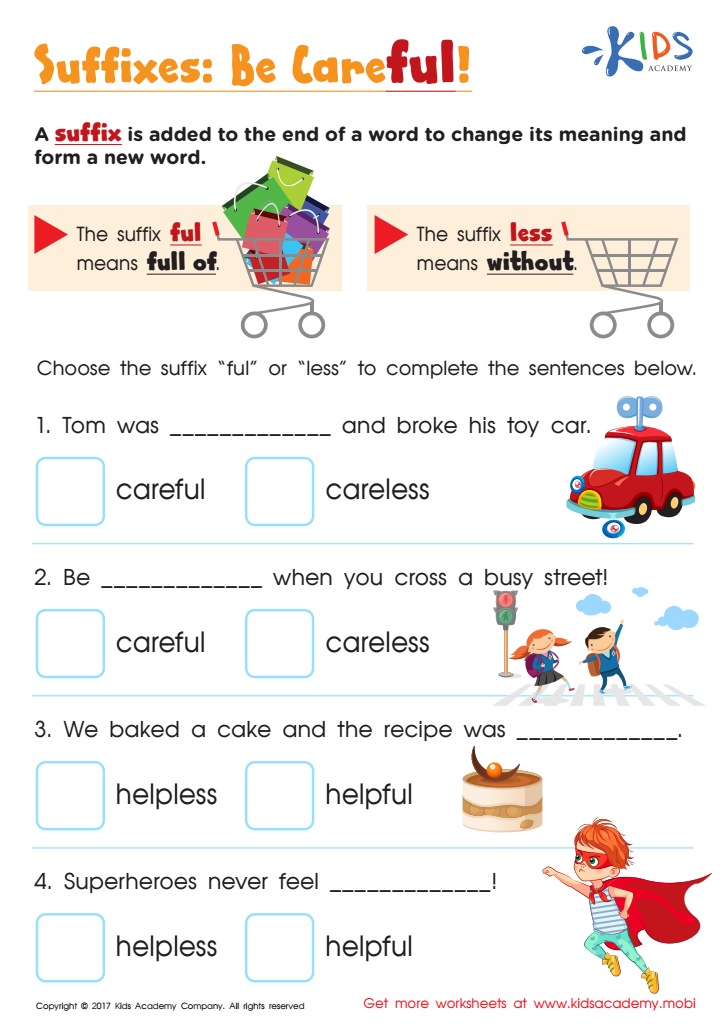
Suffixes Ful and Less Worksheet
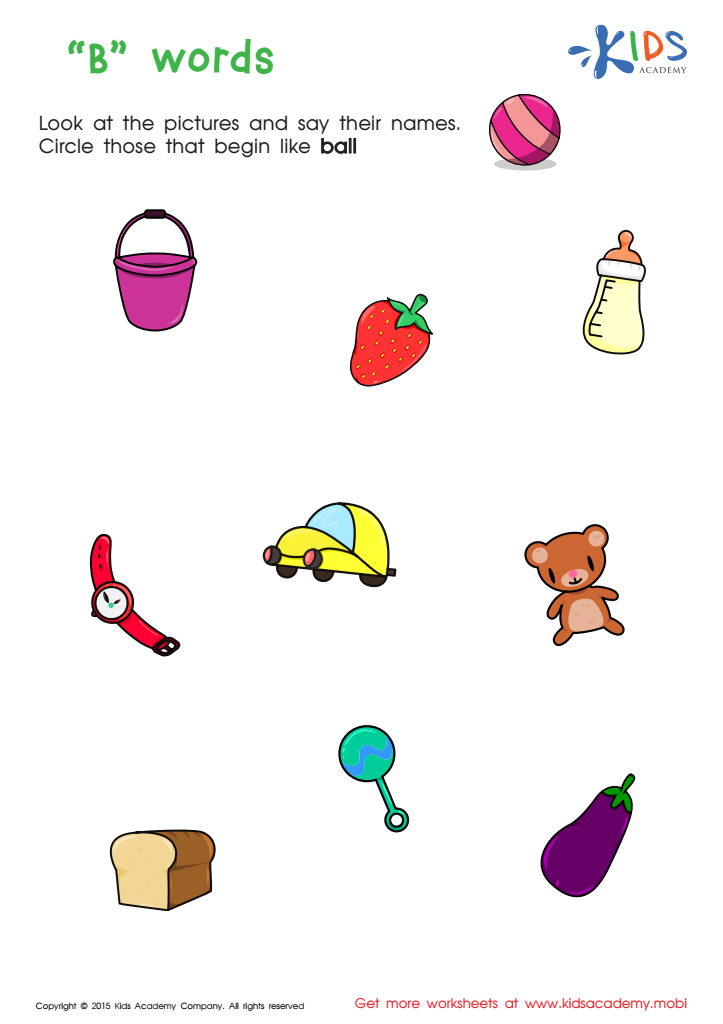
First Words Worksheet
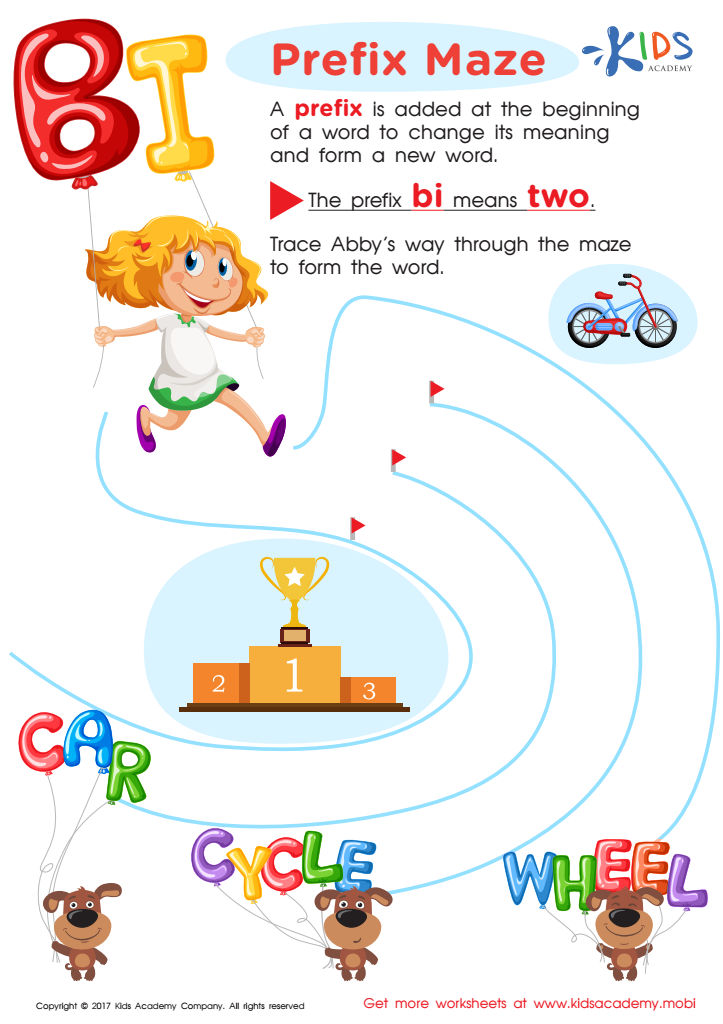
Prefix Bi Words Worksheet








Building vocabulary for 3-year-olds is crucial for their overall development and future academic success. At this age, children are in a critical phase of language development, where exposure to new words enhances their ability to communicate effectively. Engaging in vocabulary expansion helps children articulate their thoughts, express emotions, and interact with their peers, laying a foundation for social skills.
Moreover, a rich vocabulary fosters cognitive growth. Understanding and using new words assists children in comprehending concepts, improving critical thinking abilities. Reading aloud to them, introducing new words during everyday activities, and encouraging conversations about their surroundings can significantly support language acquisition.
Teachers and parents play a vital role in this process. By creating a language-rich environment filled with diverse books, storytelling, and interactive conversations, they stimulate curiosity and a love for language in children. This early investment not only nurtures communication skills but also promotes literacy, setting the stage for success when children enter school. Additionally, a strong vocabulary connects to better performance in reading, writing, and listening as children advance through their education. Thus, prioritizing vocabulary expansion in this formative stage is essential for lifelong learning and confidence in communication.








