Animal recognition Reading Worksheets for 3-Year-Olds
4 filtered results
-
From - To
Welcome to our Animal Recognition Reading Worksheets for 3-Year-Olds! Designed to spark curiosity and foster early literacy skills, these engaging worksheets introduce young learners to the wonderful world of animals. Through fun images and interactive activities, children will recognize different animals and associate them with their names. Our worksheets support vocabulary development, enhance reading comprehension, and improve fine motor skills through tracing and coloring exercises. Ideal for home and preschool environments, these resources inspire a love for learning while making reading enjoyable. Discover endless possibilities for playful learning and help your child take their first steps into literacy with our animal-themed worksheets!
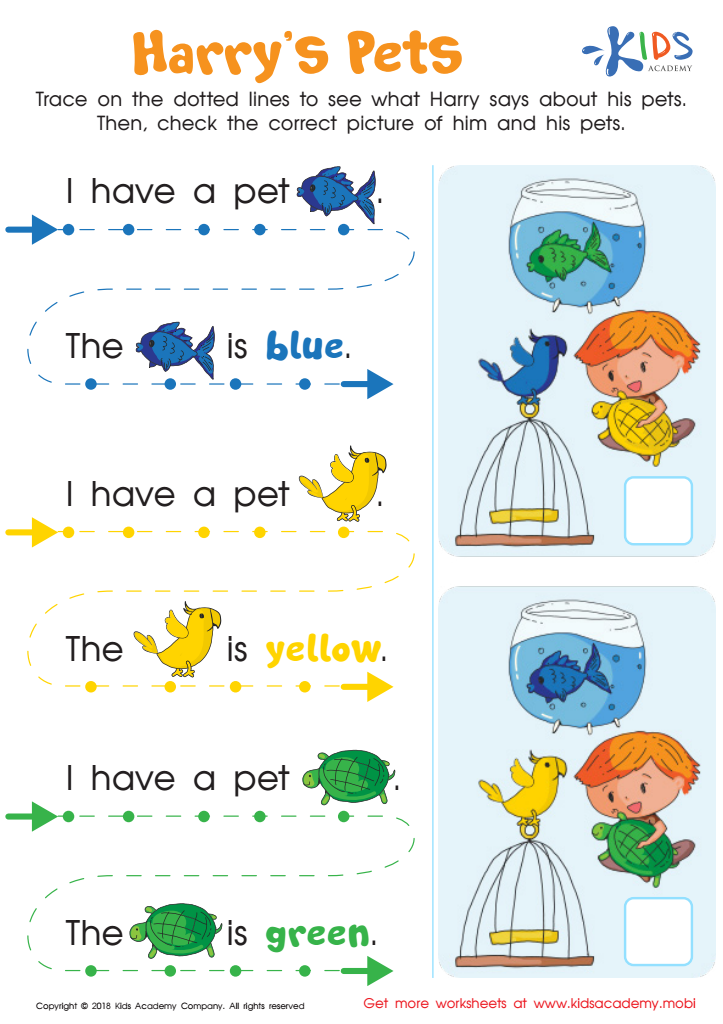
Read from Left to Right: Harry's Pets Worksheet
 Assign to My Students
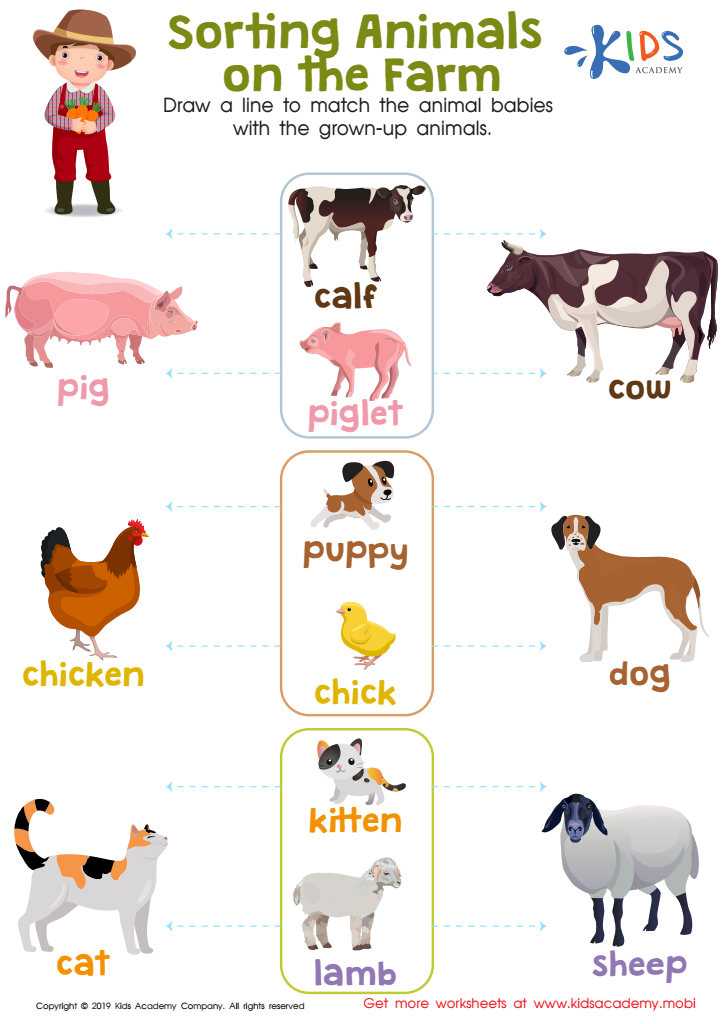
Sorting Animals on the Farm Worksheet
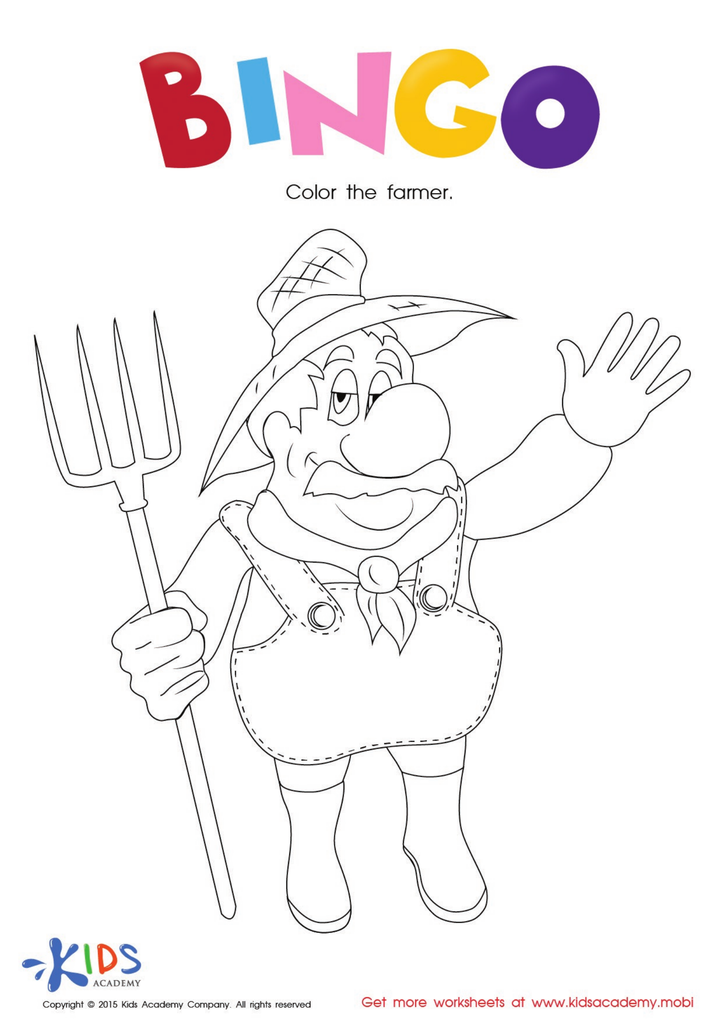
The Bingo Song: Coloring The Farmer Worksheet
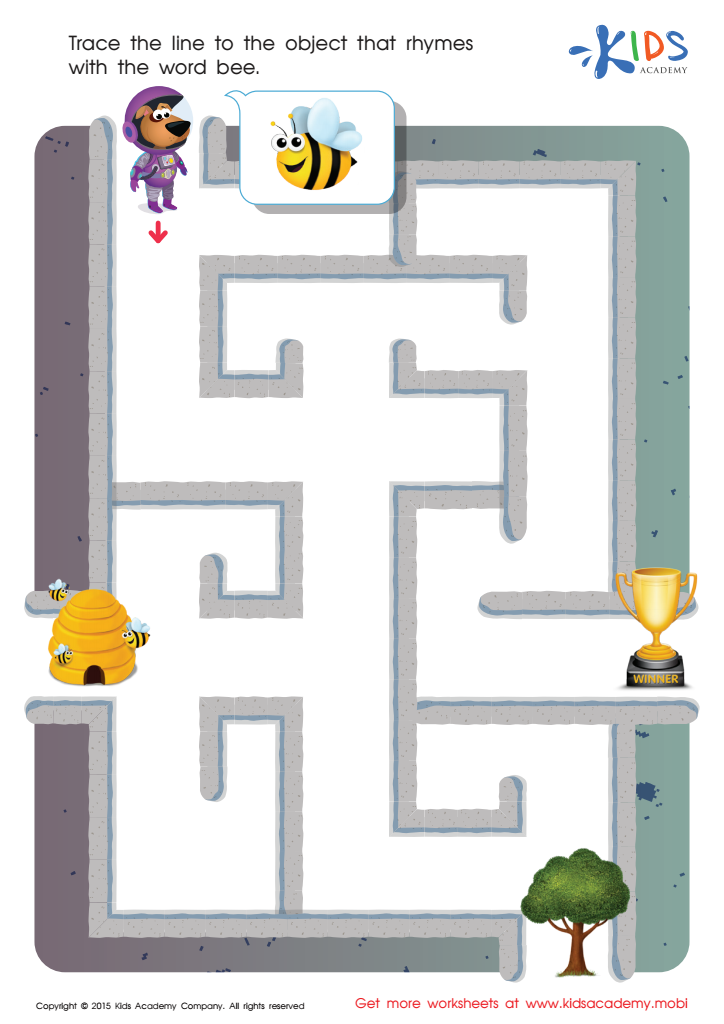
Bee Rhyming Words Worksheet








Animal recognition reading is vital for 3-year-olds because it lays the foundation for cognitive development, language skills, and emotional understanding. At this age, children are naturally curious about the world around them, and animals are a captivating theme that can spark their interest in reading. As they engage with books featuring various animals, children enhance their vocabulary, recognizing names, sounds, and characteristics associated with different species.
Furthermore, animal recognition helps develop critical thinking skills, as children begin to categorize animals, understand their habitats, and differentiate between domestic and wild species. This knowledge fosters curiosity and encourages further exploration of nature and wildlife.
For parents and teachers, incorporating animal recognition into reading activities promotes bonding and communication. It offers shared experiences that can enhance conversations about the world, empathy towards living beings, and environmental awareness. Moreover, engaging with colorful illustrations and playful stories can make reading appealing, developing a lifelong love for books.
Ultimately, animal recognition reading is not just about literacy; it nurtures a child's social, emotional, and cognitive skills, making it an essential aspect of early childhood education that parents and teachers should prioritize.








