Hand-eye Coordination Reading Worksheets for 3-Year-Olds
7 filtered results
-
From - To
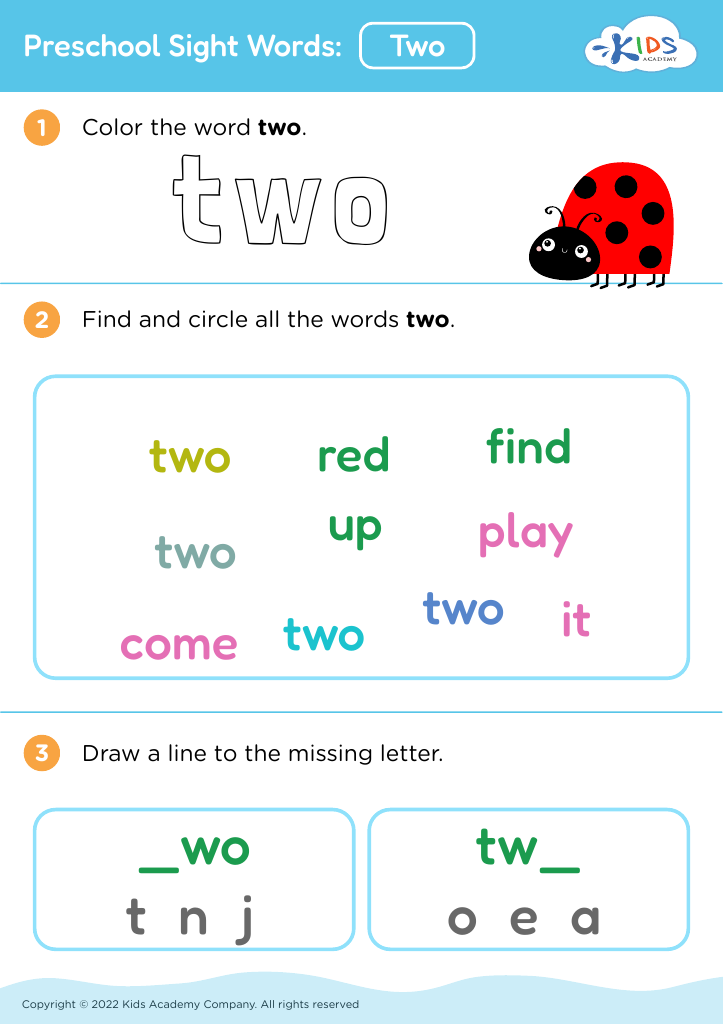
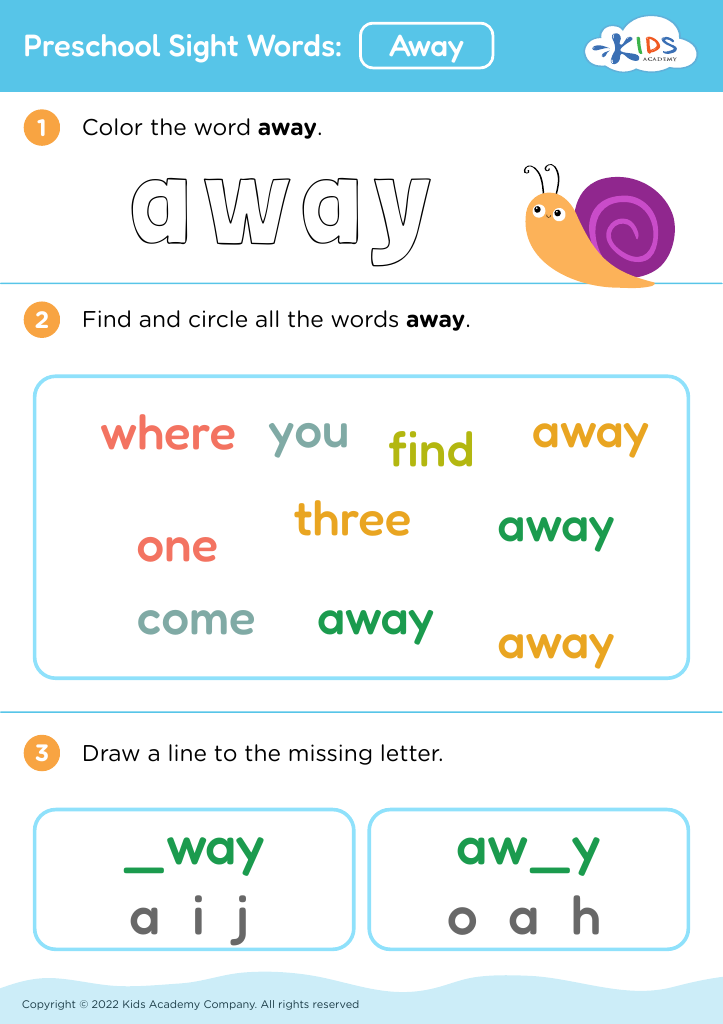
Our Hand-eye Coordination Reading Worksheets for 3-year-olds are designed to enhance early learning while making it fun and engaging. These thoughtfully crafted printables strengthen your child's reading skills, fine motor abilities, and cognitive development through interactive activities. Each worksheet incorporates colorful images and simple tasks to help preschoolers recognize letters, words, and sentences. By connecting reading exercises with hand-eye coordination tasks, these resources build foundational literacy and motor skills crucial for future academic success. Perfect for parents and educators, our worksheets offer a playful approach to early education, ensuring a joyful and effective learning experience for young children.
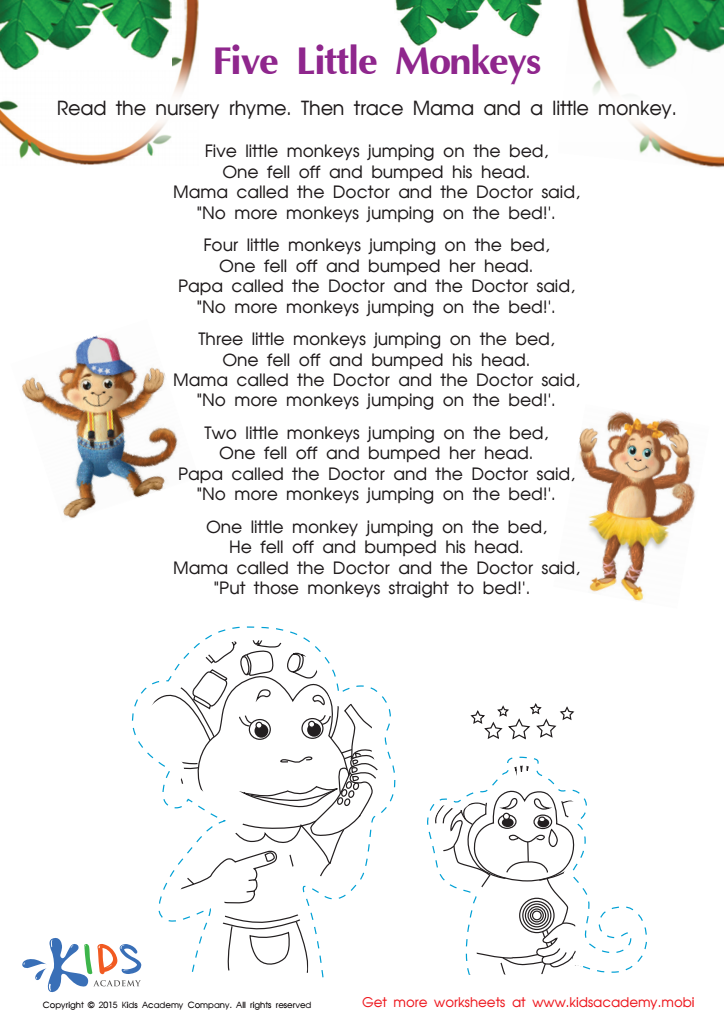
The Five Little Monkeys Nursery Rhyme Worksheet
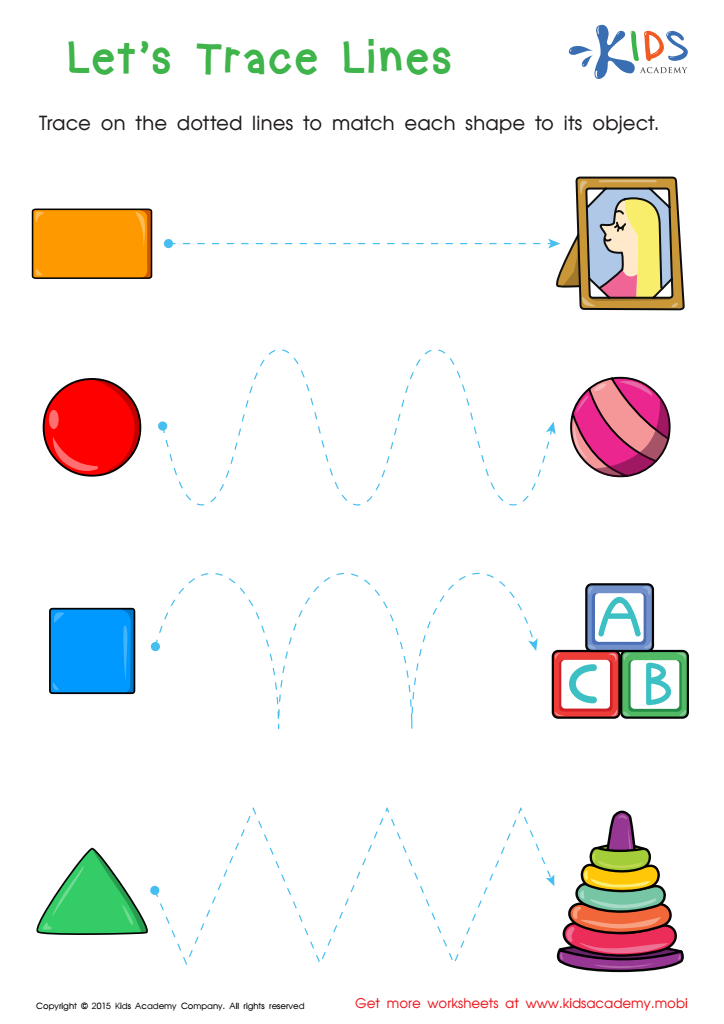
First Words: Let's Trace Lines Worksheet

Long and Short U Worksheet
 Assign to My Students
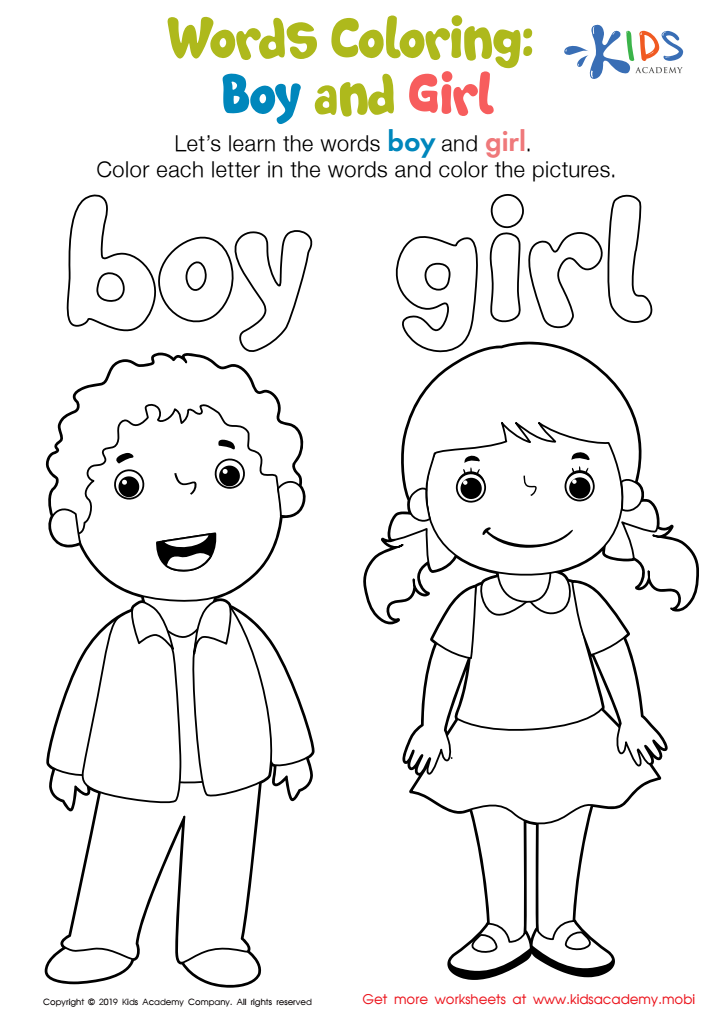
Boy and Girl Words Coloring Worksheet
Assign to My Students
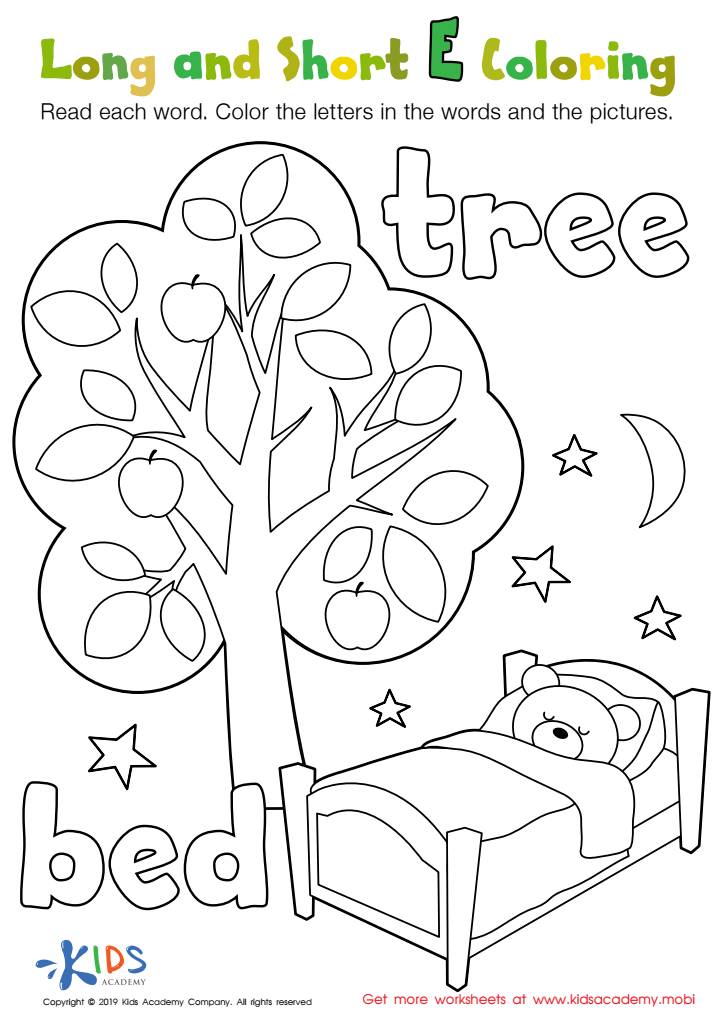
Long and Short E Worksheet
Assign to My Students







Caring about hand-eye coordination in reading for 3-year-olds is vital for several developmental reasons. At this tender age, children are rapidly developing foundational skills that will impact their future learning experiences. Hand-eye coordination, the synchronized control of eye movement with hand movement, plays a crucial role in early reading and writing abilities.
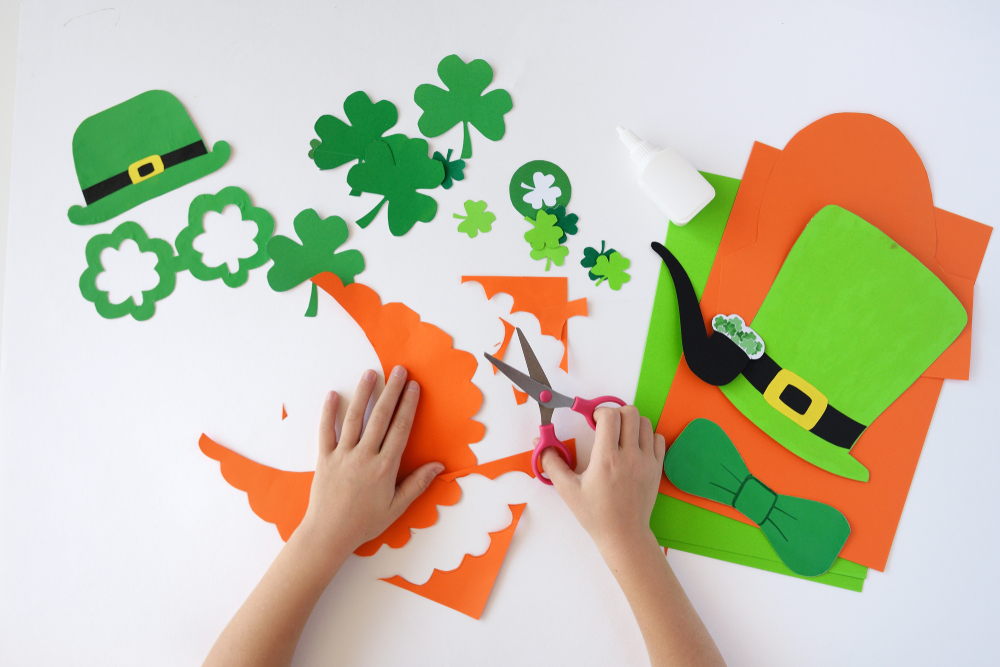
For one, engaging in activities that develop hand-eye coordination, like turning pages or tracing letters, helps children fine-tune their motor skills. This ability is critical for tasks such as keeping their place on a page while reading, or later forming letters while writing. A strong hand-eye connection also benefits their visual and spatial awareness, helping them understand the relationship between objects in their environment—a fundamental skill for recognizing letters and words.
Furthermore, advancements in hand-eye coordination enhance cognitive development. When a child successfully coordinates hand and eye movements, it boosts their concentration and problem-solving abilities, fostering overall intellectual growth.
Parents and teachers should nurture these skills through playful and engaging activities like puzzles, drawing, or interactive storybooks. By prioritizing hand-eye coordination training, they are laying a solid foundation that supports not only reading and academic pursuits but also lifelong learning and everyday tasks.








