Improve reading skills Reading Worksheets for 3-Year-Olds
3 filtered results
-
From - To
Enhance your 3-year-old’s reading skills with our engaging worksheets designed specifically for young learners! At Kids Academy, we understand that early reading is fundamental for lifelong learning. Our printable worksheets focus on developing essential skills such as vocabulary, phonics, and comprehension in a fun and interactive way. Each activity promotes reading readiness through colorful illustrations and age-appropriate exercises, ensuring children stay motivated while they learn. Whether at home or in the classroom, our resources foster a love of reading, laying a solid foundation for your child's educational journey. Explore our worksheets today and watch your little ones blossom into confident readers!
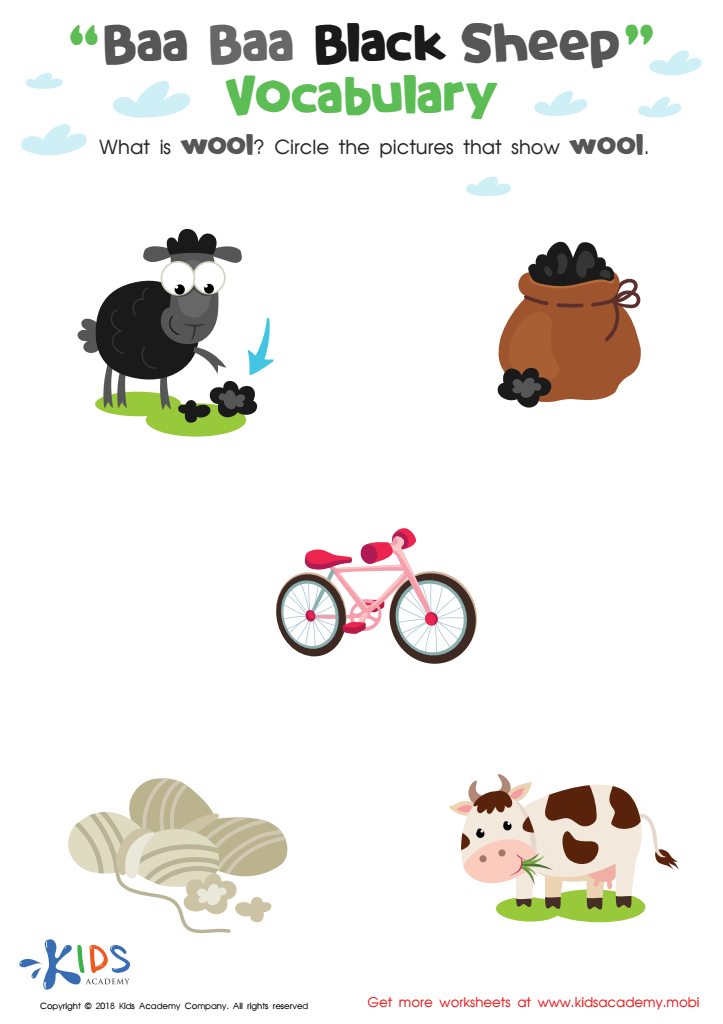
Baa Baa Black Sheep: Vocabulary Worksheet
 Assign to My Students
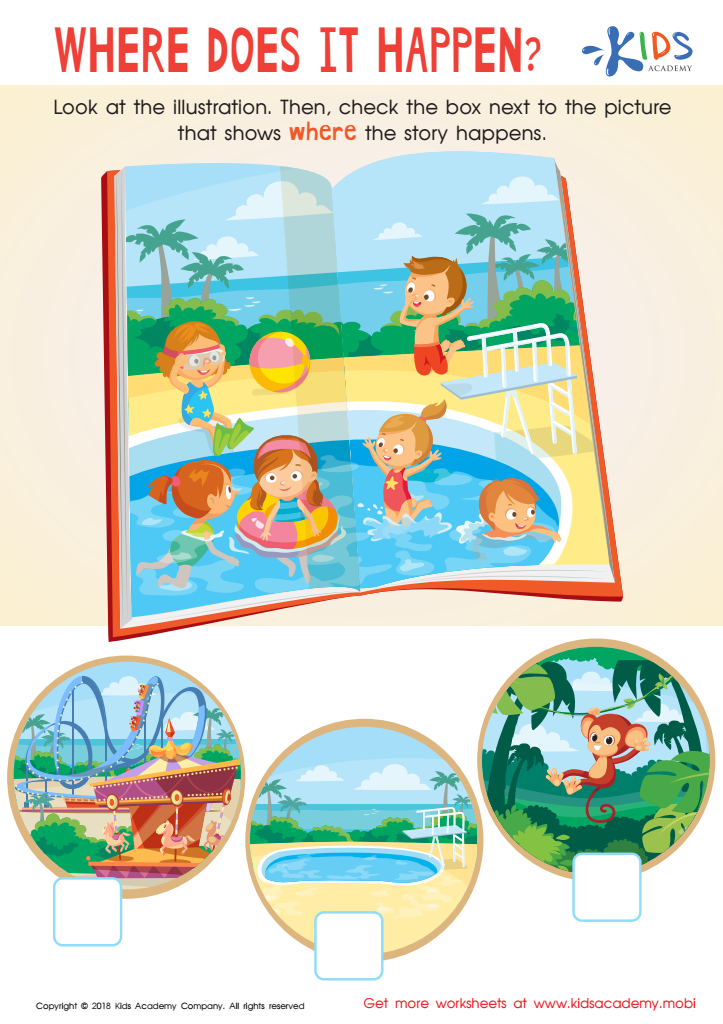
Where Does It Happen? Worksheet
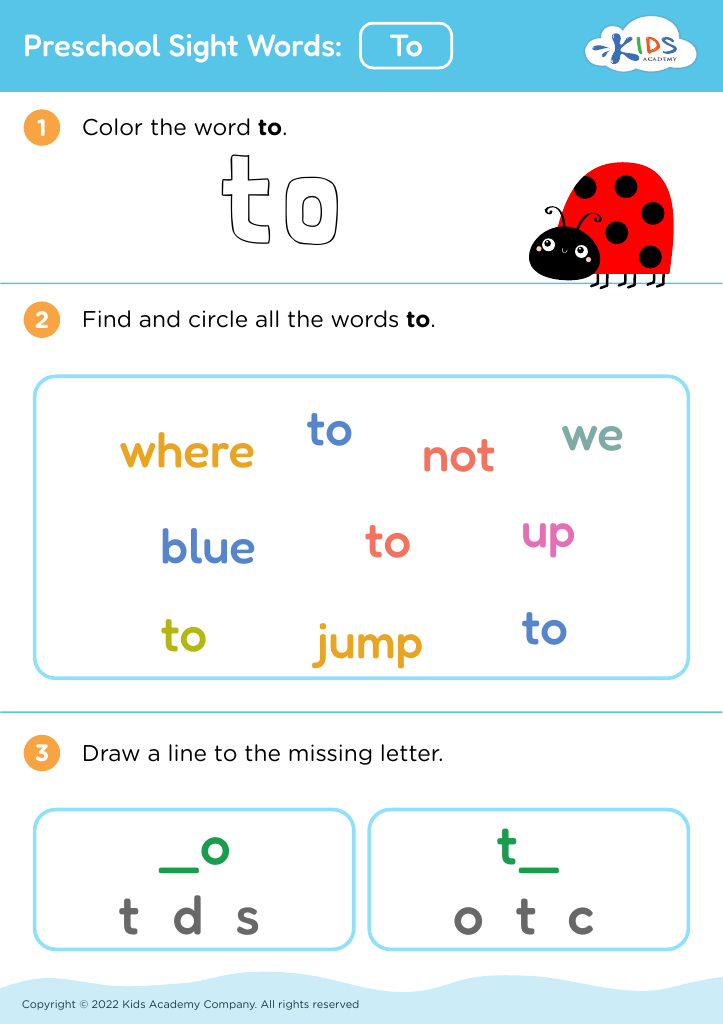





.jpg)

.jpg)
Improving reading skills in 3-year-olds is essential for parents and teachers because early literacy lays the foundation for a child's future academic success and overall development. At this age, children are incredibly receptive to language, and engaging them in reading can significantly enhance their vocabulary, comprehension, and cognitive abilities. Understanding language patterns and mechanics at a young age helps cultivate critical thinking and problem-solving skills.
Moreover, reading fosters a love for learning and instills curiosity. When parents and teachers introduce children to stories, engage them in discussions, and encourage storytelling, they not only build literacy skills but also strengthen their emotional bonds with children. This interactive process improves social skills, empathy, and cultural awareness.
Supporting early reading also helps identify potential learning challenges early on. Recognizing difficulties can lead to timely interventions and tailored support, ensuring that all children canProgressively develop their skills.
Ultimately, promoting reading in the early years signifies a commitment to nurturing a child's mind, character, and love for education. Investing time and resources in early literacy is an investment in a brighter, more informed future for every child.








