Analytical skills Reading Fiction Worksheets for 3-Year-Olds
5 filtered results
-
From - To
Discover our "Analytical Skills Reading Fiction Worksheets for 3-Year-Olds" designed to make early learning engaging and fun! These printable worksheets enhance your child's critical thinking by introducing them to age-appropriate fiction stories. Through fun and colorful exercises, children will develop essential analytical skills such as identifying characters, understanding story sequences, and making simple predictions. Perfect for toddlers ready to explore the magical world of fiction, these worksheets provide a solid foundation for future reading comprehension. Dive into a learning adventure that stimulates young minds and sets the stage for lifelong literacy success! Download your free worksheets today!
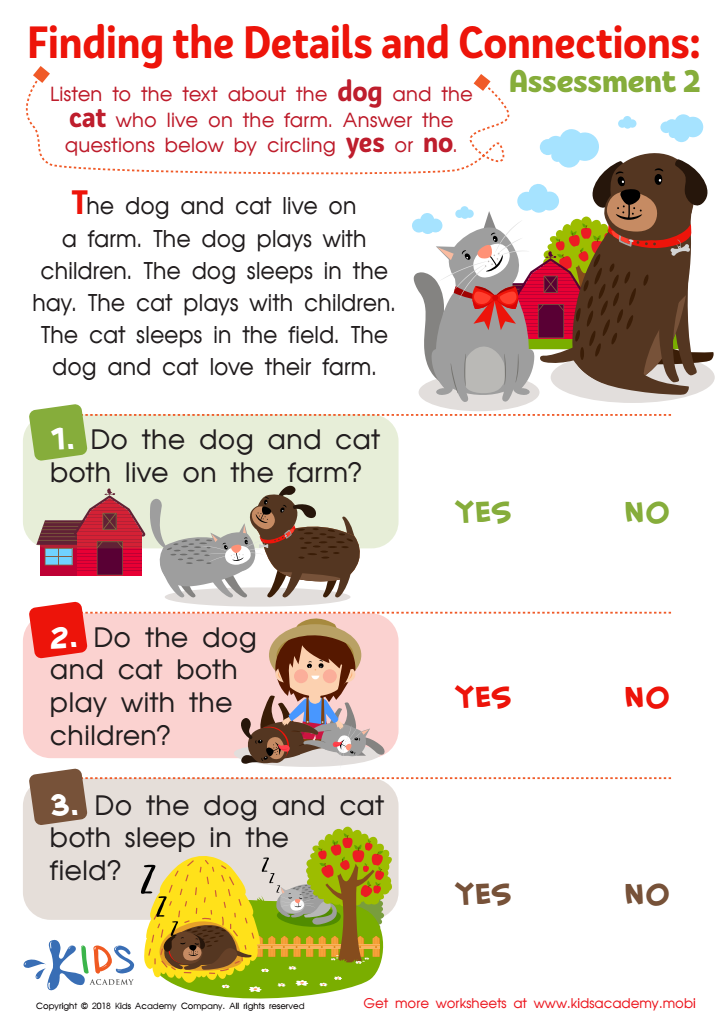
Finding the Details and Connections: Assessment 2 Worksheet
 Assign to My Students
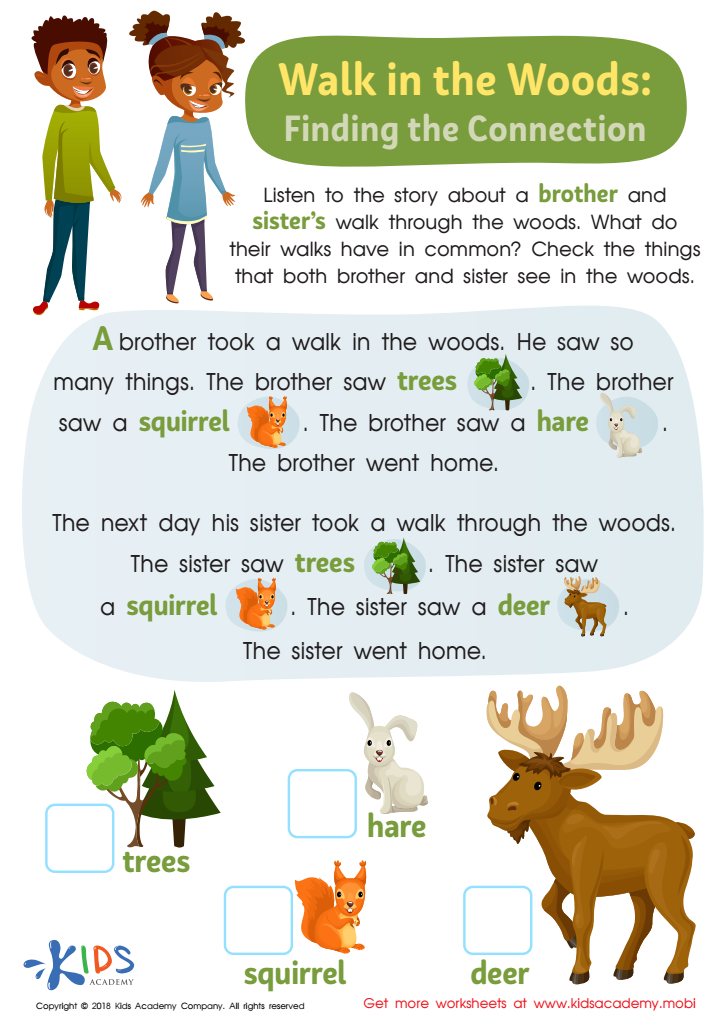
Walk In the Woods: Finding Connections Worksheet
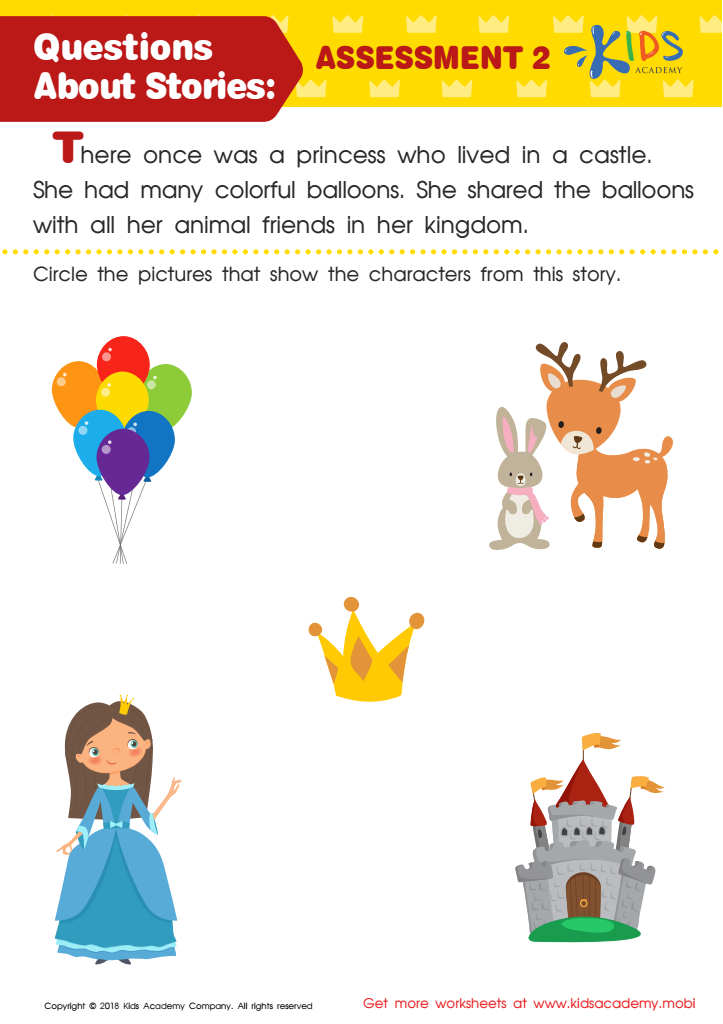
Questions About Stories: Assessment 2 Worksheet
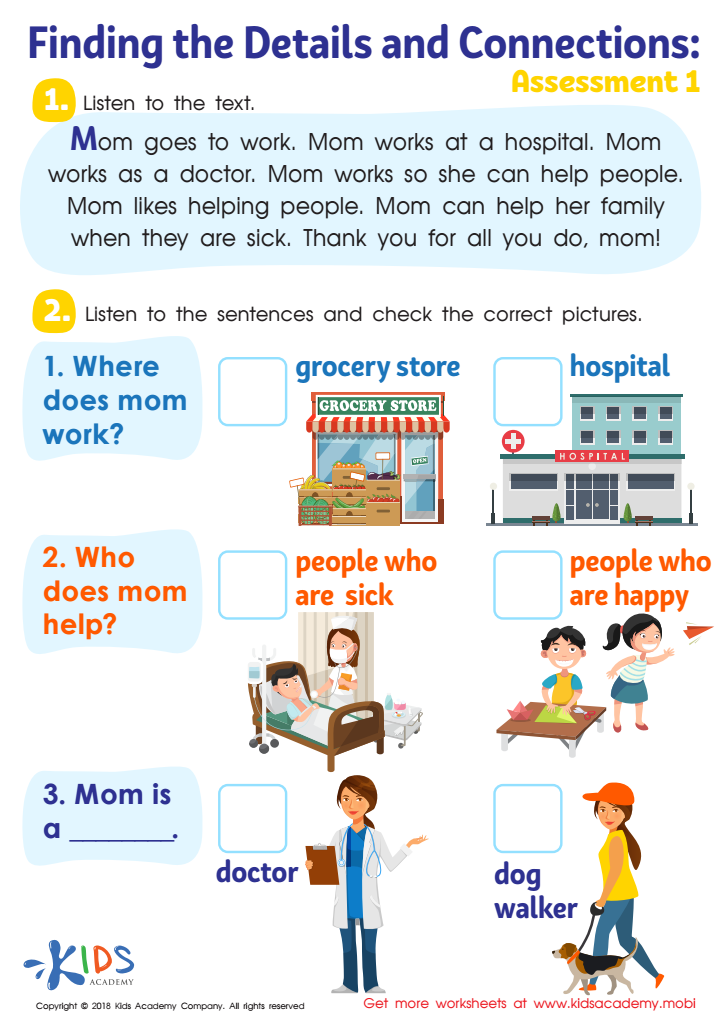
Finding the Details and Connections: Assessment 1 Worksheet

Questions About Stories: Assessment 1 Worksheet




.jpg)


Parents or teachers should care about analytical skills, especially when reading fiction, for 3-year-olds because these foundational years are critical for cognitive development. Reading fiction to young children goes beyond simple entertainment; it allows them to engage with stories actively, enhancing their comprehension and critical thinking abilities. When children explore plot, characters, and settings, they learn to make connections between different story elements and understand sequences, cause and effect, and relationships.
Furthermore, discussing stories encourages children to express their thoughts, develop their vocabulary, and practice language skills. Asking questions like "Why do you think the character did that?" or "What do you think will happen next?" not only stimulates curiosity but also trains them to think analytically.
Additionally, analytical reading can enhance empathy and emotional intelligence. By identifying with characters, children explore different perspectives and feelings, cultivating interpersonal skills that are indispensable in personal and academic settings.
Lastly, these skills lay a foundation for future learning. Analytical thinking early on will help children adapt to various educational challenges, improving their problem-solving abilities and fostering a lifelong love for reading and learning. Thus, nurturing analytical skills through reading fiction is an essential component of cultivating well-rounded, thoughtful, and capable individuals.








