
Story sequencing Reading Fiction Worksheets for 3-Year-Olds
8 filtered results
Difficulty Level
Grade
Age
-
From - To
Subject
Activity
Standards
Enhance your 3-year-old's reading comprehension with our engaging Story Sequencing Reading Fiction Worksheets. Designed specifically for young learners, these worksheets help children understand story structure by organizing events in the correct order. Through colorful illustrations and simple narratives, kids will develop essential skills such as critical thinking and memory retention. Our worksheets not only foster creativity but also encourage a love for storytelling, making learning fun! Perfect for both classroom settings and at-home activities, these resources support early literacy development while nurturing cognitive skills. Explore our collection and watch your child thrive as they master the art of sequencing stories!
Favorites
With answer key
Interactive
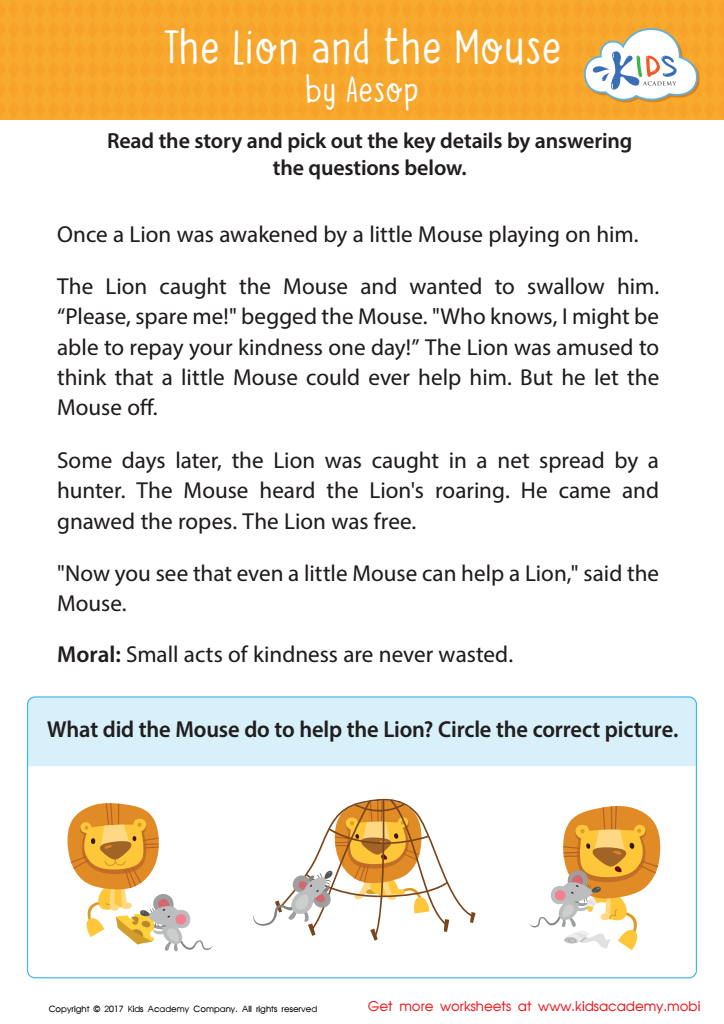
The Lion and The Mouse Sequencing Worksheet
Read the fable "The Lion and the Mouse" and test your child's comprehension skills! Answer the question by selecting the image that best matches the answer. It's a great way to practice reading comprehension.
The Lion and The Mouse Sequencing Worksheet
Worksheet
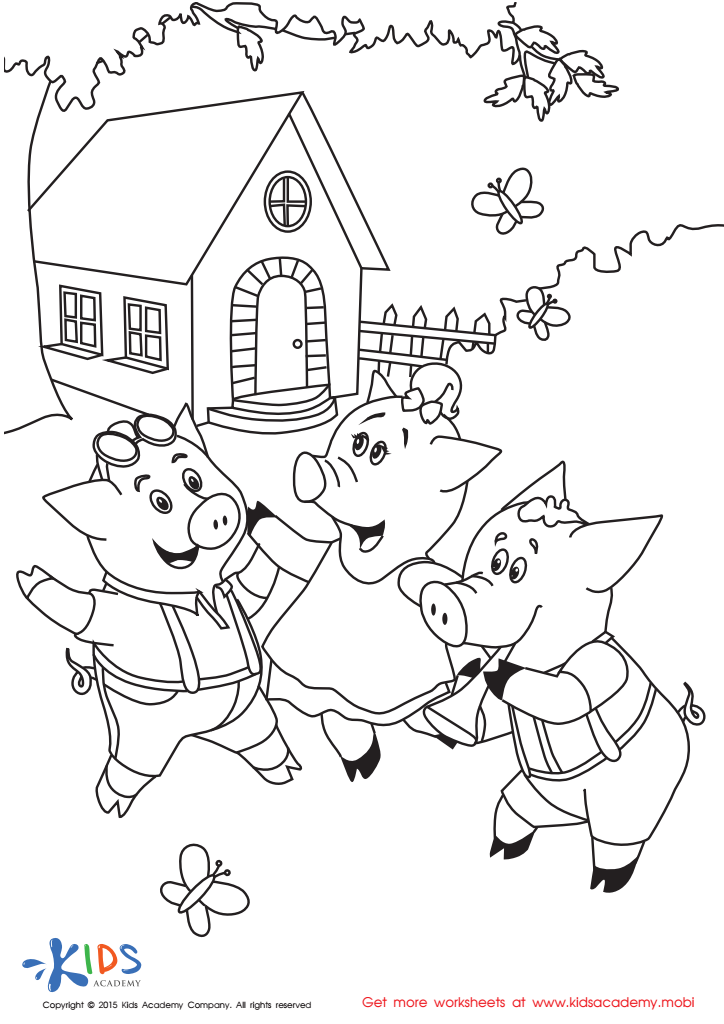
Folktales Printable PDF Worksheet: The 3 Little Pigs
Then, help your child to color the scene with pink piglets, blue sky and green grass. Make the brick house bright and vivid. Enjoy!
Download (PDF)
 Assign to My Students
Assign to My Students
Folktales Printable PDF Worksheet: The 3 Little Pigs
Worksheet
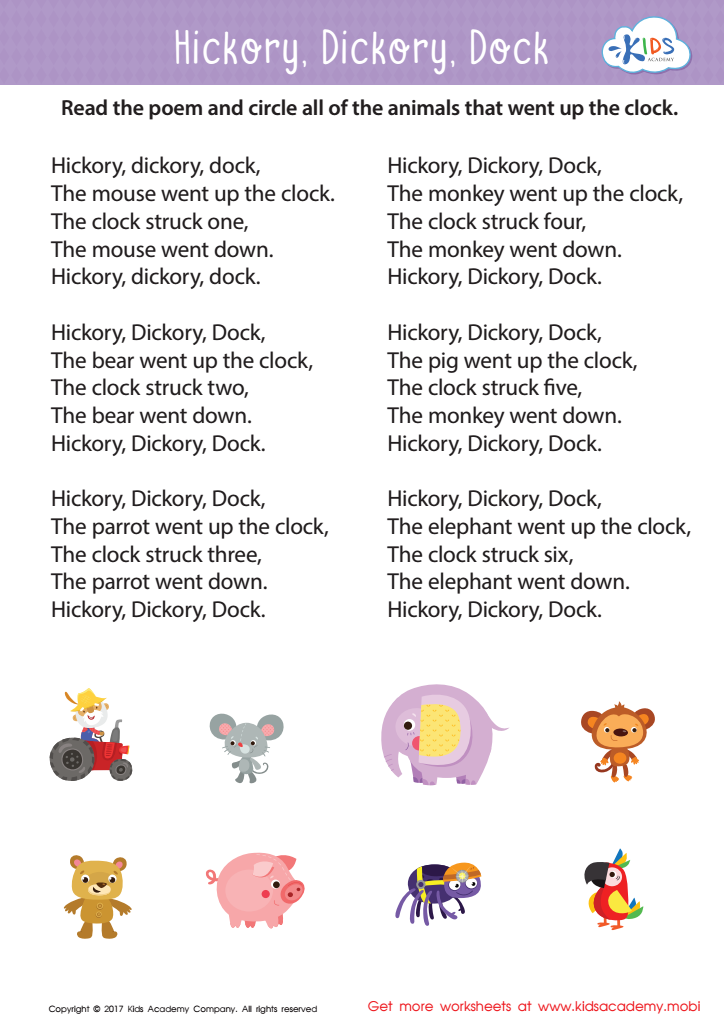
Hickory Dickory Dock Sequencing Worksheet
Help your child boost their reading skills with this fun Hickory Dickory Dock sequencing worksheet! They'll read and identify the animals in the right order, strengthening their story sequencing and comprehension skills.
Hickory Dickory Dock Sequencing Worksheet
Worksheet
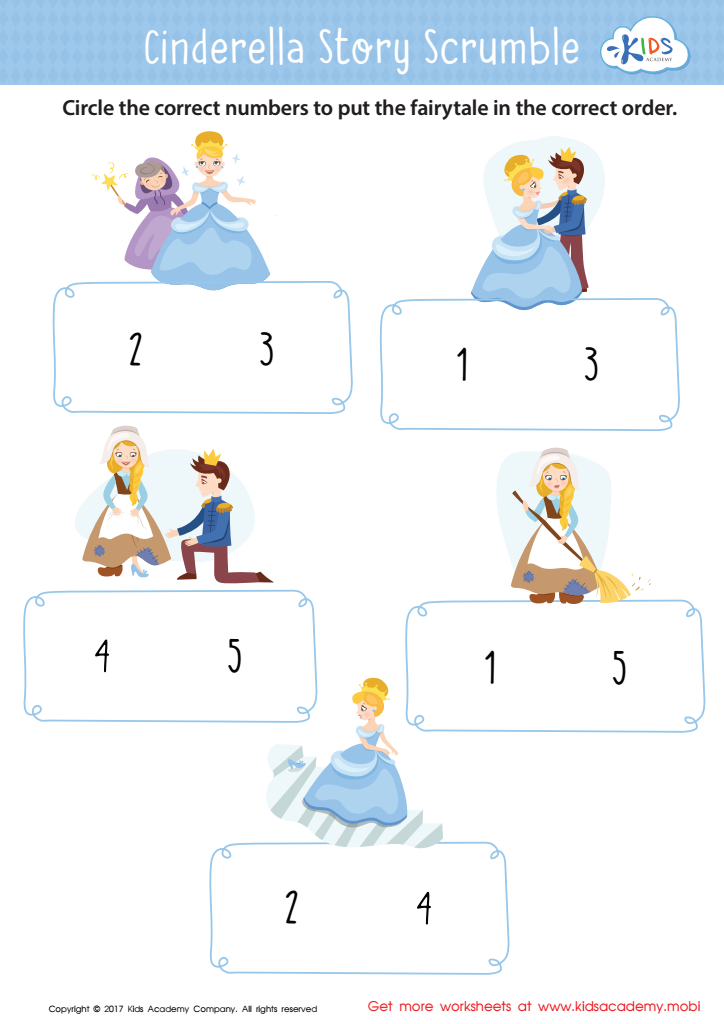
Cinderella Story Sequencing Worksheet
This worksheet helps strengthen reading comprehension skills by getting your child to remember key moments from the Cinderella story. They'll be asked to place pictures in the right order to tell the story.
Cinderella Story Sequencing Worksheet
Worksheet
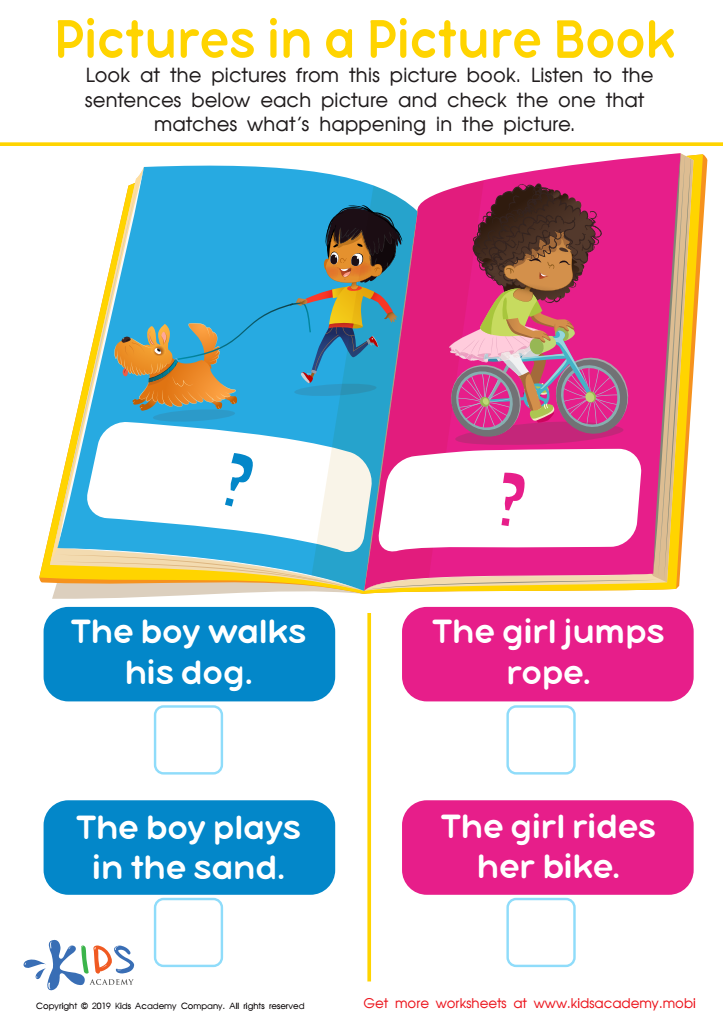
Picture in Books Worksheet
Picture books are popular with students - they're easier to read and understand because of the captions and illustrations. With preschoolers, look at the pictures in the book and read the sentences in the worksheet. Help them choose the one that matches the scene.
Picture in Books Worksheet
Worksheet
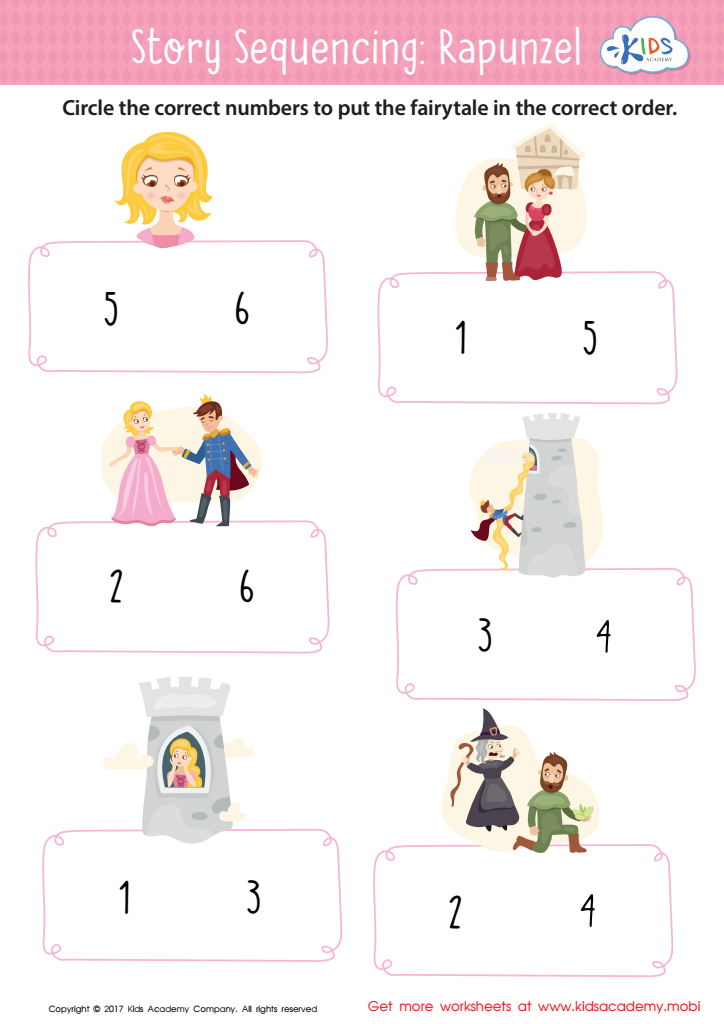
Rapunzel Story Sequencing Worksheet
Enhance your child's reading comprehension and help them sequence story events with this Rapunzel worksheet – it's thrilling and educational! Max 80 words.
Help your child develop their reading comprehension with this exciting Rapunzel story sequencing worksheet! Kids view pictures from the classic fairytale and number them in the right order, reinforcing their understanding of story events. Educational and entertaining!
Rapunzel Story Sequencing Worksheet
Worksheet
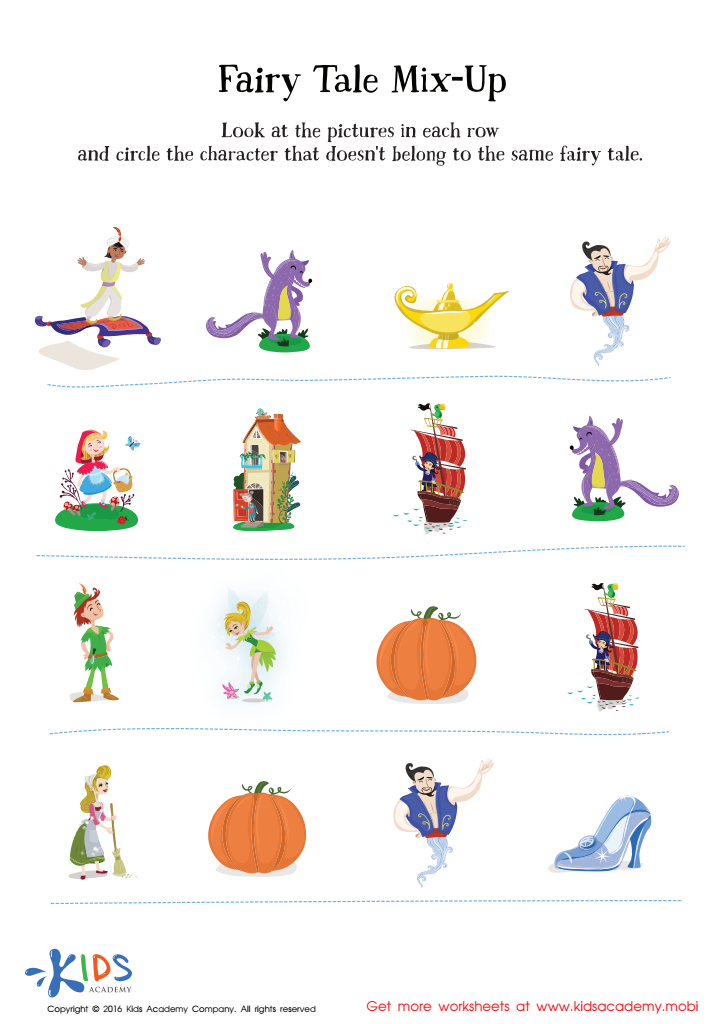
Fairy Tale Worksheet: Story Mix Up
Kids love fairy tales! Encourage your child to engage with their favorite stories using our vibrant worksheet. It'll help sharpen cognitive and comprehension skills, build problem-solving skills, and strengthen classification skills. Beforehand, read or watch the fairy tales and talk about each one's characters and elements. Your child will love the story and time spent together! Print the worksheet and get ready for a magical experience.
Fairy Tale Worksheet: Story Mix Up
Worksheet
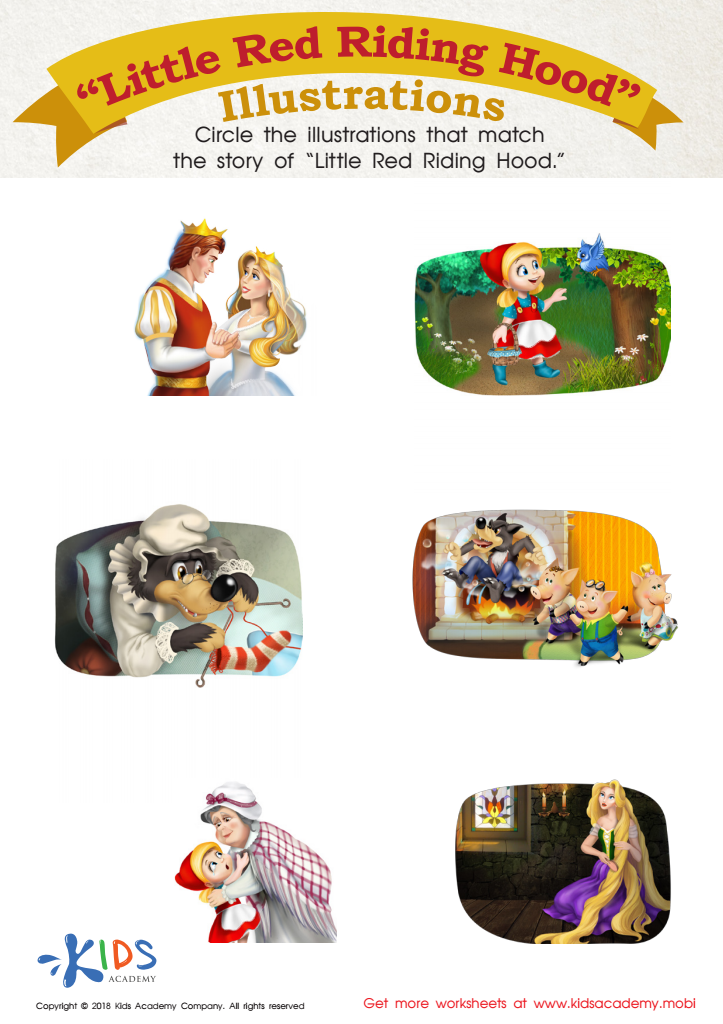
Little Red Riding Hood: Illustrations Worksheet
This worksheet encourages children to analyze illustrations from familiar fairy tales, such as Little Red Riding Hood, and decide which ones match the story and which don't. It's a great way to help them recall and retell stories they've heard or read. Illustrations are important elements that help children comprehend advanced readings.
Little Red Riding Hood: Illustrations Worksheet
Worksheet
Join Kids Academy for Free
Who is primarily going to use this learning content?





.jpg)


Story sequencing is an essential aspect of early literacy development, particularly for 3-year-olds. When parents and teachers engage young children in story sequencing, they help improve comprehension skills and narrative understanding. This process involves arranging events in the order they occur in a story and encourages critical thinking. By grasping the sequence, children learn to anticipate plot outcomes and make predictions, enhancing their ability to connect ideas and themes.
Participating in story sequencing activities fosters language development. As children articulate sentences about events and characters, they expand their vocabulary and improve verbal skills. Furthermore, sequencing encourages imagination; children can create alternative endings or re-imagine the story, which nurtures creativity.
Additionally, parents and teachers play a pivotal role in modeling how to sequence stories, demonstrating effective storytelling techniques. This engagement strengthens the bond between adult and child, reinforcing not just communication skills, but also emotional connections through shared reading experiences.
Lastly, fostering story sequencing aligns with essential early childhood educational standards, providing a strong foundation for academic success in reading and storytelling as children advance in their education. Investing in these skills now sets the stage for lifelong readers and learners.








