Vocabulary enhancement Reading Fiction Worksheets for 3-Year-Olds
5 filtered results
-
From - To
Introducing our Vocabulary Enhancement Reading Fiction Worksheets for 3-Year-Olds! Designed to support early literacy, these engaging worksheets blend fun with learning. Young children will delve into captivating stories that inspire curiosity and creativity while expanding their vocabulary. Each worksheet features age-appropriate activities that encourage word recognition, comprehension, and language development in a playful manner. Perfect for preschool educators and parents alike, these resources make reading enjoyable and help nurture a love for literature from an early age. Boost your child’s vocabulary and cognitive skills all while exploring delightful tales! Start your journey toward enhanced language development today!
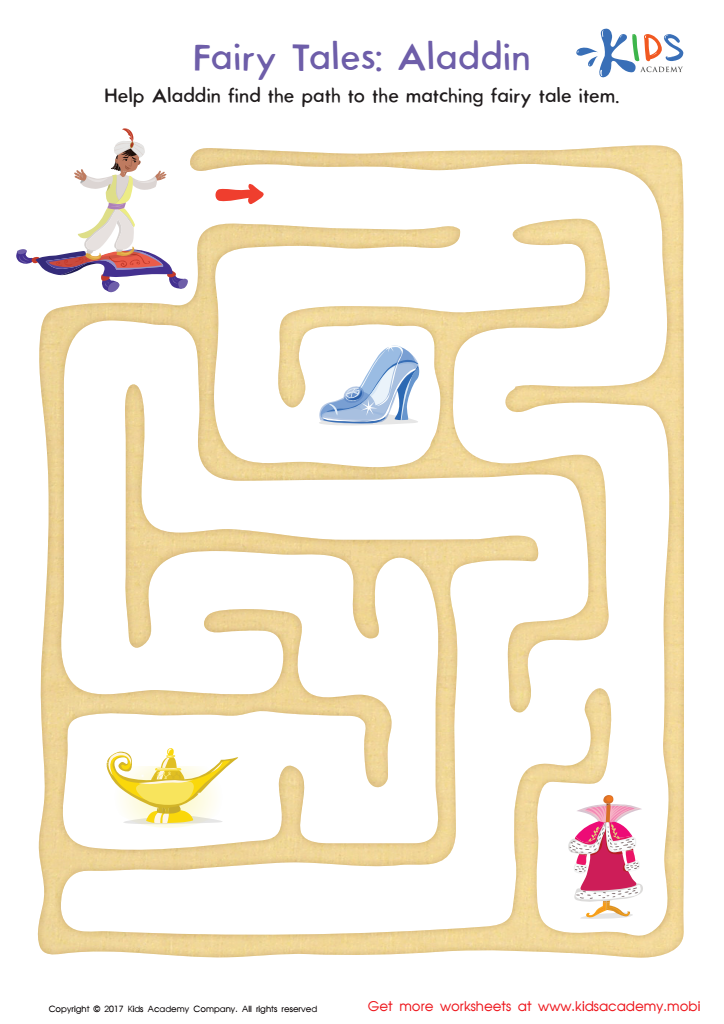
Fairy Tales Aladdin Printable
Folktales Printable PDF Worksheet: The 3 Little Pigs
 Assign to My Students
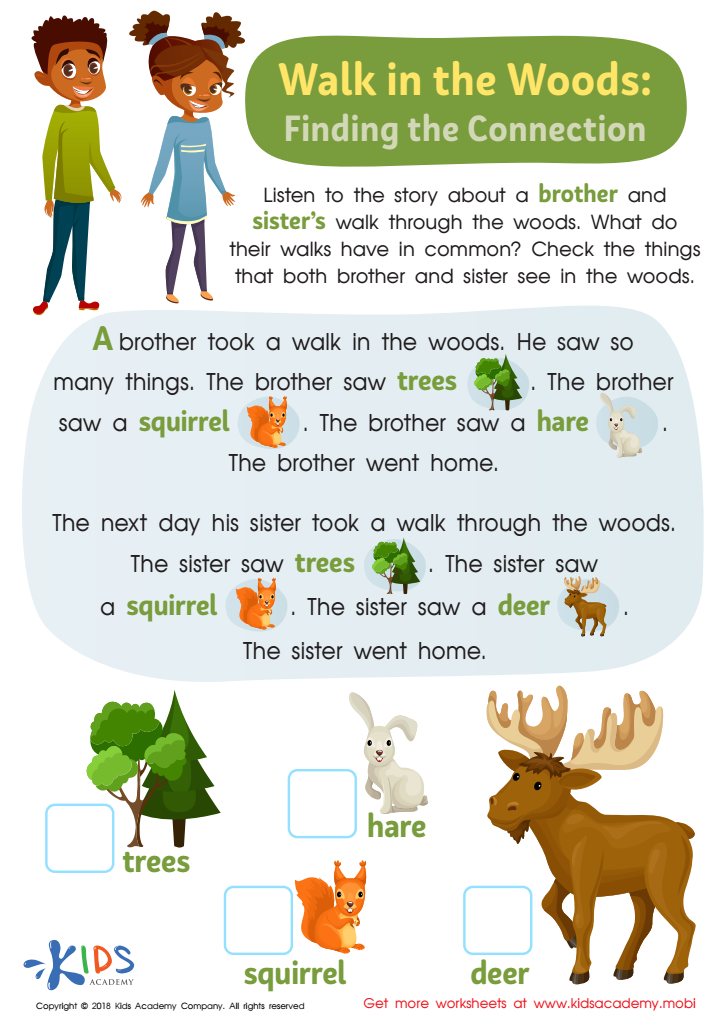
Walk In the Woods: Finding Connections Worksheet
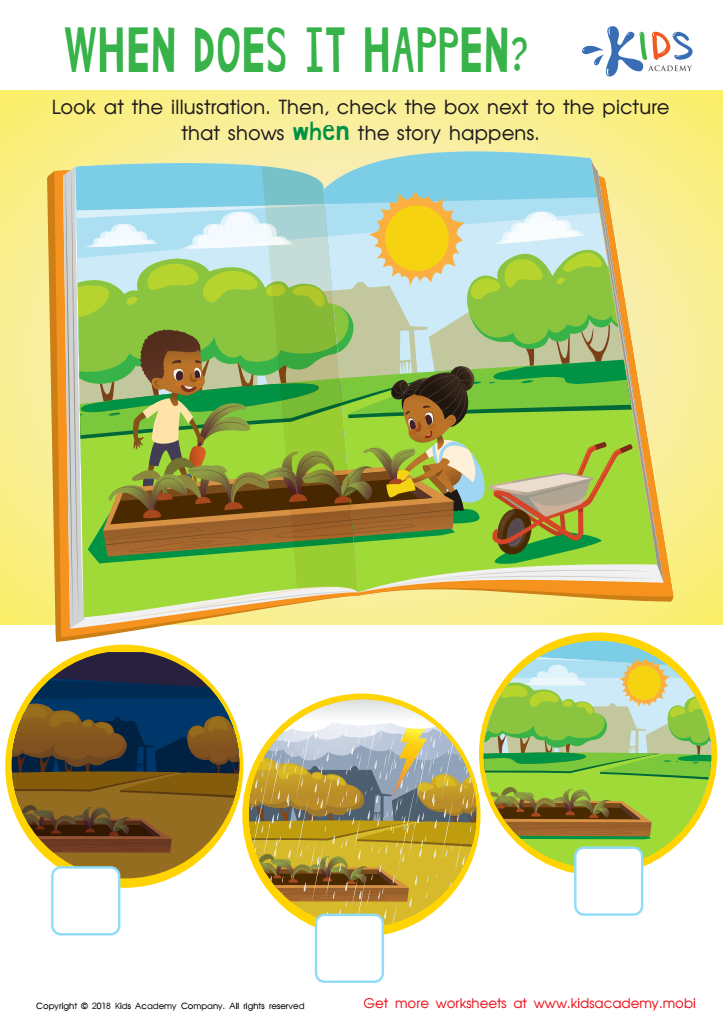
When Does It Happen? Worksheet
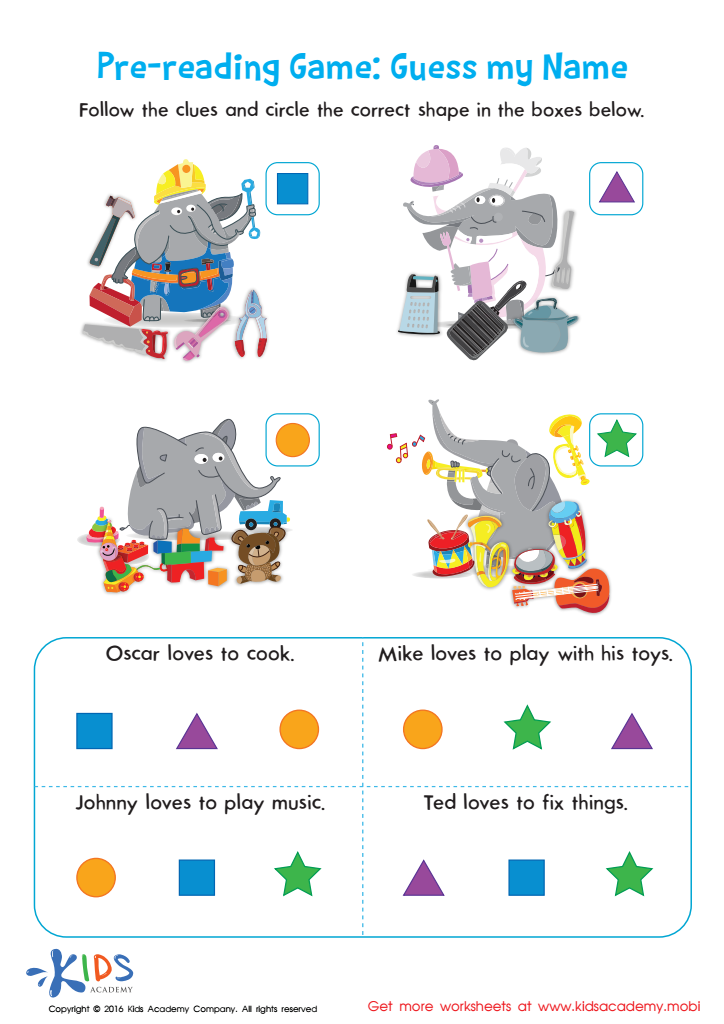
Pre Reading Worksheet Guess My Name








Vocabulary development in early childhood is crucial for fostering a lifelong love of learning and literacy. For three-year-olds, reading fiction is particularly valuable. Engaging children in stories exposes them to new words and phrases within rich, imaginative contexts. This helps them learn the meanings of words better than through isolated lessons, as contextually grounded exposure enhances comprehension.
Moreover, reading fiction encourages creativity and critical thinking, as children are invited to envision characters, settings, and plots. Such imaginative engagement not only ignites curiosity but also nurtures emotional intelligence by enabling them to explore different perspectives and feelings.
Parents and teachers should prioritize vocabulary enhancement for young learners. Enhanced vocabulary skills not only improve communication abilities but also set the foundation for academic success. Children with a robust vocabulary are more proficient in expressing themselves and understanding others, which contributes to better social interactions and building connections with peers and adults alike.
Additionally, this practice fosters a positive reading habit from an early age. Regular exposure to literature helps cultivate concentration and listening skills, critical for school readiness. Ultimately, investing in vocabulary enhancement through reading can transform a child’s future, equipping them with the tools they need to thrive in various aspects of life.








