Rhyming skills development Rhyming Words Worksheets for 3-Year-Olds
3 filtered results
-
From - To
Enhance your 3-year-old's literacy skills with our engaging Rhyming Words Worksheets! Designed specifically for preschoolers, these worksheets foster a love for language by introducing young learners to the joy of rhymes. Through fun and interactive activities, your child will develop essential phonemic awareness, improving their ability to recognize and produce rhyming words. Each worksheet features colorful illustrations and simple exercises that keep your little ones entertained while they learn. Perfect for home or in the classroom, our rhyming worksheets help build foundational reading skills, laying the groundwork for future literacy success. Watch your child's confidence in language blossom!
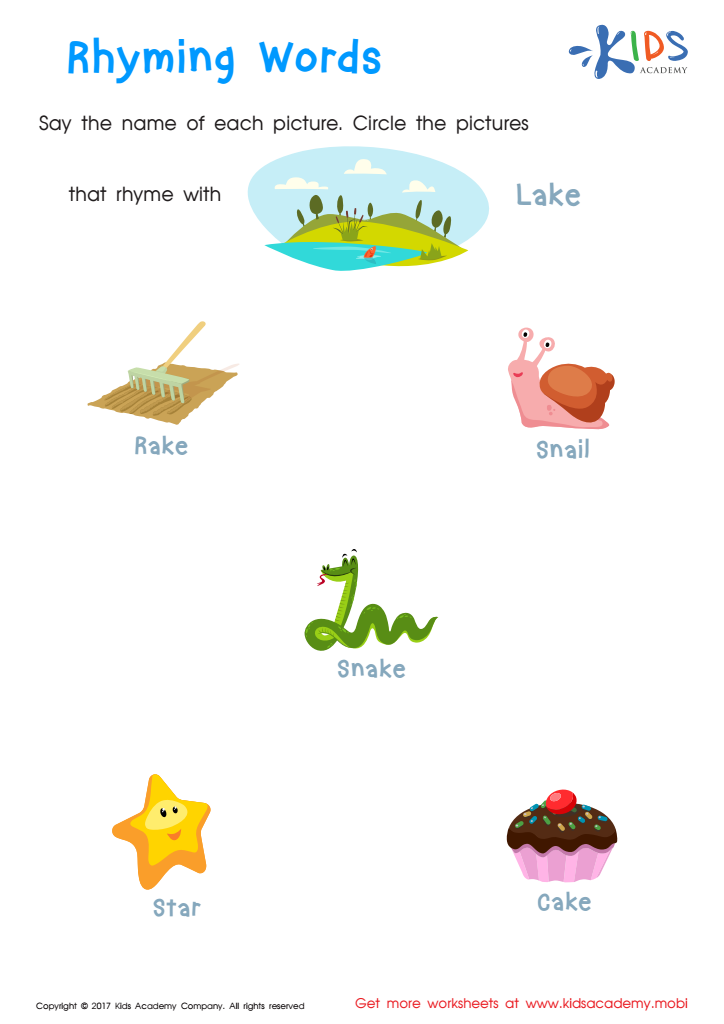
Rhyming Words Rhyming Worksheet
 Assign to My Students
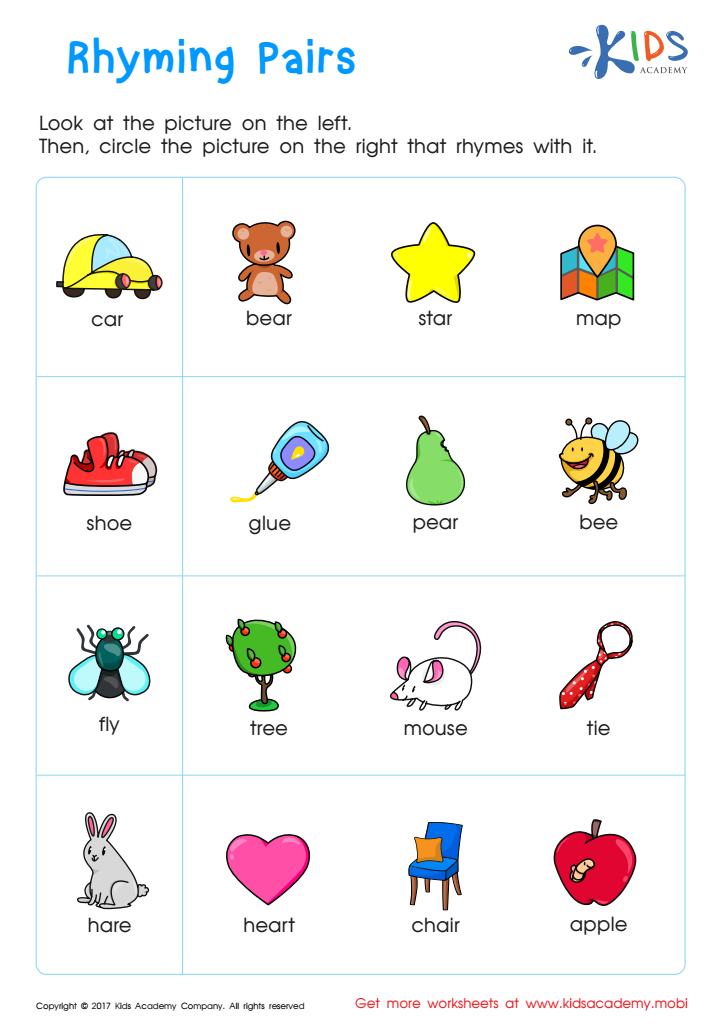
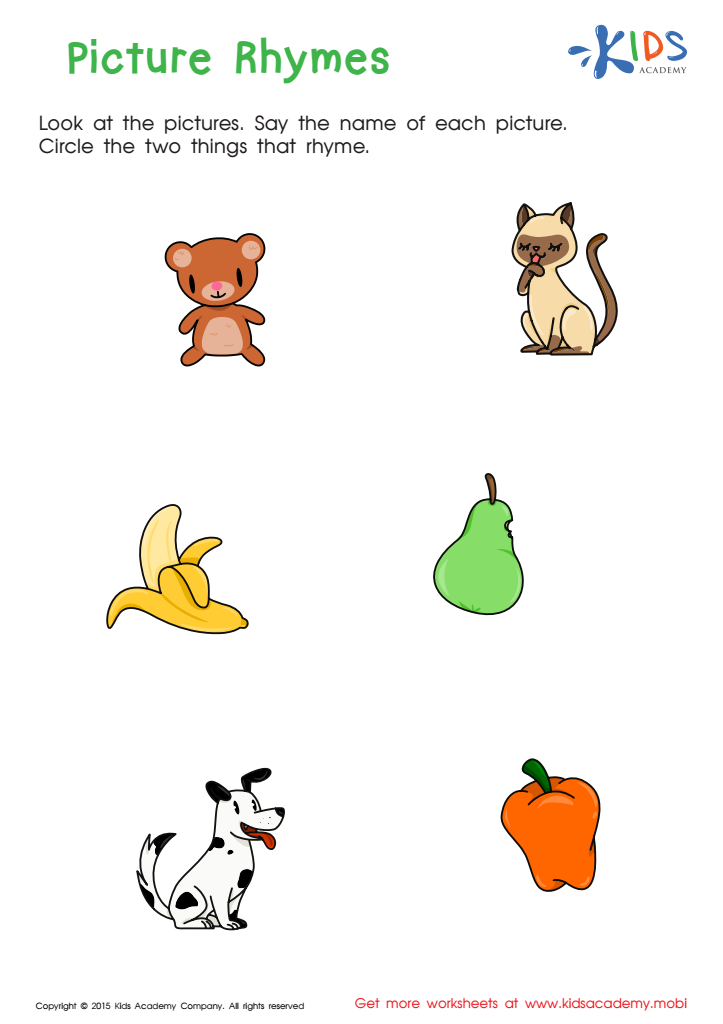
First Words: Picture Rhymes Worksheet


.jpg)





Rhyming skills development is essential for 3-year-olds as it lays the foundation for literacy and language skills. When children engage with rhymes, they sharpen their phonemic awareness, the ability to hear, identify, and manipulate sounds in words. This skill is critical for learning to read because it helps children decode words more easily. Moreover, practicing rhymes enhances vocabulary and encourages expressive language.
Rhyming activities, such as reading nursery rhymes, singing songs, or playing games, stimulate cognitive development by fostering memory and auditory discrimination. These fun interactions not only promote linguistic skills but also nurture social connections, as children often enjoy sharing rhymes with caregivers and peers.
Additionally, rhyming boosts creativity and encourages playful language use, which are significant components of cognitive growth. For parents and teachers, incorporating rhyming into daily activities provides a healthy balance to more structured learning, making language acquisition enjoyable. It nurtures a love for reading and language that can last a lifetime. In sum, focusing on rhyming skills at this young age equips children with essential tools for future academic success and enhances their overall development.








