Vocabulary enhancement Seasons Worksheets for 3-Year-Olds
4 filtered results
-
From - To
Boost your 3-year-old's language development and seasonal awareness with our Vocabulary Enhancement Seasons Worksheets! Designed by experts, these engaging activities introduce young learners to key seasonal terms through fun, interactive exercises. Perfect for building early literacy skills, each worksheet combines vivid images with simple words to help toddlers expand their vocabulary. Whether it's learning about snowy winters or sunny summers, these worksheets make learning about the seasons both educational and enjoyable. Join us in laying the foundation for your child's linguistic and cognitive growth with our expertly crafted resources, tailored specifically for curious 3-year-olds.
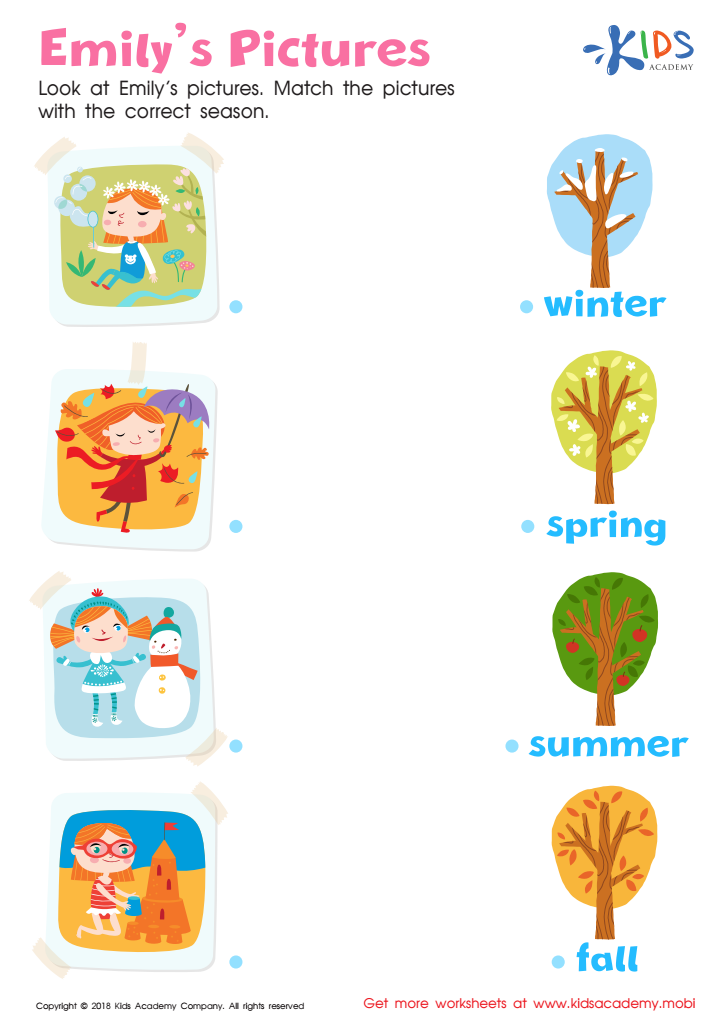
Emily's Pictures Worksheet
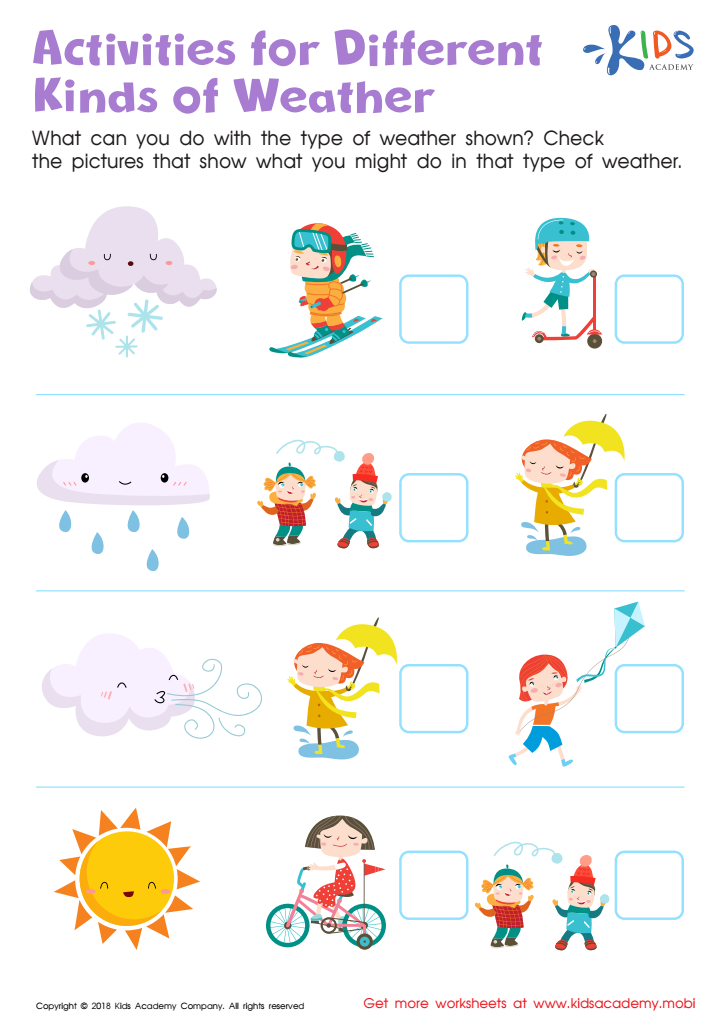
Activities for Different Kinds of Weather Worksheet
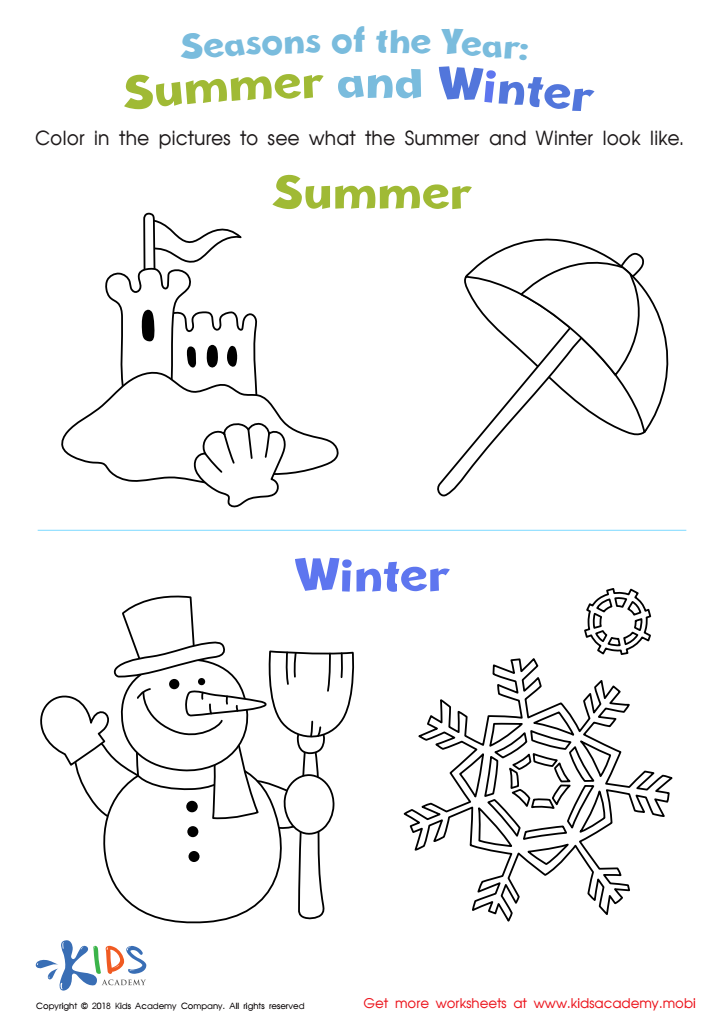
Summer and Winter Worksheet
 Assign to My Students
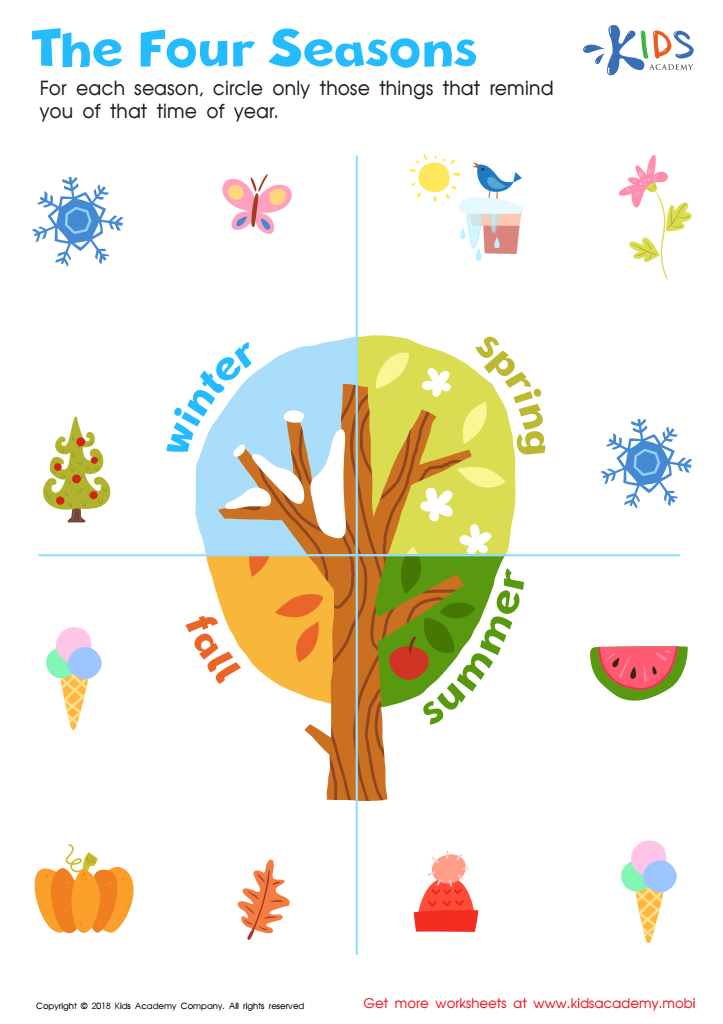
The Four Seasons Worksheet


%20(1).jpg)


Vocabulary enhancement during the seasons for 3-year-olds is critical for early childhood development. During this formative period, young brains are rapidly developing and are highly receptive to new information. Building a robust vocabulary sets a strong foundation for literacy, communication, and cognitive skills. Teaching vocabulary seasonally can make learning more dynamic and engaging, as it connects new words to changing and observable aspects of their environment.
Understanding the seasons helps children better relate to the world around them. When discussing the leaves changing colors in fall or flowers blooming in spring, children associate these real-world experiences with specific words, solidifying their comprehension and recall. Seasonal vocabulary helps children to not only learn new words but to also develop a broader understanding of temporal changes, weather patterns, and nature.
Furthermore, enhancing vocabulary in a seasonal context can strengthen familial and teacher-student bonds. It creates opportunities for interactive, experiential learning, like nature walks during different seasons, storytime focusing on season-specific books, or engaging arts and crafts that reflect seasonal themes. Investing in vocabulary enhancement is investing in a child’s academic future and overall confidence in communication. It is a crucial aspect of early education that aids in creating well-rounded, curious, and articulate individuals.







