Fine motor skills development ABC Letters Worksheets for Ages 4-5
3 filtered results
-
From - To
Enhance your child's fine motor skills with our engaging ABC Letters Worksheets, designed specifically for ages 4-5. These worksheets combine fun and educational activities that promote hand-eye coordination, dexterity, and concentration while introducing early literacy concepts. Each printable sheet encourages children to trace, color, and manipulate letters, helping them develop essential skills needed for writing and everyday tasks. Our content-rich materials ensure that learning the alphabet becomes an enjoyable experience, setting a strong foundation for future educational success. Explore the vibrant world of letters with our fine motor skills worksheets and watch your child’s confidence and abilities grow!
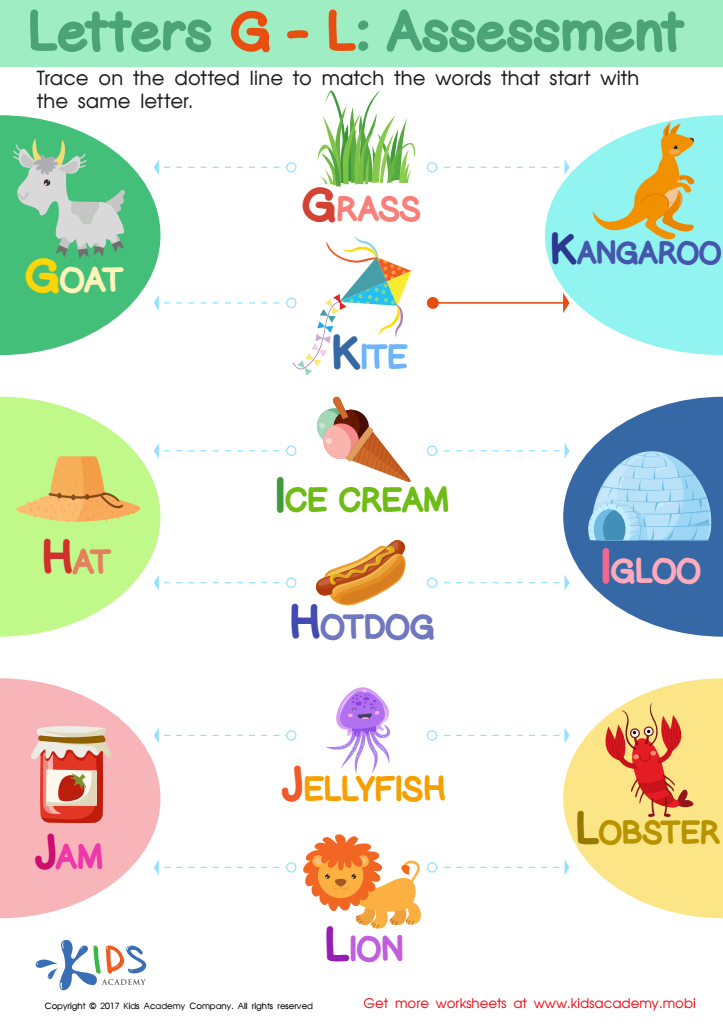
Letters G-L Worksheet







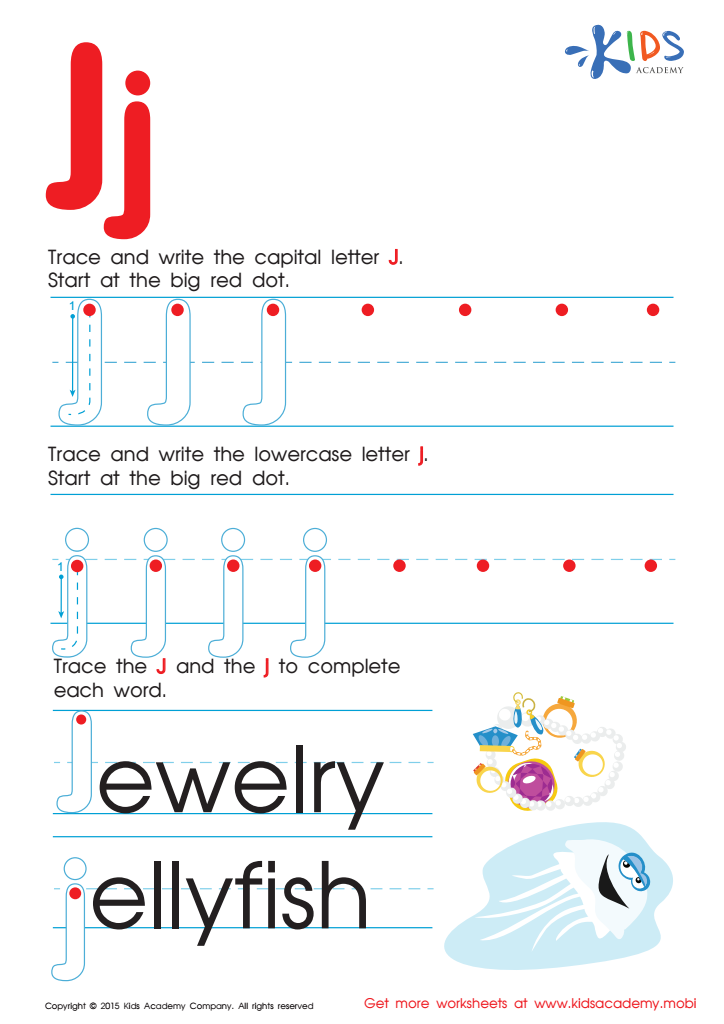
Letter J Tracing Page
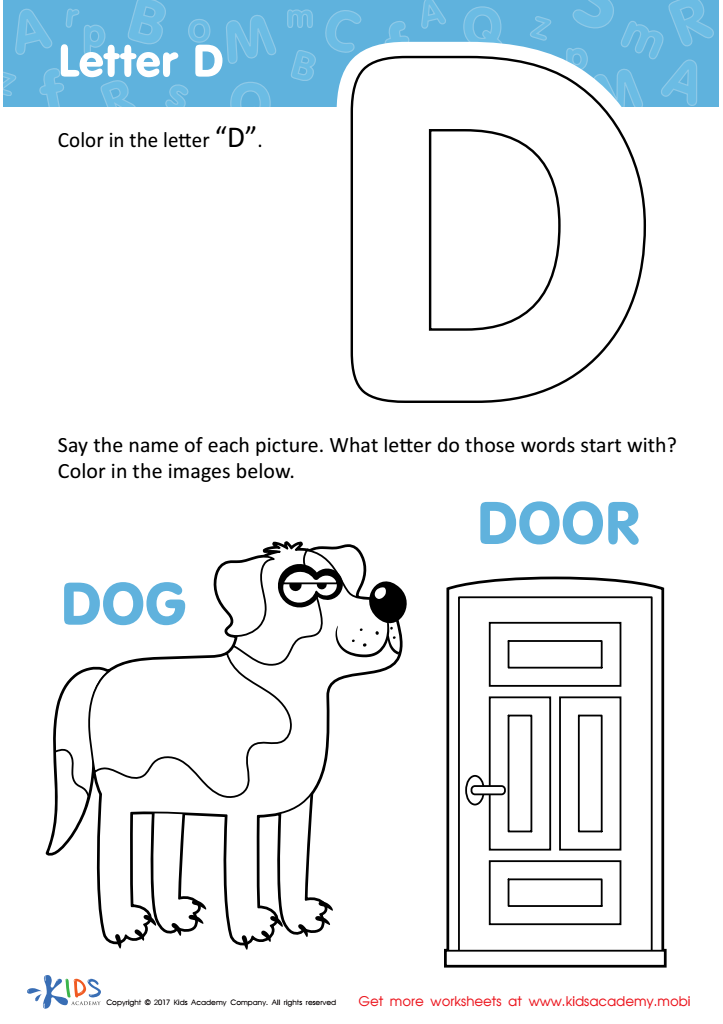
Letter D Coloring Sheet
 Assign to My Students







Fine motor skills development is crucial for children aged 4-5 as it lays the foundation for a range of essential abilities, impacting their academic and daily lives. During this pivotal stage, children engage in activities that strengthen small muscles in their hands and fingers, enhancing their dexterity and coordination. Mastery of fine motor skills enables children to write letters, a vital precursor to literacy.
Focusing on Fine motor skills associated with letters helps prepare young learners to hold writing instruments correctly and form letters legibly. Beyond writing, these skills also play a role in tasks such as buttoning shirts, tying shoelaces, and manipulating small objects, all of which contribute to their self-esteem and independence.
Moreover, activities that promote these skills, like drawing, cutting, and puzzles, can foster creativity and problem-solving abilities. Parents and teachers should prioritize fun, engaging tasks focusing on fine motor skills development, as being competent in these abilities sets children up for success in school and beyond. Supporting this growth can enhance their confidence, making learning experiences more enjoyable and effective, ultimately advocating for a well-rounded early education that prepares children for future academic challenges.







