Sound Association Alphabet Coloring Pages Worksheets for Ages 4-5
3 filtered results
-
From - To
Introducing our Sound Association Alphabet Coloring Pages Worksheets, perfect for ages 4-5! These engaging printables captivate young learners by combining coloring activities with the foundational skills of sound association. Each worksheet features a distinct letter of the alphabet, alongside corresponding images that help children recognize and associate sounds with each letter. As kids color and explore, they develop critical phonics skills in a fun and interactive way. Ideal for both classroom and home use, our worksheets make learning the alphabet enjoyable and effective, paving the way for successful reading and language development. Download now to spark their phonemic awareness!
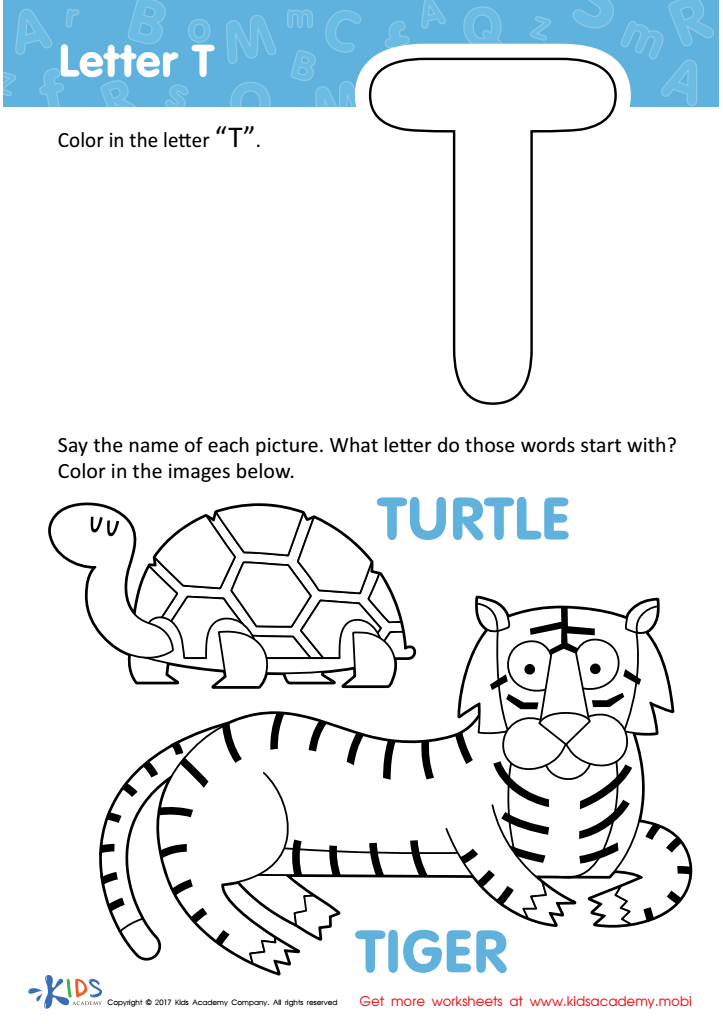
Letter T Coloring Sheet
 Assign to My Students
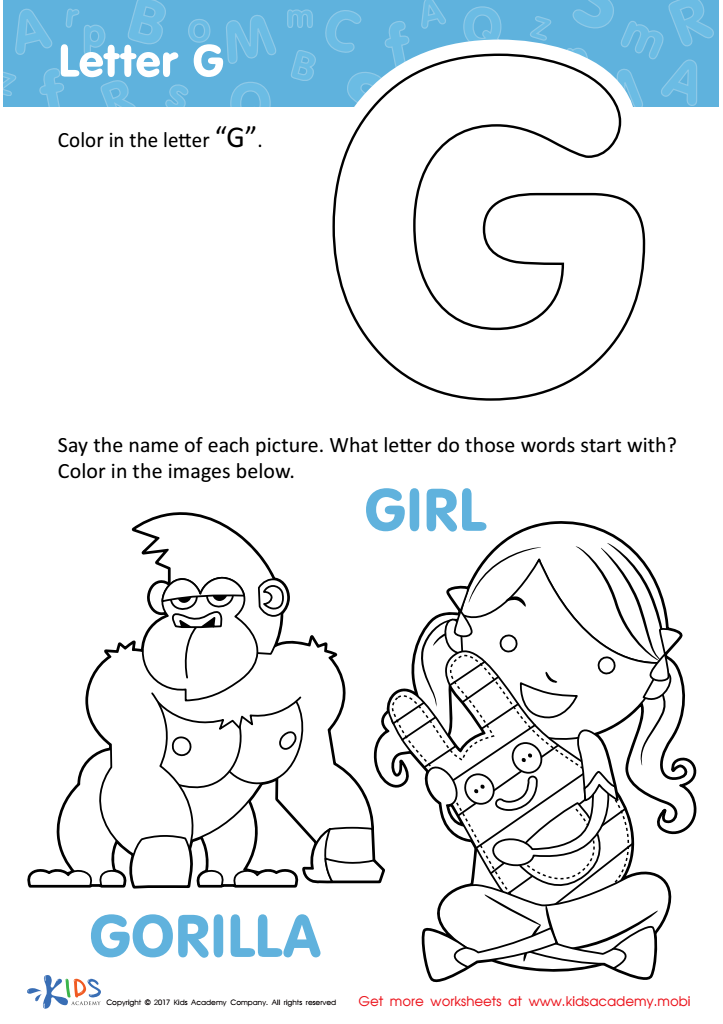
Letter G Coloring Sheet
Assign to My Students
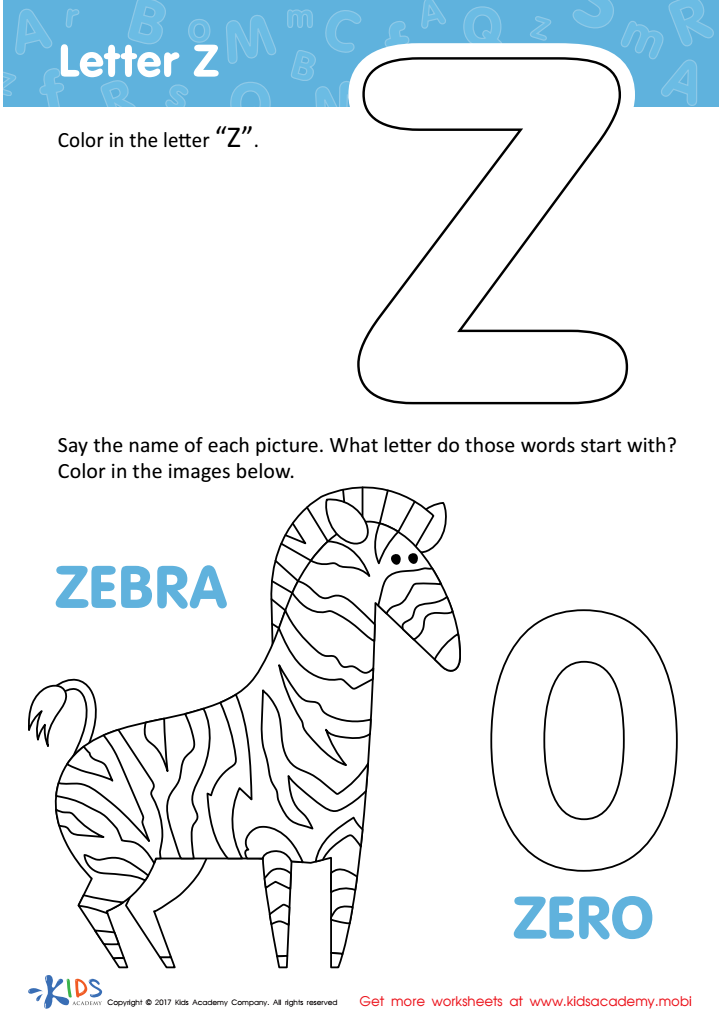
Letter Z Coloring Sheet
Assign to My Students





Sound Association Alphabet Coloring Pages are valuable tools for early childhood educators and parents of children aged 4-5. At this developmental stage, children are naturally curious and absorbent learners. These coloring pages combine visual, auditory, and kinesthetic learning, essential for young learners to grasp foundational literacy skills effectively.
Firstly, these coloring pages connect alphabet letters with corresponding sounds and images, making the learning process more engaging and memorable for young children. For example, the letter "A" paired with an image of an apple helps children associate the letter with its corresponding sound. This method strengthens phonemic awareness, which is crucial for reading readiness.
Secondly, coloring engages fine motor skills, crucial for writing. Holding crayons and coloring within lines improves hand-eye coordination and dexterity. These skills are essential as children progress to writing letters and eventually forming words and sentences.
Additionally, sound association coloring pages provide an interactive learning experience that can be enjoyable and stress-free. This positive interaction with learning materials builds a child's confidence and interest in education, creating a strong foundation for future academic success.
Using these pages in a classroom or home setting encourages parental and teacher involvement, fostering a collaborative approach to a child's education. This involvement allows for monitoring progress, offering personalized support, and nurturing a love for learning, setting children up for long-term success.







