Phonics Skills Consonants Worksheets for Ages 4-5
5 filtered results
-
From - To
Introduce your child to the world of reading with our Phonics Skills Consonants Worksheets designed for ages 4-5. These engaging and colorful worksheets focus on enhancing phonemic awareness by helping children recognize, pronounce, and write consonant sounds. Each activity is crafted to make learning fun and interactive, fostering a love for reading at an early age. With a variety of exercises like matching, tracing, and identifying consonant sounds, children can build a strong foundation for literacy. Perfect for at-home practice or classroom use, these worksheets are a fantastic resource for early learners embarking on their reading journey.
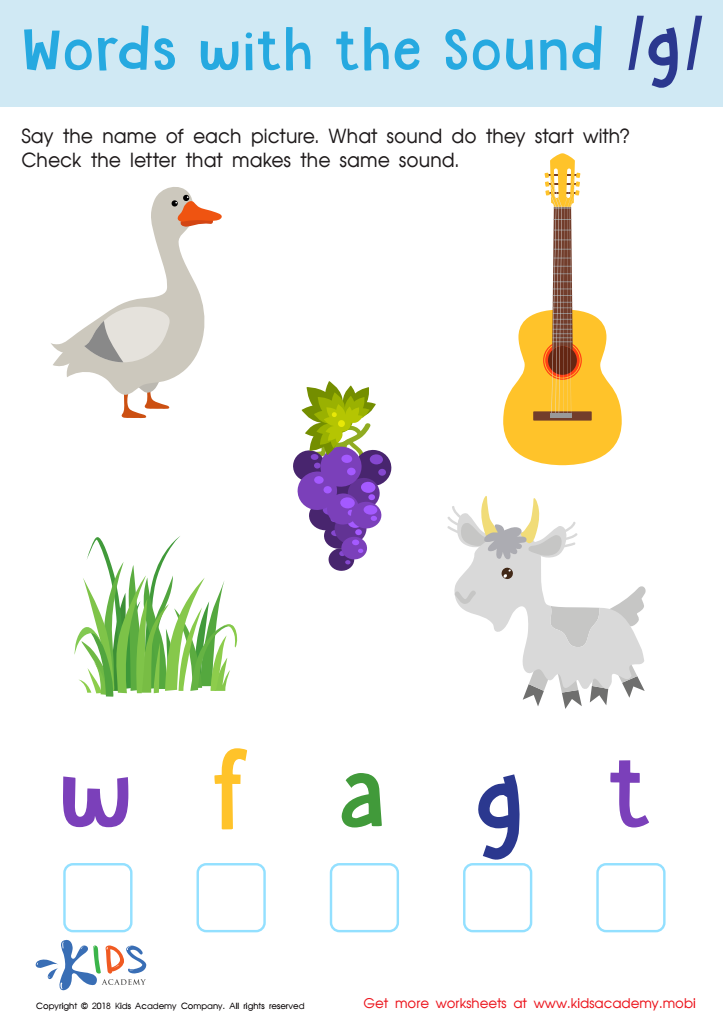
Words with sound g Reading Worksheet
 Assign to My Students
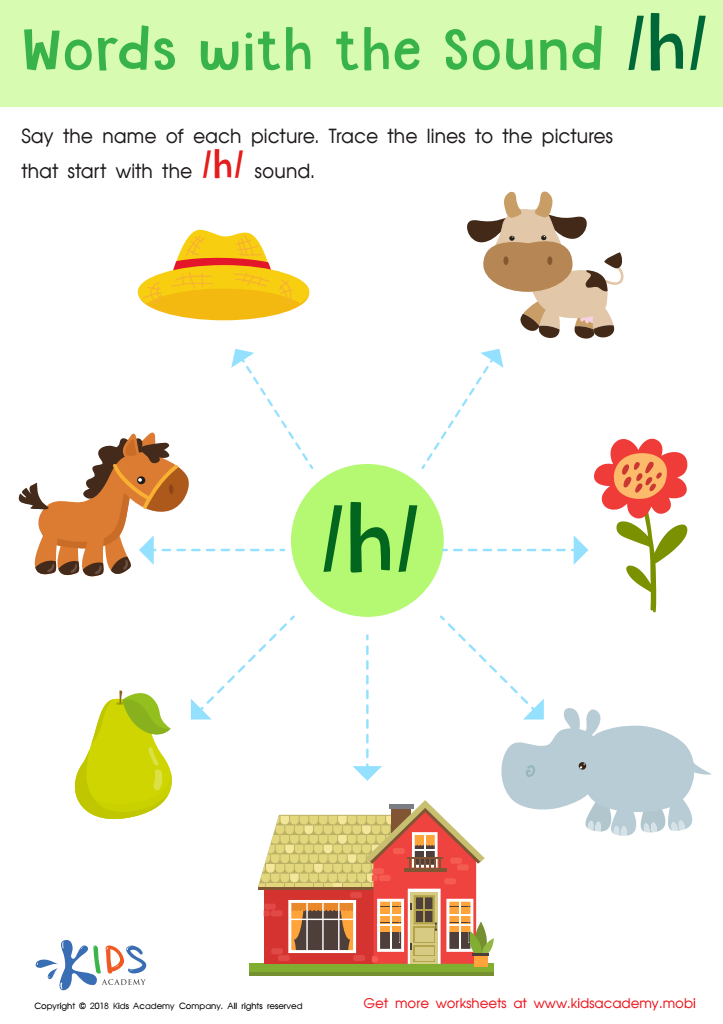
Words with sound h Reading Worksheet
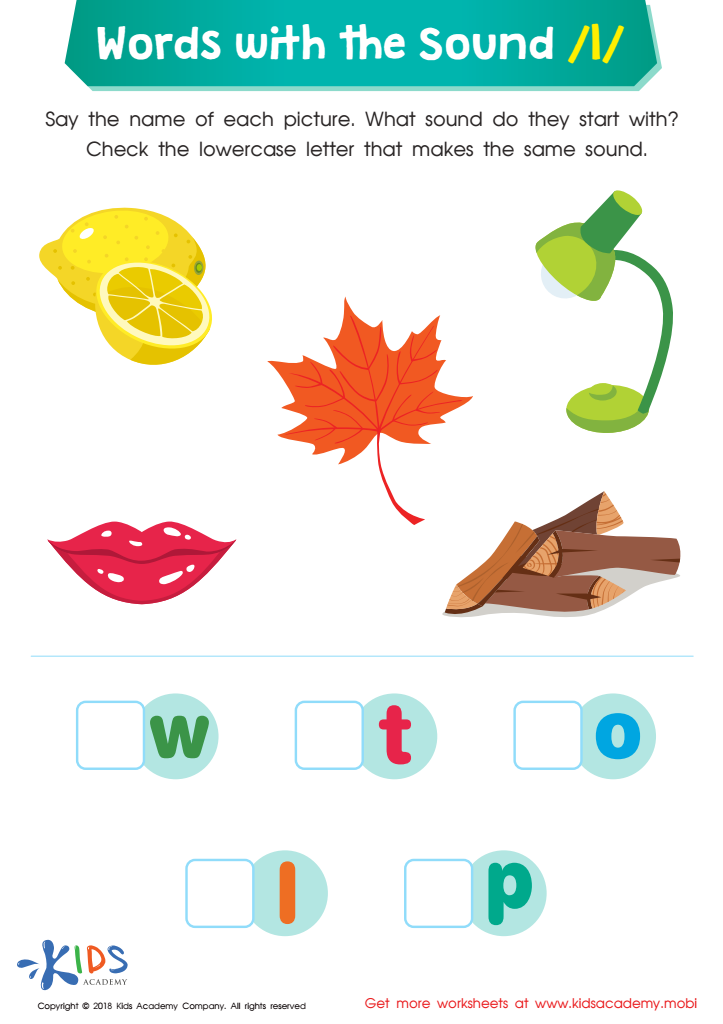
Words with Sound L Reading Worksheet
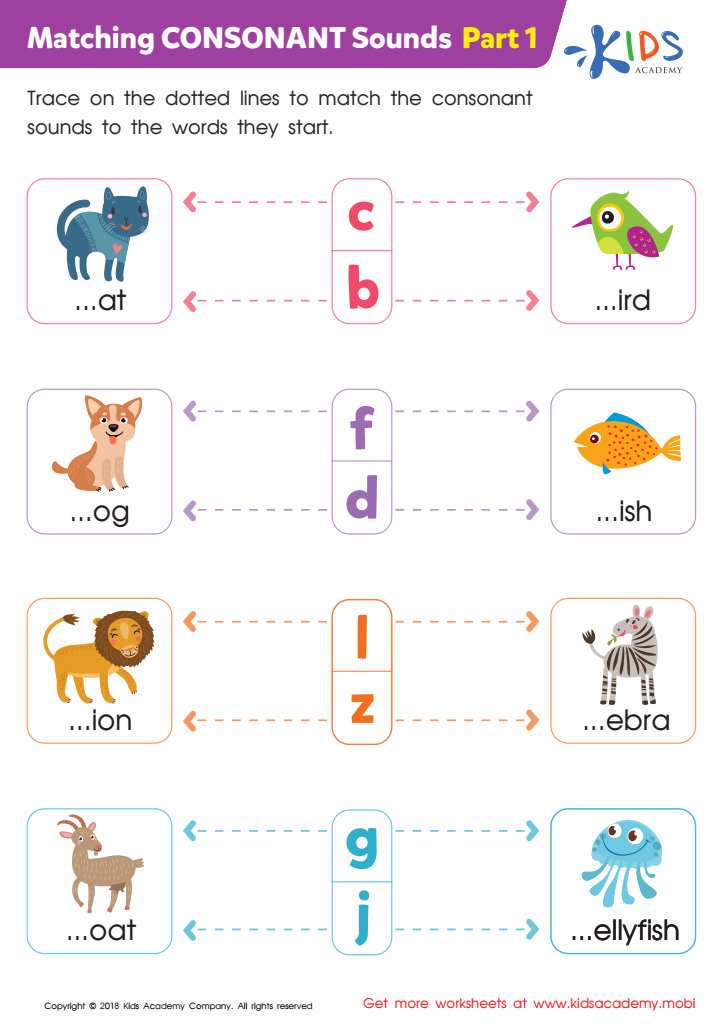
Matching Consonant Sounds: Part 1 Worksheet
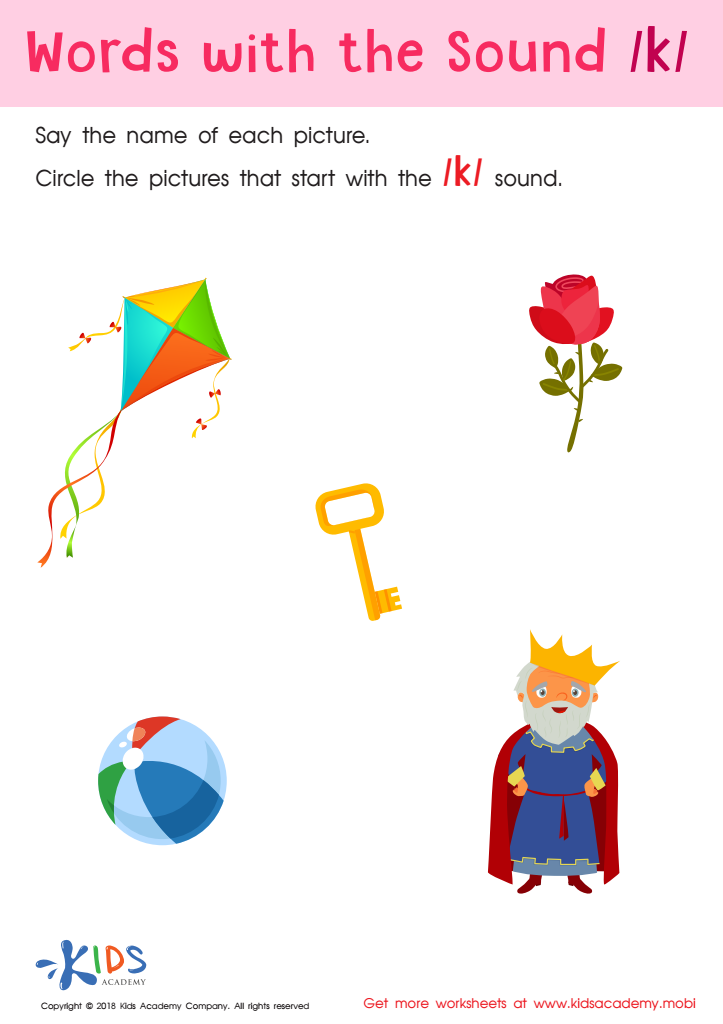
Words with sound k Reading Worksheet



Phonics skills, especially understanding consonants, are crucial for children ages 4-5 because they lay the foundation for effective reading and writing. At this developmental stage, young minds are particularly receptive to language learning. Mastering consonants—key building blocks of words—enables children to develop phonemic awareness, an essential skill for literacy.
Parents and teachers who focus on consonants help children decode words by figuring out the sounds that letters make. For instance, knowing that the letter "B" makes a "/b/" sound aids in pronouncing simple words like "bat" or "ball." This initial step in reading fosters a child's confidence and encourages a love for learning.
Furthermore, phonics instruction supports spelling, as children learn to match sounds with their corresponding letters or groups of letters. This skill enhances their ability to write cohesively and clearly, expressing their thoughts effectively.
Additionally, early success in reading and writing often leads to a positive attitude towards education in general, fostering a lifelong interest in learning. Therefore, ensuring that children grasp phonics skills and consonant sounds helps ensure their later academic success and cognitive development, making it a critical focus for both parents and educators.







