
Sound recognition Consonants Worksheets for Ages 4-5
3 filtered results
Difficulty Level
Grade
Age
-
From - To
Subject
Activity
Standards
Introduce your child to the exciting world of sound recognition with our engaging Consonant Worksheets designed for ages 4-5. These interactive resources help young learners identify and differentiate consonant sounds through creative activities and vibrant illustrations. Our worksheets are meticulously crafted to align with early literacy skills, fostering an enjoyable learning experience. Each activity encourages auditory discrimination, enhances phonemic awareness, and builds a strong foundation for reading. Perfect for preschoolers and kindergartners, these printables make learning fun while supporting developmental milestones. Explore our collection today and empower your child to recognize consonants confidently, paving the way for their future reading success!
Favorites
With answer key
Interactive
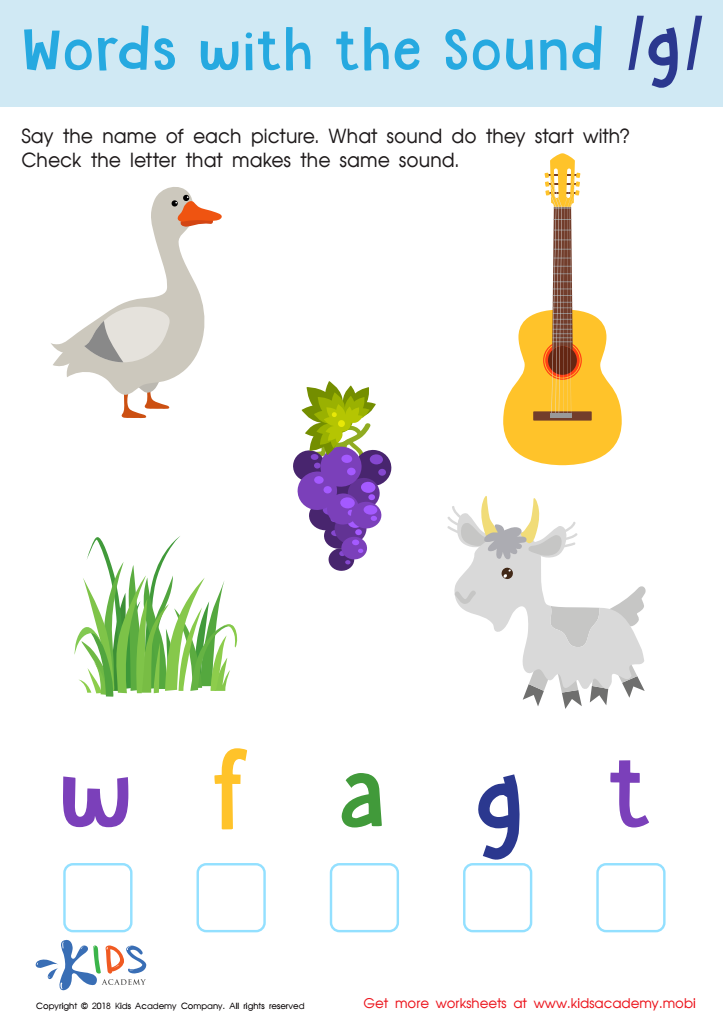
Words with sound g Reading Worksheet
Help your child learn the soft "g" sound with this phonics worksheet. Ask them to name each picture, then identify the letter sound it begins with. If it's "g", they can check the box. Have them repeat each word, listening for the soft "g" sound before moving on to the next page.
 Assign to My Students
Words with sound g Reading Worksheet
Worksheet
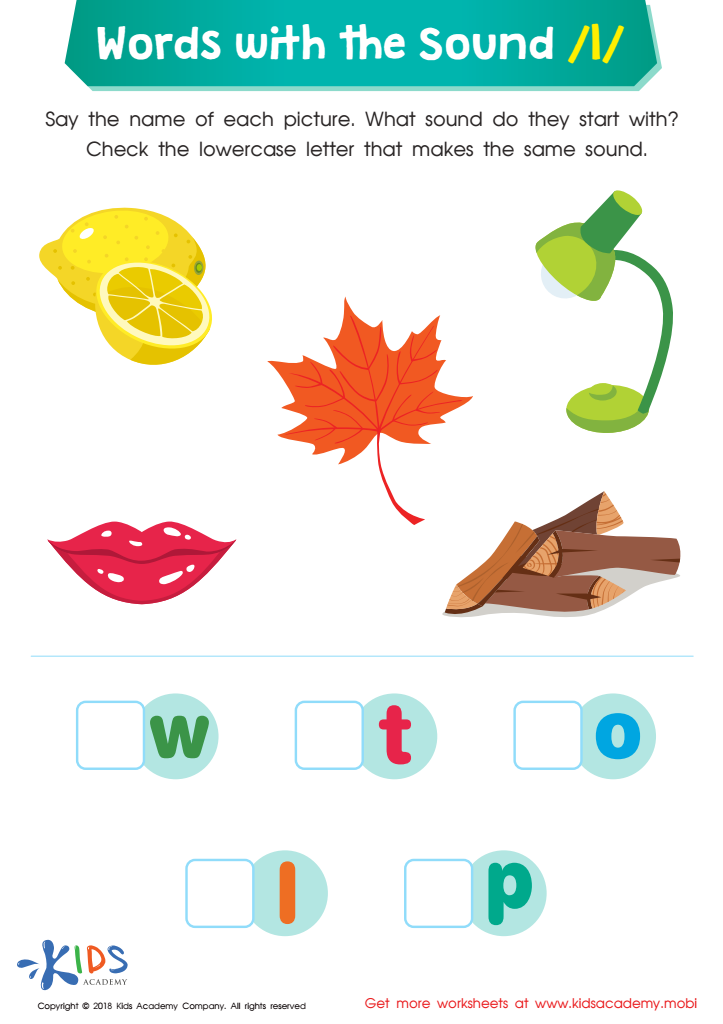
Words with Sound L Reading Worksheet
This PDF worksheet is great for helping emerging readers isolate initial sounds. Kids name familiar pictures, then identify the correct letter for the "l" sound. This worksheet strengthens fine motor skills, plus builds visual discernment. It's fun and colorful too!
Words with Sound L Reading Worksheet
Worksheet
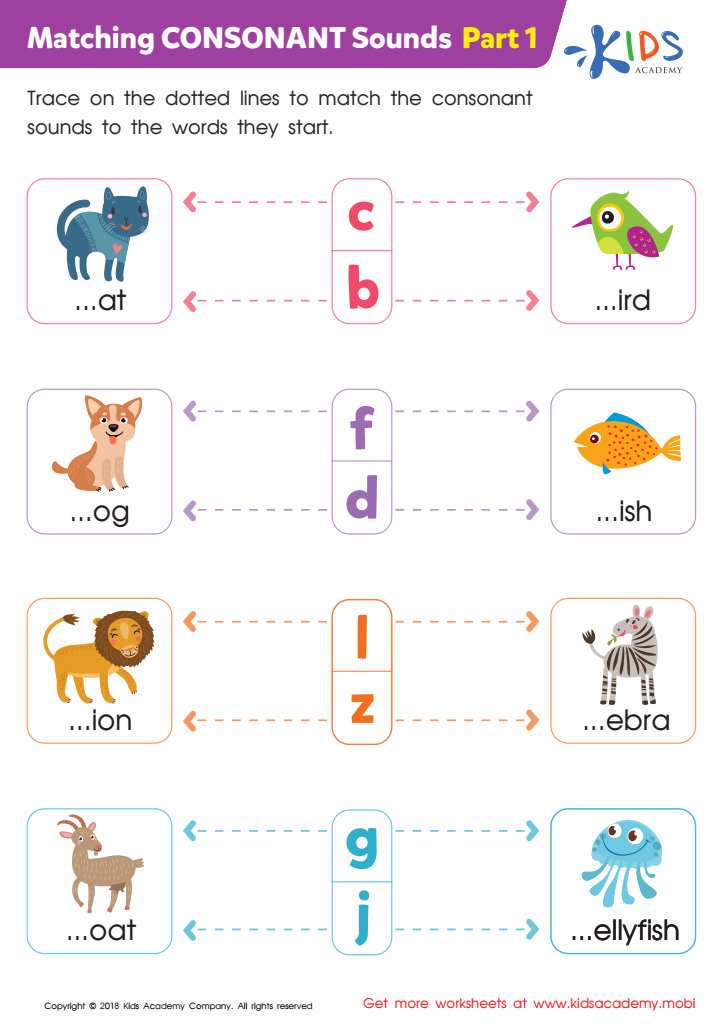
Matching Consonant Sounds: Part 1 Worksheet
Decide which letter matches each word and picture in this fun phonics worksheet. Slide your finger over each word, trying out each letter to check for matches. Once each pair is solved, trace the dotted lines with pencil to complete the printable. Who knew learning could be so enjoyable?
Matching Consonant Sounds: Part 1 Worksheet
Worksheet
Join Kids Academy for Free
Who is primarily going to use this learning content?



Sound recognition of consonants is a foundational skill for young children, particularly those aged 4-5, as it forms the building blocks of language and literacy. Parents and teachers should prioritize this skill because it directly influences a child's ability to read, write, and communicate effectively.
At this age, children are developing phonemic awareness, the ability to hear and manipulate sounds in words. Recognizing consonants helps them identify the individual sounds that make up words, which is essential for decoding and spelling. This skill lays the groundwork for more complex reading tasks, as mastering consonants ensures that children can approach unfamiliar words with confidence.
Moreover, sound recognition supports vocabulary expansion and listening skills. Children who actively engage with consonants will enhance their ability to sound out new words and understand sounds within speech. This, in turn, fosters better comprehension and articulation.
Involving parents and educators in this process can create a rich learning environment where children feel encouraged and motivated. Through games, songs, and rhymes that focus on consonant sounds, both home and school can contribute to solidifying this key aspect of early literacy. Ensuring that children grasp sound recognition is critical for their academic success and overall communication skills.







