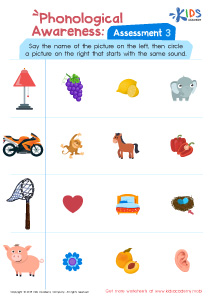
Vocabulary enhancement Consonants Worksheets for Ages 4-5
4 filtered results
-
From - To
Boost your child's vocabulary with our engaging Consonants Worksheets designed specifically for ages 4-5! These colorful and interactive worksheets focus on consonant sounds, helping young learners recognize letters while expanding their vocabulary. Children will enjoy a variety of activities that include matching words with images, filling in missing letters, and sound identification. Each worksheet fosters essential reading and language skills in a fun and stimulating way. Perfect for home or classroom use, our exercises create a supportive learning environment and lay a strong foundation for early literacy. Unlock the joy of learning consonants and vocabulary enhancement today!
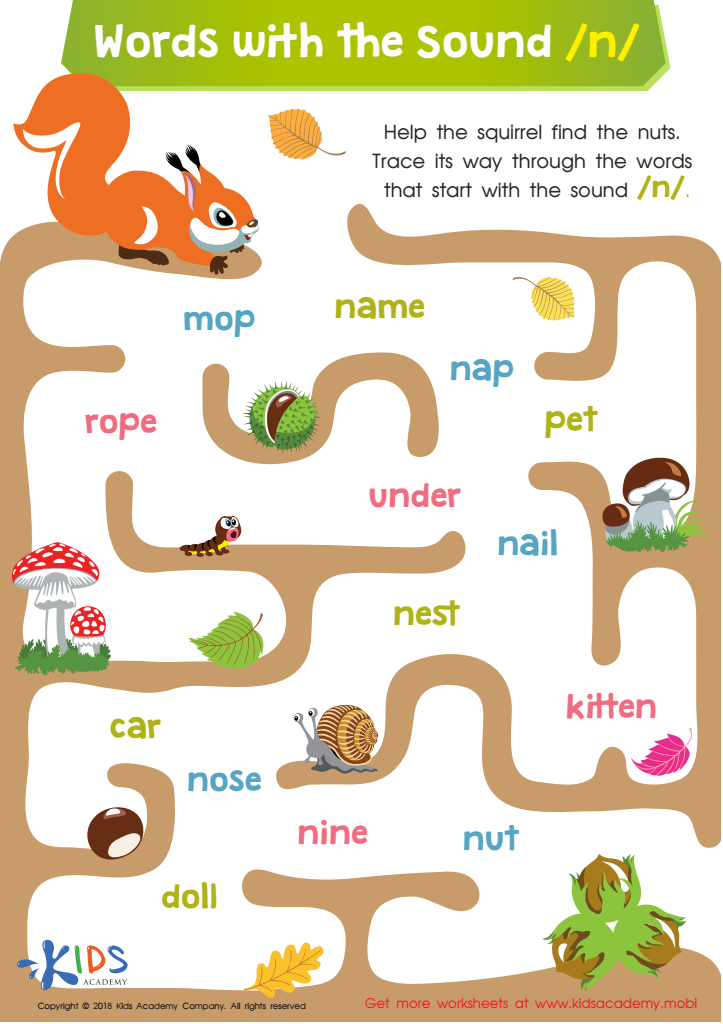
Words with Sound N Reading Worksheet
 Assign to My Students
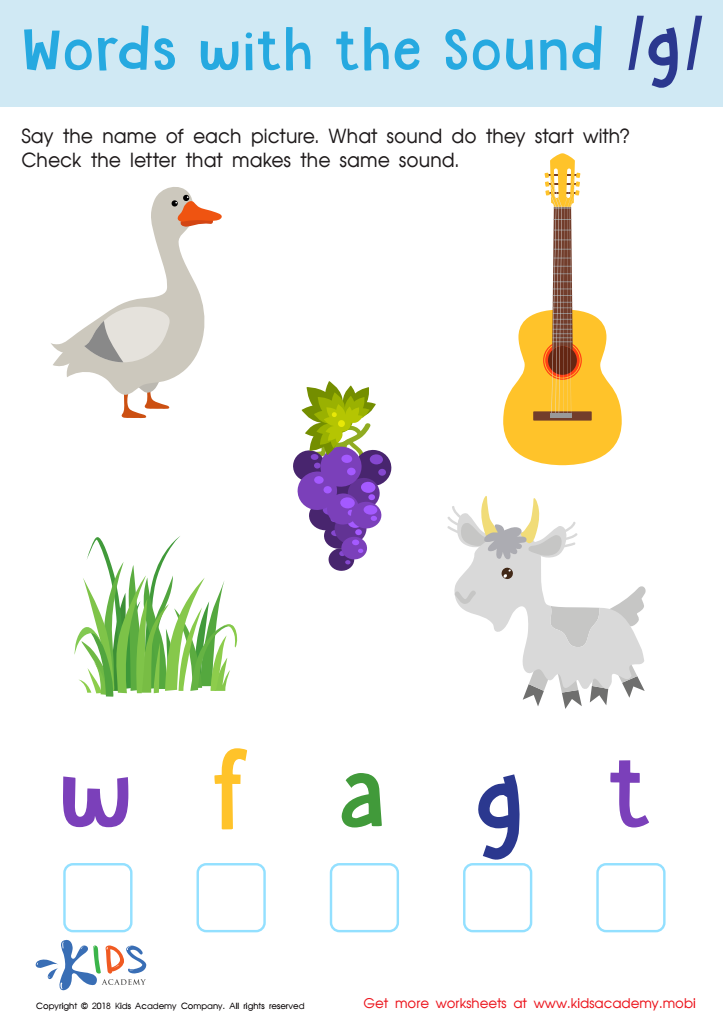
Words with sound g Reading Worksheet
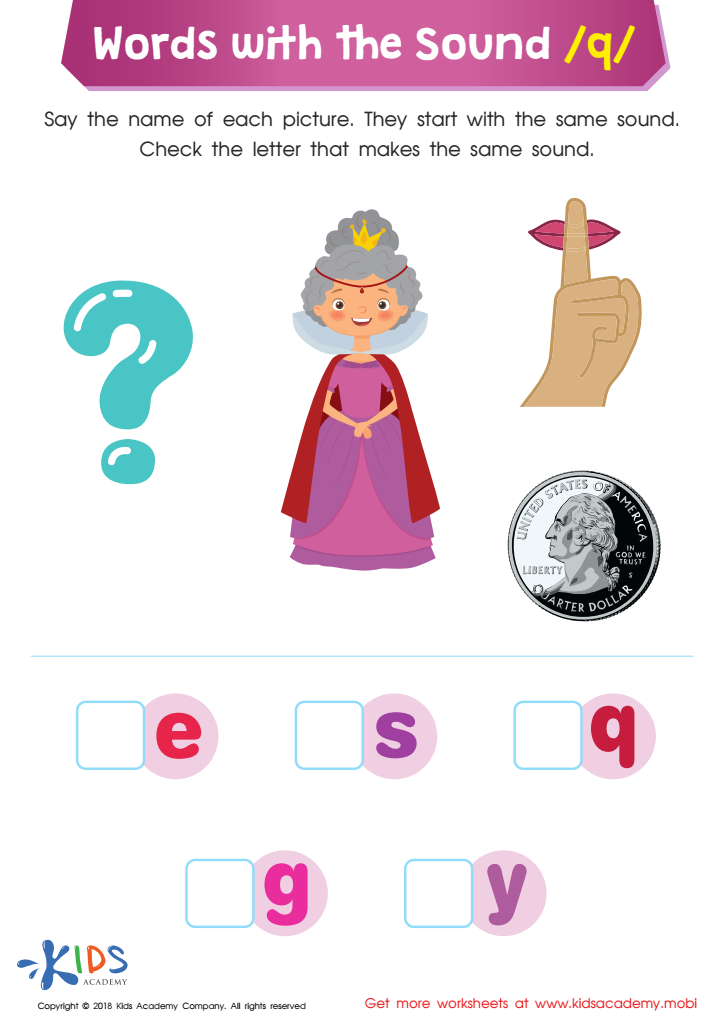
Words with Sound Q Reading Worksheet
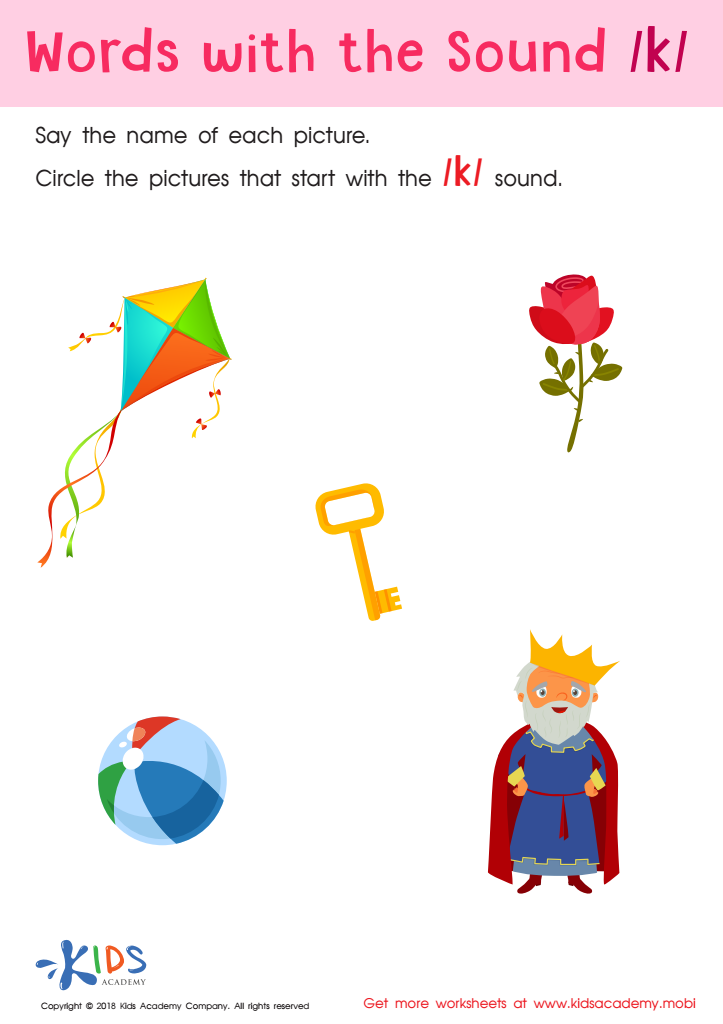
Words with sound k Reading Worksheet



Vocabulary enhancement, particularly focusing on consonants, is crucial for children aged 4-5 as it lays the foundation for effective communication and literacy skills. At this developmental stage, children are rapidly expanding their vocabulary, and understanding consonant sounds is essential for speech clarity and word recognition. Parental and teacher involvement can significantly influence a child’s linguistic journey.
Firstly, strong vocabulary skills correlate with better reading comprehension and writing abilities later in life. By emphasizing consonant sounds, educators and parents can help children decode words, improving their reading fluency. This understanding also supports phonemic awareness, which is critical for learning to read.
Moreover, enhancing vocabulary at an early age boosts children's confidence in expressing themselves. When children can articulate their thoughts and feelings more clearly, they are likely to engage more actively in conversations, thereby fostering social skills.
Engaging children in fun activities that focus on consonants—such as rhymes, games, and storytelling—can create a vibrant learning atmosphere. As active participants, both parents and teachers have a unique role in making learning enjoyable, encouraging curiosity, and nurturing a lifelong love for language. Ultimately, investing time in vocabulary enhancement lays the groundwork for a child’s academic success and social competence.