
Alphabet sequencing Alphabet Worksheets for Ages 4-5
8 filtered results
Difficulty Level
Grade
Age
-
From - To
Subject
Activity
Standards
Introduce your little learners to the world of letters with our engaging Alphabet Sequencing Worksheets, specially designed for ages 4-5. These worksheets offer fun, interactive activities that enhance letter recognition and sequencing skills through colorful visuals and playful tasks. Children will enjoy tracing, matching, and arranging letters in the correct order, reinforcing their understanding of the alphabet. Perfect for at-home learning or classroom use, our worksheets support early literacy development and ignite a love for learning. Give your child a head start with our educational resources and watch them flourish as they master the alphabet!
Favorites
With answer key
Interactive
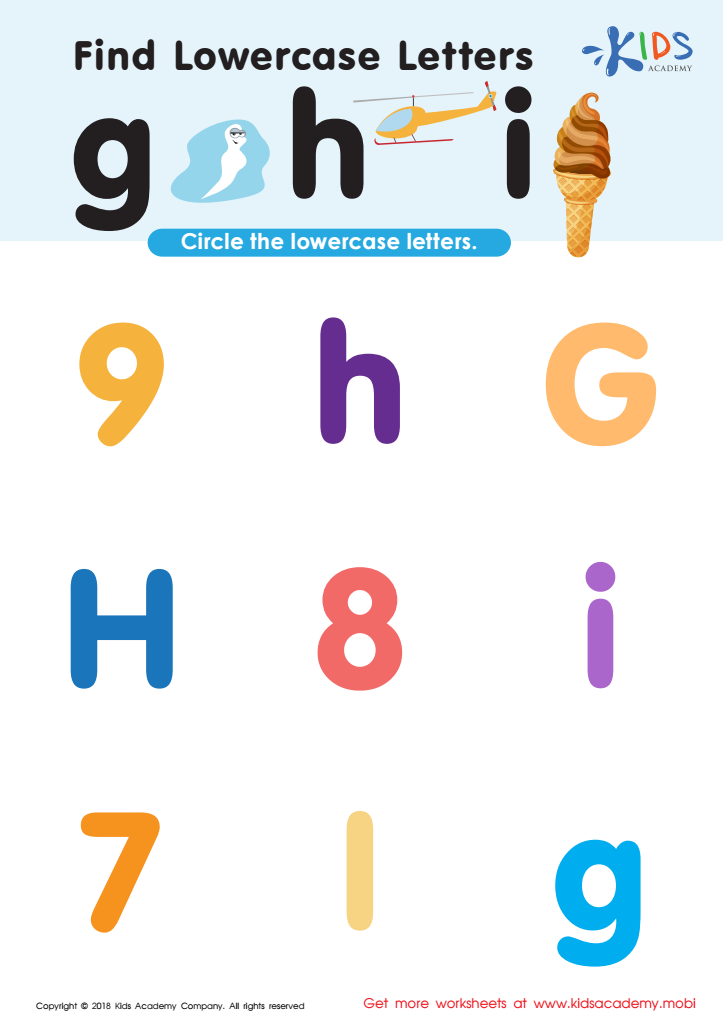
Find Lowercase Letters g h i Worksheet
Turn learning into a fun journey with your child! Use this free worksheet to find and circle the lowercase letters hidden amongst uppercase letters and numbers. Your child will understand what you're teaching them as they enjoy the search.
 Assign to My Students
Find Lowercase Letters g h i Worksheet
Worksheet
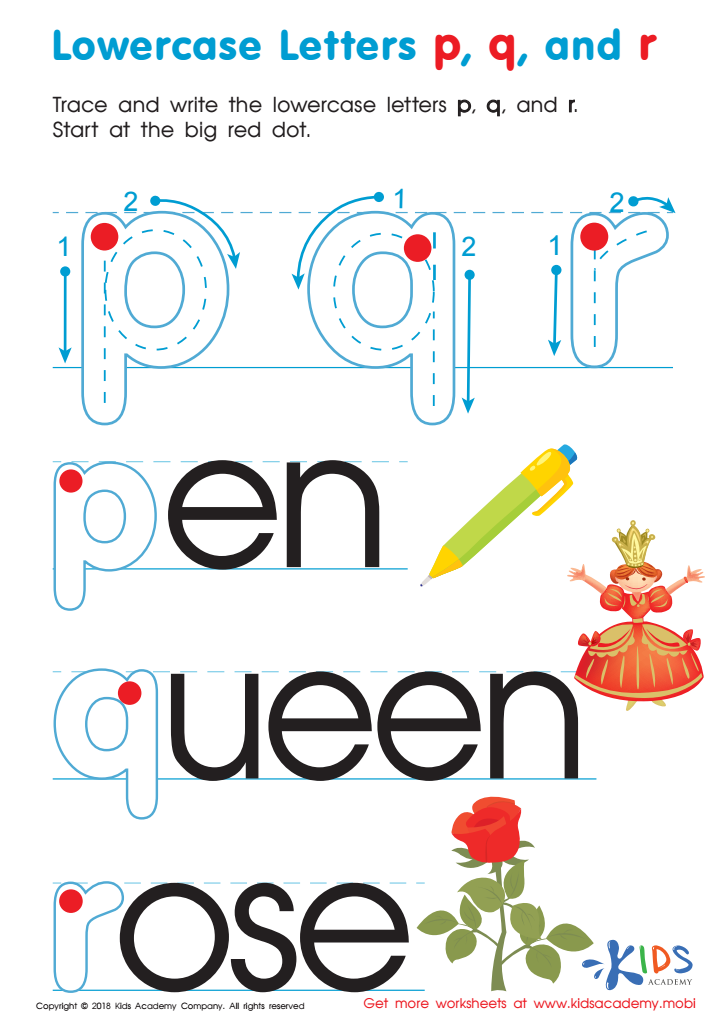
Lowercase Letters p q r Worksheet
Trace and write lowercase letters p, q and r with this fun worksheet. Each letter has a large red dot to mark the start, and dotted lines to follow with a pencil. Colorful images and text make it an enjoyable way to learn.
Lowercase Letters p q r Worksheet
Worksheet
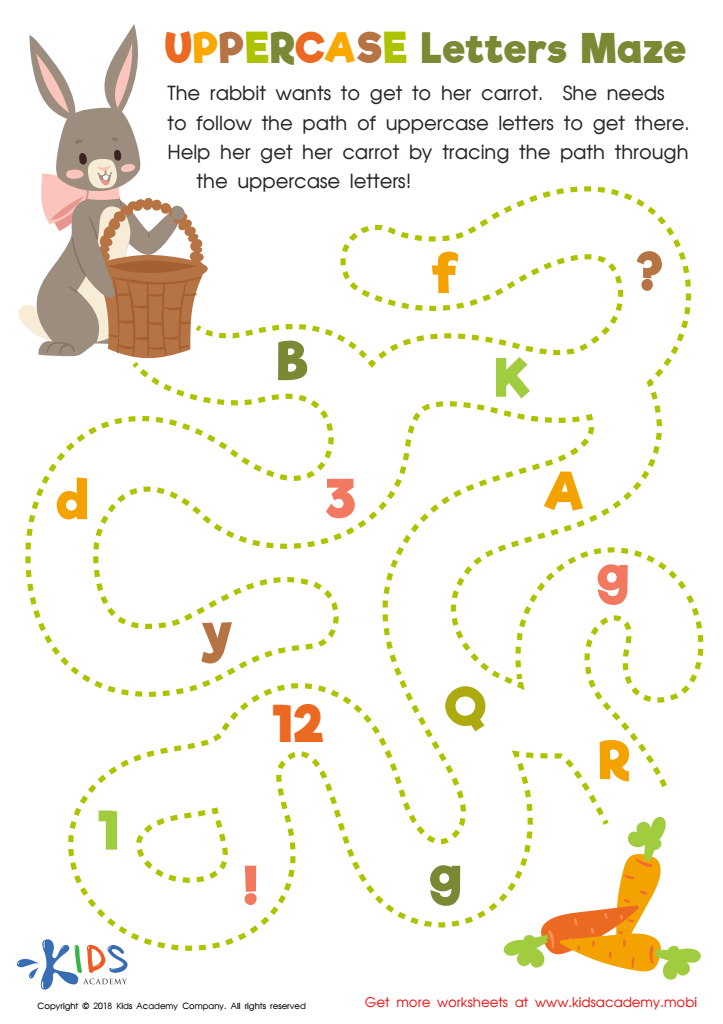
Uppercase Letters Maze Worksheet
Kids can have fun helping a rabbit find her carrot by picking the path with uppercase letters. This worksheet teaches letter differentiation while building confidence. Kids will have a great time while getting an essential skill!
Uppercase Letters Maze Worksheet
Worksheet
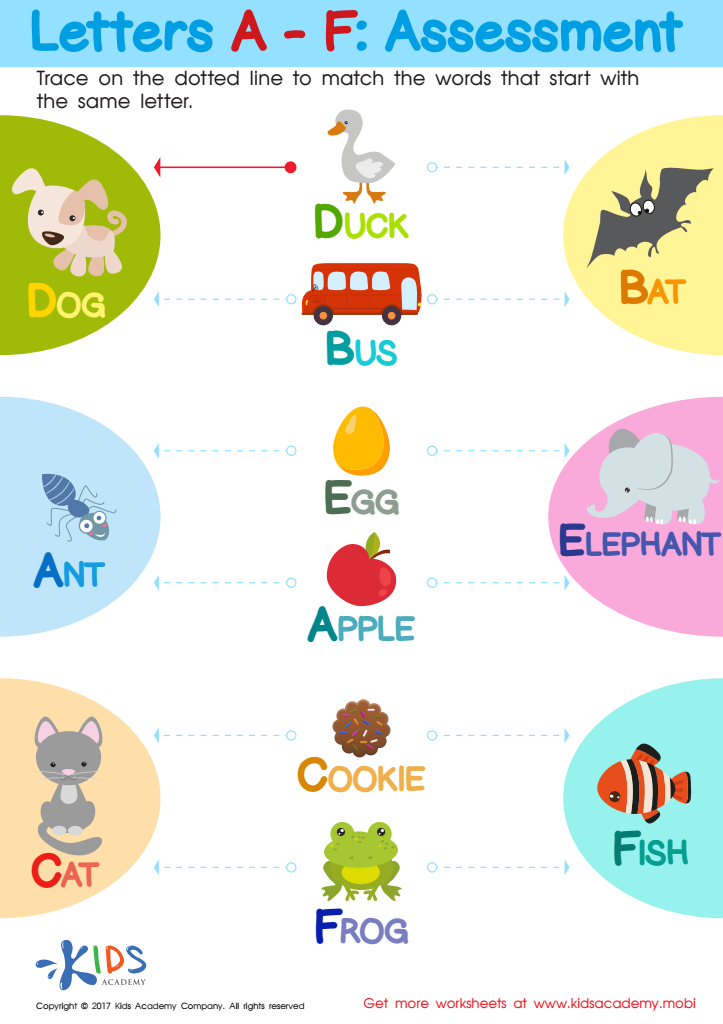
Letters A - F Worksheet
Help your child develop their reading skills with this fun phonics worksheet aimed at preschoolers. They can match letters A-F using colorful words and pictures. Assist your child by sounding out the letters and words - it's a great way to learn!
Letters A - F Worksheet
Worksheet
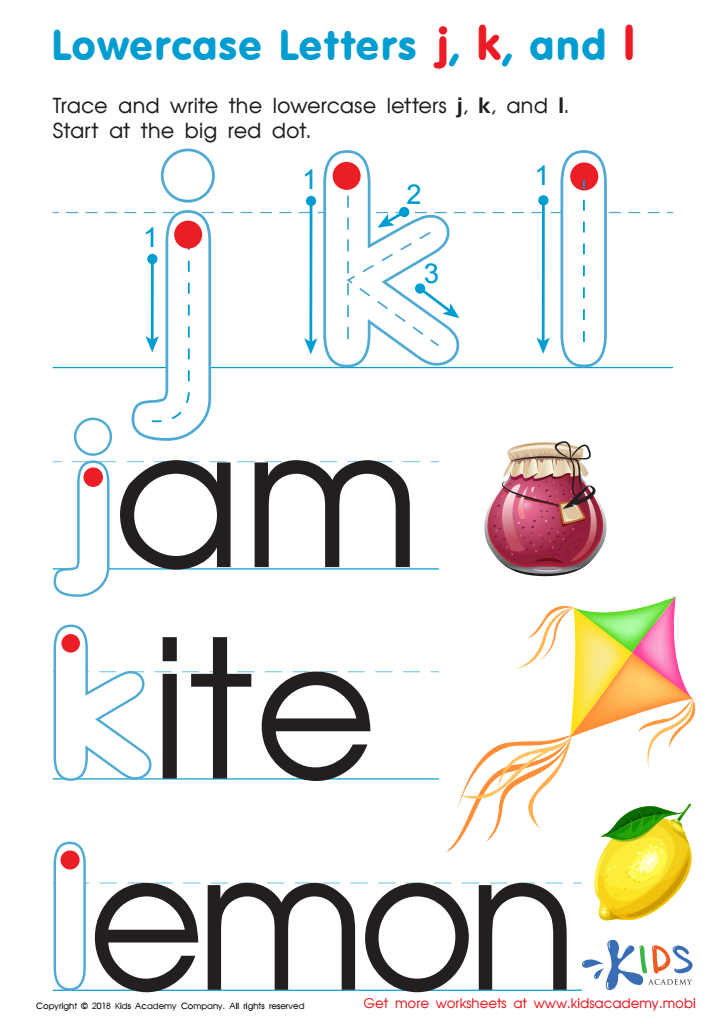
Lowercase Letters j k l Worksheet
Teach your child the difference between uppercase and lowercase letters. Have them trace and write the lowercase letters j, k, and l, starting at the red dot. Guide your child's hand to form the letters correctly.
Lowercase Letters j k l Worksheet
Worksheet
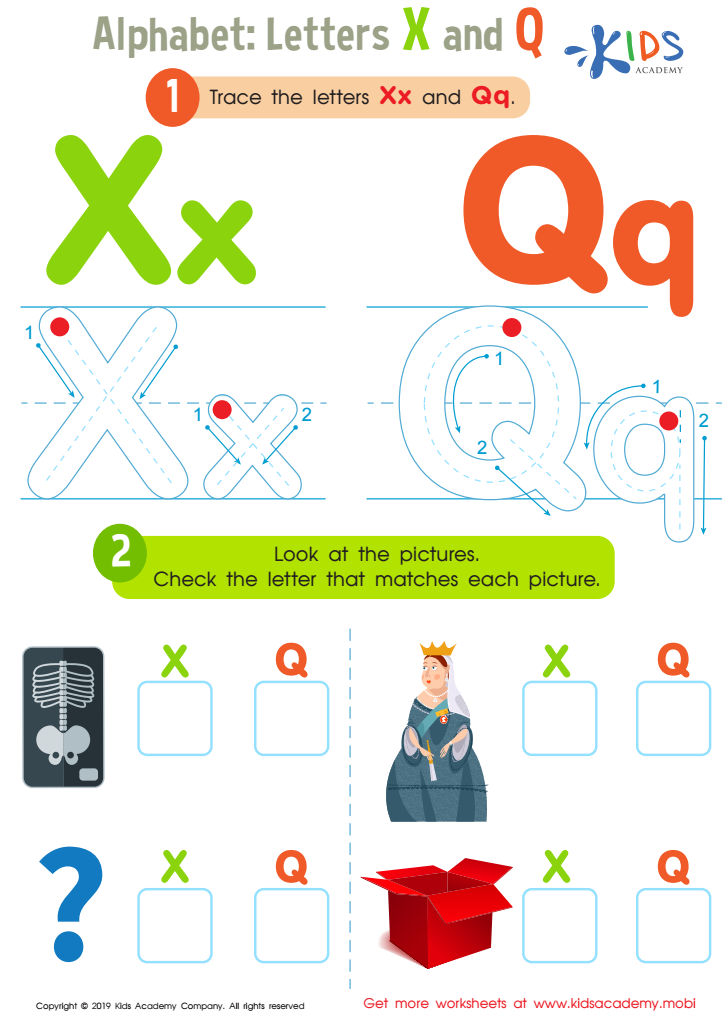
Letters X and Q Tracing Worksheet
Do you want your students to improve writing and letter recognition? This worksheet is a great place to start! Kids can trace the letters «X» and «Q» and identify pictures that match each letter. With a little encouragement, they'll do a great job!
Letters X and Q Tracing Worksheet
Worksheet
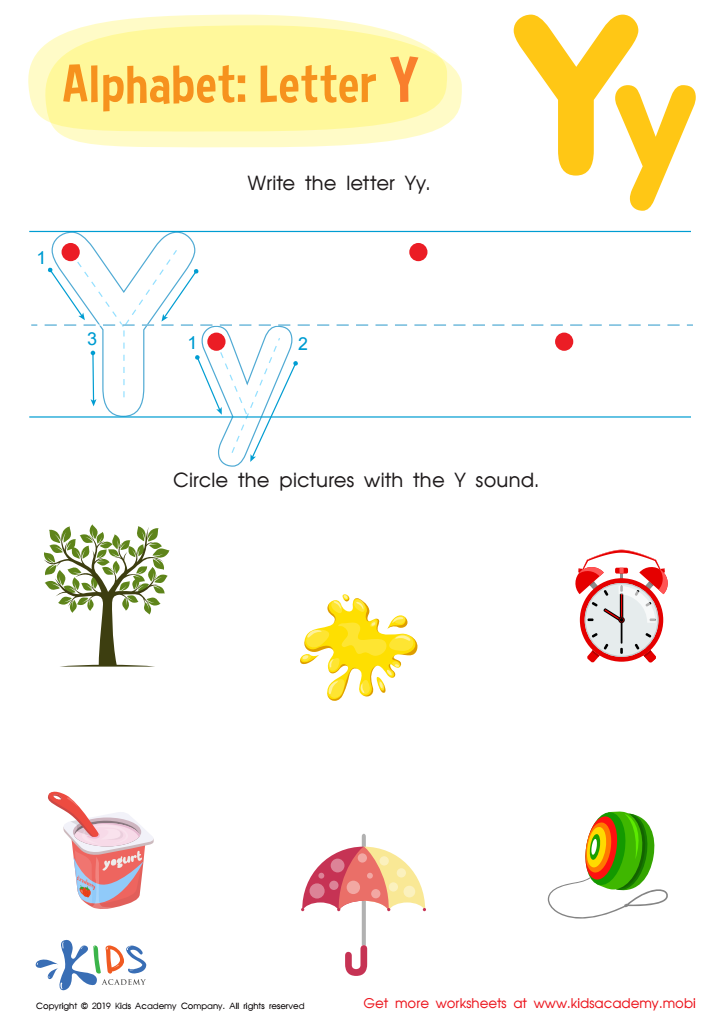
Letter Y Tracing Worksheet
Does your child need help with learning the final letters of the alphabet? This PDF worksheet is perfect then! Kids can practice tracing the letter «Y» and circle pictures that start with the same sound. Options include «yellow» and «yogurt». It's a great way of honing their letter-learning skills.
Letter Y Tracing Worksheet
Worksheet
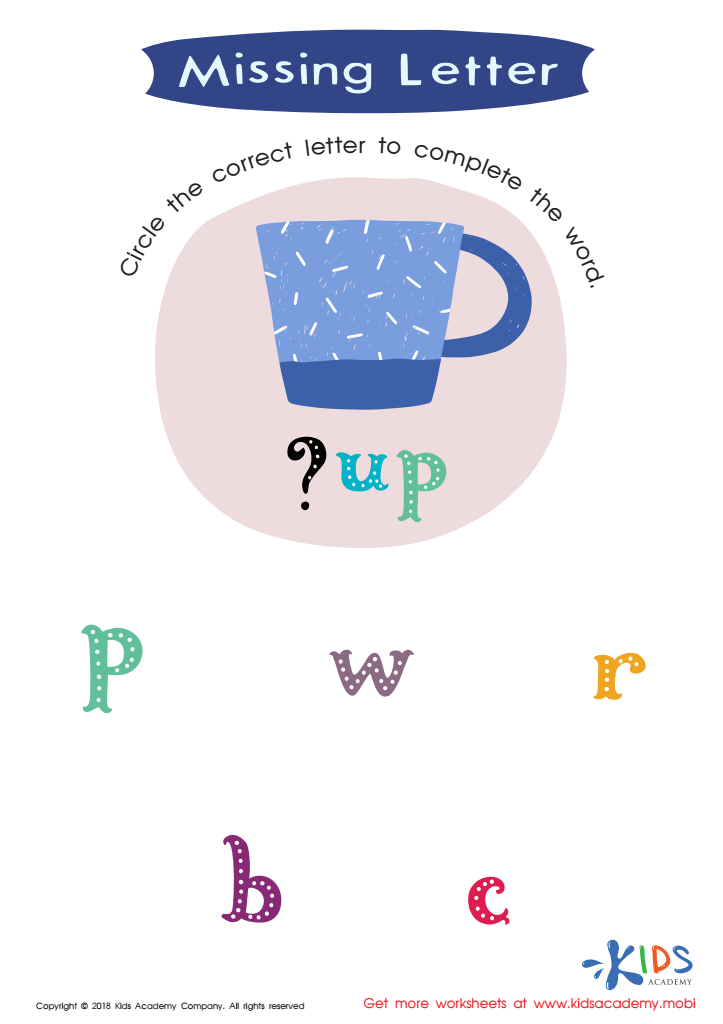
Missing Letter Worksheet
Congrats! If your kids can spell some small words, pat yourself on the back. Struggling with the alphabet? Help them learn with this simple worksheet. They'll have to find the missing letter to complete the word. Print this worksheet and help your little one find and circle the right letter.
Missing Letter Worksheet
Worksheet
Join Kids Academy for Free
Who is primarily going to use this learning content?








Alphabet sequencing is crucial for children aged 4-5 as it lays the foundation for literacy and communication skills. Understanding the order of letters not only enhances a child’s ability to recognize words but also supports early reading and writing development. When children learn to sequence the alphabet, they begin to grasp phonemic awareness—knowing that letters have associated sounds—a vital skill for decoding words.
Moreover, practicing alphabet sequencing encourages cognitive development. As children engage in activities that involve arranging letters, they sharpen their memory, attention, and problem-solving abilities. These skills are essential for academic success beyond just reading and writing.
Additionally, mastering the alphabet sequence fosters confidence. When children become familiar with the letters' order, they feel more empowered to participate in classroom activities, such as singing the alphabet song or finding letters in their names and other words.
For teachers and parents, emphasizing alphabet sequencing illuminates their role in shaping literacy development. By supporting this skill, they not only prepare children for future academic challenges but also instill a love for reading—a gift that can last a lifetime. In nurturing these foundational skills, caregivers play a crucial part in a child’s overall learning trajectory.







