Phonetics understanding Alphabet Worksheets for Ages 4-5
3 filtered results
-
From - To
Unlock your child's reading potential with our "Phonetics Understanding Alphabet Worksheets for Ages 4-5." Designed to provide engaging and interactive activities, these worksheets help young learners identify, pronounce, and understand each letter's sound. Our expertly crafted materials ensure your child builds a solid phonetic foundation, paving the way for fluent reading and effective communication. Each worksheet combines fun graphics and structured exercises to strengthen letter recognition and phonemic awareness. Perfect for preschoolers and kindergarteners, our resources support early literacy development in an enjoyable and educational way. Spark a love for reading with Kids Academy today!
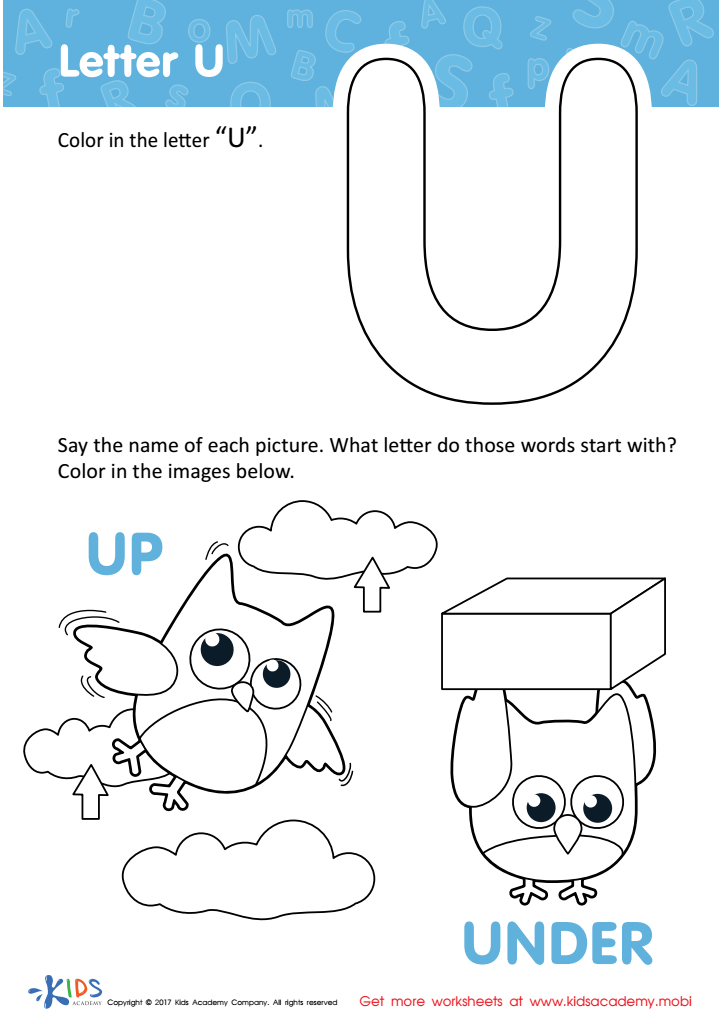
Letter U Coloring Sheet
 Assign to My Students
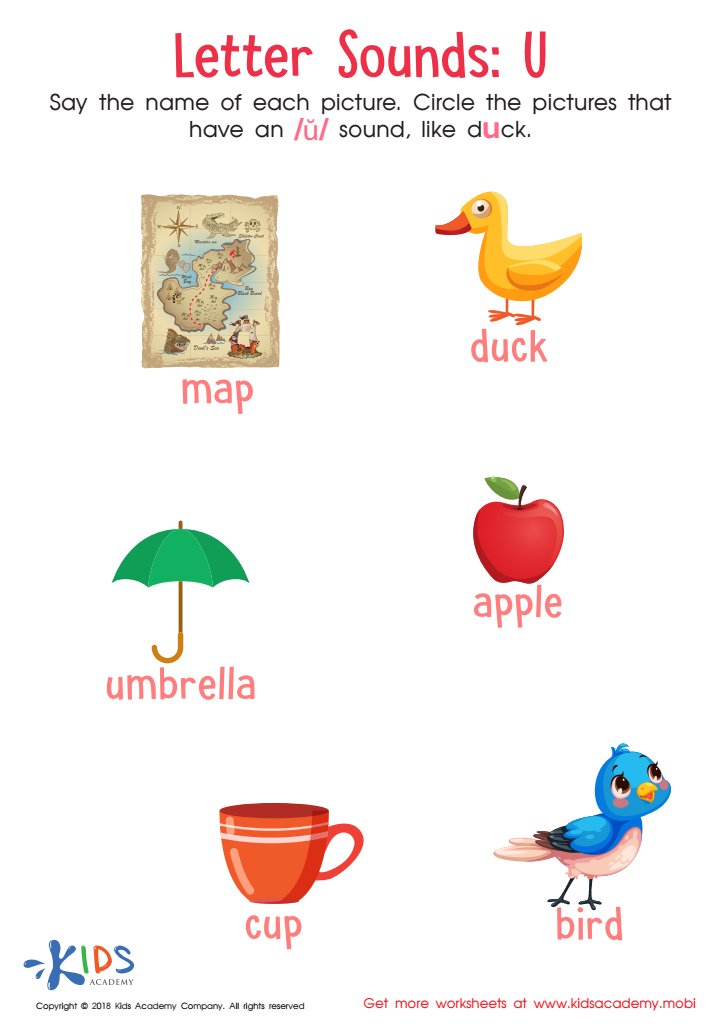
Letter U Sounds Worksheet
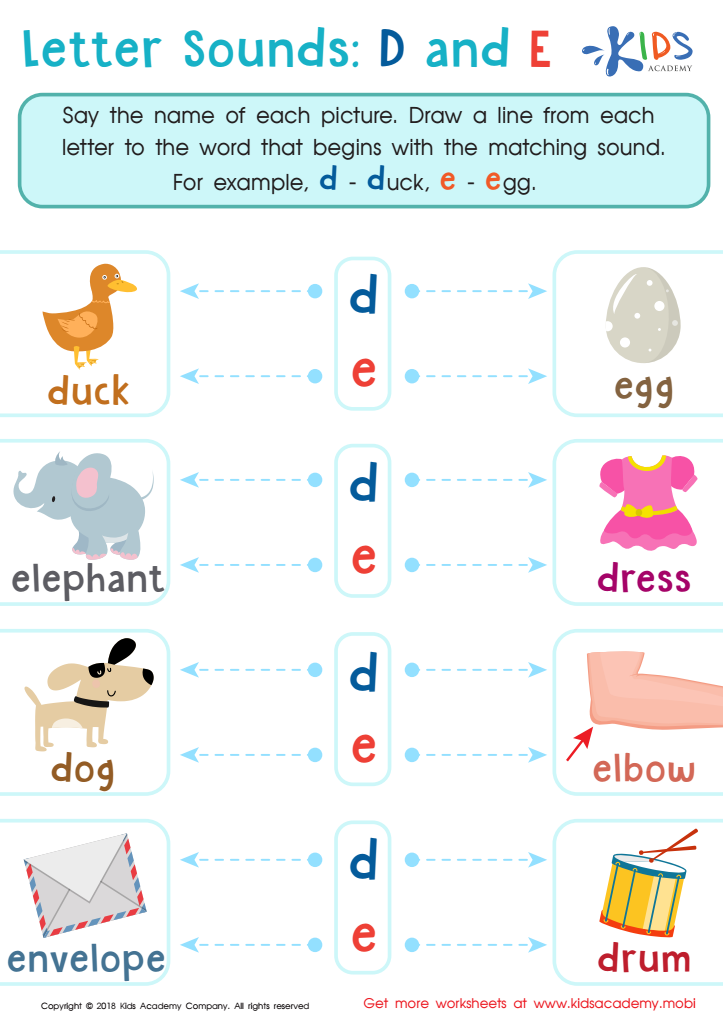
Letter D and E Sounds Worksheet








Understanding phonetics and the alphabet is crucial for children ages 4-5 as it lays the groundwork for reading and literacy skills. At this developmental stage, children are highly receptive to learning sounds and associating them with letters, an essential component of decoding words. Phonetics, which focuses on the sounds of speech, equips children with the ability to break down and rebuild words, facilitating smoother reading experiences.
Knowledge of the alphabet is equally important, as it introduces children to the symbols representing these sounds. This combination of phonetic awareness and alphabet familiarity helps children understand that written words are a code for spoken language. Early mastery in these areas can boost confidence, promote academic success, and foster a lifelong love of reading.
Moreover, strong early literacy skills provide a foundation for other educational achievements. Phonetic understanding can also aid in spelling and writing, making children more effective communicators. Parents and teachers play a crucial role in this process by providing a linguistically rich environment through activities like reading aloud, phonetic games, and interactive sessions that keep learning engaging and age-appropriate. By nurturing these skills early, we give children valuable tools that support their overall cognitive and social development.







