Rhyme recognition Alphabet Worksheets for Ages 4-5
3 filtered results
-
From - To
Introducing our engaging Rhyme Recognition Alphabet Worksheets, designed specifically for children aged 4-5. These worksheets provide an interactive approach to learning, helping young learners identify and understand rhyming words while reinforcing their grasp of the alphabet. Each worksheet features fun illustrations and activities that captivate children's attention, making phonics practice enjoyable. By recognizing and producing rhymes, kids enhance their language skills, vocabulary, and phonemic awareness. Perfect for home or classroom use, these worksheets are an excellent resource for early literacy development, setting the foundation for future reading success. Discover the joy of learning through rhyme today!
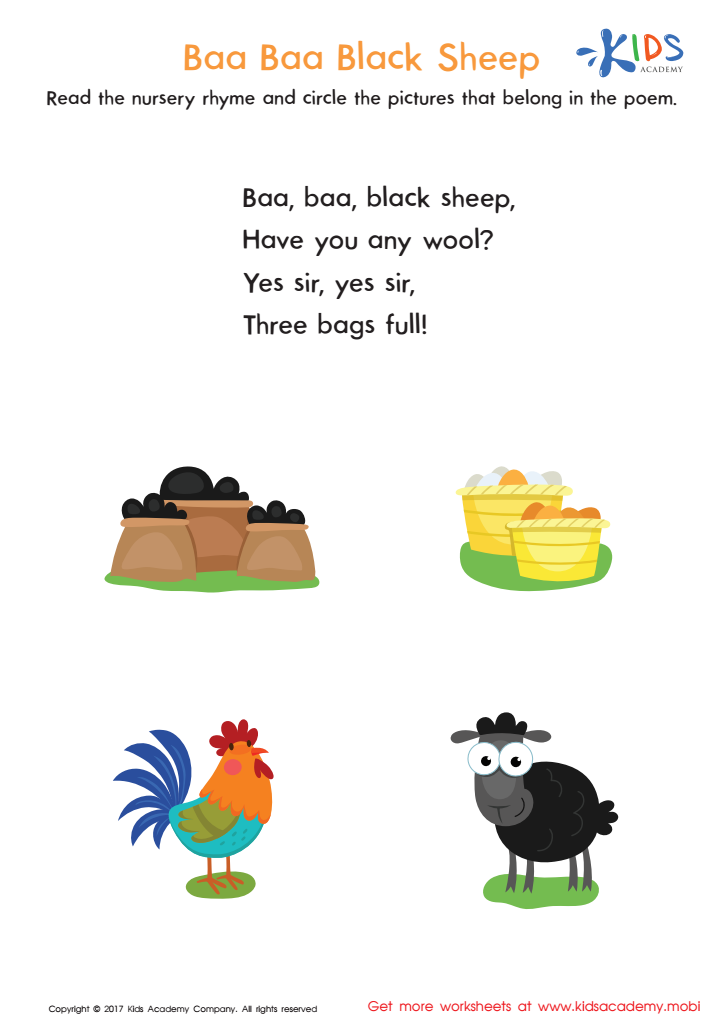
Baa Baa Black Sheep Printable
 Assign to My Students
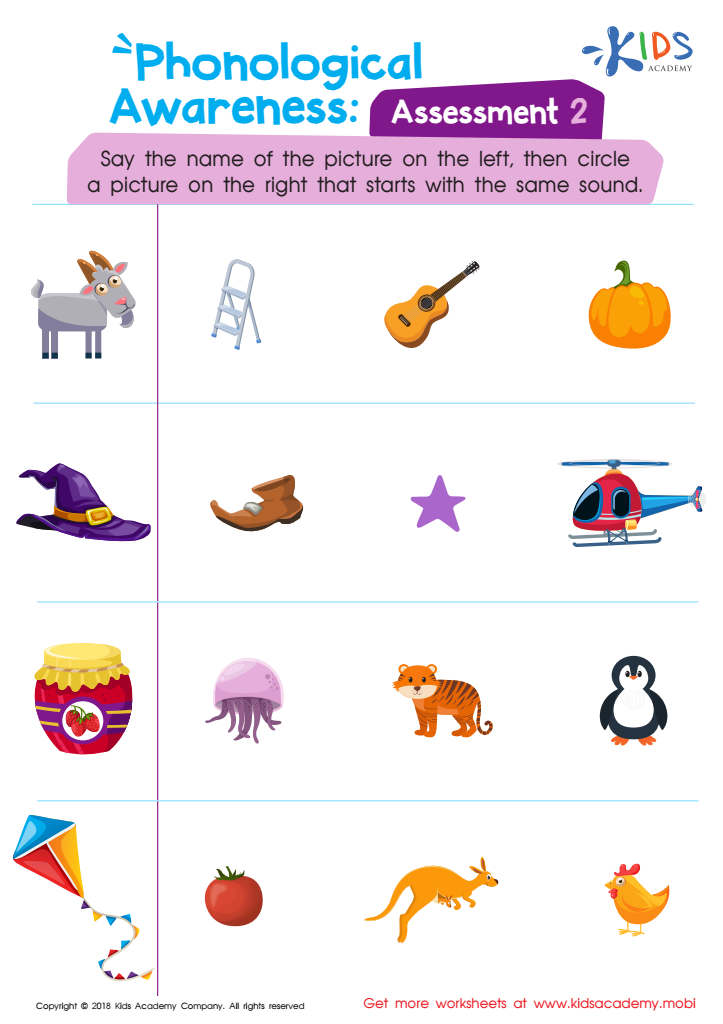
Phonological Awareness: Assessment 2 Worksheet
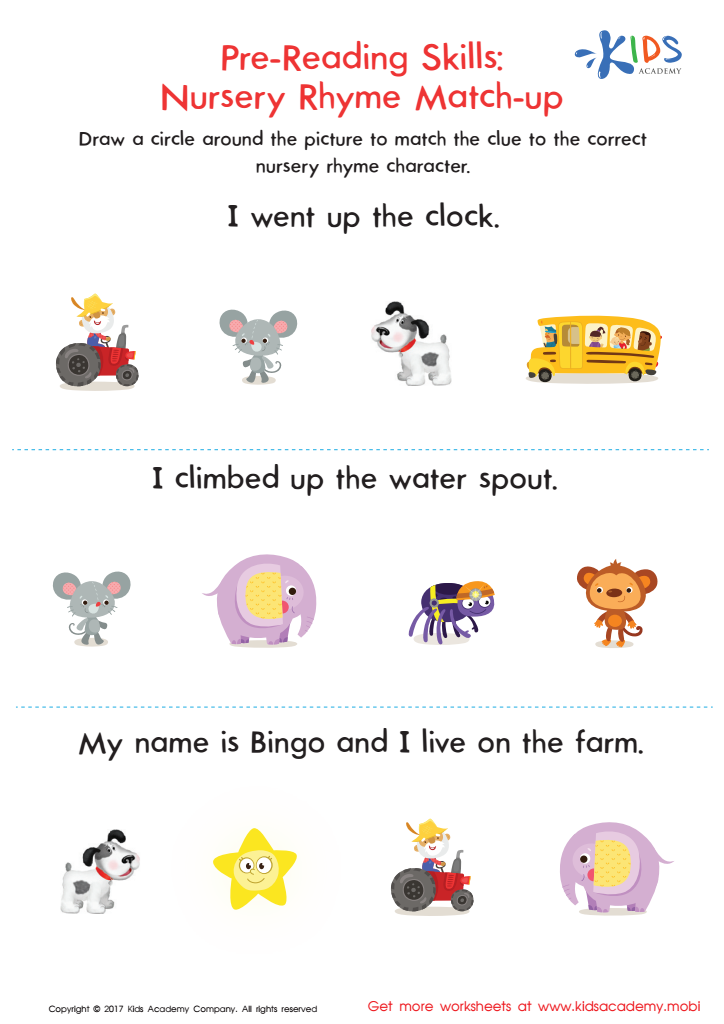
Nursery Rhyme Match–Up Worksheet



.jpg)

Rhyme recognition and understanding the alphabet are crucial linguistic skills for children aged 4-5. Parents and teachers should prioritize these elements because they lay the foundation for reading and writing. Rhyme recognition enhances phonological awareness, enabling children to discern sound patterns in words, which is fundamental to developing strong reading skills. By listening to rhymes, children improve their ability to blend sounds and segment words, essential steps in learning to read.
Additionally, mastering the alphabet at this age equips children with the building blocks of literacy. Recognizing letters and their corresponding sounds fosters letter-sound associations, making it easier for young learners to decode words. This connection is pivotal in the reading process and language development overall.
Moreover, incorporating rhyme and phonics into play and daily routines enhances engagement and makes learning fun. Rhymes help children develop a love for language through playful interactions, songs, and stories. When parents and teachers emphasize these skills, they not only support children's academic growth but also boost their confidence in language use. Ultimately, promoting rhyme recognition and alphabet familiarity fosters a positive learning environment, setting the stage for successful future literacy experiences.







