Fine Motor Skills Letter F Worksheets for Ages 4-5
3 filtered results
-
From - To
Boost your child's early writing abilities with our "Fine Motor Skills Letter F Worksheets for Ages 4-5." Designed especially for preschoolers, these interactive worksheets foster essential fine motor development through engaging letter tracing, coloring, and playful activities. Enhancing skills such as hand-eye coordination and pencil grip, these worksheets provide a productive and fun way for children to practice the lowercase and uppercase versions of the letter F. Perfect for classroom reinforcement or homeschooling, each activity is crafted to build confidence and prepare your young learner for academic success. Download now to guide your child’s educational journey!
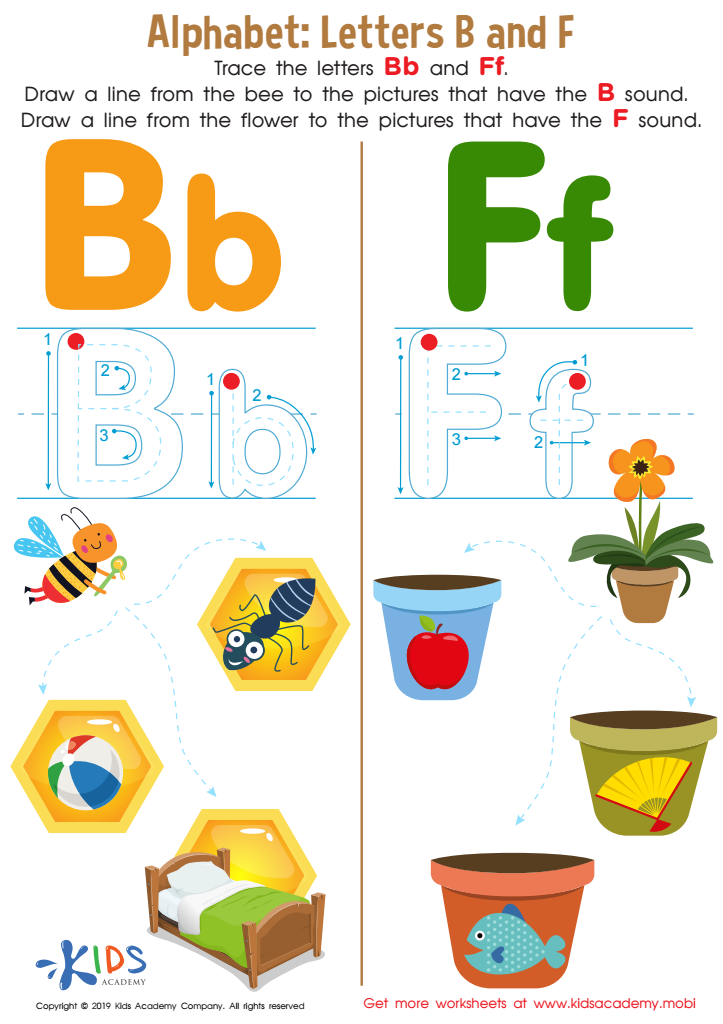
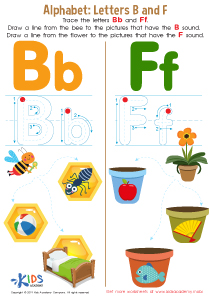
Letters B and F Tracing Worksheet
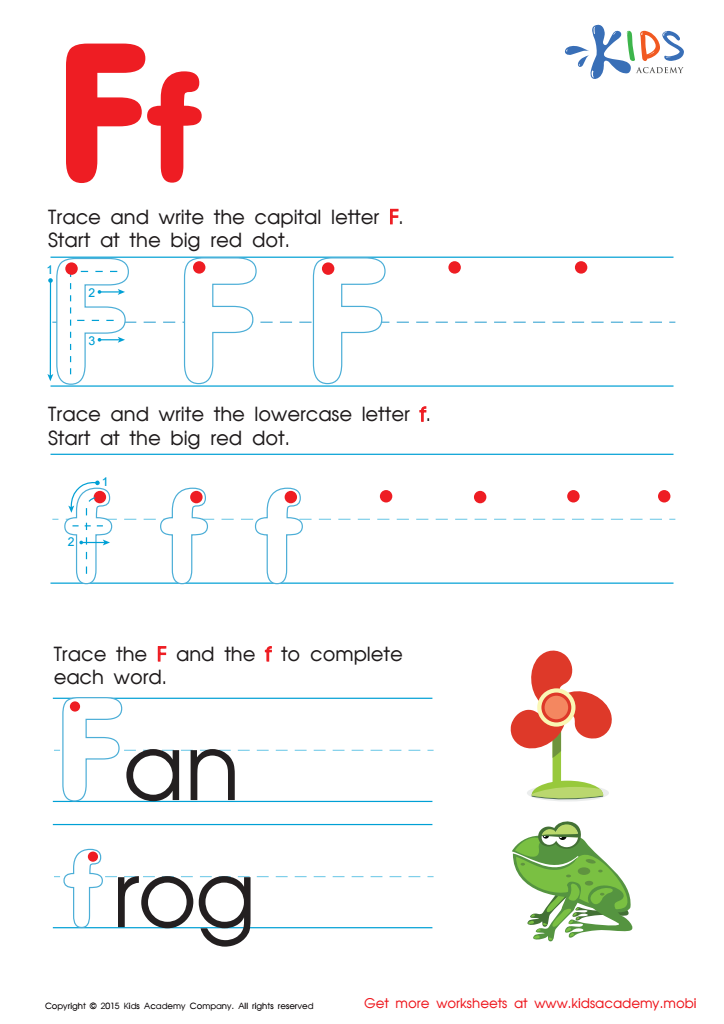
Letter F Tracing Page
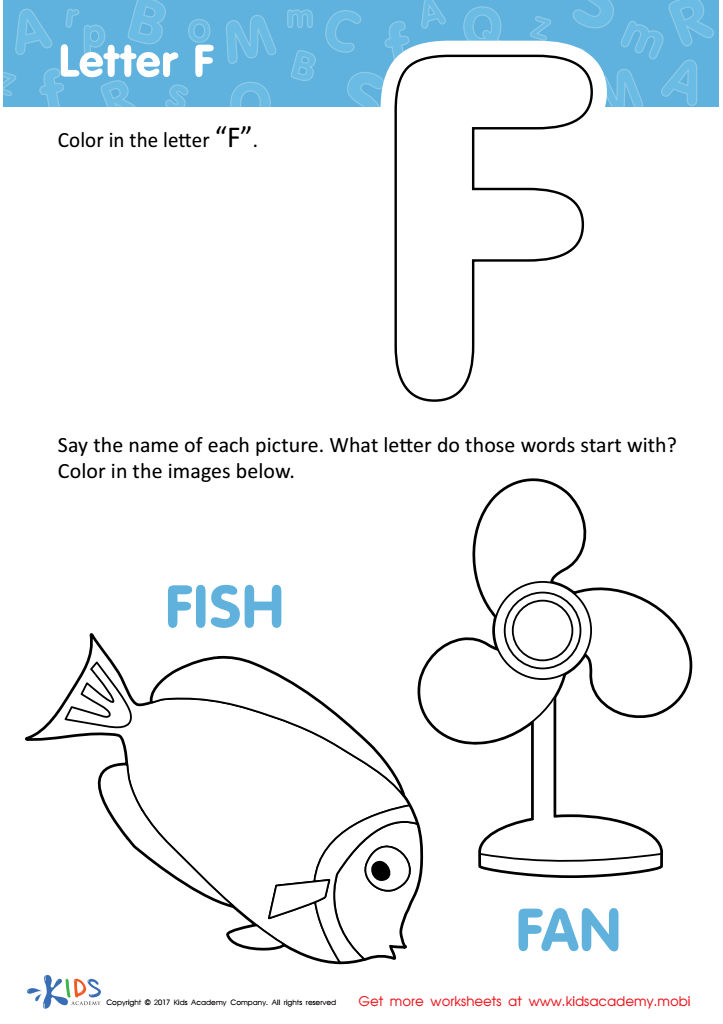
Letter F Coloring Sheet
 Assign to My Students





Fine motor skills refer to the coordination of small muscles, especially those in the hands and fingers, which are crucial for performing tasks that require precision. For children aged 4-5, developing fine motor skills can significantly impact their daily activities and learning experiences. One activity that targets these skills is practicing the letter "F" through various hands-on activities.
Parents and teachers should care about these fine motor skills for several reasons. Firstly, mastering the ability to write, especially the letter "F", lays a foundational brick in a child's journey to reading and writing. It's essential for later academic success. Secondly, activities that enhance these skills, such as tracing, coloring, or playing with clay, also improve hand-eye coordination, concentration, and even core muscle development indirectly.
Moreover, strong fine motor skills contribute to children's independence in tasks like tieing shoelaces, buttoning clothes, and using utensils, promoting self-reliance. Meanwhile, integrating the practice of specific letters, such as “F,” can make learning more fun and thematic, sparking curiosity and thematic exploration (e.g., ‘F’ for “fish” might lead to a science lesson).
Finally, early success in these tasks can boost confidence and willingness to engage in more complex activities. Investment in developing these skills ensures that children are well-prepared for the diverse challenges of elementary education and daily living.