Lowercase letter writing Letter Recognition Worksheets for Ages 4-5
3 filtered results
-
From - To
Our "Lowercase Letter Writing Letter Recognition Worksheets for Ages 4-5" are designed to help young learners master the basics of the alphabet. These engaging and educational worksheets offer a perfect blend of fun and learning, guiding children through the process of recognizing and writing lowercase letters. With colorful illustrations and clear instructions, these worksheets make it easy for your child to develop strong foundational literacy skills. Ideal for preschool and kindergarten students, our printable activities will support early writing abilities while fostering a love for reading. Boost your child's confidence and readiness for school with our expertly crafted resources.
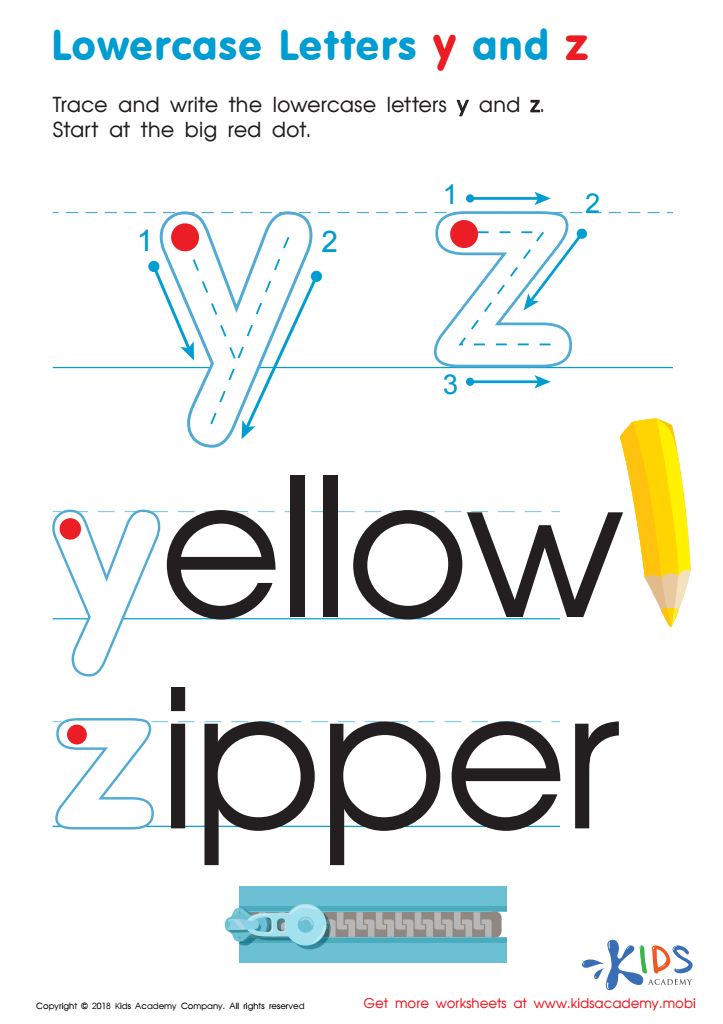
Lowercase Letters y z Worksheet
 Assign to My Students
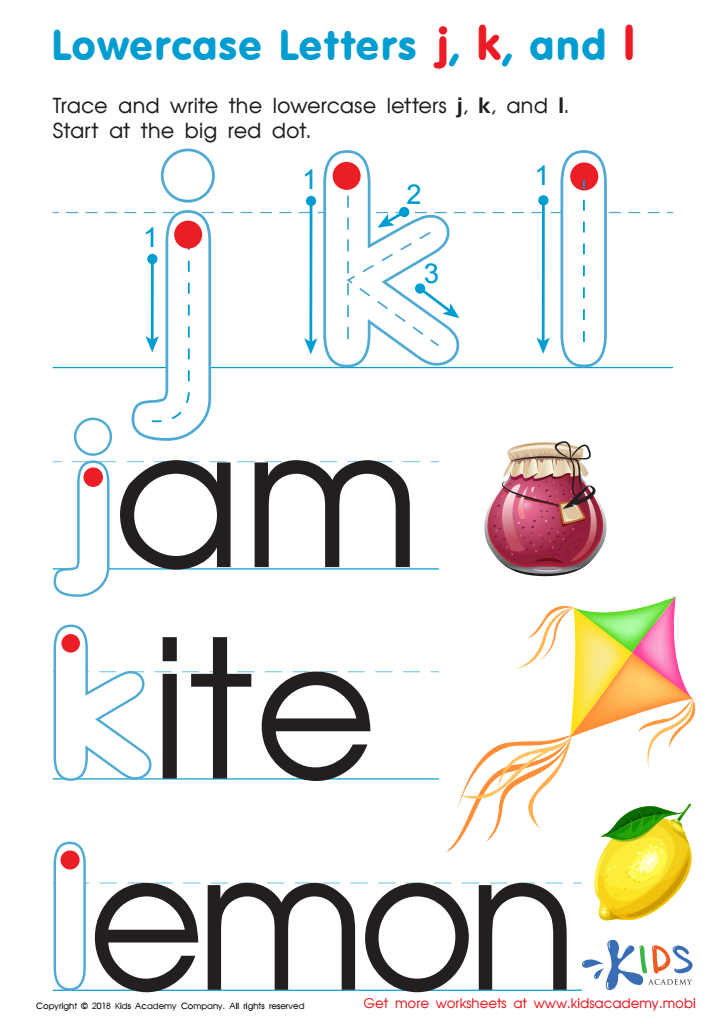
Lowercase Letters j k l Worksheet

Lowercase Letters m n o Worksheet








Lowercase letter recognition and writing for children aged 4-5 is crucial as it lays the foundation for successful literacy development. At this developmental stage, children are in their prime years for learning and absorbing information, making it the ideal time to introduce the fundamentals of reading and writing.
First, understanding lowercase letters is key, as they are more common in written text than uppercase letters, making up approximately 95% of all textual characters. This familiarity helps in easier and faster reading comprehension when they encounter books, signs, and instructions.
Second, early recognition and practice promote fine motor skills development. Writing lowercase letters involves intricate movements that refine children's hand-eye coordination and dexterity, essentials for future tasks such as handwriting and typing.
Third, gaining proficiency in lowercase letters can boost confidence. The ability to recognize and write these letters empowers children, making them eager learners who are more likely to enjoy reading and writing activities, fostering a lifelong love for learning.
Lastly, it helps bridge educational stages. Skills in letter recognition and writing serve as foundational knowledge that kindergarten and elementary curricula build upon. Establishing these skills early on ensures children enter school ahead of the curve, setting them up for academic success.







