Phonics practice Letter Recognition Worksheets for Ages 4-5
3 filtered results
-
From - To
Discover our engaging Phonics Practice Letter Recognition Worksheets designed specifically for children aged 4-5! These worksheets feature fun activities that help young learners identify letters, enhancing their reading and writing skills. Each worksheet incorporates vibrant illustrations and interactive exercises to keep kids motivated while they practice letter recognition. As they analyze and match letters, students build essential phonics skills that lay the foundation for reading success. Ideal for preschool and kindergarten environments, our worksheets support early literacy development in a playful manner. Give your child a head start on their literacy journey with our thoughtfully crafted resources!
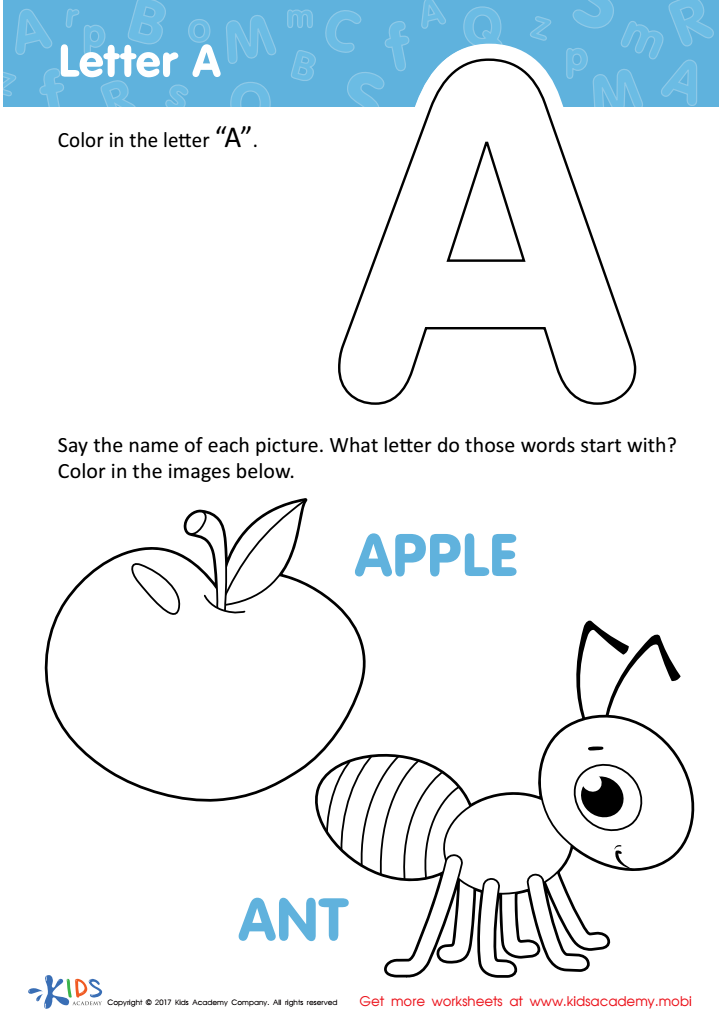
Letter A Coloring Sheet
 Assign to My Students
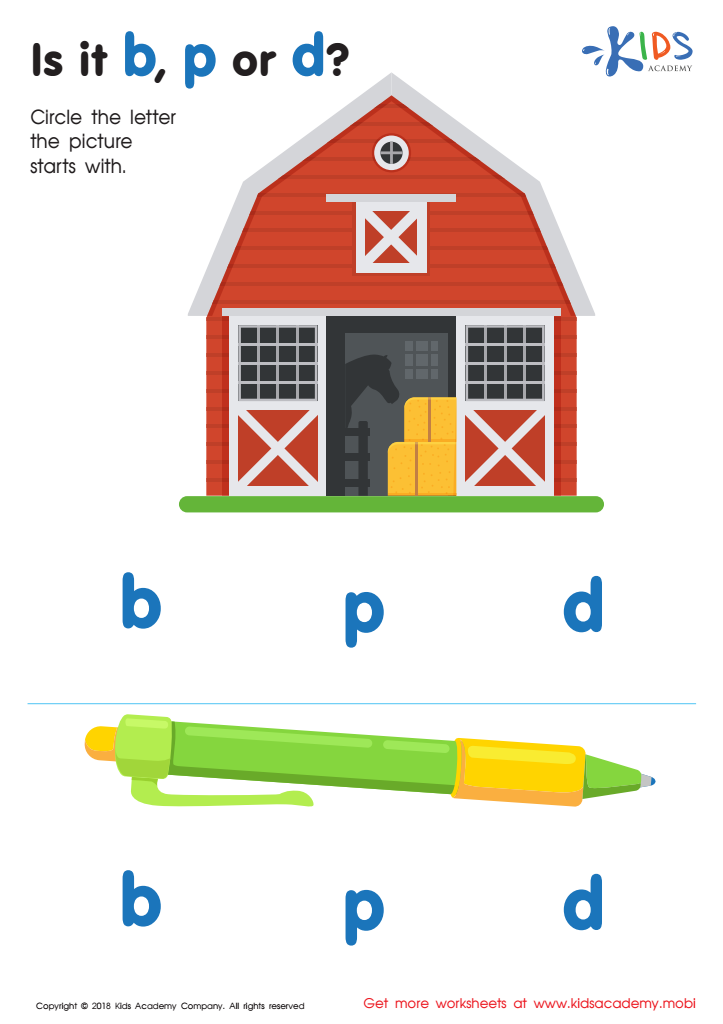
Is it b, p or d? Worksheet
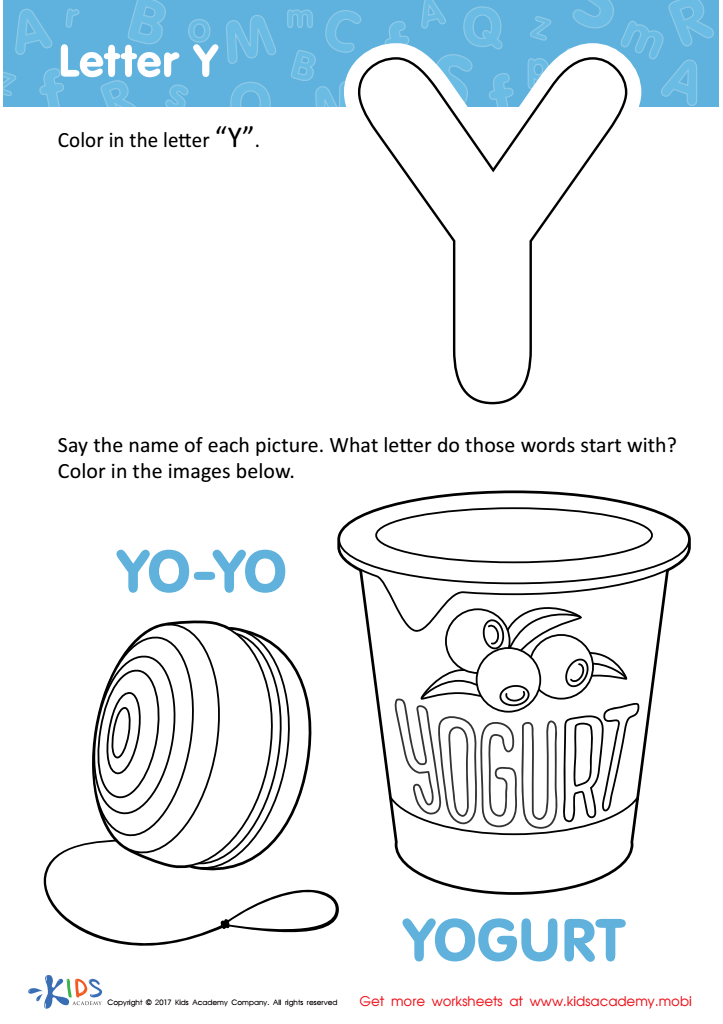
Letter Y Coloring Sheet
Assign to My Students








Phonics practice and letter recognition are foundational components of early literacy development for children aged 4-5. At this stage, children are beginning to make critical connections between letters and their corresponding sounds, which is essential for reading. Parents and teachers should care about phonics practice because it enhances children’s ability to decode words, aiding in their reading fluency and comprehension.
When children engage in letter recognition, they learn to identify both uppercase and lowercase letters, fostering their ability to read simple texts effectively. This knowledge significantly benefits their vocabulary development and confidence in language skills. Moreover, mastering letter recognition can promote a love for reading, encouraging lifelong learning.
By incorporating playful phonics activities and consistent practice at home or in the classroom, adults can create a supportive learning environment that nurtures curiosity and engagement. Simple games and songs that emphasize sounds and letter forms make learning effective and enjoyable. Early intervention is crucial; the more exposure and practice children receive during these formative years, the stronger their reading skills will be, setting a positive trajectory for future academic success. In essence, focusing on phonics practice equips children with indispensable tools for their educational journey.







