
Visual discrimination Letter Recognition Worksheets for Ages 4-5
5 filtered results
Difficulty Level
Grade
Age
-
From - To
Subject
Activity
Standards
Boost your child's early reading skills with our Visual Discrimination Letter Recognition Worksheets designed for ages 4-5. These engaging and colorful worksheets help young learners differentiate between similar-looking letters, a crucial step in mastering the alphabet. By practicing letter matching, identification, and sorting activities, your child will enhance their visual discrimination abilities, setting a solid foundation for reading and writing. Our expertly crafted worksheets make learning fun and effective, offering a valuable tool for parents and teachers alike. Equip your little one with the skills they need to excel in literacy with Kids Academy's trusted resources.
Favorites
With answer key
Interactive
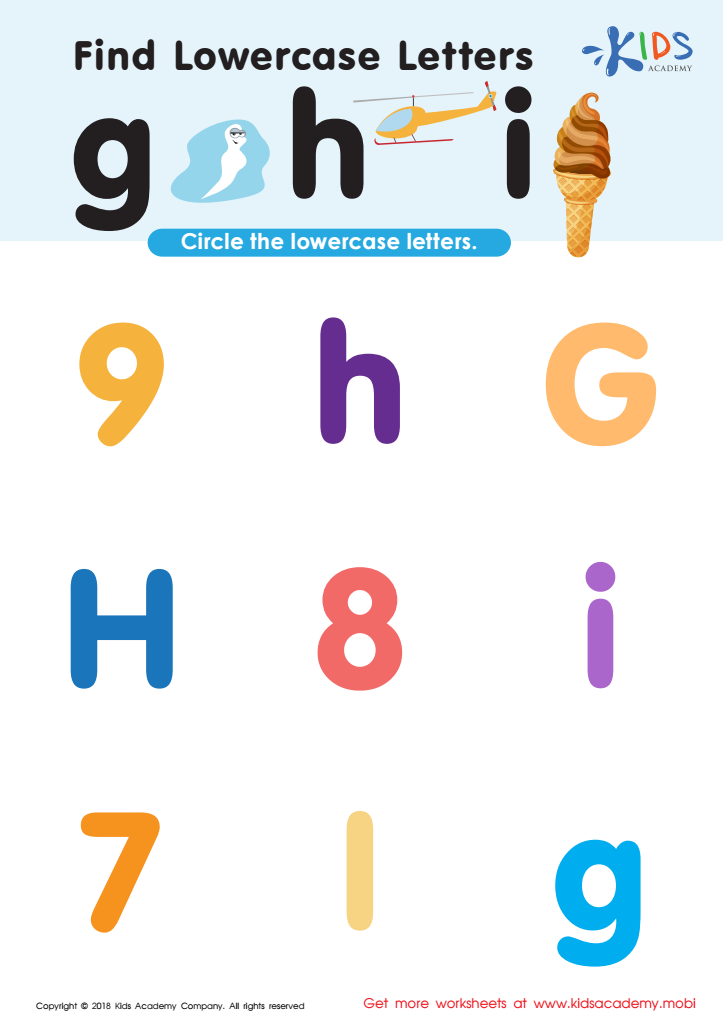
Find Lowercase Letters g h i Worksheet
Turn learning into a fun journey with your child! Use this free worksheet to find and circle the lowercase letters hidden amongst uppercase letters and numbers. Your child will understand what you're teaching them as they enjoy the search.
 Assign to My Students
Find Lowercase Letters g h i Worksheet
Worksheet
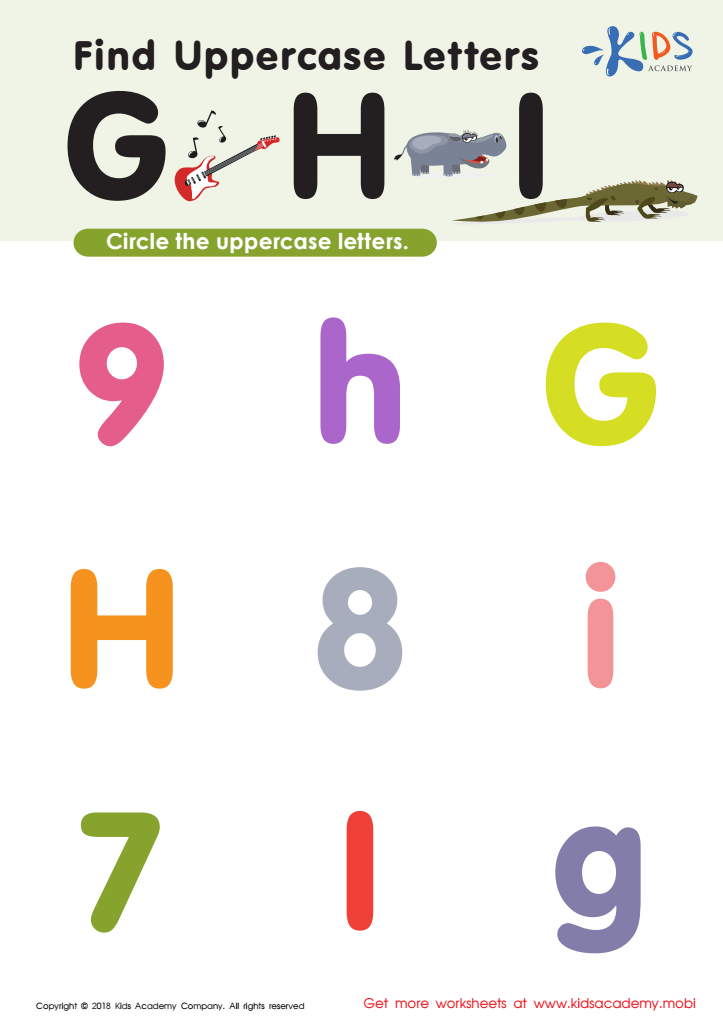
Find Uppercase Letters G, H, and I Worksheet
Find G, H, and I in uppercase with this downloadable worksheet! Numbers are included to challenge your kindergartener's letter recognition skills. Plus, practice G, H, and I sounds using the cute graphics. Perfect for learning letter case recognition!
Find Uppercase Letters G, H, and I Worksheet
Worksheet
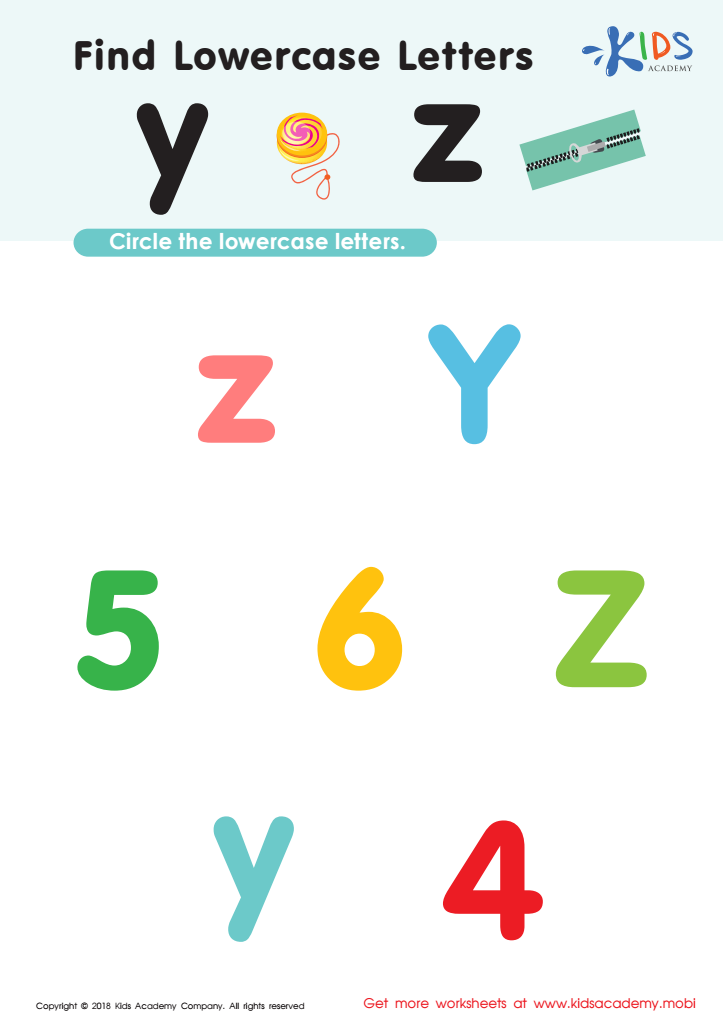
Find Lowercase Letters y z Worksheet
Help your kid learn the alphabet. Before they can move on to words and reading, they must first know the lower and uppercase letters. Show them how to find the letters y and z in this worksheet, which is filled with uppercase letters and numbers. Together, find and circle them.
Find Lowercase Letters y z Worksheet
Worksheet
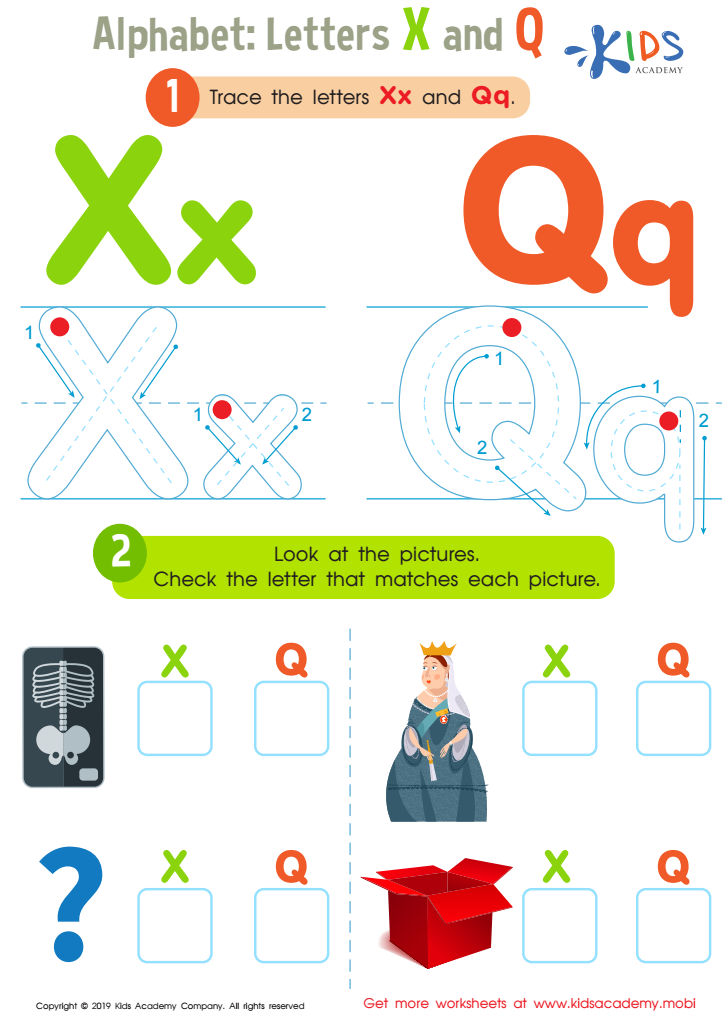
Letters X and Q Tracing Worksheet
Do you want your students to improve writing and letter recognition? This worksheet is a great place to start! Kids can trace the letters «X» and «Q» and identify pictures that match each letter. With a little encouragement, they'll do a great job!
Letters X and Q Tracing Worksheet
Worksheet
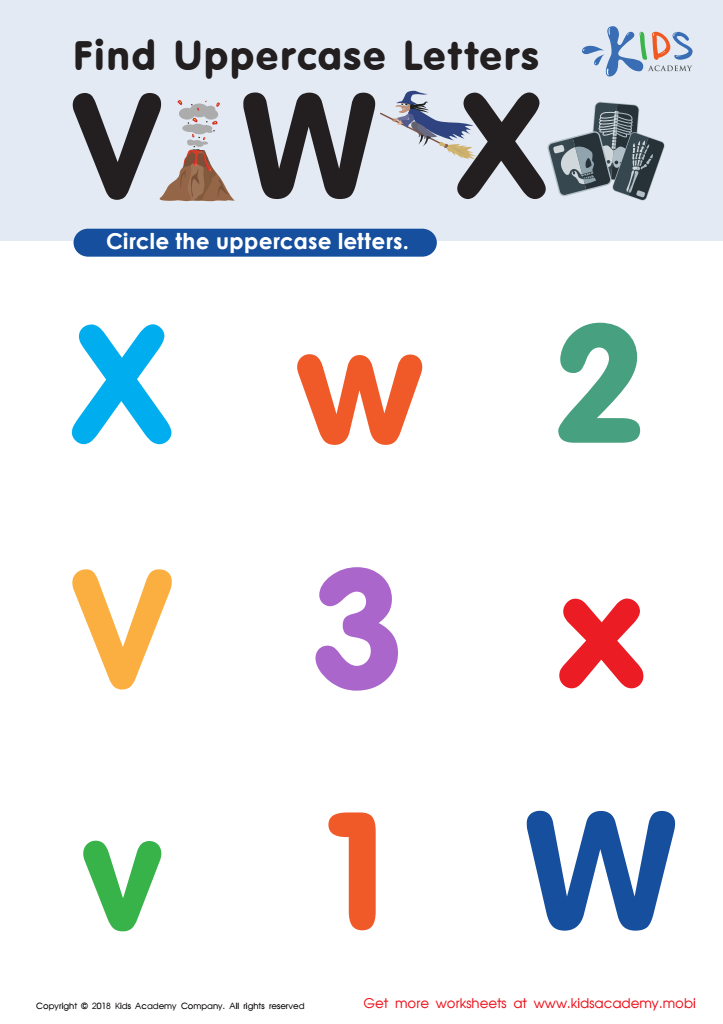
Find Uppercase Letters V, W, X Worksheet
Ask your kids if they can spot the uppercase letters V, W and X hidden in the lowercase letters and numbers, then have them circle them. After that, ask them to give you examples of words beginning with those letters. This worksheet will help them get started.
Find Uppercase Letters V, W, X Worksheet
Worksheet
Join Kids Academy for Free
Who is primarily going to use this learning content?








Parents and teachers should place significant importance on visual discrimination and letter recognition for children aged 4-5 because these skills are foundational for early reading and writing development. Visual discrimination enables children to notice and differentiate between the subtle differences in shapes, which is crucial for distinguishing letters that may look similar, such as 'b' and 'd' or 'p' and 'q'. This ability directly impacts their capacity to decode and understand written text, an essential precursor to literacy.
The early acquisition of letter recognition helps in creating a robust foundation for phonemic awareness, where children learn the associated sounds of each letter, a critical step in learning to read. When children can effortlessly recognize and name letters, they experience greater ease when blending sounds to form words or segmenting sounds within words, thereby enhancing their spelling and reading fluency.
Furthermore, early mastery in these areas boosts children's confidence and enjoyment in learning, setting a positive trajectory for future academic achievement. Engaging children in fun, interactive letter recognition activities—like letter puzzles, matching games, and sorting exercises—makes learning enjoyable and easier to grasp.
Thus, by prioritizing visual discrimination and letter recognition, parents and teachers help children develop competencies that are vital for academic success and foster a lifelong love of reading and learning.







