Letter recognition Letter U Worksheets for Ages 4-5
5 filtered results
-
From - To
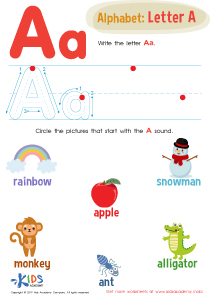
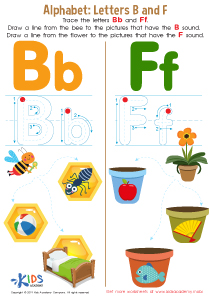
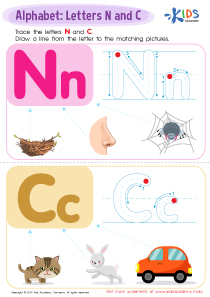
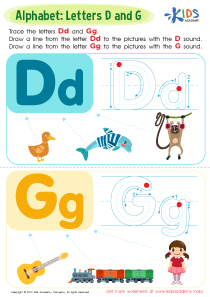
Explore engaging and interactive "Letter U Recognition Worksheets for Ages 4-5" designed to enhance your child's alphabet skills. These fun-filled sheets feature various activities, including tracing, coloring, and matching, that help young learners identify and comprehend the letter U. With playful images and hands-on exercises, children enjoy learning while developing critical pre-reading skills. Ideal for preschool and kindergarten students, these worksheets strengthen fine motor skills and boost confidence in recognizing letters. Give your little ones an educational head start with our expertly crafted resources tailored to spark interest and support their early literacy journey.
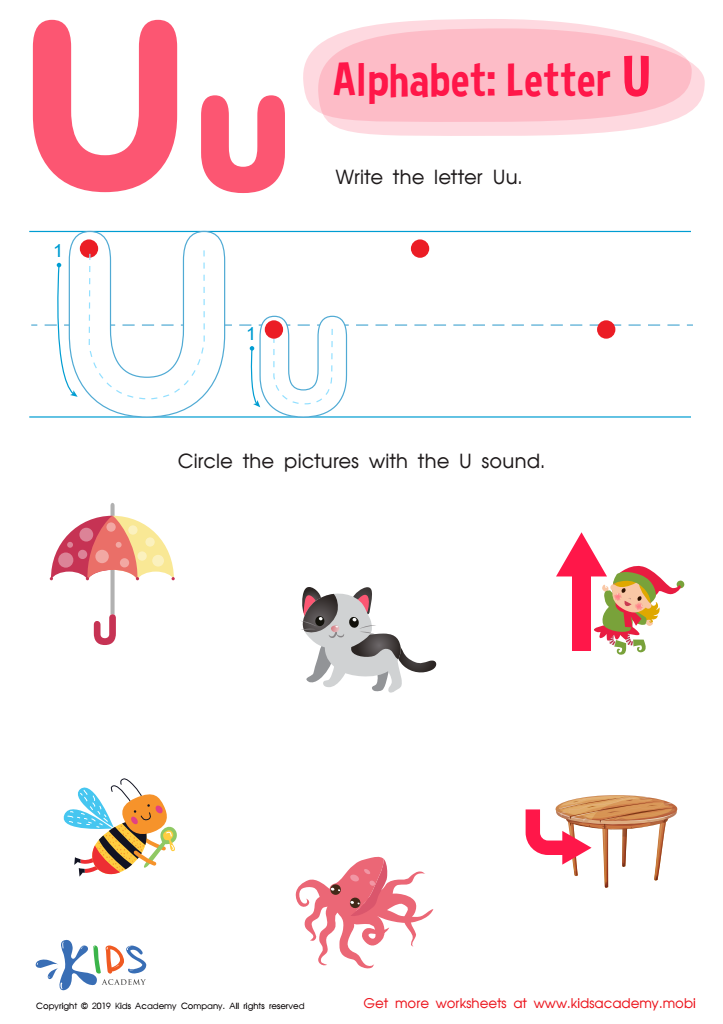
Letter U Tracing Worksheet
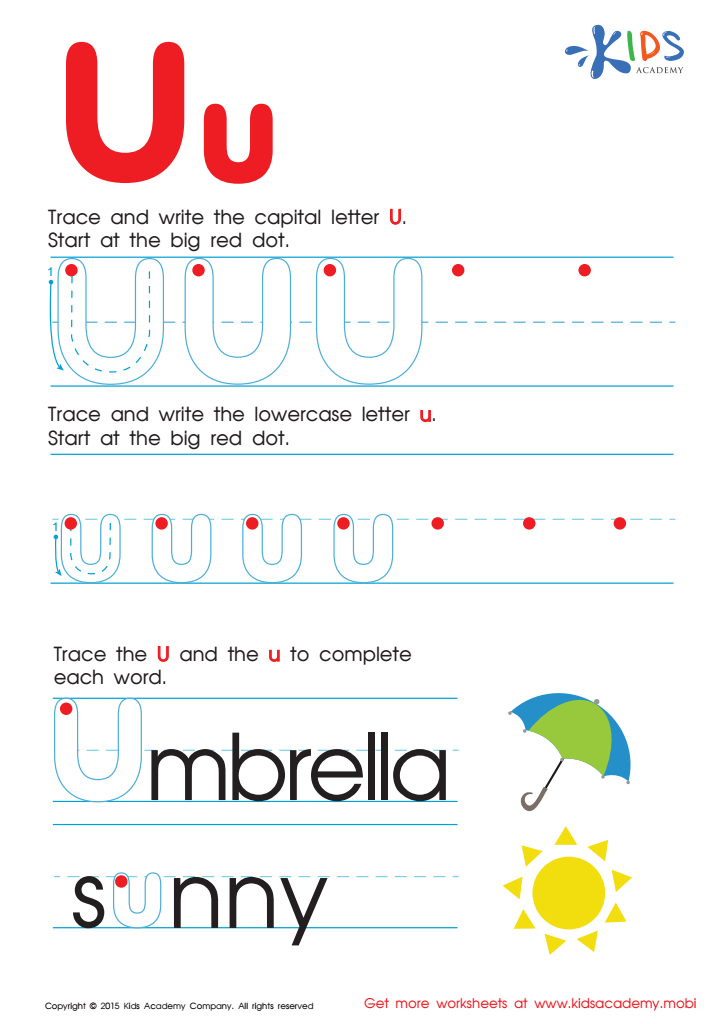
Letter U Tracing Page
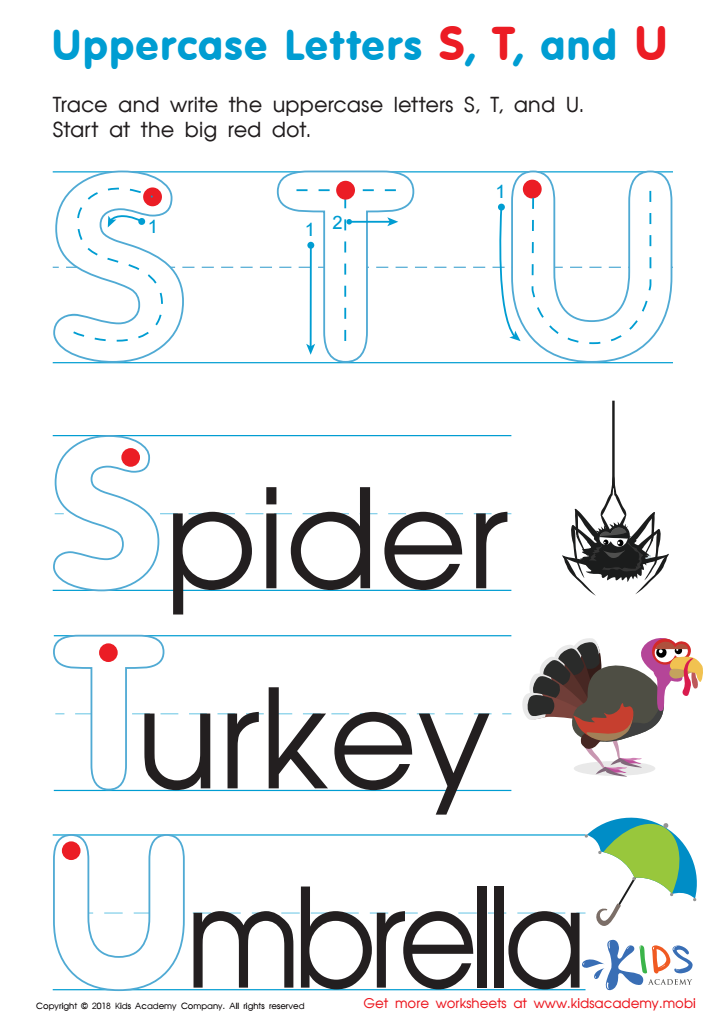
Uppercase Letters S, T, and U Worksheet
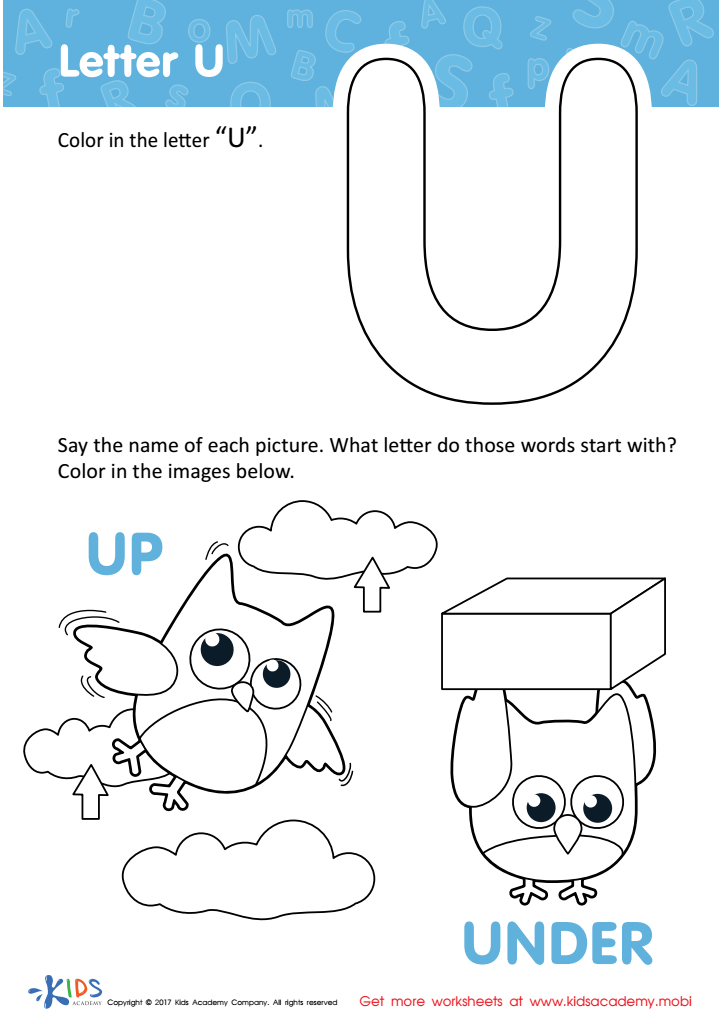
Letter U Coloring Sheet
 Assign to My Students
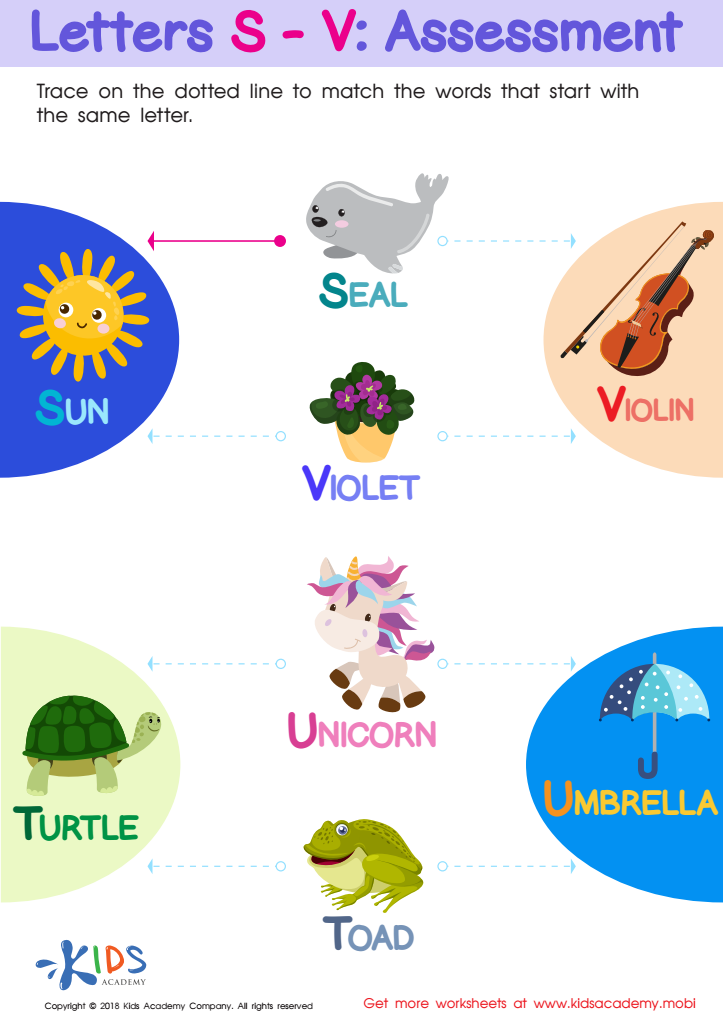
Letters S - V Tracing Worksheet





Letter recognition, including recognizing the letter U, is crucial for children ages 4-5. At this developmental stage, young learners are like little sponges, absorbing foundational skills that will support their future reading and writing abilities. When parents and teachers focus on letter recognition, they lay the groundwork for essential literacy skills.
Recognizing the letter U, both its uppercase and lowercase forms, contributes to a child’s alphabet knowledge—a cornerstone for reading. It helps them understand that letters are distinct symbols that correspond to specific sounds. This familiarity allows children to start decoding words, a vital step in learning to read.
Moreover, when children can identify letters, they feel more confident and interested in engaging with books and printed material. This early engagement fosters a love for reading, sparking curiosity and a lifelong learning journey.
Additionally, recognizing the letter U and other alphabet letters aids in developing fine motor skills. Activities like tracing or writing the letter U strengthen hand-eye coordination and fine motor control, preparing children for writing tasks they'll encounter in school.
In summary, focusing on letter recognition, such as the letter U, equips children with critical skills for reading and writing, boosts confidence, and nurtures an early love for learning. Therefore, parents and teachers have an essential role in making this learning process engaging and effective.