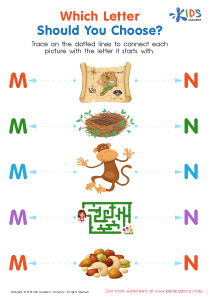
Alphabet familiarity Lowercase/Small Letters Worksheets for Ages 4-5
3 filtered results
-
From - To
Discover our engaging "Alphabet Familiarity Lowercase/Small Letters Worksheets" designed specifically for children ages 4-5. These worksheets help young learners recognize, trace, and write lowercase letters while enhancing their understanding of the alphabet. Through fun activities and vibrant illustrations, kids will explore letter formation, improve fine motor skills, and boost their letter recognition abilities. Perfect for at-home learning or classroom use, these resources provide a solid foundation in literacy while keeping children motivated and excited about learning. Foster a love for reading and writing with our carefully crafted worksheets, ideal for nurturing early literacy skills in a playful and interactive manner.
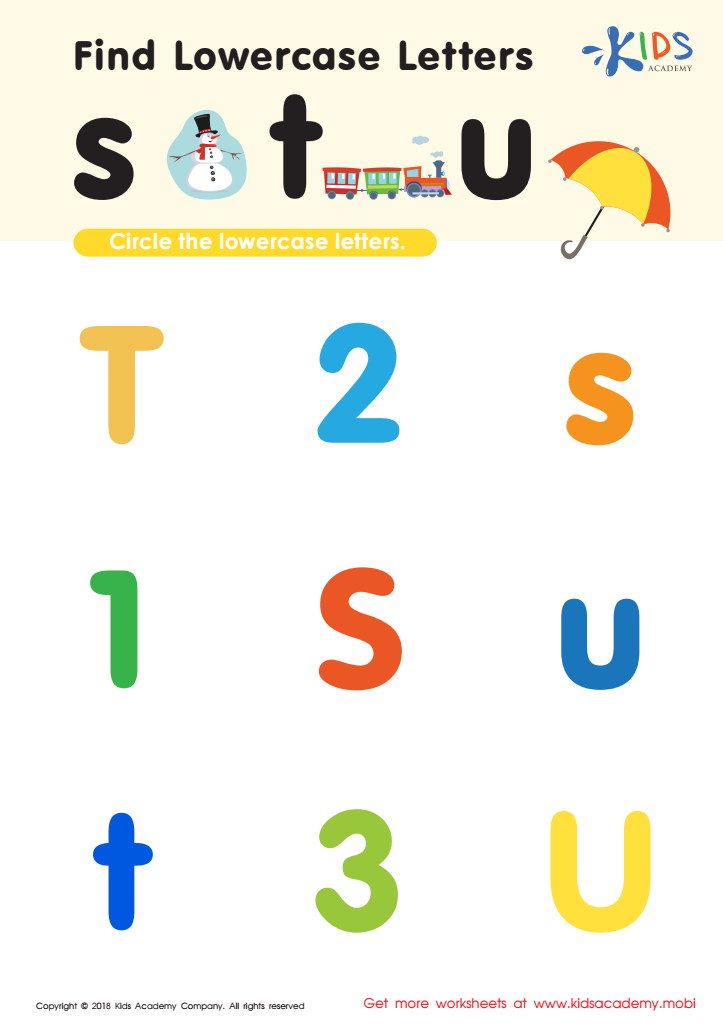
Find lowercase Letters s t u Worksheet
 Assign to My Students
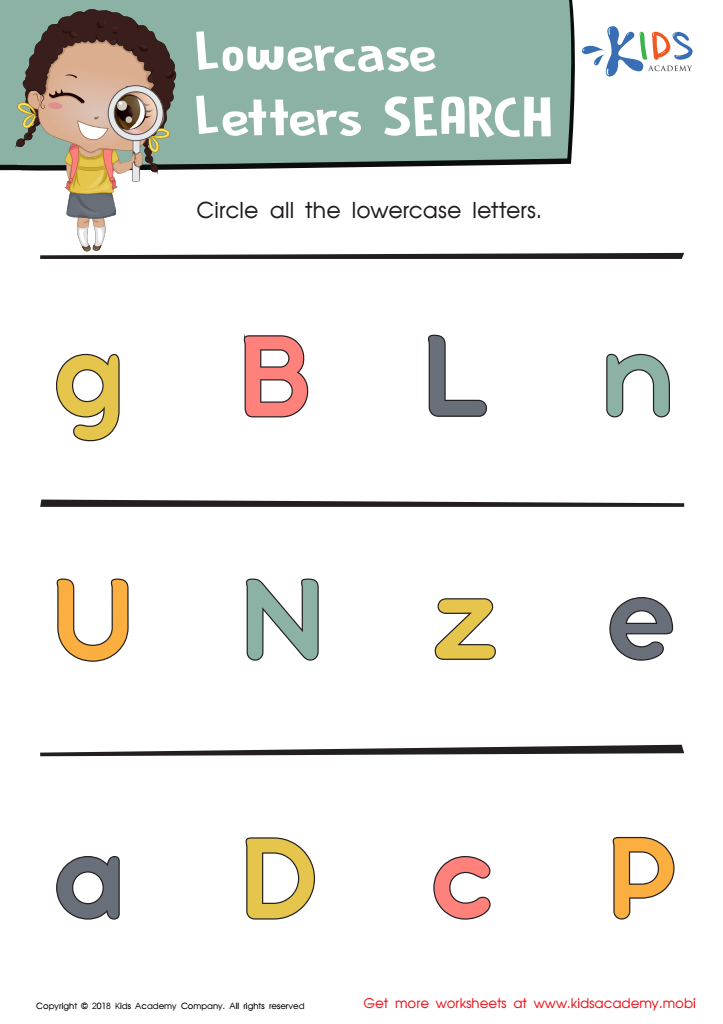
Lowercase Letters Search: Assessment Worksheet
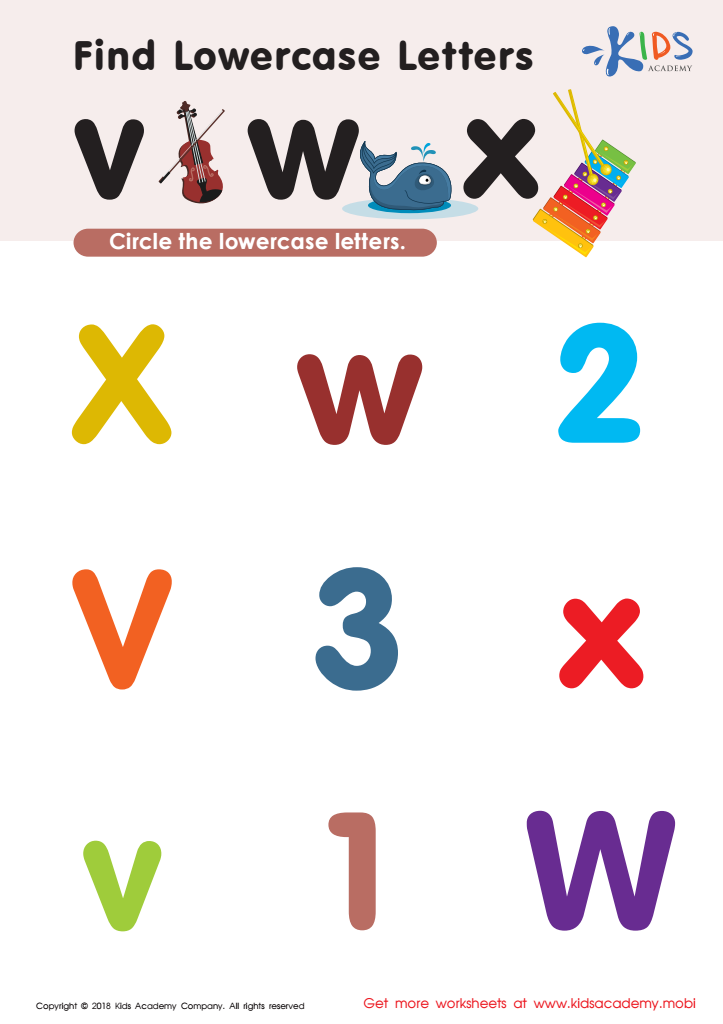
Find Lowercase Letters v w x Worksheet


Alphabet familiarity, particularly with lowercase letters, is crucial for children aged 4-5 as it lays the foundation for literacy development. At this stage, children are developing their phonetic awareness and start recognizing that letters represent sounds. Familiarity with lowercase letters is essential since these are the forms they will encounter most frequently in reading and writing.
When children learn to identify and distinguish lowercase letters, they enhance their ability to decode words. This skill is necessary for early reading proficiency. Additionally, recognizing these letters enables children to understand that writing is an extension of spoken language, which fosters both their reading and writing skills.
Parents and teachers play a vital role in supporting this learning process. By introducing fun, engaging activities like letter games, storytime with picture books, and art projects, they can help children explore and recognize lowercase letters in various contexts. Providing a rich literacy environment enhances motivation and builds confidence in young learners. Ultimately, promoting familiarity with lowercase letters supports cognitive development, paving the way for successful literacy skills and a lifelong love for reading and writing. Engaging early with this literacy foundation can lead to better academic outcomes as children progress in their education.