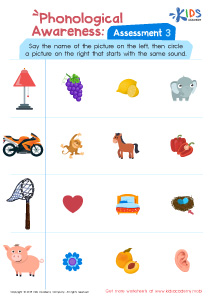
Rhyming skills development Rhyming Worksheets for Ages 4-5
3 filtered results
-
From - To
Enhance your child's language skills with our engaging Rhyming Worksheets, specially designed for ages 4-5. These interactive activities make learning fun while fostering phonemic awareness through rhyming exercises. Explore a variety of worksheets that focus on identifying, matching, and creating rhymes, helping young learners develop crucial literacy skills early on. Our resources are perfect for both home and classroom settings, providing an enjoyable way for children to practice sound patterns and improve their vocabulary. Join us in nurturing your child's love for language through delightful rhyming activities that spark creativity and confidence in their reading journey!
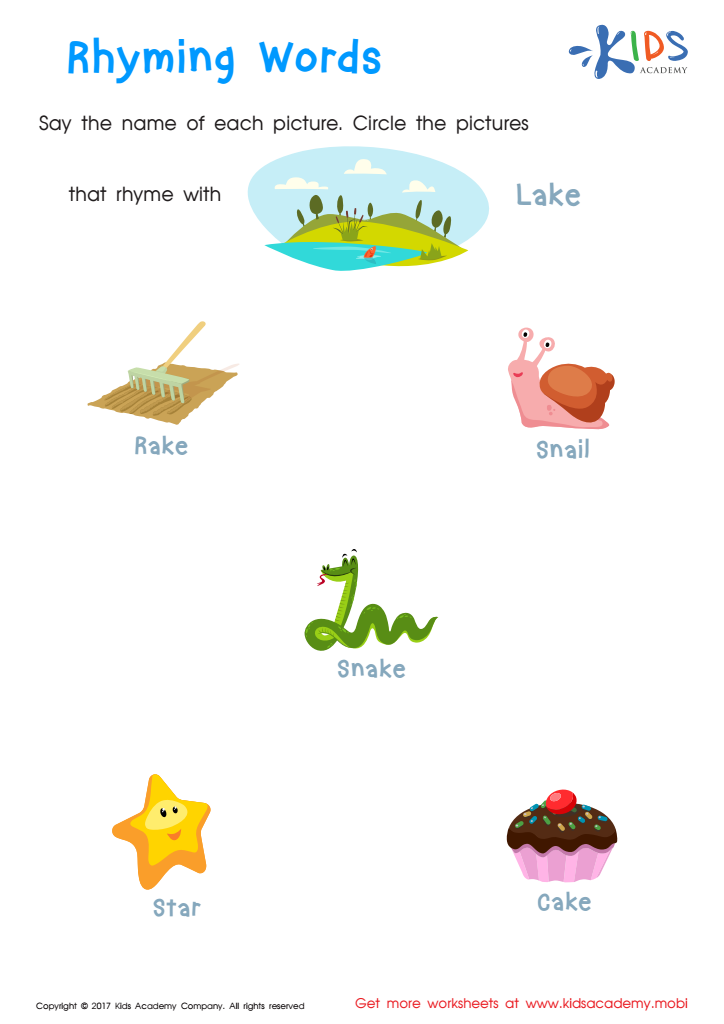
Rhyming Words Rhyming Worksheet
 Assign to My Students
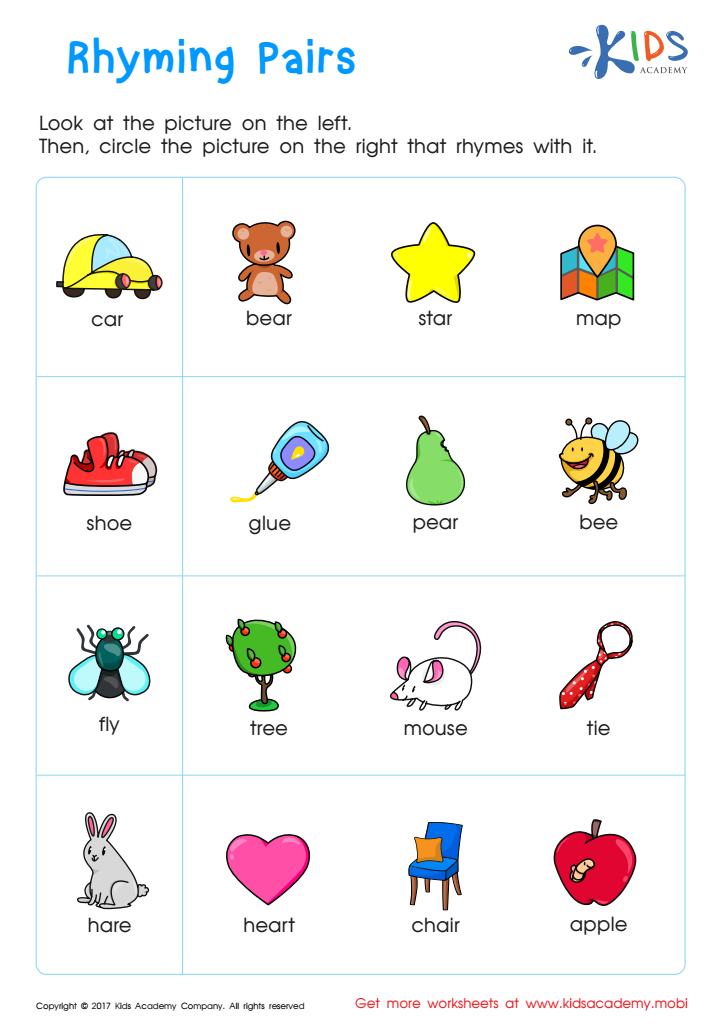
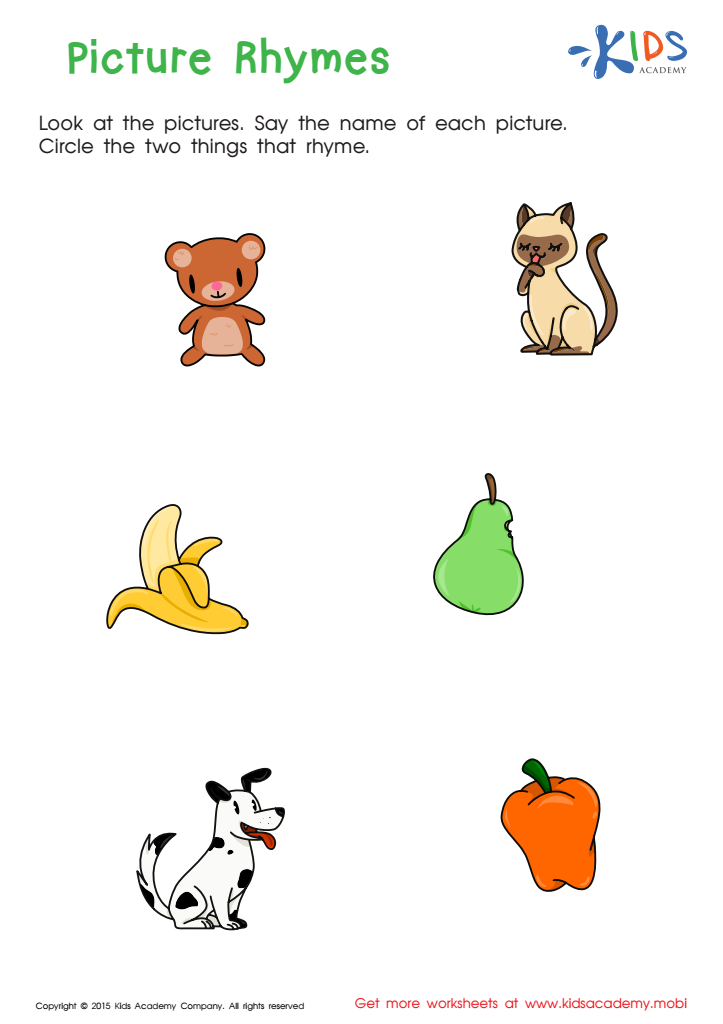
First Words: Picture Rhymes Worksheet








Rhyming skills are a foundational element in early language development for children aged 4-5. Understanding and producing rhymes enhance phonemic awareness, which is essential for reading readiness. When children recognize and create rhymes, they learn to identify sounds within words, making it easier for them to decode text later on.
Additionally, rhyming promotes vocabulary expansion. Exposure to new words in a playful context helps children understand and remember their meanings. Rhyme also aids in developing auditory discrimination, enabling children to distinguish between similar sounds, an important skill for effective communication.
Furthermore, engaging in rhyming activities nurtures creativity and imagination, allowing children to play with language and express themselves. This can boost self-confidence in their verbal abilities. Rhyming songs, poems, and games are enjoyable and social activities, fostering a love for language and literacy.
Ultimately, parents and teachers should care about rhyming skills because they lay the groundwork for successful reading and writing. By encouraging rhyming, we nurture a love for learning and equip children with essential skills that will support their academic journey. Investing time in this playful language activity today can lead to greater literacy success tomorrow.