
Letter-sound association Upper & Lowercase Letters Worksheets for Ages 4-5
3 filtered results
Difficulty Level
Grade
Age
-
From - To
Subject
Activity
Standards
Discover our engaging Letter-Sound Association Upper and Lowercase Letters Worksheets designed specifically for children aged 4-5! These printable resources encourage young learners to connect letters with their corresponding sounds, laying a strong foundation for reading and language skills. Each worksheet features interactive activities that promote recognition of both uppercase and lowercase letters, helping kids enhance their phonemic awareness in a fun and accessible way. Ideal for home or classroom use, these worksheets foster early literacy skills and support children's cognitive development. Encourage your little ones to explore the world of letters and sounds with our thoughtfully crafted activities today!
Favorites
With answer key
Interactive
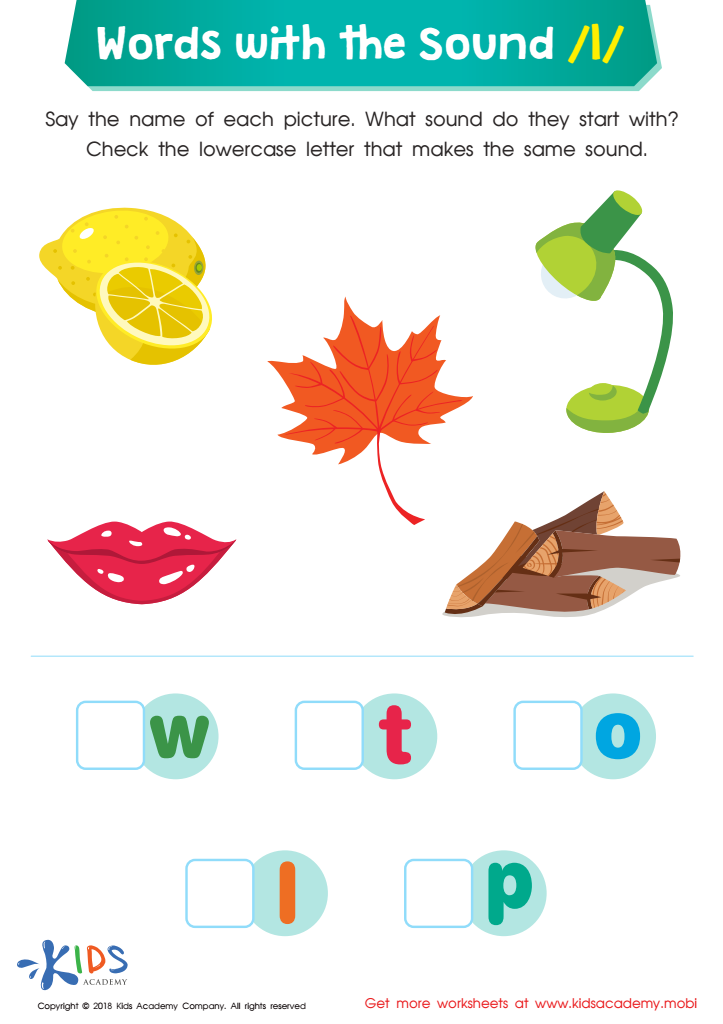
Words with Sound L Reading Worksheet
This PDF worksheet is great for helping emerging readers isolate initial sounds. Kids name familiar pictures, then identify the correct letter for the "l" sound. This worksheet strengthens fine motor skills, plus builds visual discernment. It's fun and colorful too!
 Assign to My Students
Words with Sound L Reading Worksheet
Worksheet

Lowercase Letters m n o Worksheet
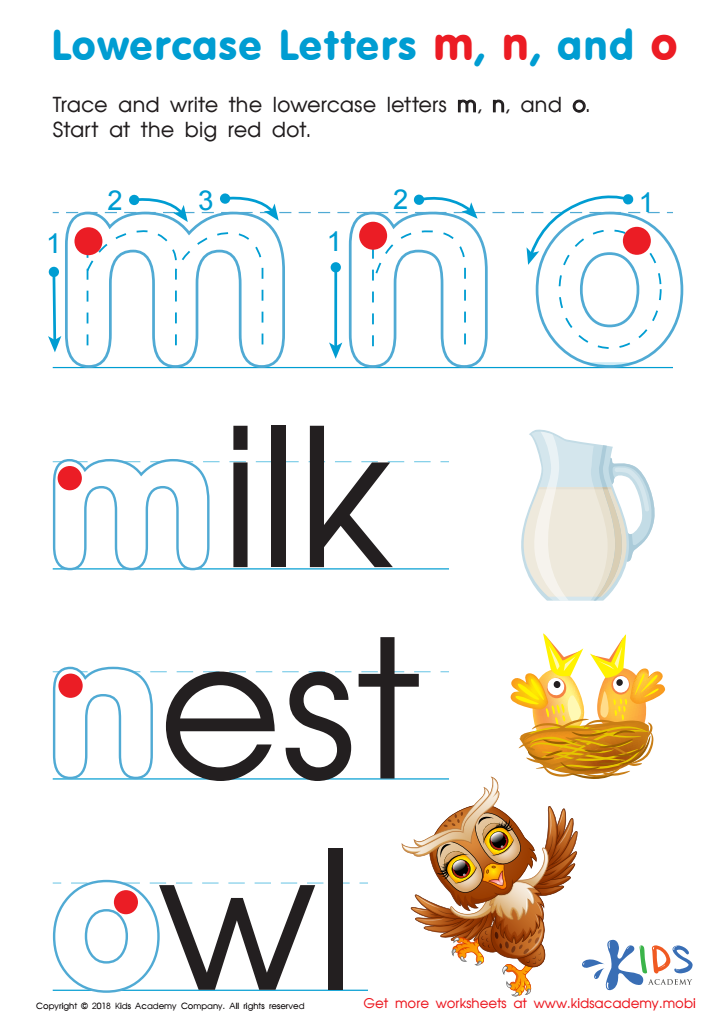
Help your child learn the alphabet with letter tracing. Show them the difference between uppercase and lowercase letters by working through this free worksheet, tracing and writing lowercase m, n and o.
Lowercase Letters m n o Worksheet
Worksheet
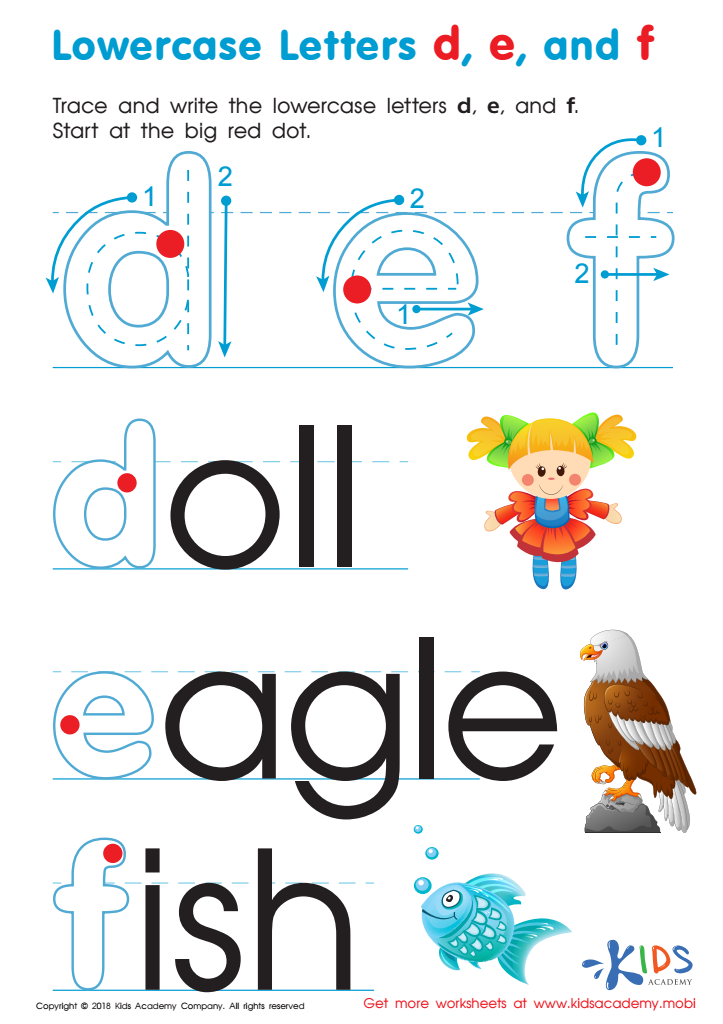
Lowercase Letters d e f Worksheet
Help your child learn the alphabet letters by tracing and writing the lowercase letters d, e, and f. Begin at the big red dot and follow the dots. This worksheet will help your little one gain a better understanding of the letters.
Lowercase Letters d e f Worksheet
Worksheet
Join Kids Academy for Free
Who is primarily going to use this learning content?






Understanding letter-sound associations and recognizing both uppercase and lowercase letters are fundamental skills for children aged 4-5, setting the groundwork for future literacy success. At this stage, children are typically developing phonemic awareness, which is crucial for learning to read and write. By teaching them to associate specific letters with their corresponding sounds, parents and teachers help children decode words, enhancing their reading fluency and comprehension.
Moreover, knowing both uppercase and lowercase letters is essential for understanding written text in everyday life; it aids in recognition of personal names, places, and signs. Children often encounter printed material in various contexts, and for them to engage with their environment confidently, they need to grasp how these letters function.
Additionally, the practice of sharing letter-sound associations through playful activities ignites curiosity and promotes a love for language. Engaging in this foundational literacy practice fosters communication skills and invites opportunities for rich interactions, deepening the child’s understanding of the world around them.
Ultimately, supporting literacy development at this stage equips children with tools that will empower them throughout their educational journey, making letter-sound associations vital and worthwhile investments of time and effort by parents and teachers alike.







