Uppercase identification Upper & Lowercase Letters Worksheets for Ages 4-5
5 filtered results
-
From - To
Discover an engaging way to teach uppercase and lowercase letters with our Uppercase Identification Worksheets for Ages 4-5! Tailored for young learners, these interactive resources promote letter recognition through fun activities. Each worksheet includes visually stimulating illustrations along with various exercises designed to reinforce uppercase differentiation. Children will gain confidence as they practice identifying letters in captivating formats, ensuring playful learning. Our worksheets foster essential pre-reading skills while supporting fine motor development. Perfect for at-home or classroom use, our uppercase identification resources encourage children to explore the alphabet and lay a strong foundation for their literacy journey. Start your child's learning adventure today!
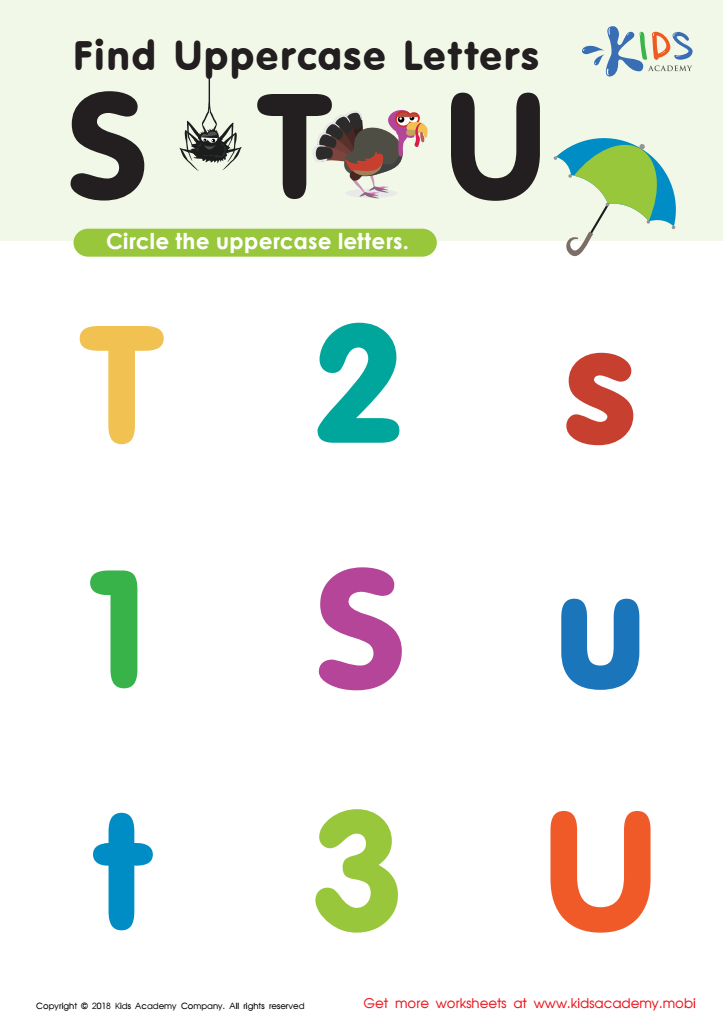
Find Uppercase Letters Worksheet
 Assign to My Students

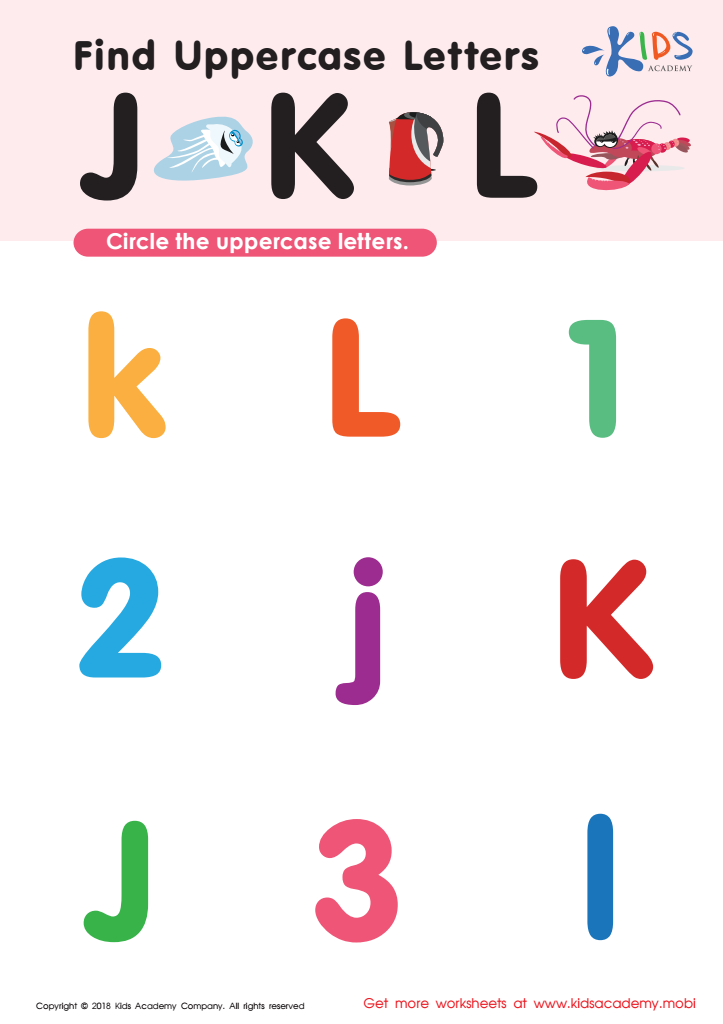
Find Uppercase Letters J, K, and L Worksheet

Find Uppercase Letters A, B, and C Worksheet
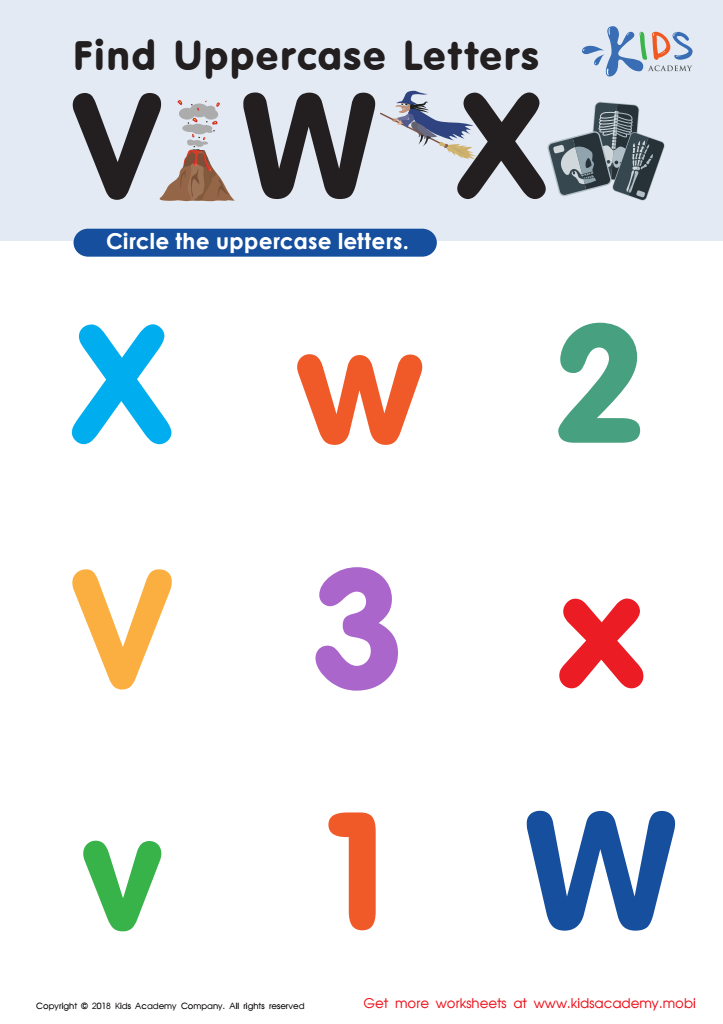
Find Uppercase Letters V, W, X Worksheet
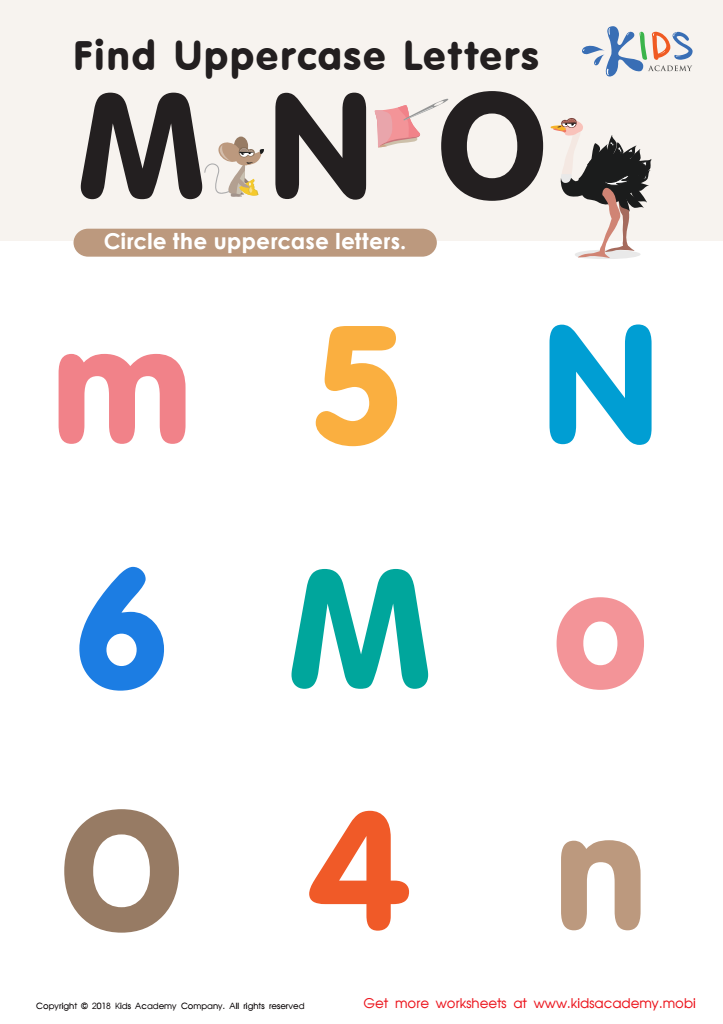
Find Uppercase Letters M, N, and O Worksheet






Uppercase and lowercase letter identification is crucial for young learners aged 4-5 as it lays the foundation for literacy skills. Understanding the difference between uppercase and lowercase letters helps children recognize the variations in letters they will encounter in reading and writing. This differentiation aids in developing phonemic awareness, which is essential for decoding words and developing reading fluency.
Moreover, children learn that uppercase letters typically signal the beginning of sentences or proper nouns, highlighting the structure of written language. This understanding is vital for crafting coherent sentences as they begin to write. Building familiarity with both forms of letters also boosts confidence in expressing themselves through writing, whether it be their name or simple sentences.
For teachers and parents, consistent reinforcement of uppercase and lowercase identification in playful and engaging ways, like games or storybooks, makes learning enjoyable. Early mastery is associated with long-term academic success. By recognizing letters in various contexts, children enhance their reading comprehension, eventually leading to better overall literacy. In summary, focusing on uppercase and lowercase letters is vital not just for immediate learning, but for instilling the skills necessary for future reading and writing proficiency.







