Vocabulary development Vowels Worksheets for Ages 4-5
4 filtered results
-
From - To
Boost your child's vocabulary development with our engaging Vowels Worksheets, designed specifically for ages 4-5. These printable resources focus on recognizing and pronouncing vowels, a crucial step in early language acquisition. Kids will enjoy interactive activities that make learning fun and effective, helping them to identify vowel sounds in words and improving their reading skills. Each worksheet aims to build a strong vocabulary foundation, setting young learners on the path to literacy success. Perfect for preschool and kindergarten students, these worksheets make vowel practice easy and enjoyable. Download today for free and start your child’s educational journey!
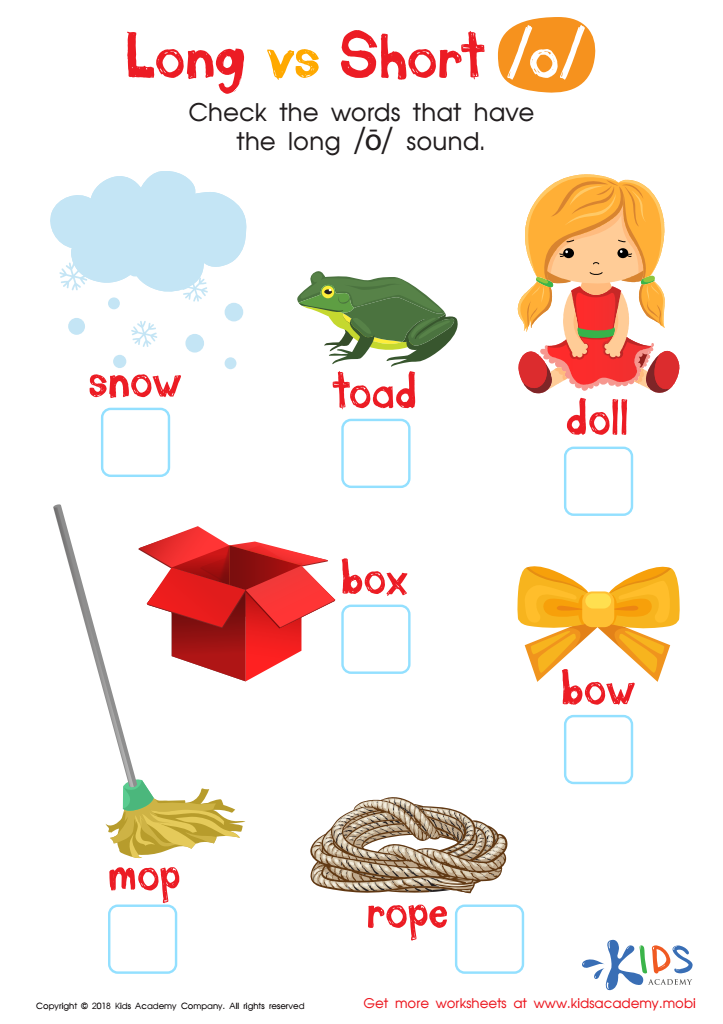
Long vs Short O Reading Worksheet
 Assign to My Students
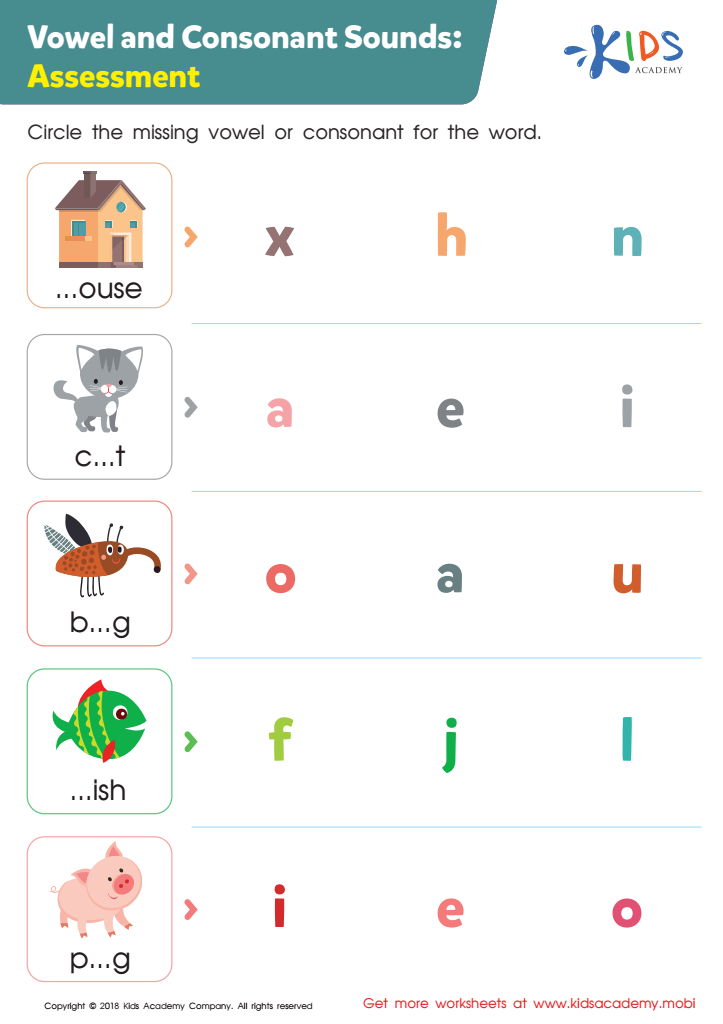
Vowel and Consonant Sounds: Assessment Worksheet
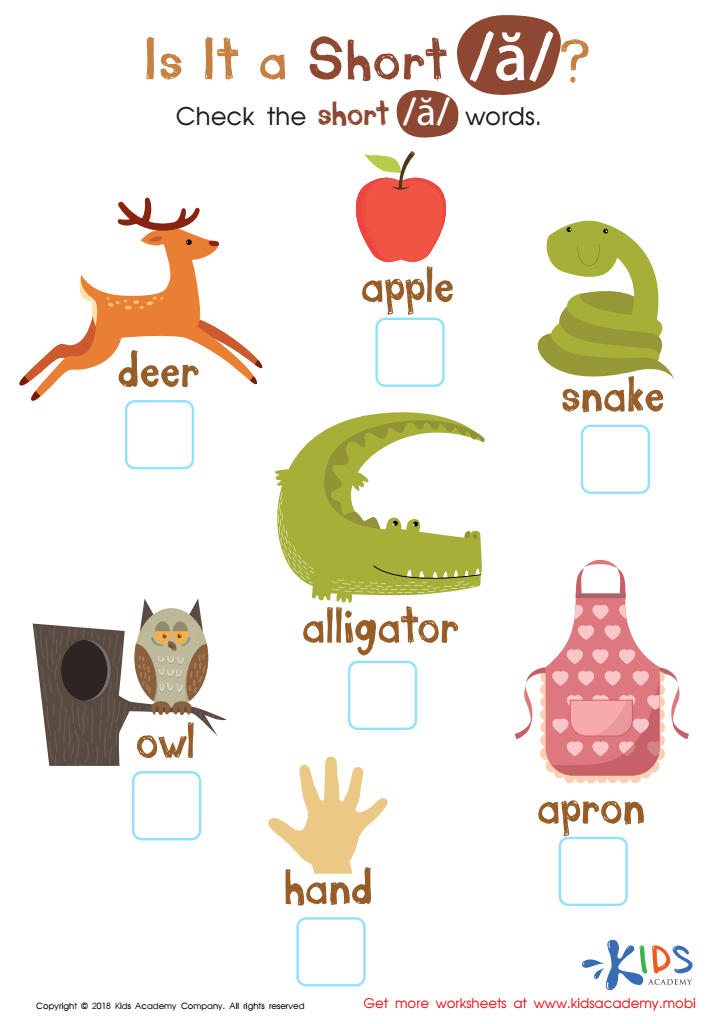
Is It Short A? Reading Worksheet
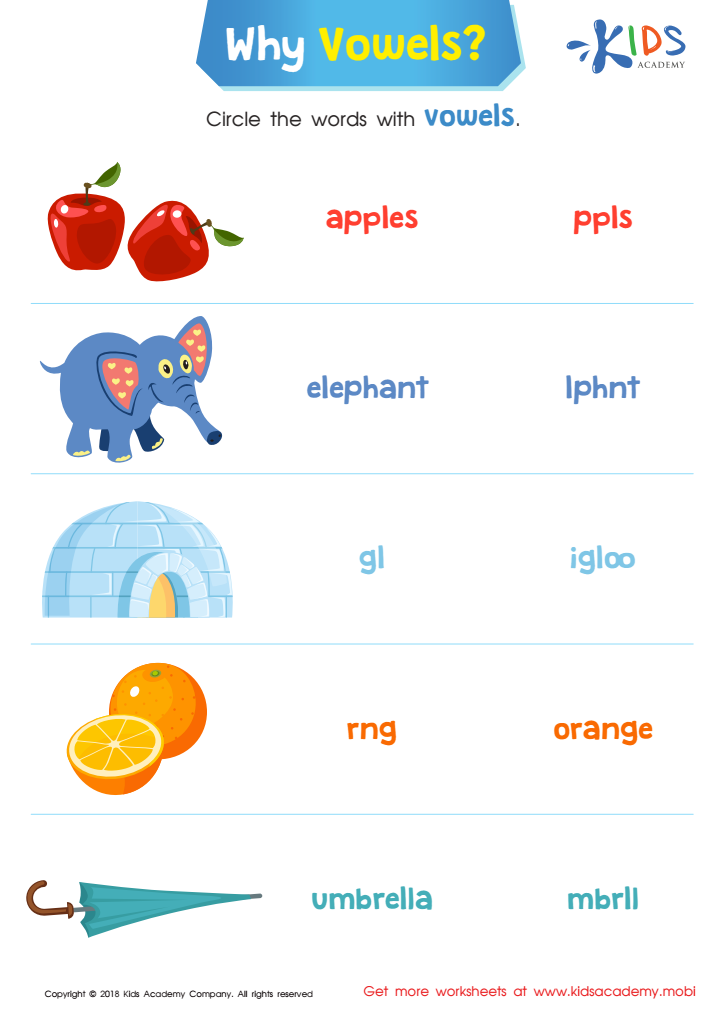
Why Vowels? Reading Worksheet





Vocabulary development, particularly understanding vowels, is crucial for children aged 4-5 because it lays the foundation for their future language skills, literacy, and overall academic success. At this developmental stage, children are primed to absorb new information, and strengthening their vocabulary helps them express themselves more clearly and confidently.
Vowels play a key role in phonetic awareness, which is the ability to hear, identify, and manipulate sounds in words. This awareness is essential for learning to read and write. By focusing on vowels, parents and teachers help children understand that words are made up of distinct sounds, and this understanding improves their decoding skills. For instance, knowing the difference between short and long vowels can help children distinguish between words like "cat" and "cake," leading to better reading comprehension and spelling accuracy.
Moreover, a robust vocabulary enriches children’s understanding of the world around them. It improves their ability to follow instructions, socialize with peers, and articulate their thoughts and emotions. This early boost in vocabulary typically translates into better performance in school, as language skills are integral to learning in all subjects.
Thus, by caring about vocabulary development and focusing on vowels, adults are setting the stage for lifelong communication skills, academic achievement, and self-expression.







