Letter tracing skills English for Beginners Worksheets for Ages 4-5
3 filtered results
-
From - To
Discover our engaging "Letter Tracing Skills English for Beginners Worksheets," designed specifically for children ages 4-5. These printable worksheets provide a fun and interactive way to help young learners develop essential handwriting skills while familiarizing them with the English alphabet. Avec vibrant illustrations and simple instructions, each worksheet promotes concentration and fine motor skills, making learning enjoyable. Perfect for both classroom settings and home learning, these resources support early literacy development and enhance letter recognition. Start your child's linguistic journey today with our beautifully designed worksheets that will inspire confidence in writing and a love for learning!
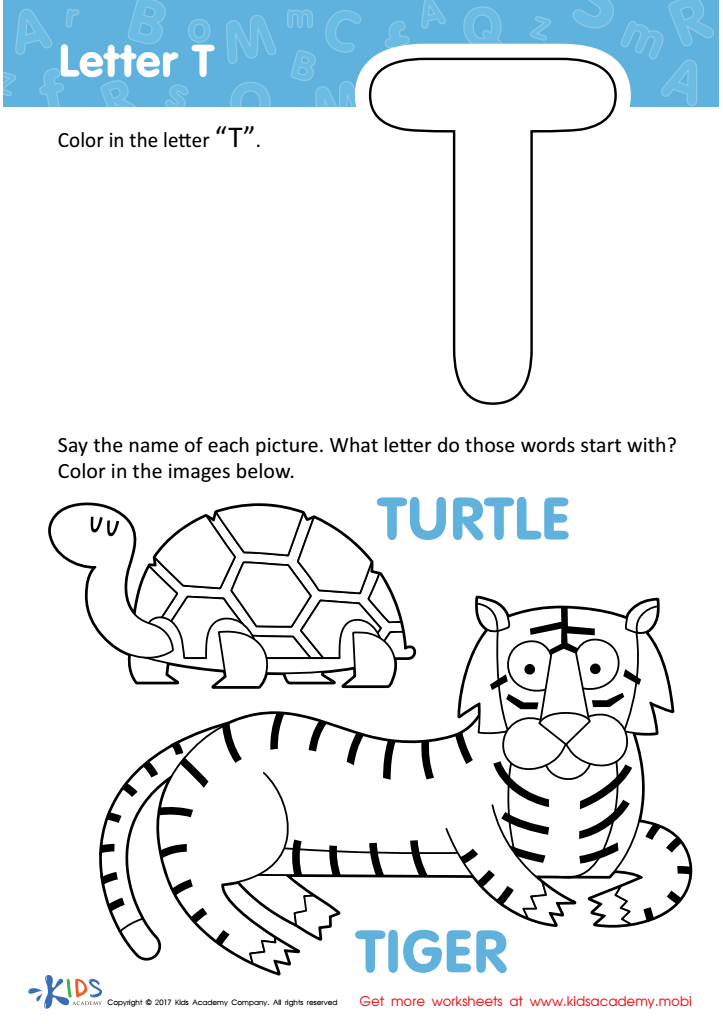
Letter T Coloring Sheet
 Assign to My Students

Letter C Tracing Page
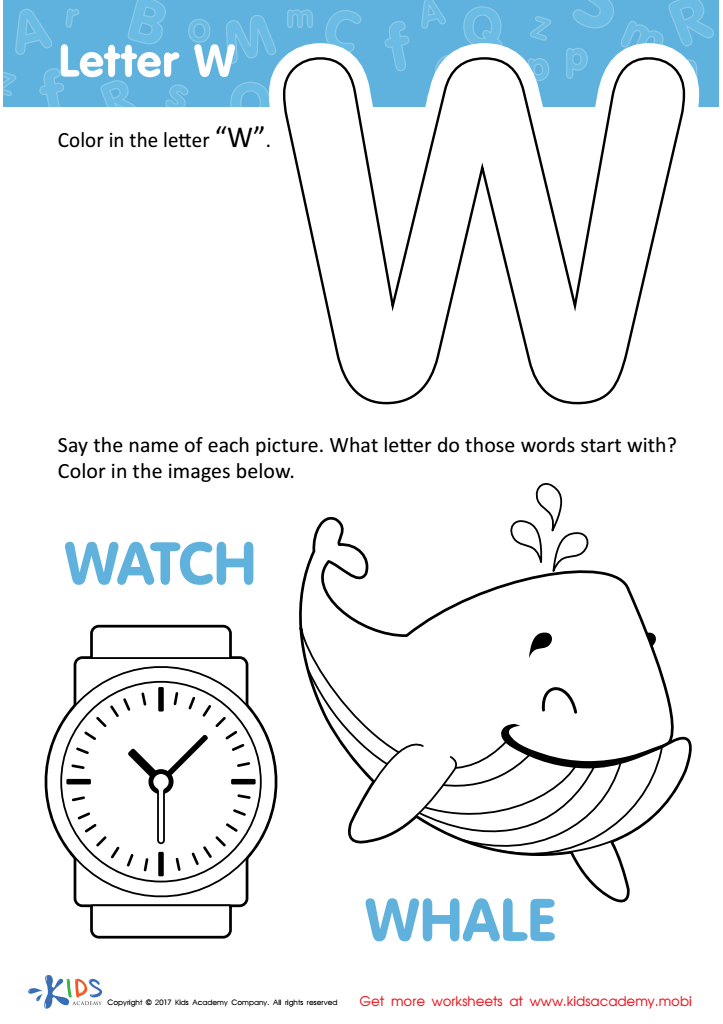
Letter W Coloring Sheet
Assign to My Students





Letter tracing skills are crucial for children aged 4-5 as they lay the foundation for literacy development. At this early stage, children are beginning to recognize letters, understand their shapes, and connect them with sounds. Tracing letters helps reinforce these essential concepts while improving fine motor skills, hand-eye coordination, and muscle memory, which are vital for handwriting.
Furthermore, mastering letter tracing can boost a child's confidence and interest in writing, encouraging them to explore creative expression through words and stories. It introduces a structured approach to learning letters, making it less intimidating and more engaging for young learners. As they successfully trace letters, children experience small victories that contribute to a positive attitude towards learning.
Teachers and parents play a pivotal role in guiding this process; their encouragement and involvement can enhance a child's motivation. Engaging activities, such as using fun materials or incorporating art, can make letter tracing enjoyable, thus sustaining their interest. Ultimately, nurturing letter tracing skills equips children with necessary tools for reading and writing, serving as a building block for lifelong learning. By investing time in these skills, educators and parents are fostering essential pathways for academic success and communication.