Associative learning Worksheets for Ages 4-5
3 filtered results
-
From - To
Discover our engaging and educational Associative Learning Worksheets tailored for ages 4-5 at Kids Academy. Designed to develop critical thinking and cognitive skills, these colorful and interactive worksheets help young learners make connections between ideas, objects, and experiences. Through matching, sorting, and pairing exercises, children build foundational skills that support their future academic success. Ideal for both classroom and home use, our age-appropriate materials foster curiosity and a love for learning. Download now to give your preschoolers a head start in developing vital associative thinking abilities in an enjoyable and stimulating way.
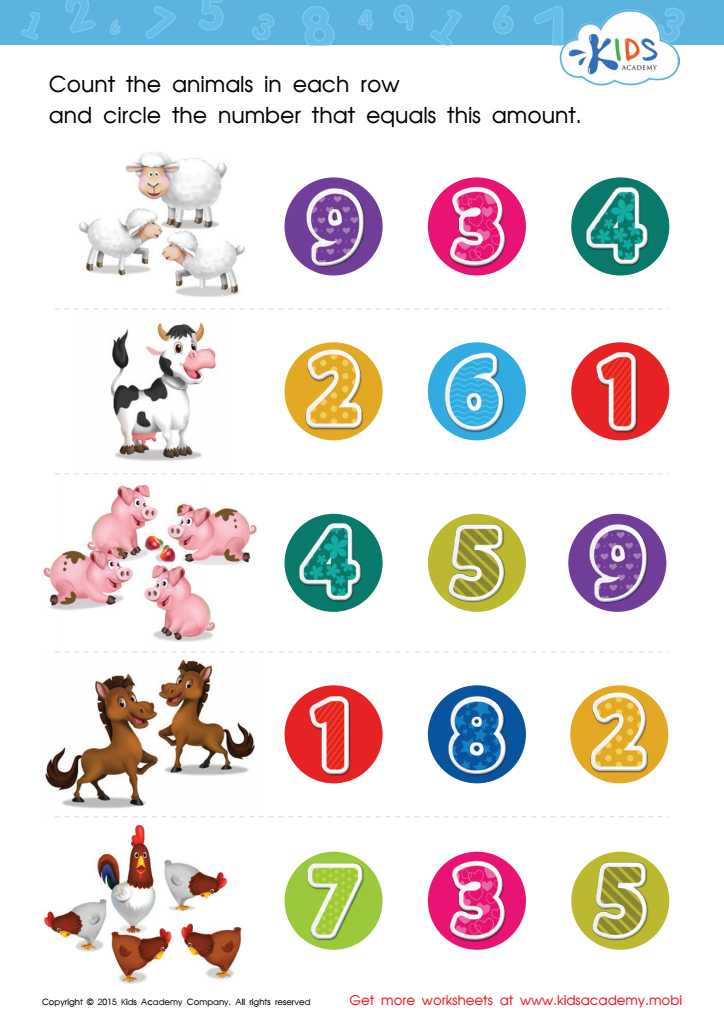
Count and Match 1 – 5 Math Worksheet
 Assign to My Students
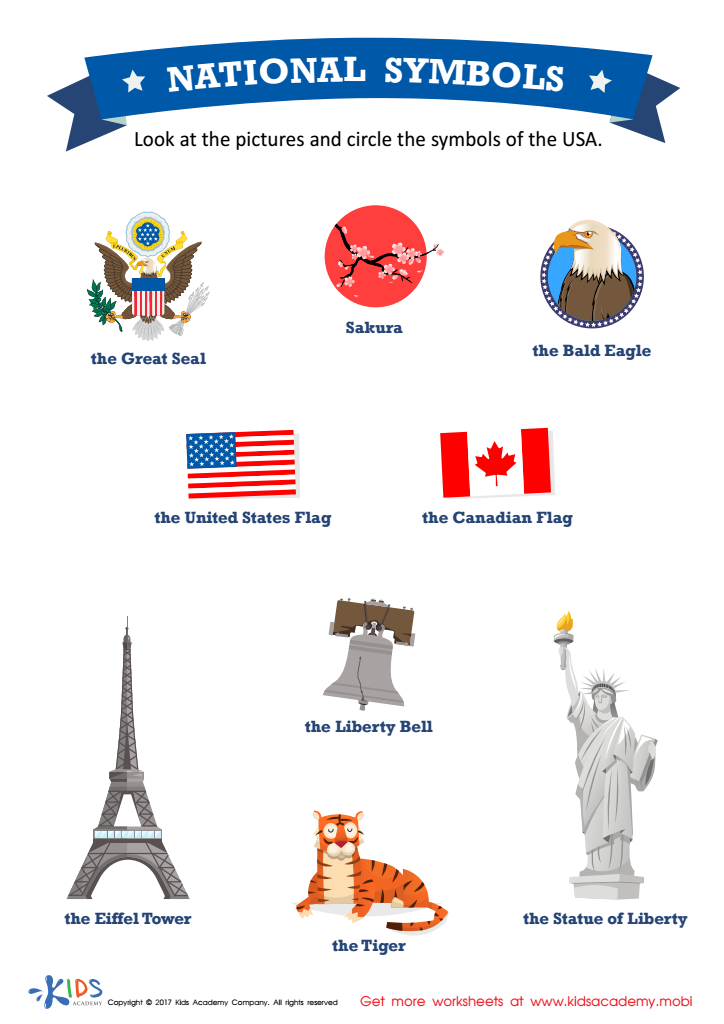
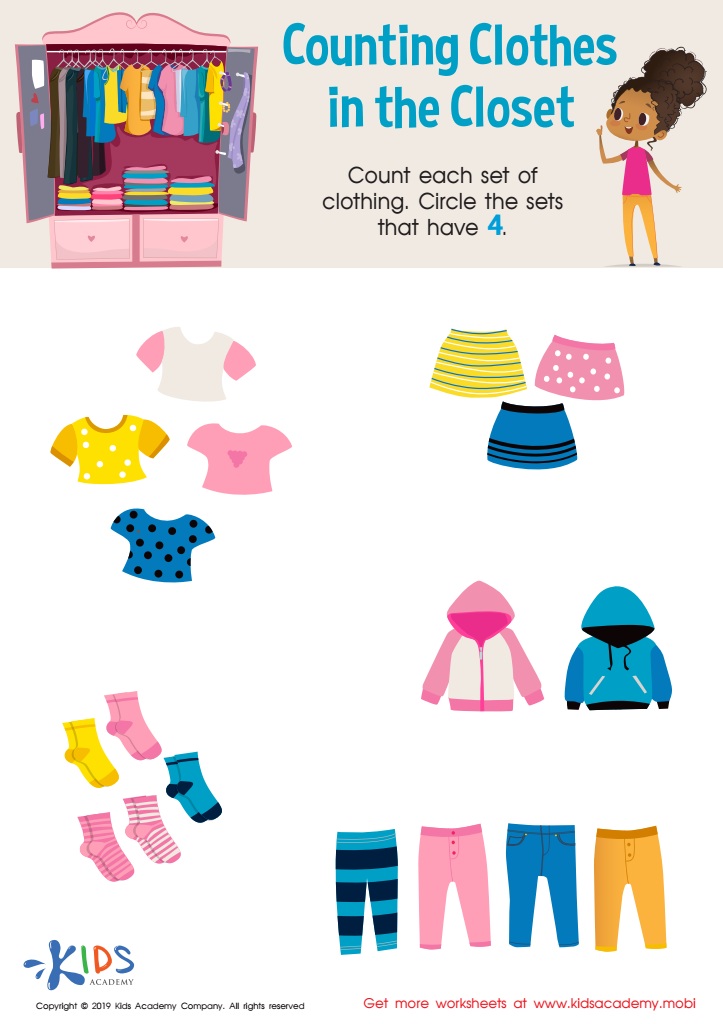
Counting Clothes Worksheet






Associative learning is crucial for children aged 4-5 as it forms the foundation of their understanding of relationships between ideas and concepts, which is pivotal at this developmental stage. At its core, associative learning leverages the ability of young brains to link new information with existing knowledge through repetition and patterns, which can significantly enhance memory and comprehension.
For parents and teachers, fostering this type of learning means aiding young children in making connections between their experiences and new lessons. This can involve simple activities like pairing words with corresponding images, or linking sounds to actions. For example, when children hear the bell for recess, they associate the sound with playtime, which makes transitions smoother and strengthens their cognitive framework.
Supporting associative learning not only boosts cognitive skills but also nurtures a child's social and emotional development. By helping children make connections, caregivers can promote language skills, color and shape recognition, and even early math concepts such as number relationships. Furthermore, this approach aligns with children’s natural learning processes, making learning more engaging and effective.
Investing time in associative learning sets a strong educational foundation, preparing children for more complex tasks and concepts in their future academic journey. By appreciating its value, parents and teachers can better support children’s growth, making learning an enjoyable and seamless part of their everyday lives.








