Check out this FREE "Basic Addition Skills" Trial Lesson for age 4-5!

T

Favorites
With answer key
Interactive
  • 4-5
  • Basic Addition Skills
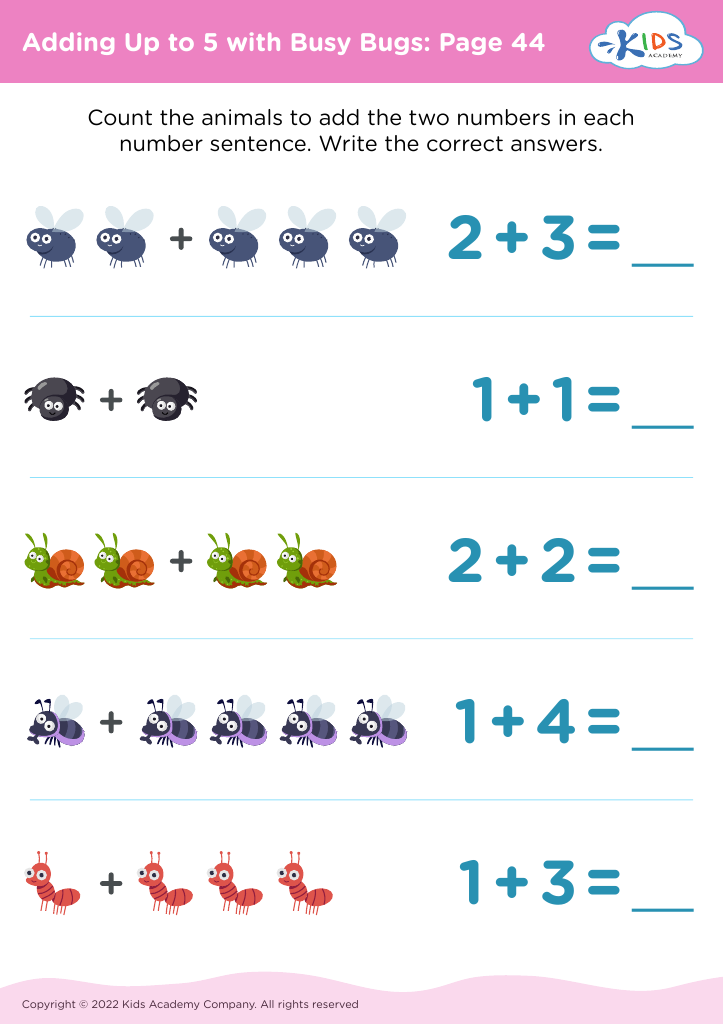
Adding Up to 5 with Busy Bugs: Page 44
Worksheet
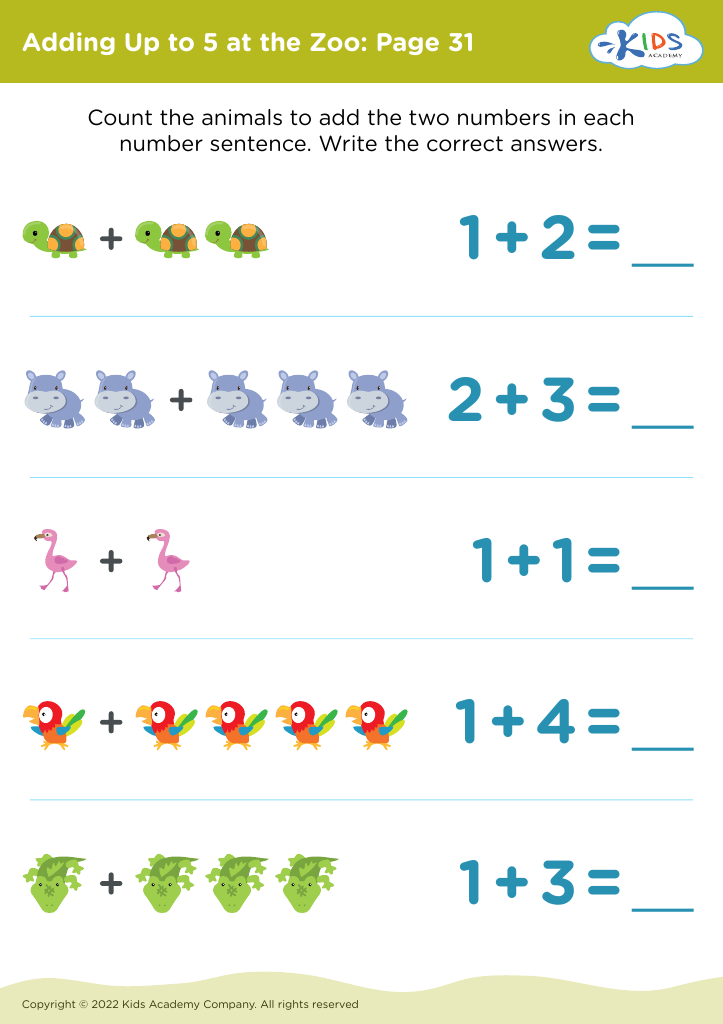
Adding Up to 5 at the Zoo: Page 31
Worksheet
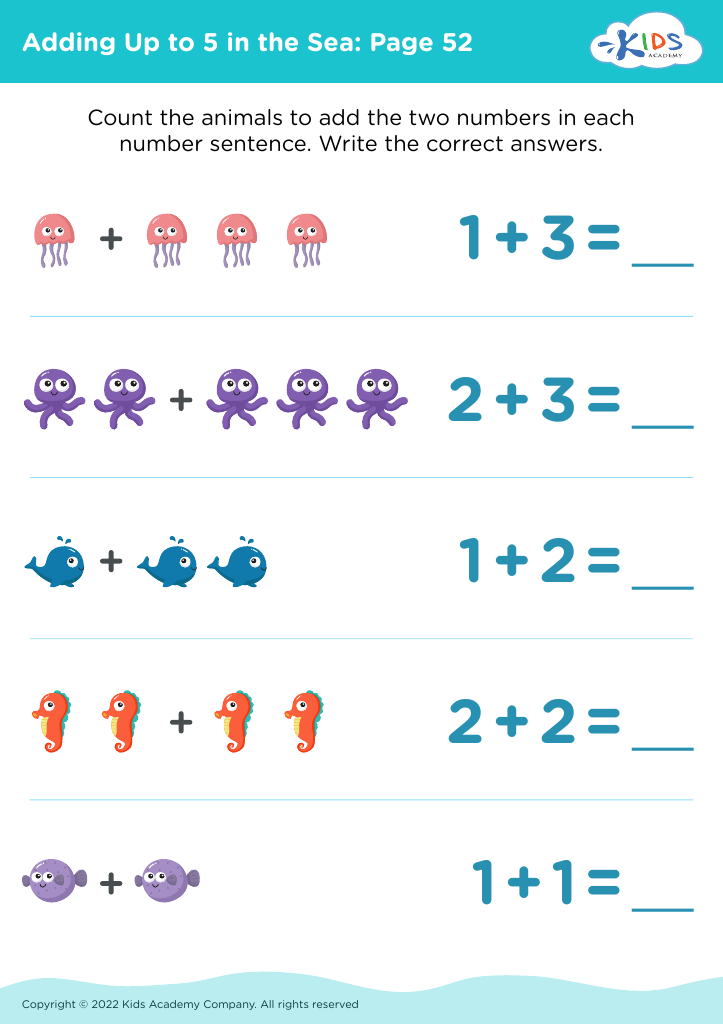
Adding Up to 5 in the Sea: Page 52
Worksheet
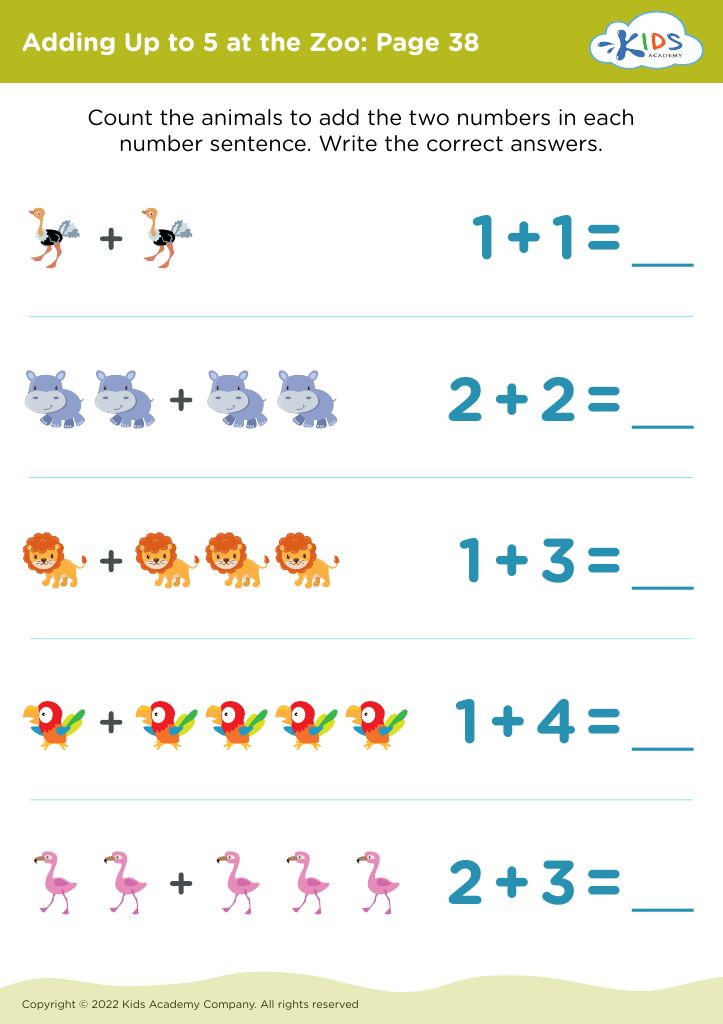
Adding Up to 5 at the Zoo: Page 38
Worksheet
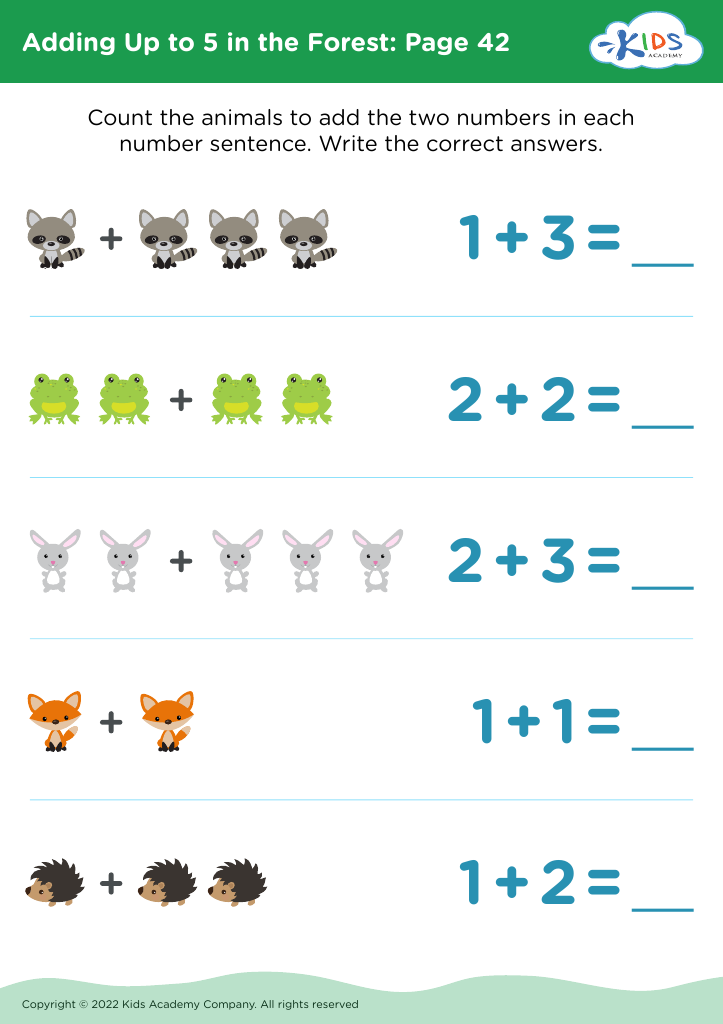
Adding Up to 5 in the Forest: Page 42
Worksheet
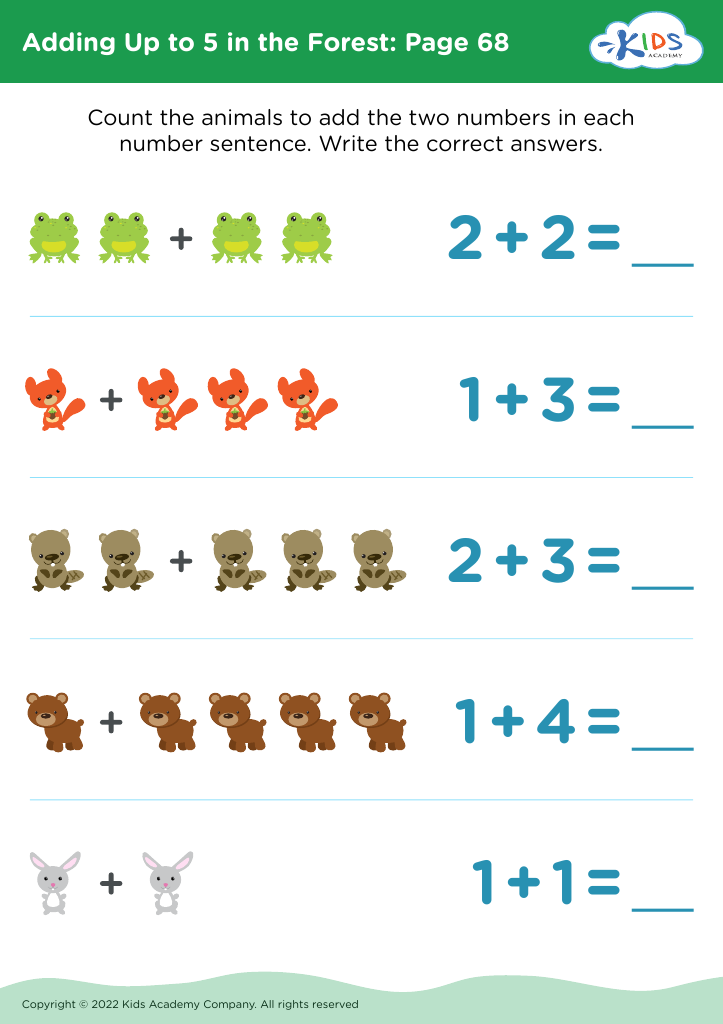
Adding Up to 5 in the Forest: Page 68
Worksheet
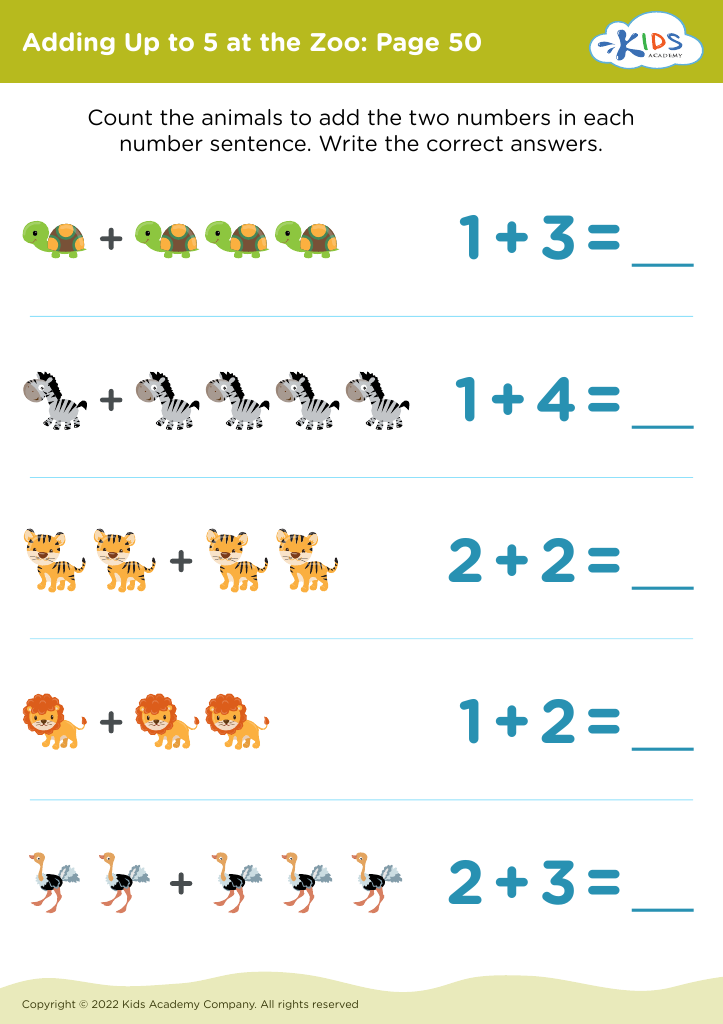
Adding Up to 5 at the Zoo: Page 50
Worksheet
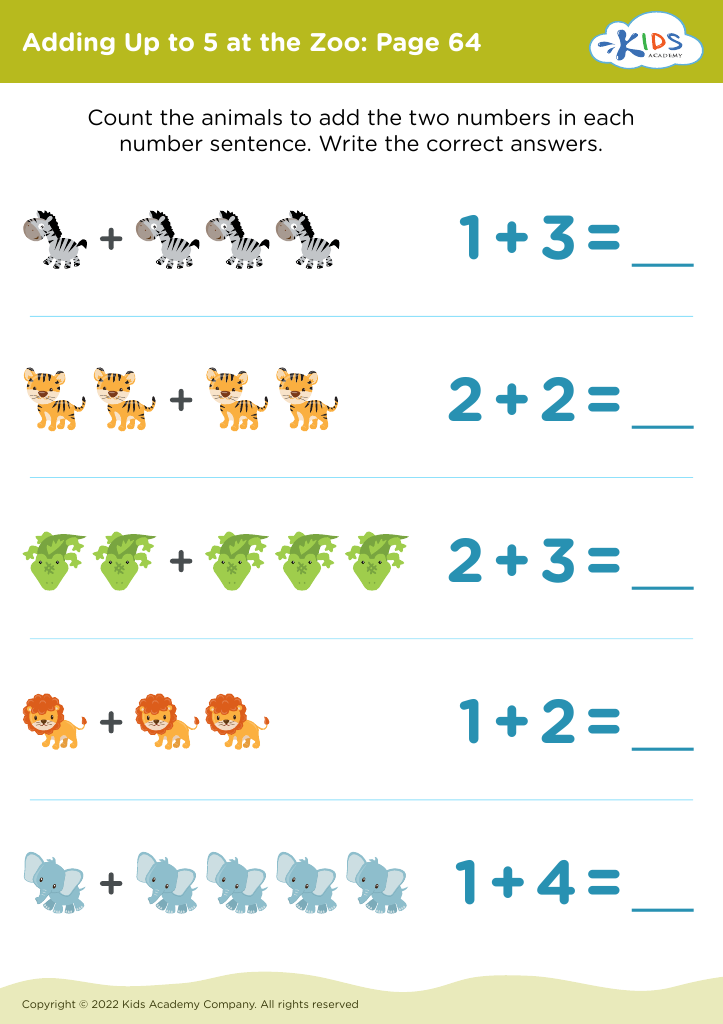
Adding Up to 5 at the Zoo: Page 64
Worksheet
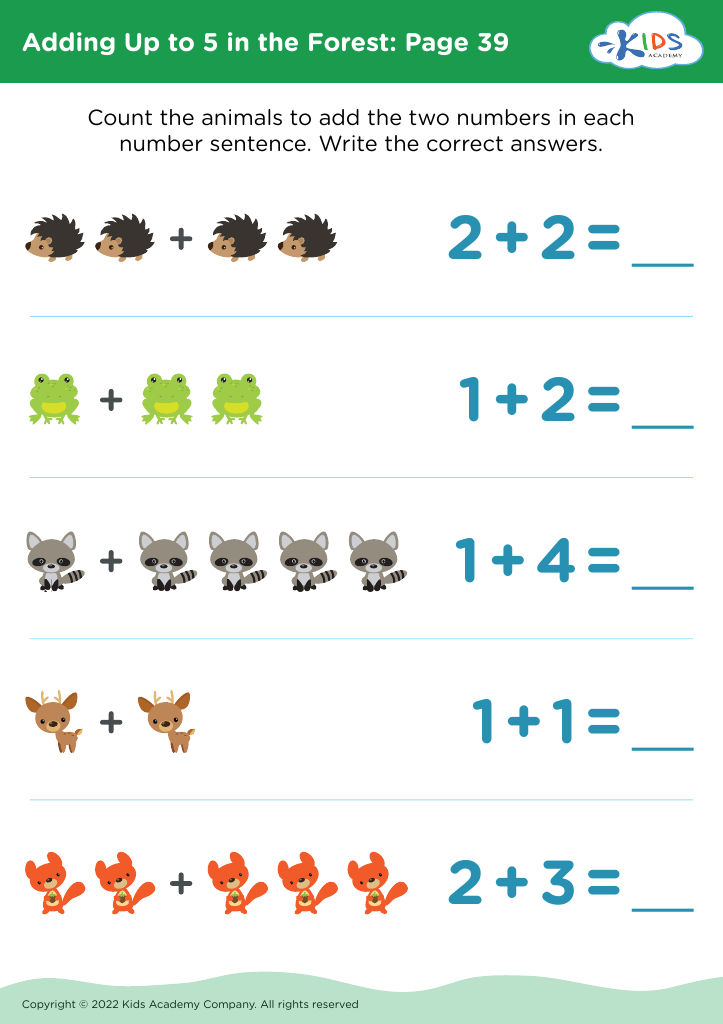
Adding Up to 5 in the Forest: Page 39
Worksheet
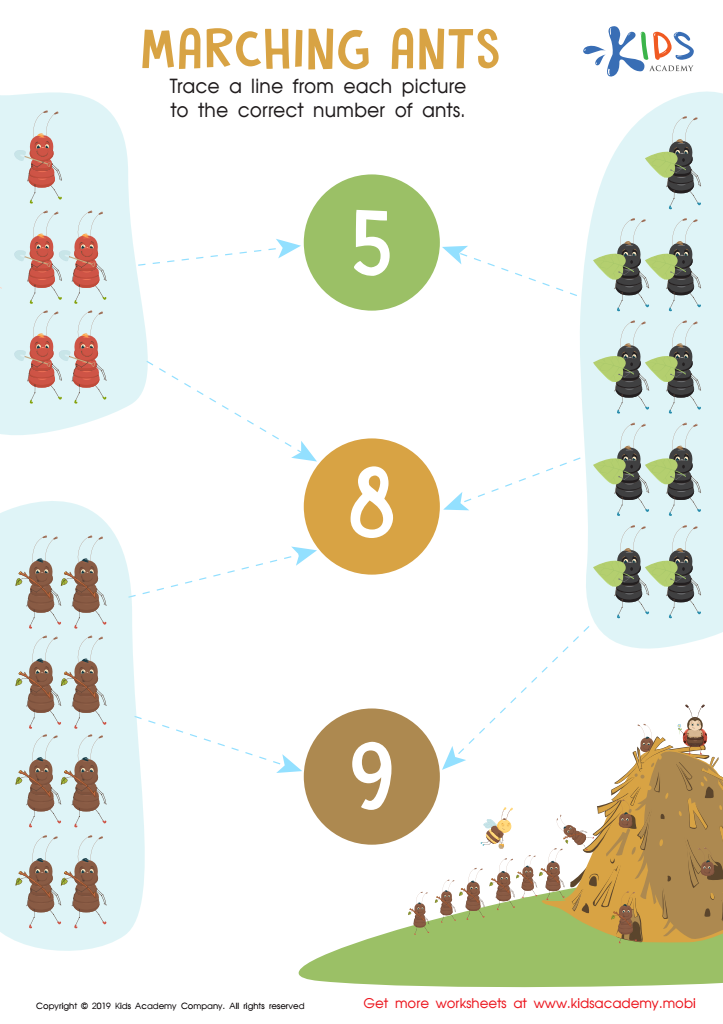
Marching Ants Worksheet

Marching Ants Worksheet

Assess and help your kids practice counting with this worksheet. Ask them to identify the four groups of ants in the picture. Guide them as they count each group and trace the lines to the corresponding number.
Marching Ants Worksheet
Worksheet
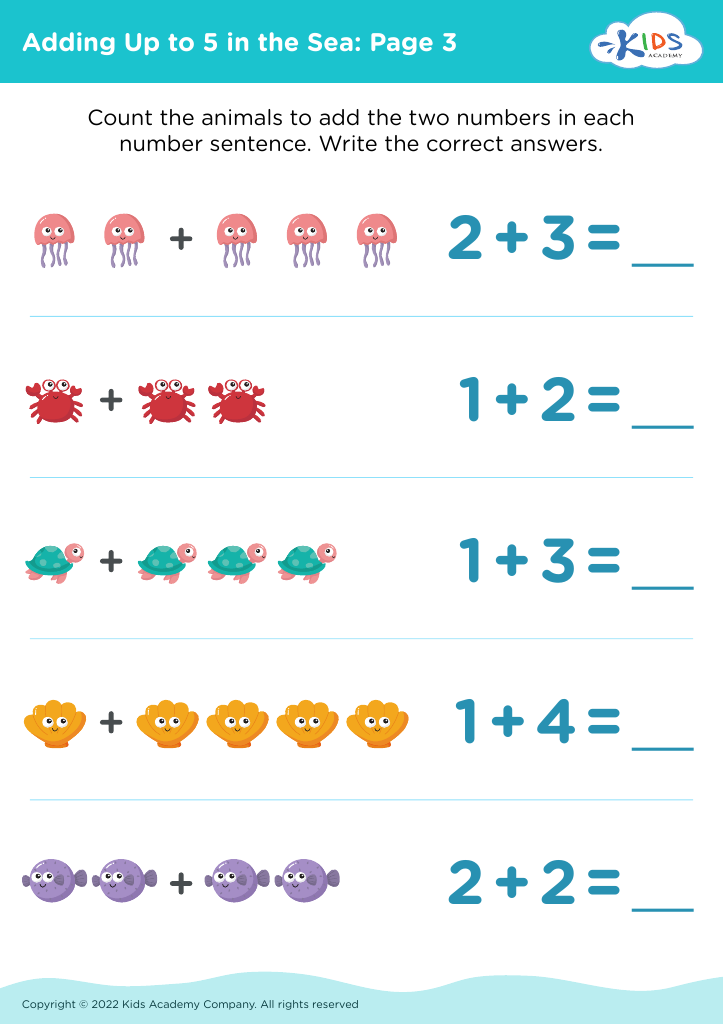
Adding Up to 5 in the Sea: Page 3

Adding Up to 5 in the Sea: Page 3

Adding Up to 5 in the Sea: Page 3
Worksheet
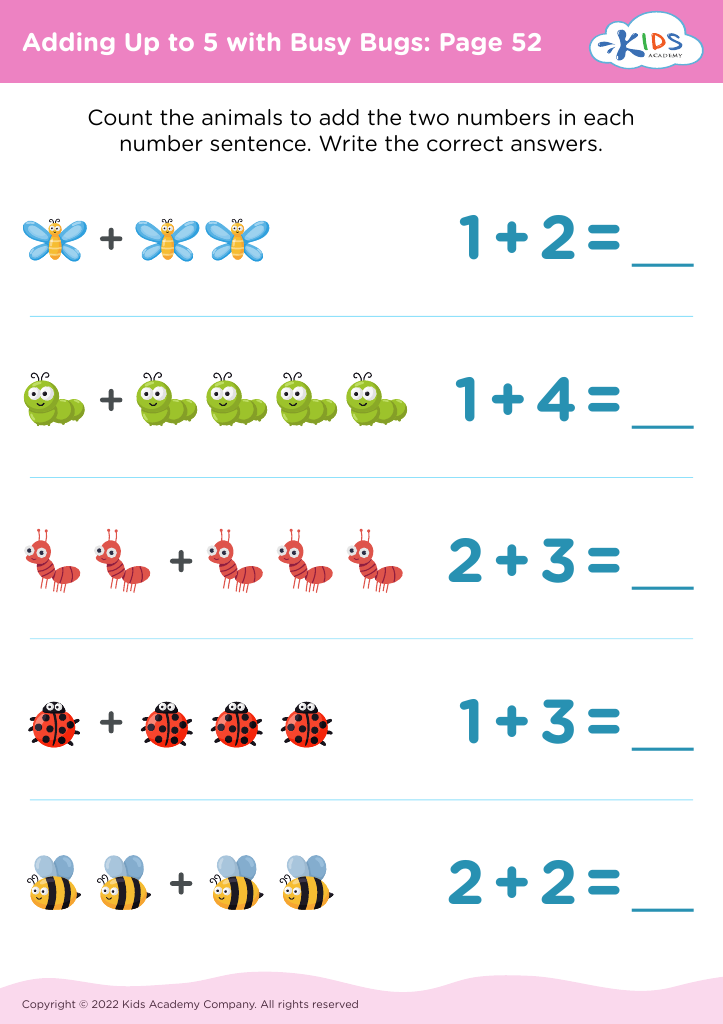
Adding Up to 5 with Busy Bugs: Page 52
Worksheet
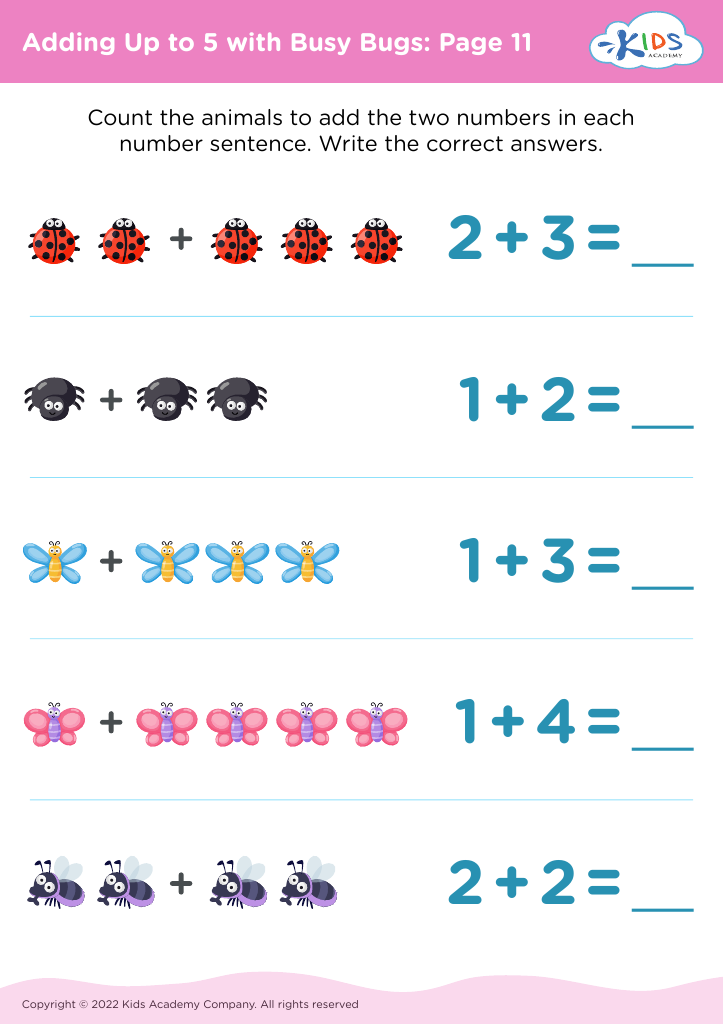
Adding Up to 5 with Busy Bugs: Page 11
Worksheet
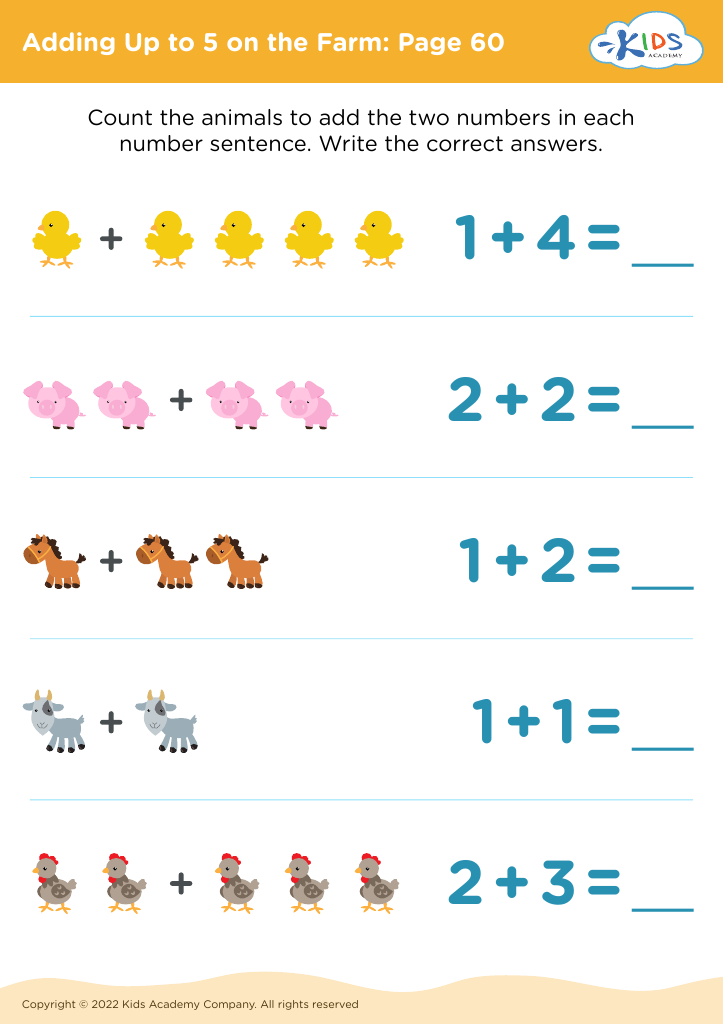
Adding Up to 5 on the Farm: Page 60
Worksheet
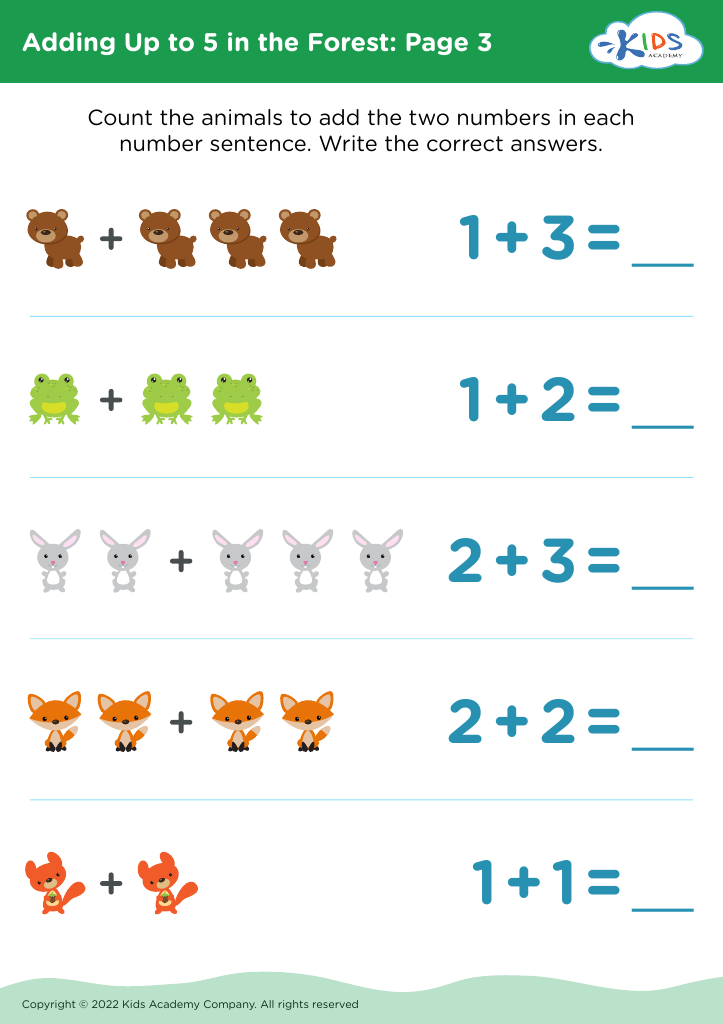
Adding Up to 5 in the Forest: Page 3
Worksheet
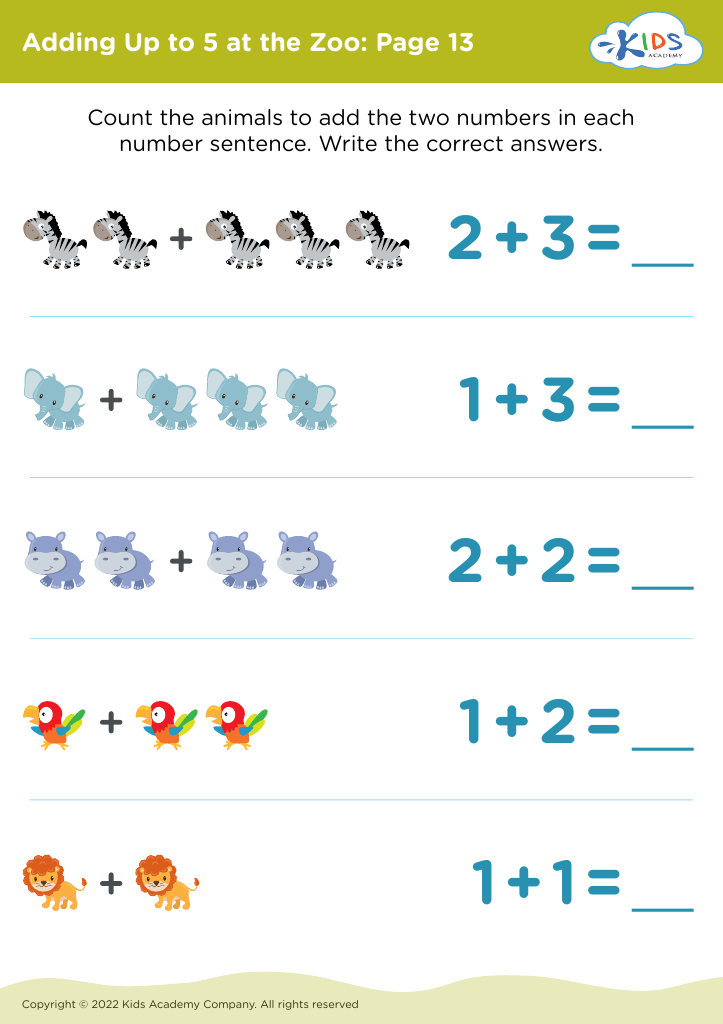
Adding Up to 5 at the Zoo: Page 13
Worksheet
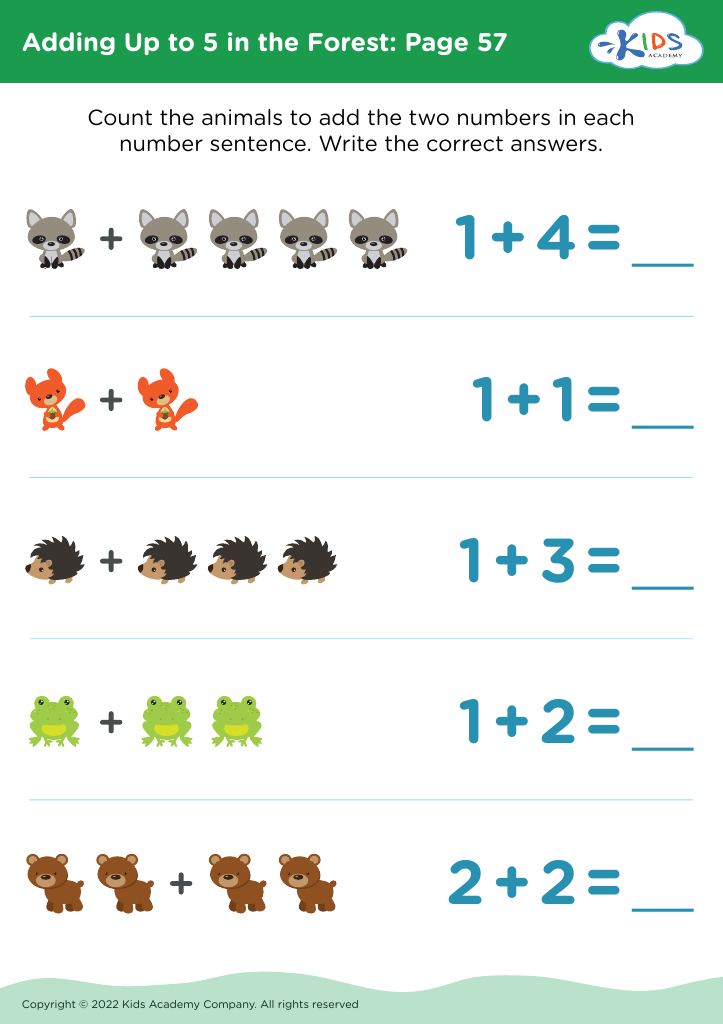
Adding Up to 5 in the Forest: Page 57
Worksheet
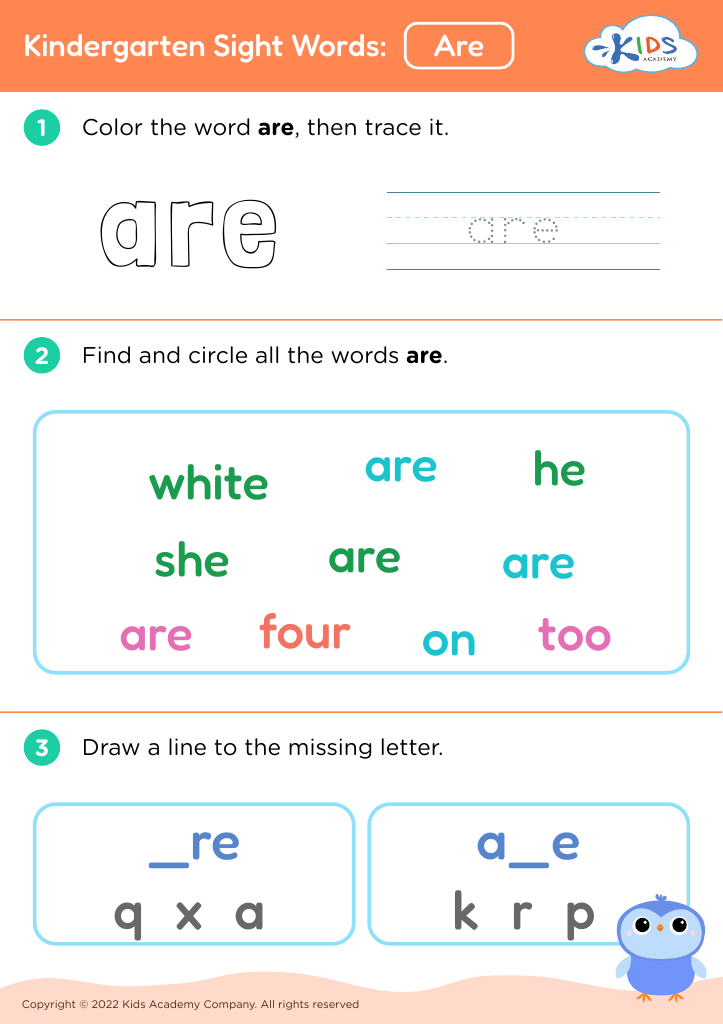
Kindergarten Sight Words: Are

Kindergarten Sight Words: Are

Kindergarten Sight Words: Are
Worksheet
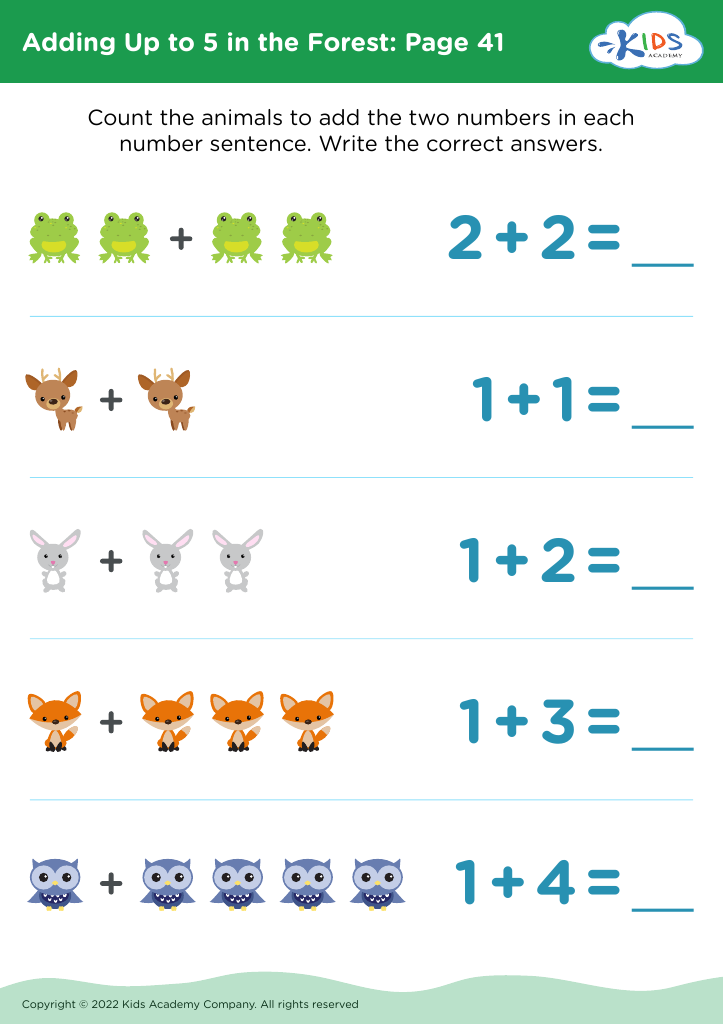
Adding Up to 5 in the Forest: Page 41
Worksheet
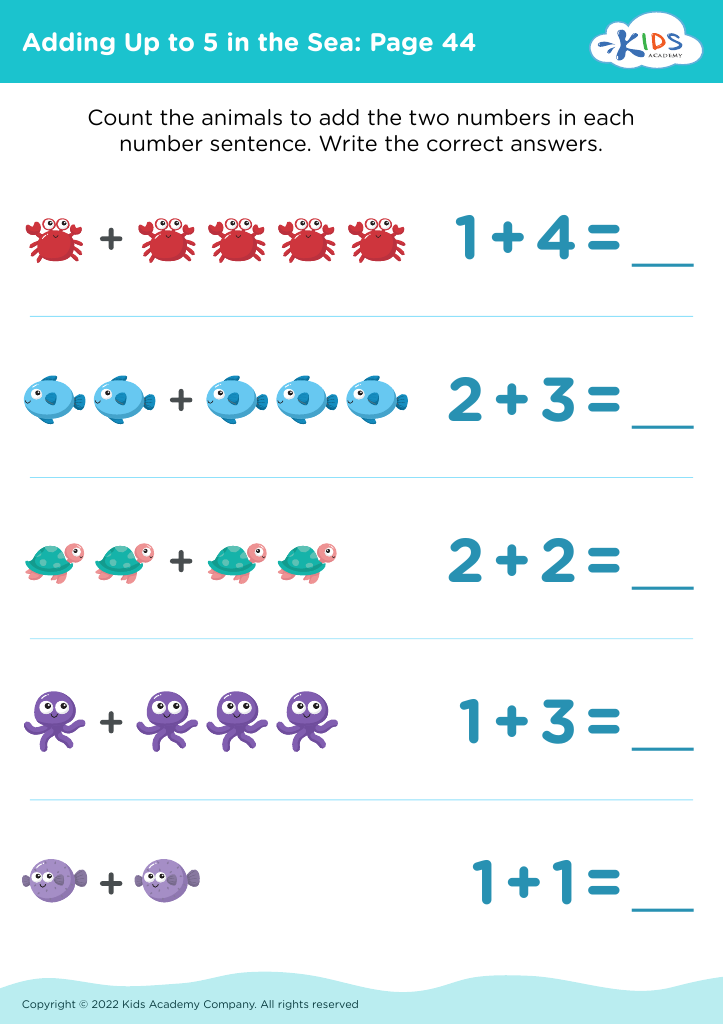
Adding Up to 5 in the Sea: Page 44
Worksheet
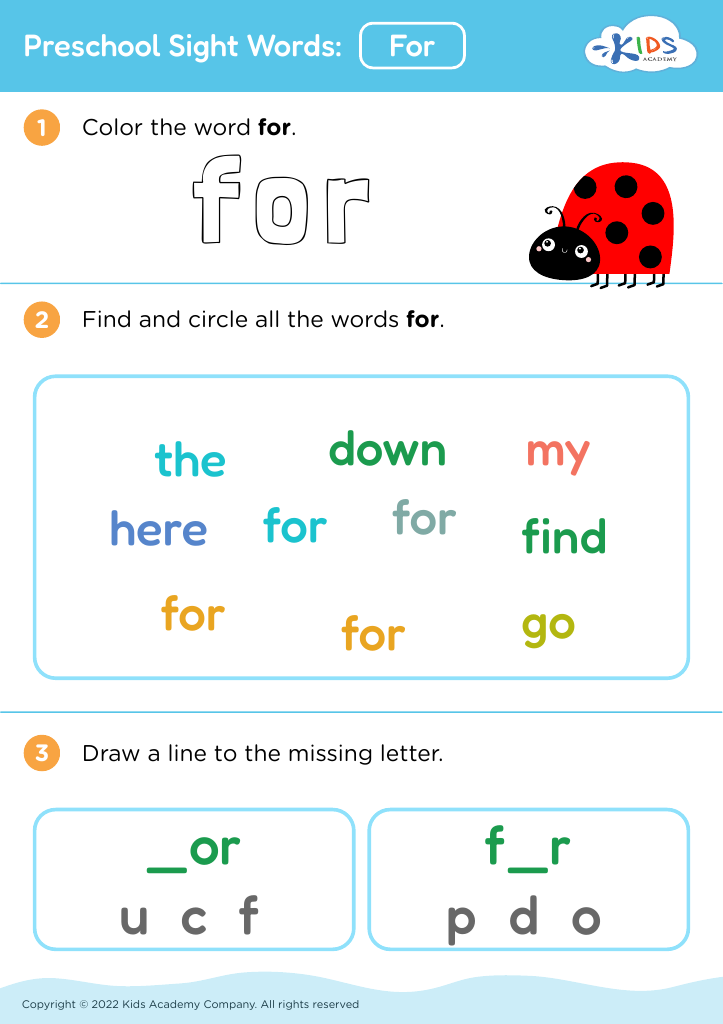
Preschool Sight Words: For

Preschool Sight Words: For

Preschool Sight Words: For
Worksheet
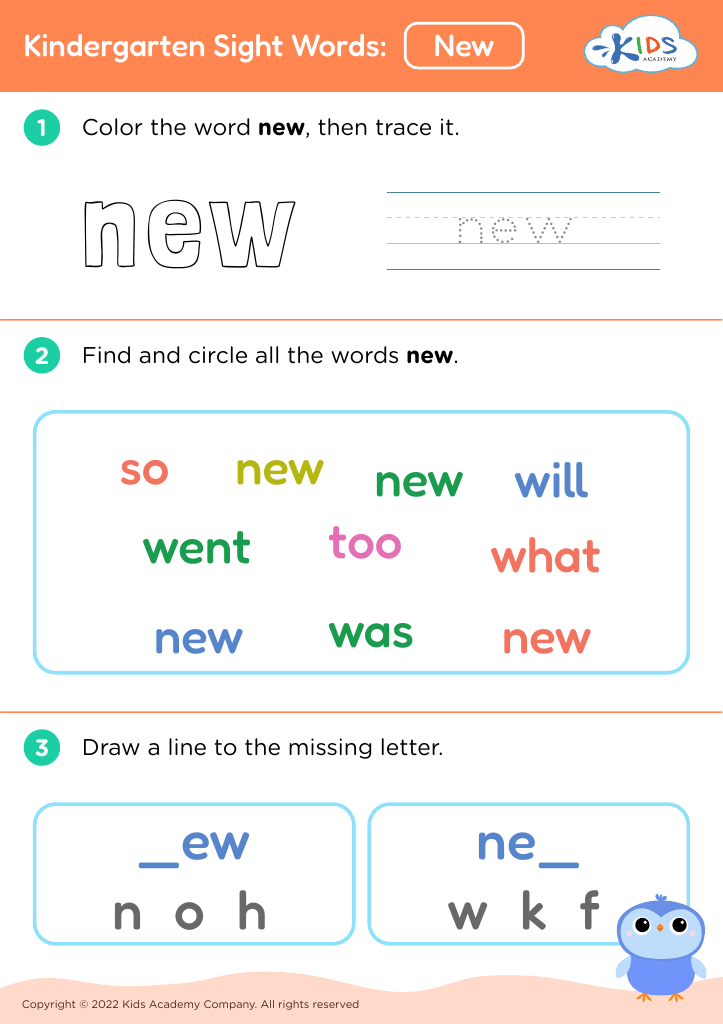
Kindergarten Sight Words: New

Kindergarten Sight Words: New

Kindergarten Sight Words: New
Worksheet
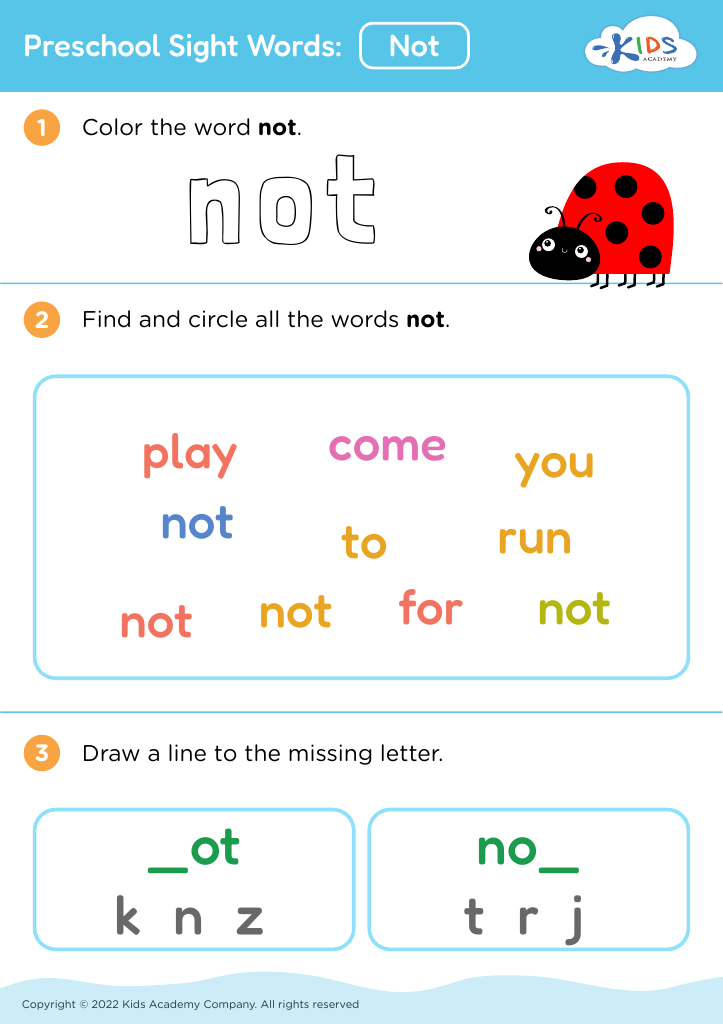
Preschool Sight Words: Not

Preschool Sight Words: Not

Preschool Sight Words: Not
Worksheet


... 10 11

Basic addition skills are foundational for young children, typically aged 4-5, as they embark on their educational journey. These skills play a critical role in their overall cognitive development and future academic success. Firstly, mastering basic addition fosters number sense, allowing children to understand and work with numbers confidently. This sets the stage for more advanced mathematical concepts and problem-solving abilities later on.

For parents and teachers, emphasizing basic addition is crucial because it promotes logical thinking and reasoning. These skills are not only essential in math but also in everyday activities, such as counting objects, understanding time, and managing simple transactions. Encouraging children to practice addition strengthens their memory and concentration, enabling them to focus better in various learning scenarios.

Furthermore, early proficiency in addition boosts children's self-esteem and fosters a positive attitude toward learning. When children experience success and feel competent in their abilities, they are more likely to be motivated and engaged in their studies.

Lastly, basic addition skills lay the groundwork for a lifelong love of learning. When children see the relevance and fun in math, they become curious and enthusiastic learners. In summary, ensuring children develop strong basic addition skills sets a critical educational foundation, paving the way for future learning and everyday life skills.