Community awareness Worksheets for Ages 4-5
3 filtered results
-
From - To
Explore our Community Awareness Worksheets for Ages 4-5, designed to help young learners understand and engage with the world around them. These fun and interactive activities introduce essential concepts such as community helpers, local landmarks, and the importance of working together. Each worksheet encourages critical thinking, creativity, and social skills, making learning both enjoyable and educational. Perfect for preschool classrooms or at-home learning, our resources support early development and instill a sense of belonging within the community. Download these engaging worksheets today and watch your child’s awareness and appreciation for their environment grow!
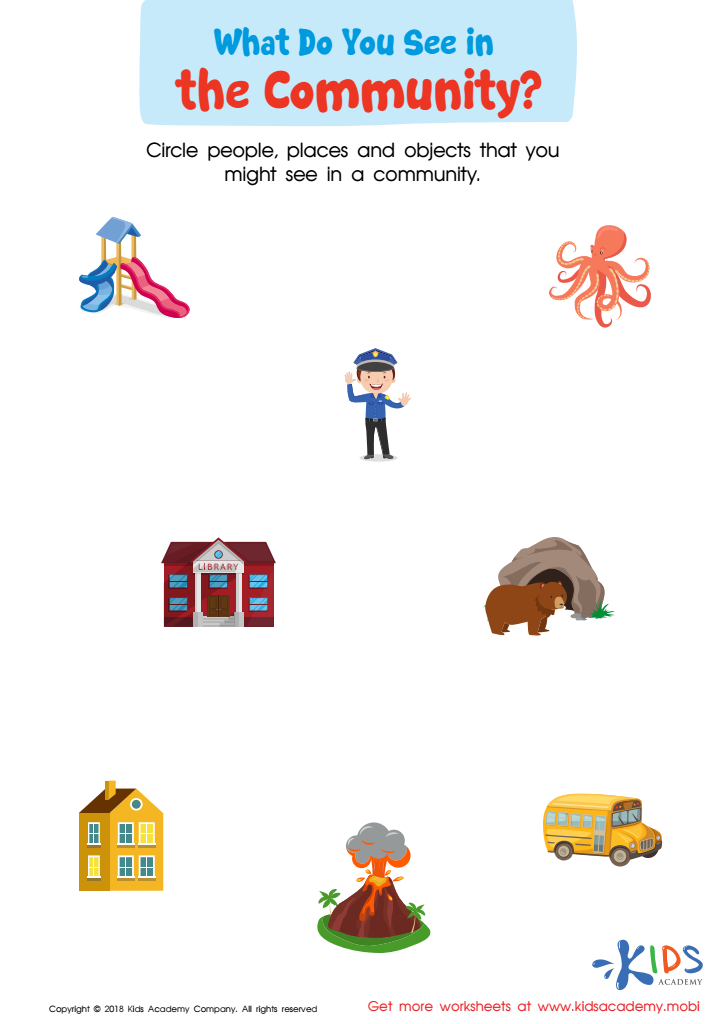
What Do You See in the Community Worksheet
 Assign to My Students
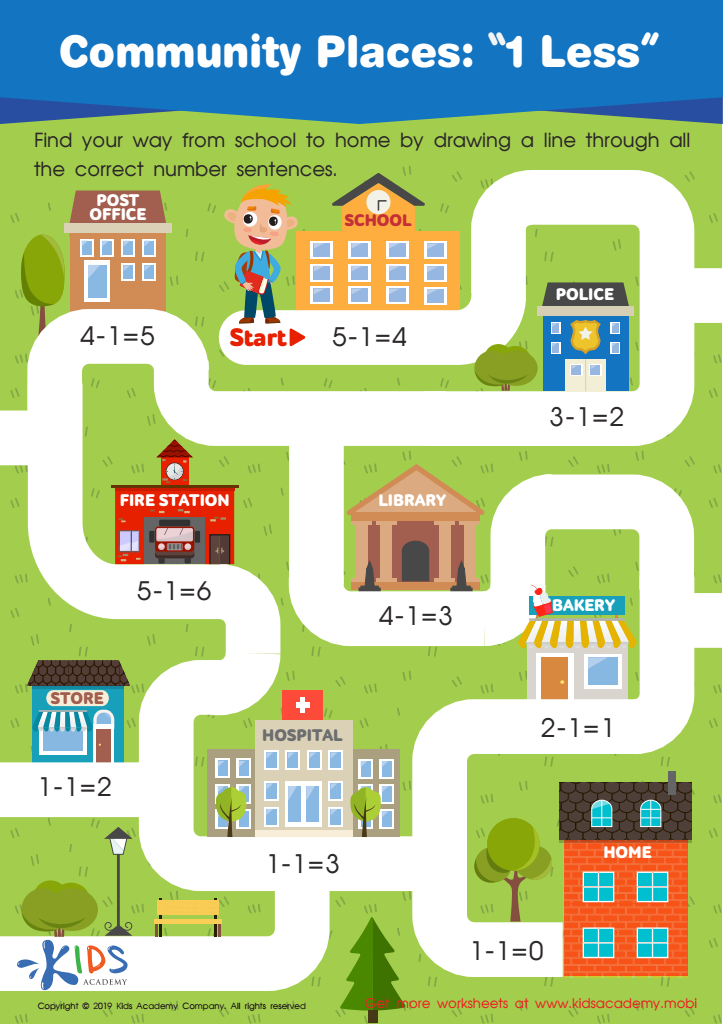
Community Places: 1 Less Worksheet
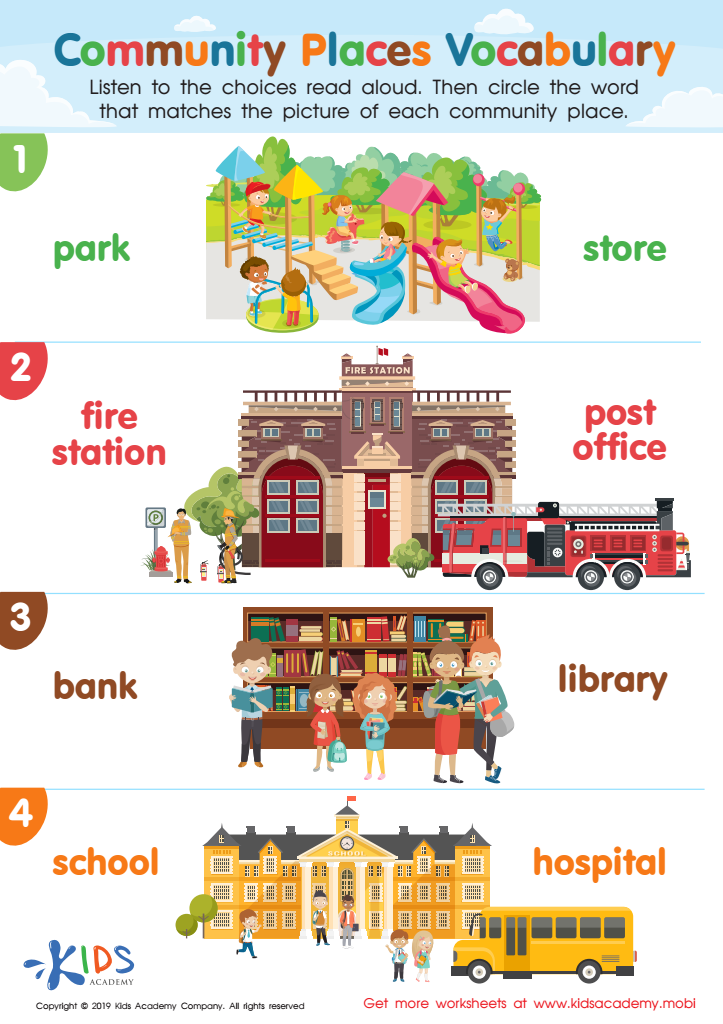
Community Places Vocabulary Worksheet







Parents and teachers should prioritize community awareness for ages 4-5 as it lays a crucial foundation for children's social, emotional, and cognitive development. At this young age, children are naturally curious about their surroundings. Introducing them to community awareness helps foster a sense of belonging, identity, and connection to the world around them.
Engaging children in community awareness helps them recognize important community helpers, such as firefighters, teachers, and healthcare providers, promoting respect and appreciation for these roles. It also encourages empathy, as children learn about diversity and understand the needs and experiences of various groups within their community.
Moreover, community awareness enhances children's communication skills. Through discussions, field trips, and interactions with local members, children articulate their thoughts and feelings, boosting their confidence. Additionally, learning to identify community resources, such as parks and libraries, helps instill responsible habits of civic engagement.
Finally, early exposure to community concepts paves the way for active citizenship. By nurturing awareness in young children, parents and teachers equip them with the tools to become informed, compassionate, and engaged adults in the future, ultimately contributing to a stronger, more unified community.








