Differentiating shapes Worksheets for Ages 4-5
4 filtered results
-
From - To
Welcome to our Differentiating Shapes Worksheets for Ages 4-5! Designed specifically for young learners, these engaging worksheets help children identify and differentiate between various shapes in a fun and interactive way. Featuring colorful illustrations and simple activities, our worksheets encourage critical thinking and shape recognition skills. Each activity is crafted to capture the attention of preschoolers, making learning enjoyable. From circles and squares to triangles and rectangles, these resources provide a solid foundation in early geometry. Empower your child’s learning journey with our carefully curated shape worksheets, perfect for use at home or in the classroom! Download now and watch them explore the world of shapes!
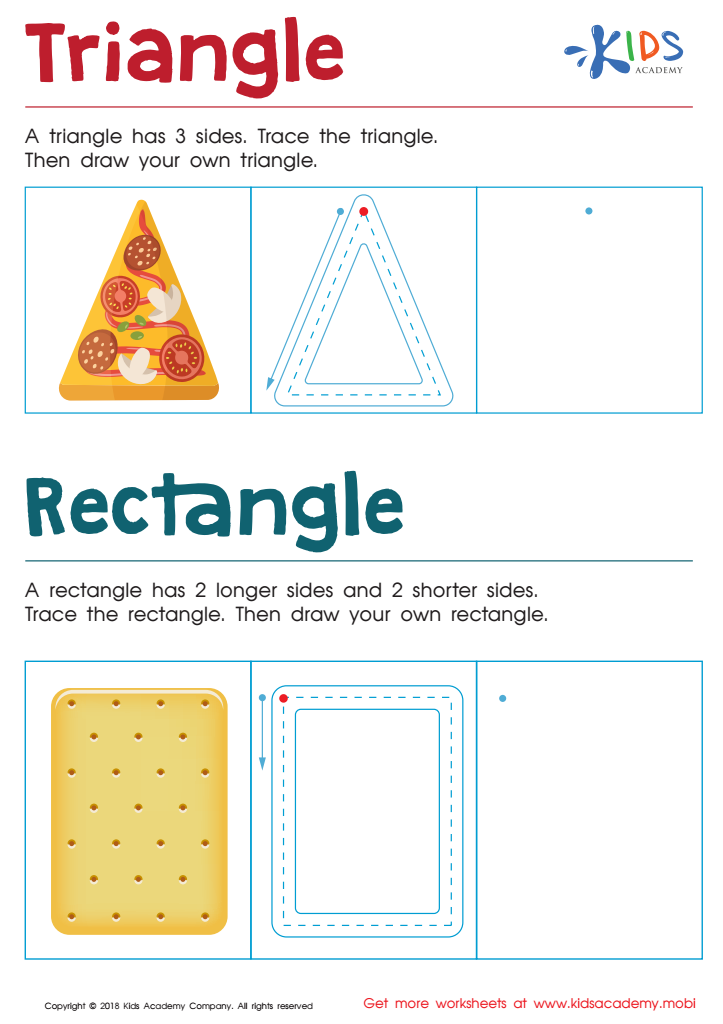
Triangle Rectangle Worksheet
 Assign to My Students
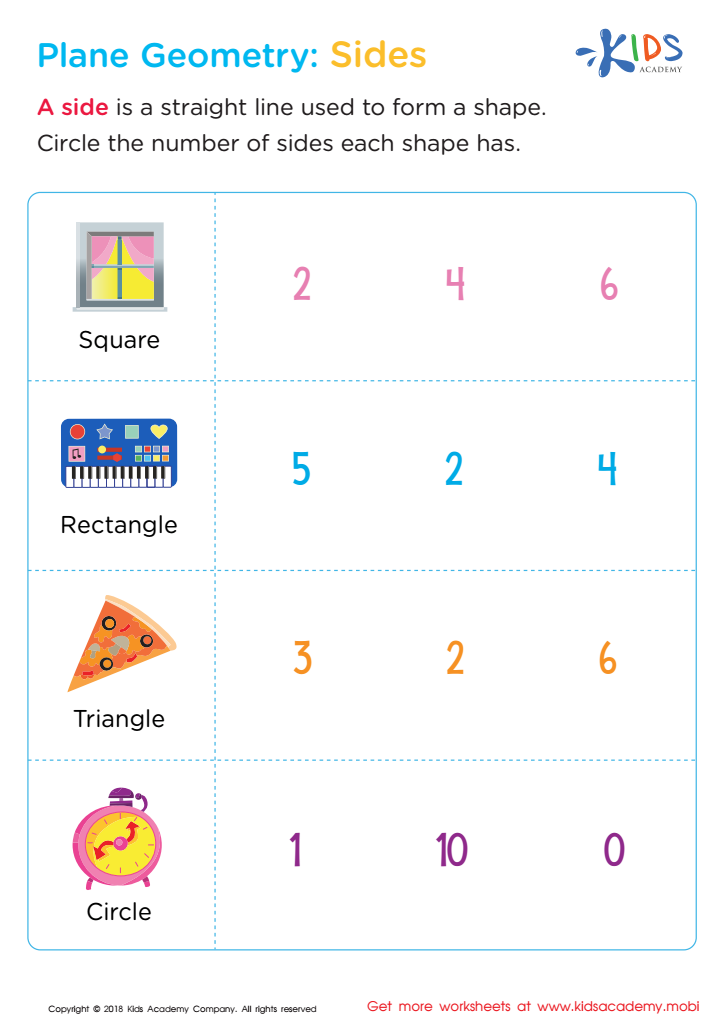
Plane Geometry: Sides Worksheet
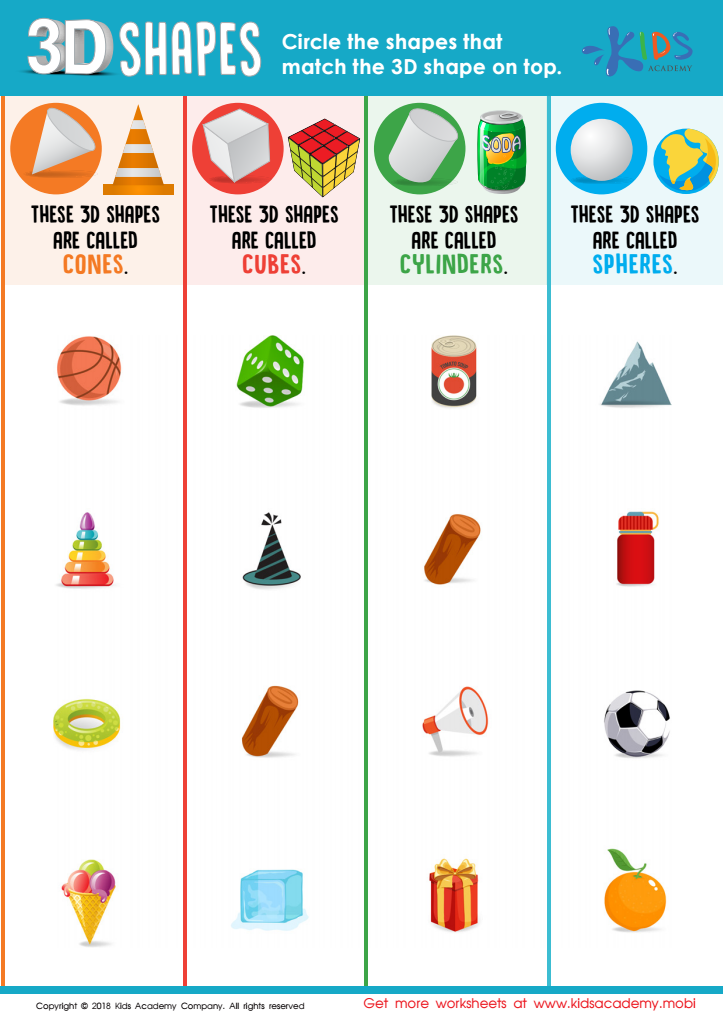
3D Shapes Worksheet








Differentiating shapes is essential for childhood development, particularly for children aged 4-5. This period is pivotal for early mathematical and spatial understanding, and recognizing shapes plays a crucial role. Parents and teachers should care about shape differentiation as it lays the foundation for critical thinking, problem-solving, and analytical skills.
When children learn to identify and differentiate shapes, they enhance their cognitive abilities, improving their capacity to categorize and make connections between objects. For example, recognizing a circle versus a square helps young learners with pattern recognition and fosters their understanding of geometry, which is fundamental in math education.
Moreover, shape differentiation facilitates language development. As children describe shapes using terms like "round," "corner," and "flat," they build a vocabulary that will be valuable in various contexts. Engaging with shapes can also promote fine motor skills; for instance, drawing or manipulating shapes encourages hand-eye coordination.
Furthermore, incorporating shape recognition into play nurtures a child’s creativity and imagination. Activities involving shapes can foster collaboration and communication during group play, building essential social skills. Therefore, support in this developmental area from parents and teachers not only boosts academic readiness but also enriches a child’s overall growth.








