Identifying Animals Worksheets for Ages 4-5
4 filtered results
-
From - To
Introducing our "Identifying Animals Worksheets for Ages 4-5," a fun and engaging resource designed to help young learners explore the animal kingdom! These worksheets encourage children to recognize and distinguish different animals through vibrant illustrations and interactive activities. Perfect for early childhood education, our resources promote critical thinking, enhance vocabulary, and support fine motor skills as kids color, identify, and categorize animals. With a variety of exercises tailored to their developmental stage, these worksheets provide a delightful learning experience that sparks curiosity and fosters a love for nature. Download our worksheets today and embark on an exciting animal-learning adventure!
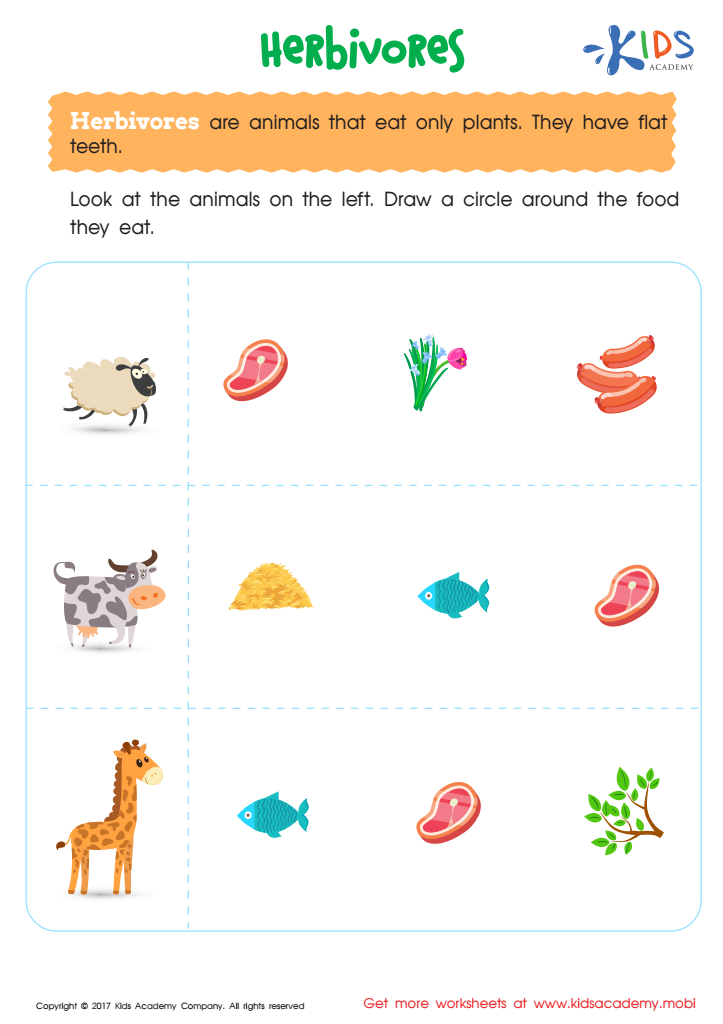
Herbivores Printable
 Assign to My Students
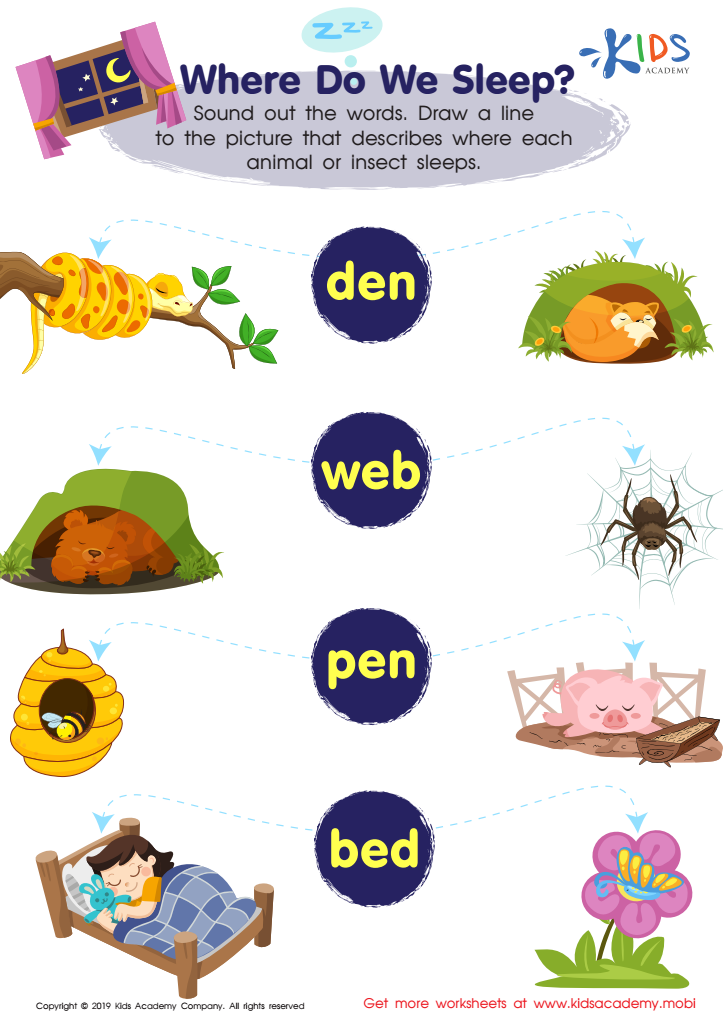
Where Do We Sleep Worksheet
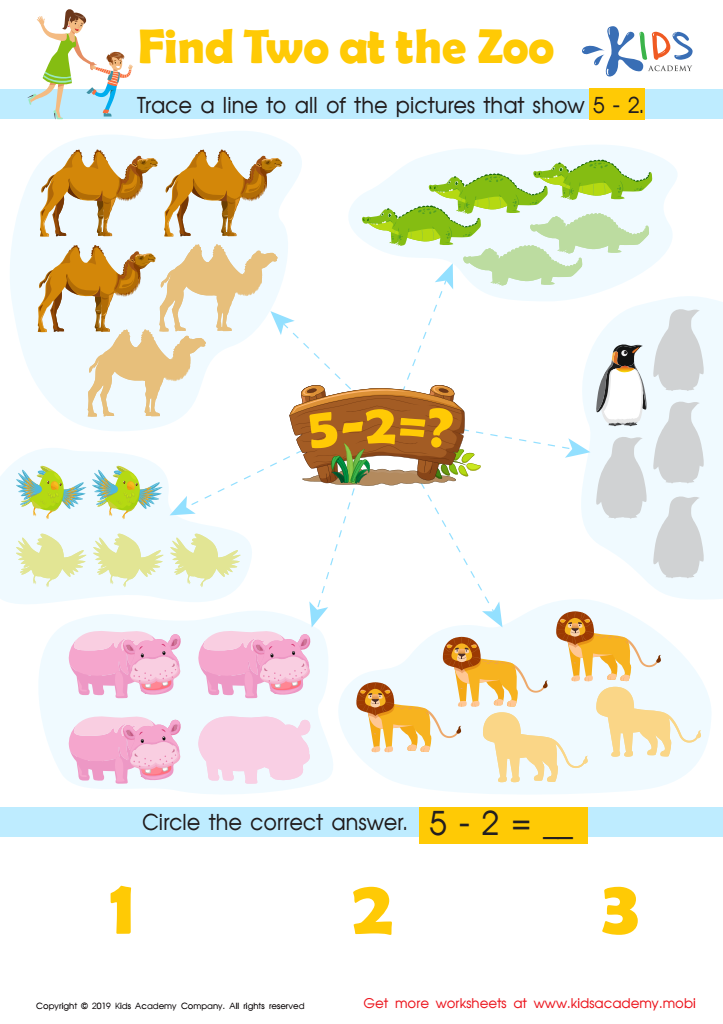
Find Two at the Zoo Worksheet
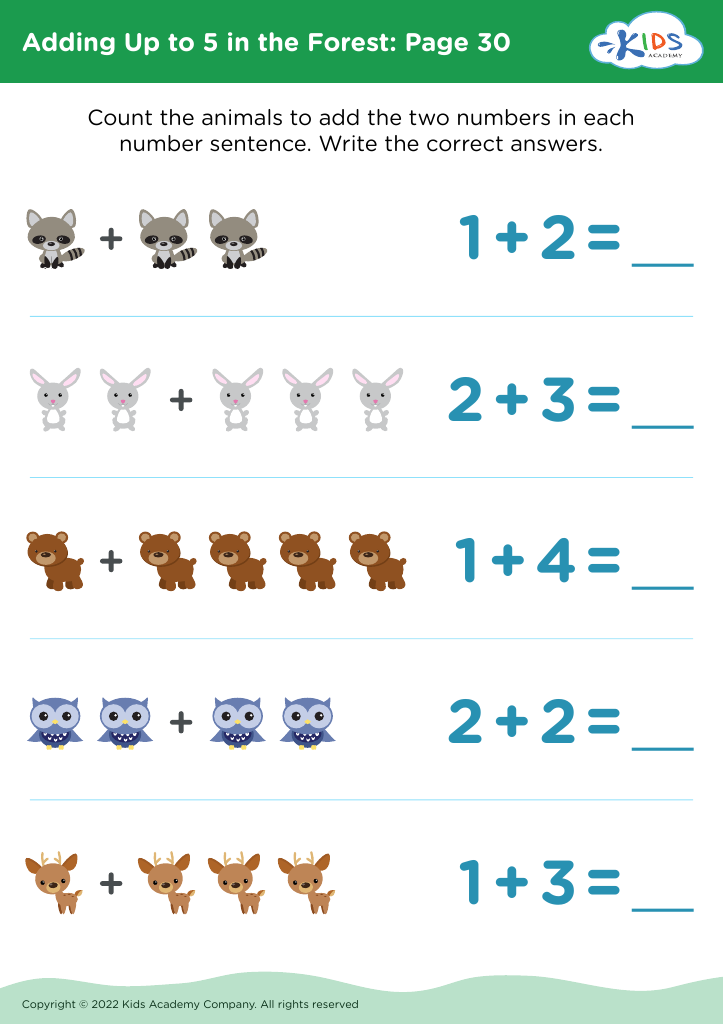








Identifying animals is an essential activity for young children aged 4-5, providing numerous educational benefits that parents and teachers should prioritize. At this developmental stage, children are naturally curious and eager to explore their surroundings. Learning about animals fosters this curiosity and encourages exploration of the environment. By identifying animals, children enhance their vocabulary and language skills as they learn new words and terminology associated with different species.
Furthermore, understanding animals promotes cognitive development. Children learn to categorize and classify information, improving critical thinking and analytical skills. Engaging with various animals, whether through books, media, or nature walks, also instills a sense of empathy and respect for living beings, nurturing emotional growth.
Additionally, integrating animal identification into learning helps build a wide range of concepts, from basic science—understanding habitats, diets, and life cycles—to fostering creativity through imaginative play. It opens opportunities for discussions about conservation and responsibility for the environment.
Overall, prioritizing animal identification enriches children's educational experiences, supporting both their intellectual progress and emotional development. In nurturing this interest, parents and teachers play a crucial role in helping young learners become observant and compassionate individuals.








