Identifying shapes Worksheets for Ages 4-5
8 filtered results
-
From - To
Introduce young learners to the world of geometry with our engaging "Identifying Shapes Worksheets for Ages 4-5." Designed to enhance early learning skills, these worksheets simplify shape recognition through fun and interactive activities. Ideal for preschool and kindergarten children, they focus on identifying basic shapes like circles, squares, triangles, and rectangles. By incorporating colorful illustrations and simple instructions, our printable worksheets ensure a delightful and educational experience. Foster your child's cognitive development and early math skills by making learning both enjoyable and effective. Perfect for parents and educators aiming to build a strong mathematical foundation.
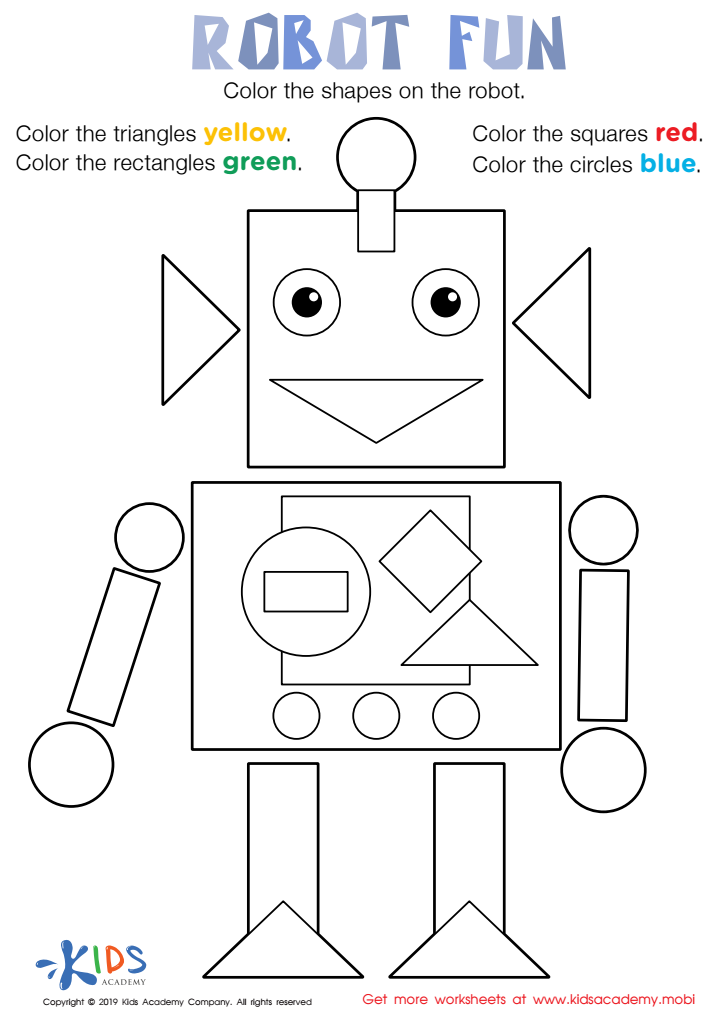
Robot Fun Worksheet
 Assign to My Students
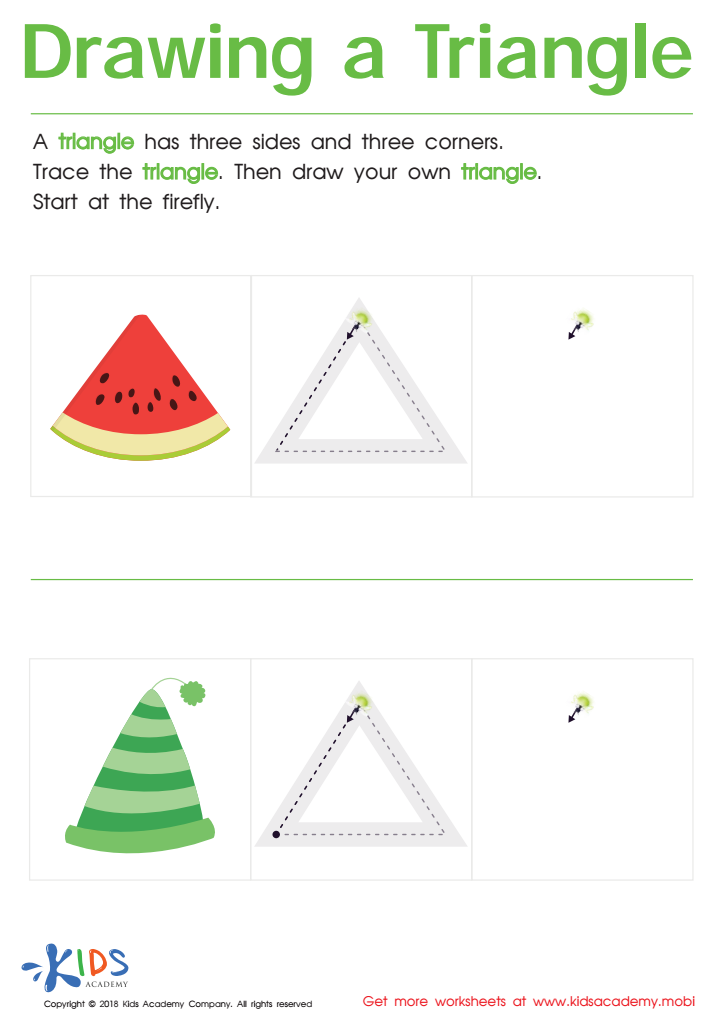
Drawing a Triangle Worksheet
Earth's Systems: Assessment 1








Identifying shapes is a fundamental skill for children aged 4-5, and parents or teachers should prioritize this aspect of learning due to its critical impact on cognitive and academic development. At this age, recognizing and naming shapes such as circles, squares, triangles, and rectangles helps build essential visual-spatial skills. These skills are foundational for more advanced concepts in mathematics, such as geometry, problem-solving, and the ability to recognize patterns.
Additionally, early shape identification enhances fine motor skills as children learn to draw and manipulate objects, which is essential for writing. It also encourages analytical thinking; children learn to observe, compare, and classify different characteristics of shapes, leading to better attention to detail and logical thinking.
Shape recognition is intrinsically linked to language development as children learn the vocabulary and descriptors related to shapes. This builds their communication skills, allowing them to express more complex ideas with precision. Engaging with shapes also nurtures creativity through activities like drawing, building, and playing with puzzles.
Moreover, recognizing shapes is a practical skill with day-to-day applicability. It helps children navigate their environments and understand the world around them, from identifying road signs to organizing belongings. Overall, early competence in identifying shapes sets a strong precedence for academic success and daily life skills.








