
Improving observation skills Worksheets for Ages 4-5
3 filtered results
Difficulty Level
Grade
Age
-
From - To
Subject
Activity
Standards
Enhance your child's observation skills with our engaging worksheets designed for ages 4-5. These fun, interactive activities focus on developing critical thinking and attention to detail through colorful illustrations and stimulating scenarios. Children will learn to identify differences, analyze patterns, and improve their memory skills. Our worksheets promote creativity and visual awareness, encouraging young learners to explore their surroundings with curiosity. Perfect for both home and classroom use, these resources are designed to foster cognitive and observational abilities while providing enjoyable learning experiences. Download the worksheets today to give your child a head start in observation skills and overall development!
Favorites
With answer key
Interactive
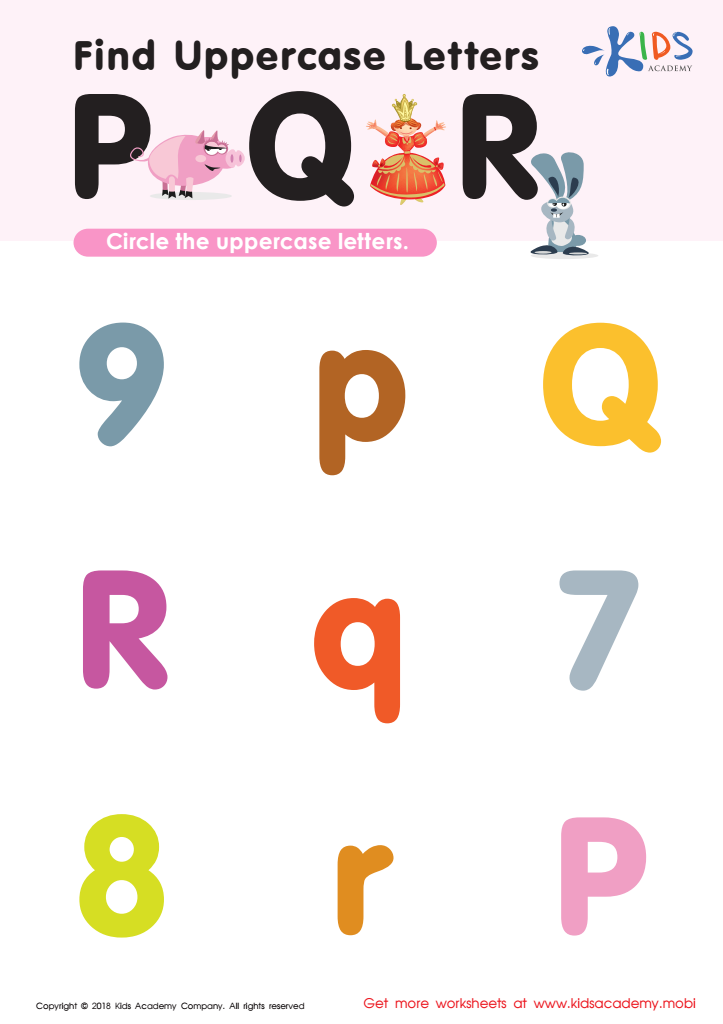
Find Uppercase Letters P, Q, and R Worksheet
Kids learn best when they can make connections. This free printable worksheet guides kids to solve the puzzle using the example letters P, Q, and R, supported by graphics and colors. Point out the page is pink, like the pig (which starts with P!) and solve by finding and circling the uppercase letters – be careful of the numbers!
 Assign to My Students
Find Uppercase Letters P, Q, and R Worksheet
Worksheet
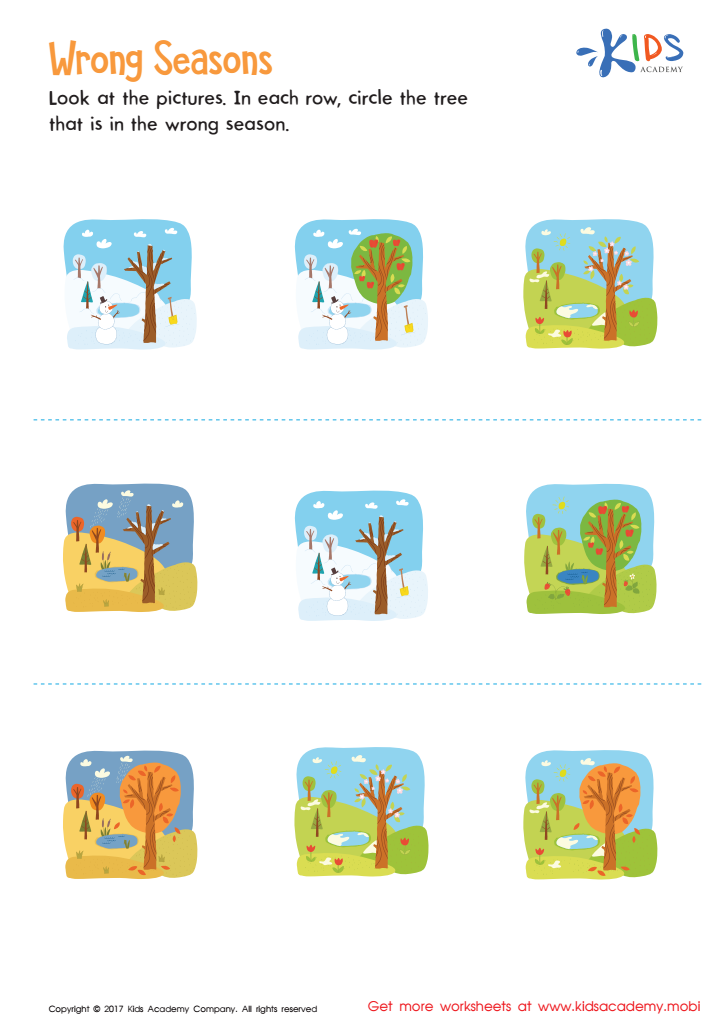
Wrong Seasons Worksheet
Uh oh! Trees are out of place in these vibrant pictures! Use this wrong seasons worksheet to help your child develop observation, analytical, and critical thinking skills. They'll learn about how the seasons change the surroundings, like trees. Print it out today to sharpen your child's eye for spotting the seasons!
Wrong Seasons Worksheet
Worksheet
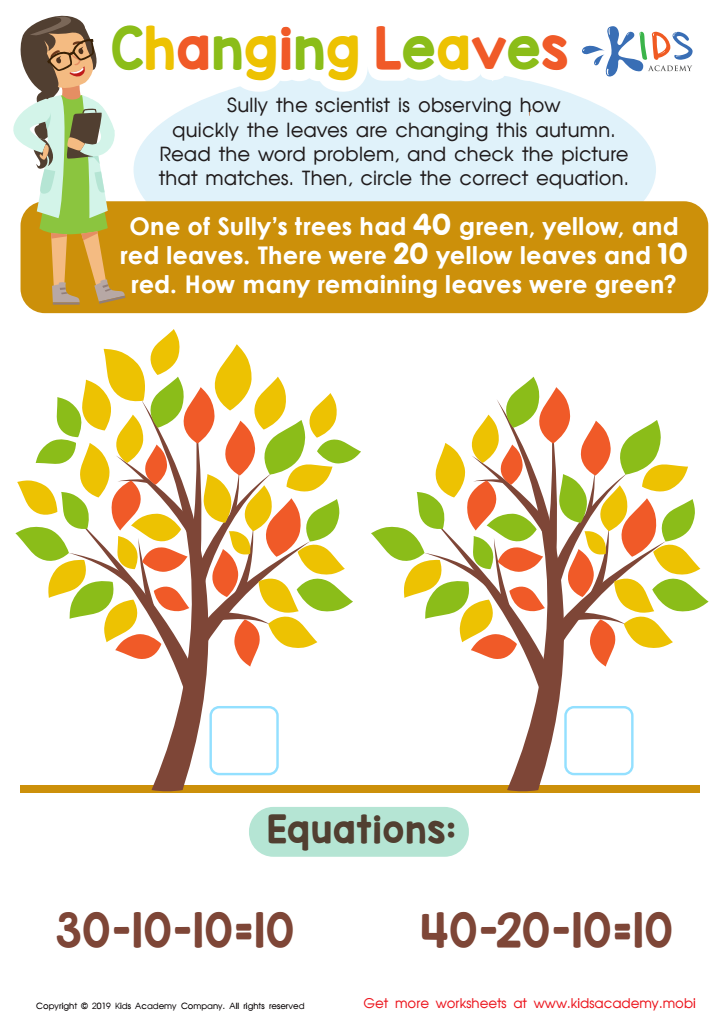
Changing Leaves Worksheet
Fall is the perfect time for kids to help Sully the scientist observe the changing leaves! Download the free worksheet with a subtraction word problem and bolded info to find the matching equation and picture. It's a fun way for your tots to learn while they admire the reddening, yellowing, and orange leaves.
Changing Leaves Worksheet
Worksheet
Join Kids Academy for Free
Who is primarily going to use this learning content?








Improving observation skills in children aged 4-5 is essential for their overall development and learning. At this stage, children are like sponges, eager to absorb information from their surroundings. Observation skills enhance their ability to notice details, recognize patterns, and make connections, crucial components of early learning.
For parents and teachers, fostering these skills aids in informal assessments of a child's understanding and interests. By encouraging children to observe their environment, they engage in critical thinking, become problem solvers, and develop their curiosity—traits that form a strong foundation for lifelong learning.
Additionally, strong observation skills support language development as children learn to articulate what they see, hear, and feel. This also builds social-emotional skills; as they observe interactions, they develop empathy and awareness of nonverbal cues.
Encouraging observation can be simple and fun—nature walks, storytelling, and playtime activities—allowing for exploration and questions. Thus, investing in developing these skills not only enriches a child’s academic journey but also prepares them for meaningful interactions in their day-to-day lives. Parents and teachers who prioritize observation skill development actively contribute to shaping more inquisitive, self-aware, and engaged learners.








