
Letter identification Worksheets for Ages 4-5
7 filtered results
Difficulty Level
Grade
Age
-
From - To
Subject
Activity
Standards
Discover engaging and effective Letter Identification Worksheets designed exclusively for children ages 4-5. These fun and educational worksheets help young learners recognize and identify both uppercase and lowercase letters, setting the foundation for successful reading skills. With a variety of activities including coloring, tracing, and matching, children will enjoy interactive ways to enhance their letter recognition and phonics understanding. Ideal for preschoolers and kindergarteners, these worksheets are perfect for both classroom use and at-home practice. Boost your child's confidence and make learning the alphabet an enjoyable adventure with our meticulously crafted Letter Identification Worksheets.
Favorites
With answer key
Interactive
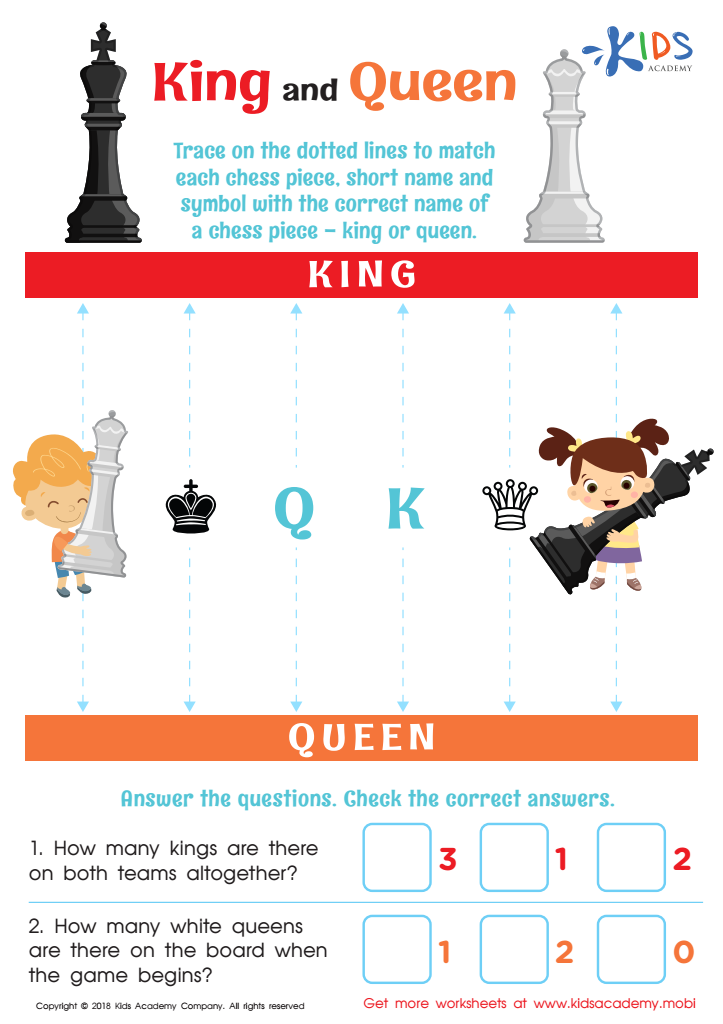
King and Queen Worksheet
Instruct your kids to trace the dotted lines to match each chess piece, short name, and symbol with either king or queen.Answer the questions at the bottom and check the answers. This exercise will help your children to differentiate between a king and queen chess piece and know their symbols.
 Assign to My Students
King and Queen Worksheet
Worksheet
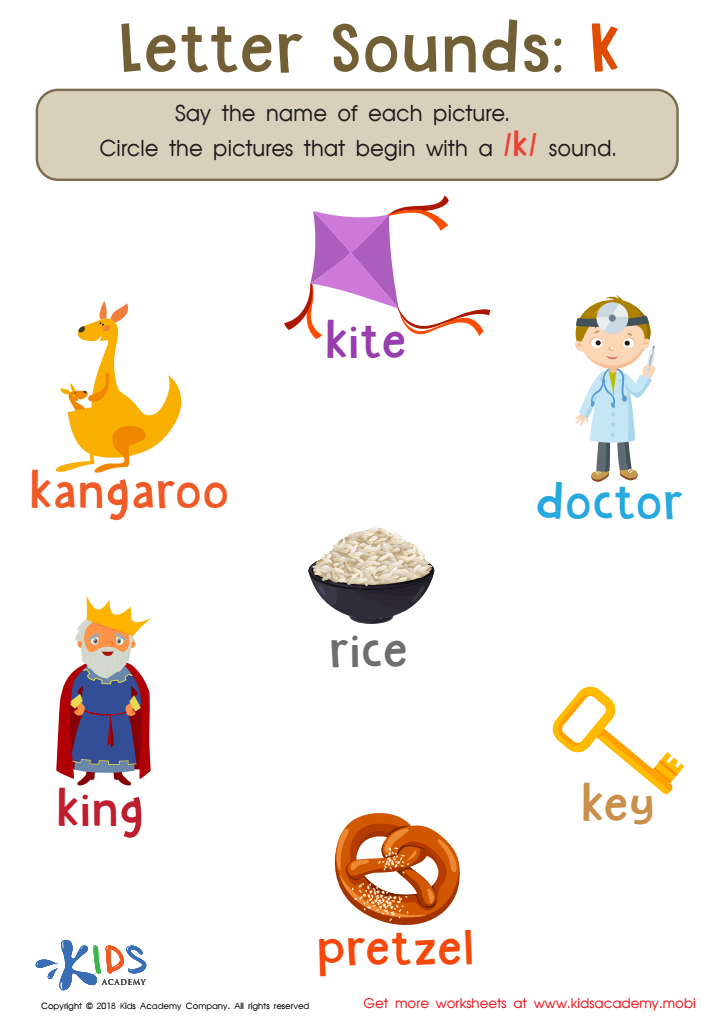
Letter K Sounds Worksheet
Help your child practice phonics with Kids Academy's illustrated worksheet! Have them look at the pictures, read the words and say them aloud. Only circle those that start with a hard 'K' sound. Perfect for preschoolers and kindergarteners! Plus, they'll learn the silent K used in a few words.
Letter K Sounds Worksheet
Worksheet
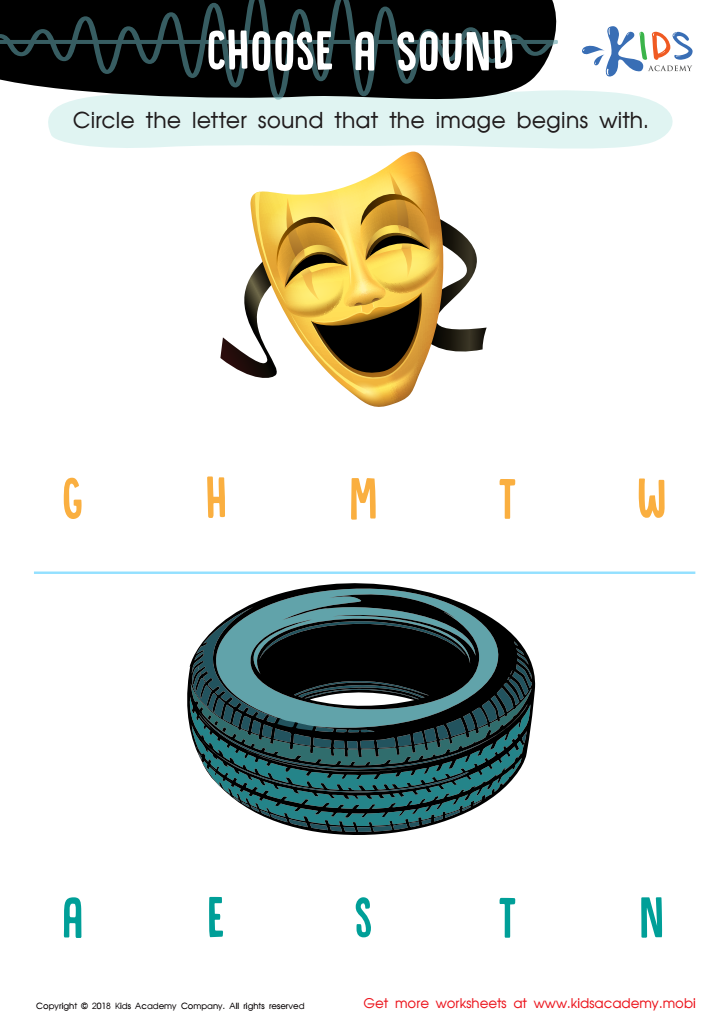
Choose a Sound Worksheet
Help your child hone pre-reading skills with this colorful worksheet! They'll practice tracing letter sounds, develop phoneme awareness, and gain confidence. Plus, it's a fun way to work on their fine motor skills.
Choose a Sound Worksheet
Worksheet
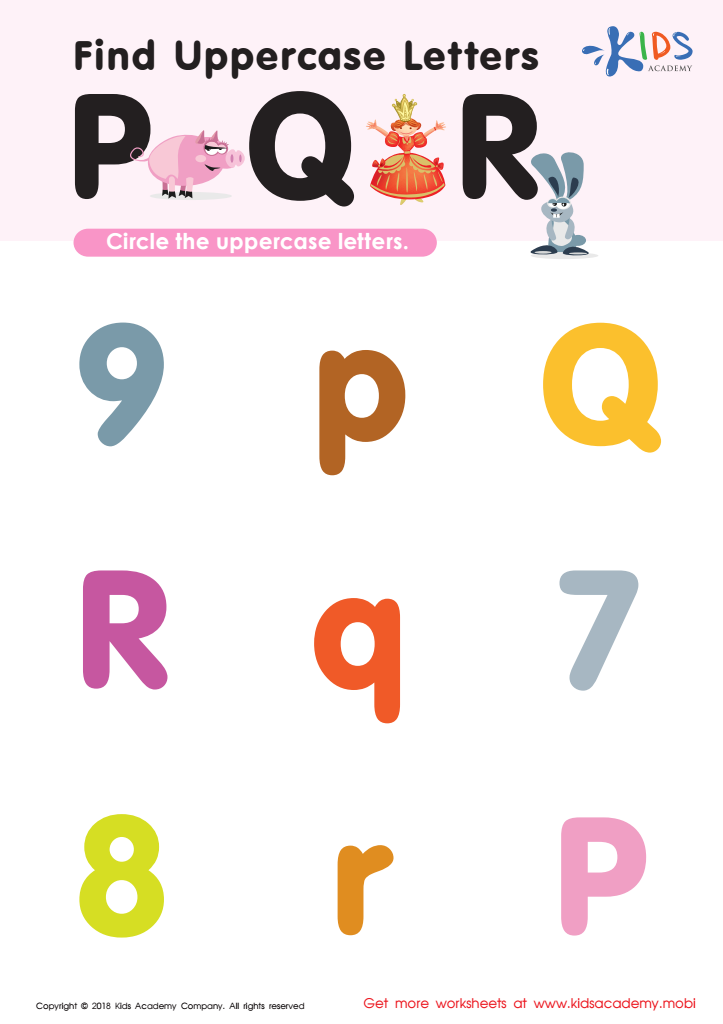
Find Uppercase Letters P, Q, and R Worksheet
Kids learn best when they can make connections. This free printable worksheet guides kids to solve the puzzle using the example letters P, Q, and R, supported by graphics and colors. Point out the page is pink, like the pig (which starts with P!) and solve by finding and circling the uppercase letters – be careful of the numbers!
Find Uppercase Letters P, Q, and R Worksheet
Worksheet
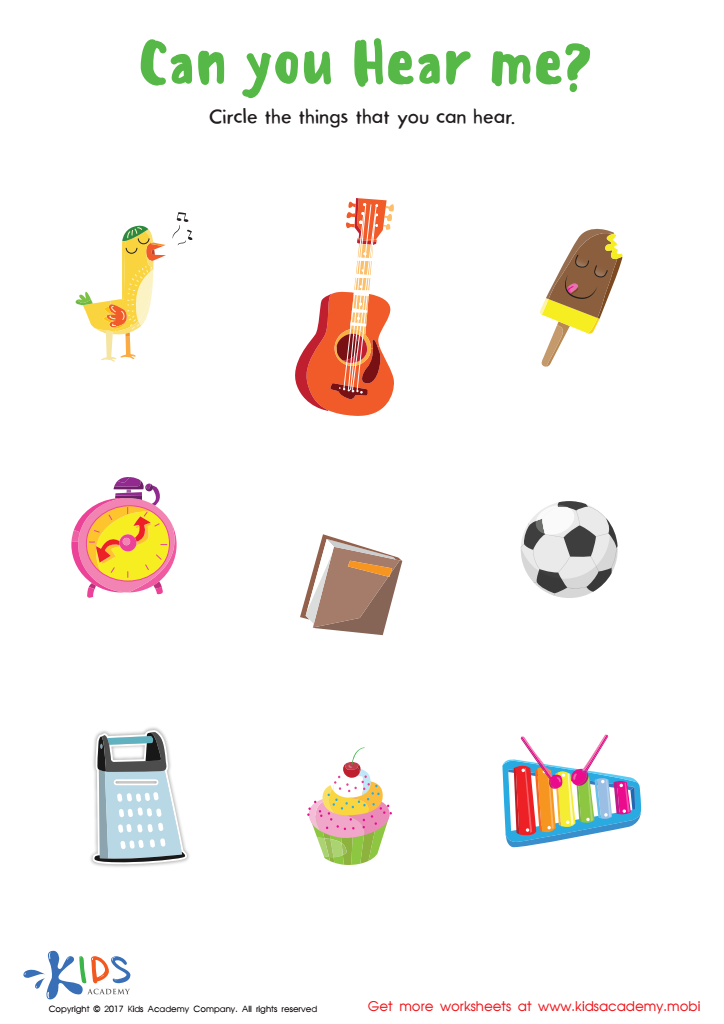
Can You Hear Me Worksheet
Challenge your child's thinking and help them learn by using this cute "Can You Hear Me?" worksheet. It encourages use of prior knowledge to identify objects that make sounds, developing critical thinking skills. As they imagine balls and cupcakes making sounds, your child will have plenty of laughs. Extend learning by talking about the sounds and why certain objects make them.
Can You Hear Me Worksheet
Worksheet
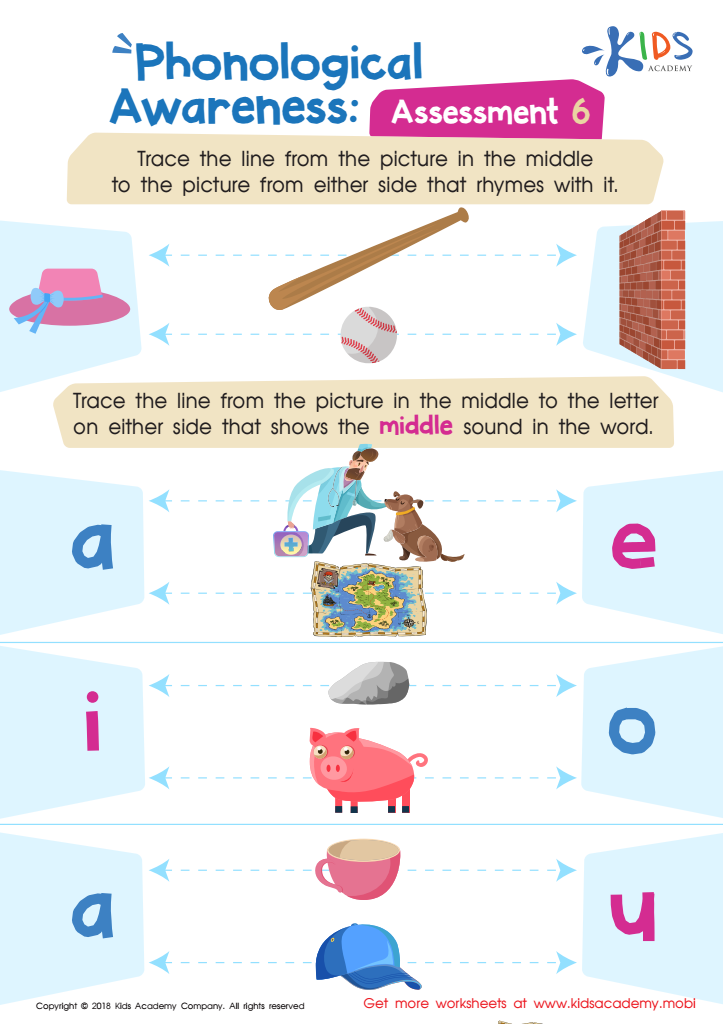
Phonological Awareness: Assessment 6 Worksheet
Check your child's ability to recognize middle word sounds using this free worksheet. Help them learn phonics by practicing with rhyming. Trace the line from the image to its rhyming match then encourage them to name each image aloud to identify which letter matches the sound. It's a great way to assess letter and sound recognition.
Phonological Awareness: Assessment 6 Worksheet
Worksheet
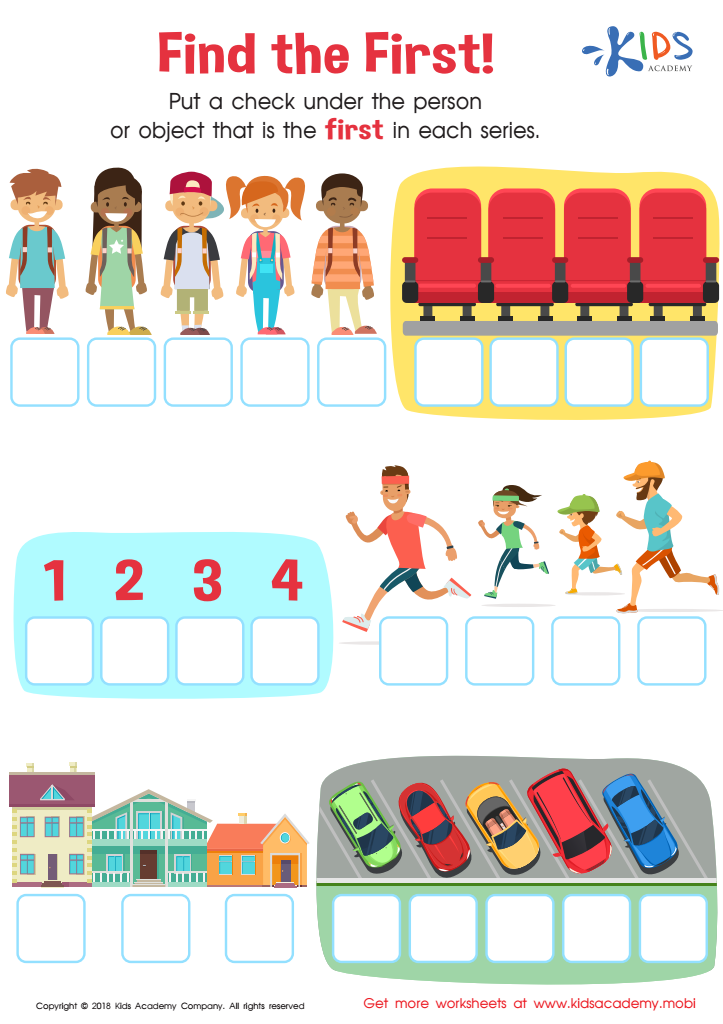
Find the First! Worksheet
Have your young students discuss what it means to be first in line, row, or a race. This free worksheet helps clarify their understanding of "first". View each group of people/objects and choose the first one. Follow up with hands-on activities like lining up students/toys or acting out a sequence of movements. Students can tell what happened first. Enjoy this printout for a fun math lesson!
Find the First! Worksheet
Worksheet
Join Kids Academy for Free
Who is primarily going to use this learning content?






Letter identification is a critical foundational skill for young children, usually ages 4-5, setting the stage for reading and writing. Parents and teachers should prioritize this skill for several reasons.
Firstly, knowing letters and their corresponding sounds is the cornerstone of phonemic awareness, a key driver in learning how to read. When children can accurately identify letters, they are better equipped to understand that letters represent sounds, which combine to form words. This boosts their ability to decode new words and enhances reading fluency.
Moreover, early letter identification is linked to future academic success. Children who master this skill tend to have a smoother transition to kindergarten and primary school, showing more confidence and enthusiasm for learning. These early achievers often exhibit better reading comprehension and improved writing skills as they progress through their education.
Additionally, developing letter identification skills fosters a sense of accomplishment and self-esteem. Children feel proud when they recognize letters in their environment, like in books, on signs, and on their toys. This sense of empowerment spurs further curiosity and a love for learning.
In sum, investing time in teaching letter identification can yield substantial benefits. It equips children with the tools they need for academic success and cultivates a lifelong love for reading and learning.








