
Number tracing Worksheets for Ages 4-5
3 filtered results
Difficulty Level
Grade
Age
-
From - To
Subject
Activity
Standards
Welcome to our Number Tracing Worksheets tailored for children aged 4-5! These engaging worksheets are designed to help young learners develop their counting and fine motor skills as they trace numbers from 1 to 20. Each worksheet features colorful illustrations to make learning enjoyable and captivating. By practicing number tracing, children not only enhance their handwriting but also gain confidence in their numeracy skills. Our easy-to-use printables are perfect for home or classroom use, providing a fun and effective way for kids to learn. Start your child's mathematical journey now with our free, downloadable worksheets! Happy tracing!
Favorites
With answer key
Interactive
 Assign to My Students
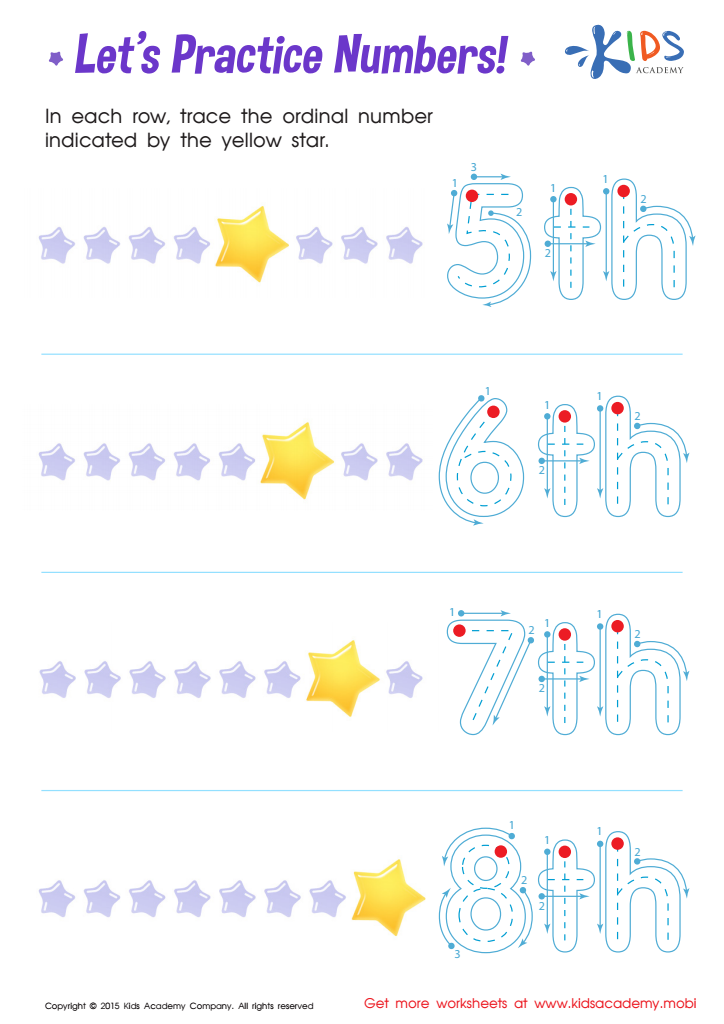
Ordinal Numbers: Let's Practice Numbers Printable
Worksheet
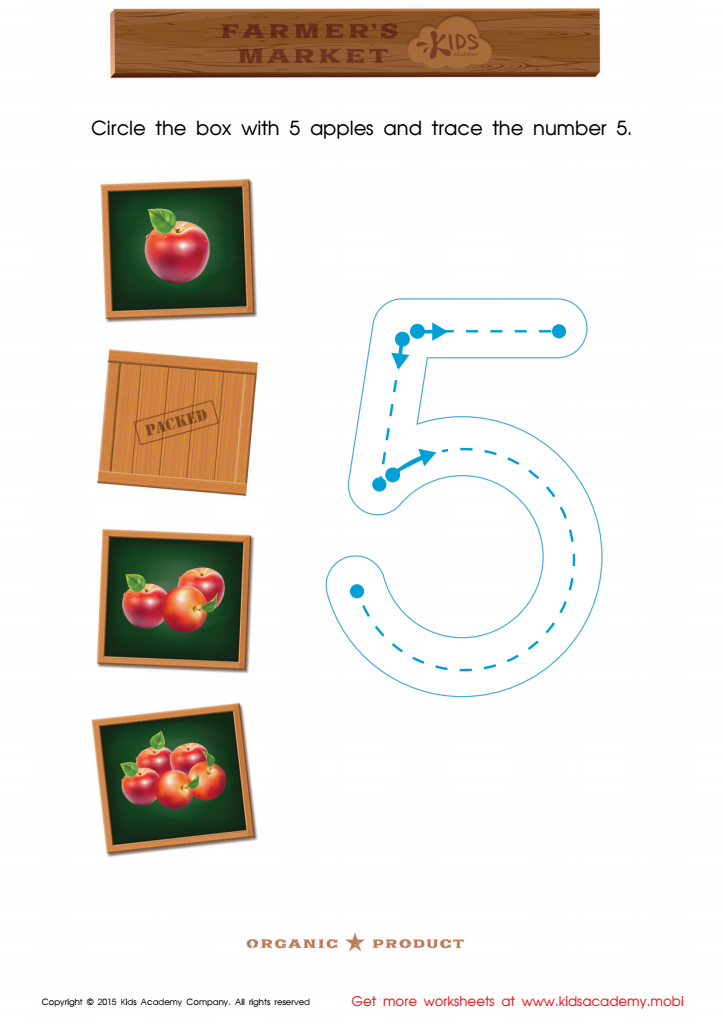
Count the Apples and Trace the Number 5 Printable
Count the juicy apples in each box, find the one with 5 and trace the number 5 following the arrows. Practice makes perfect! Print and get your little mathematician counting.
Count the Apples and Trace the Number 5 Printable
Worksheet
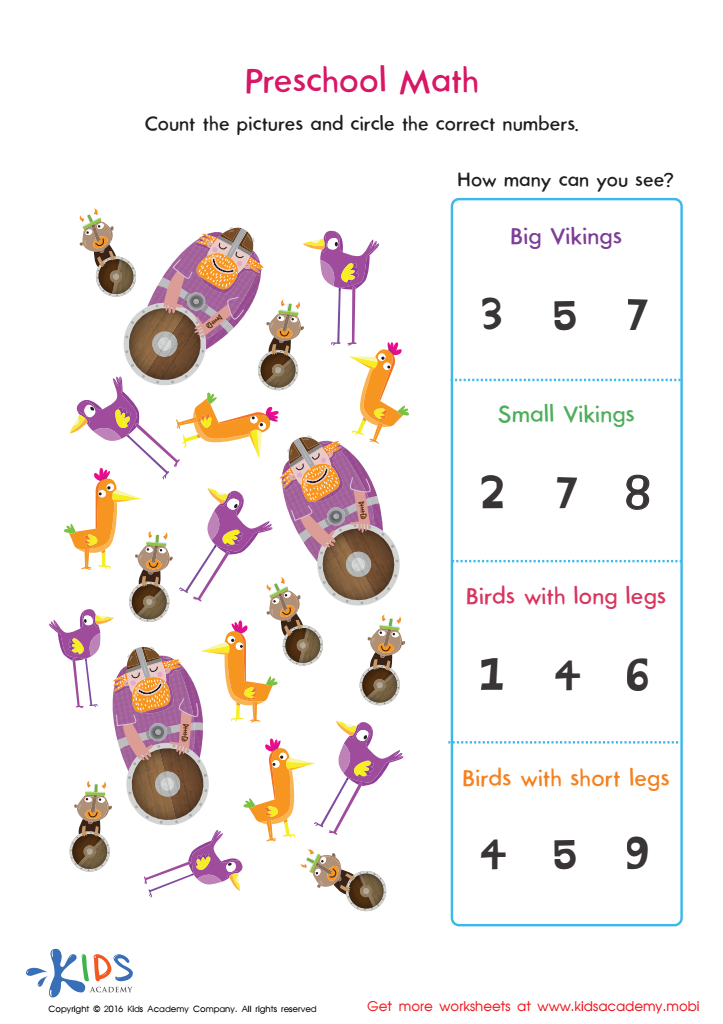
Counting Worksheet: Preschool Math
Worksheet
Join Kids Academy for Free
Who is primarily going to use this learning content?








Number tracing is a crucial foundational skill for children aged 4-5, as it lays the groundwork for numeracy and mathematical understanding. Engaging in number tracing helps young learners develop fine motor skills, which are essential for writing and everyday tasks. The act of tracing numbers reinforces their shapes and structures, enabling children to internalize the appearance of each numeral.
Beyond motor skills, number tracing cultivates cognitive development by encouraging spatial awareness and hand-eye coordination. As children trace, they learn to recognize numbers visually while connecting them to their corresponding values. This activity also promotes numeracy confidence, making them more comfortable and excited about engaging in future math-related challenges.
Moreover, number tracing can spark a child's curiosity about numbers and encourage a positive attitude toward mathematics. It often leads to discussions between parents and teachers about numbers in different contexts, laying the foundation for problem-solving and critical thinking skills that will benefit them in later educational stages.
Overall, number tracing not only supports essential developmental milestones but also fosters a love for learning, making it an activity that parents and teachers should prioritize in early childhood education.








