Punctuation understanding Worksheets for Ages 4-5
4 filtered results
-
From - To
Explore our engaging Punctuation Understanding Worksheets designed specifically for ages 4-5! These interactive worksheets introduce young learners to essential punctuation marks, such as periods, question marks, and exclamation points. Each activity is tailored to nurture foundational writing skills, helping children understand how punctuation contributes to meaning and clarity in sentences. With colorful illustrations and fun exercises, your child will stay motivated while enhancing their language comprehension. Ideal for use at home or in the classroom, these worksheets provide a fantastic opportunity to develop early literacy skills in a playful and supportive environment. Get started today to make learning punctuation enjoyable!
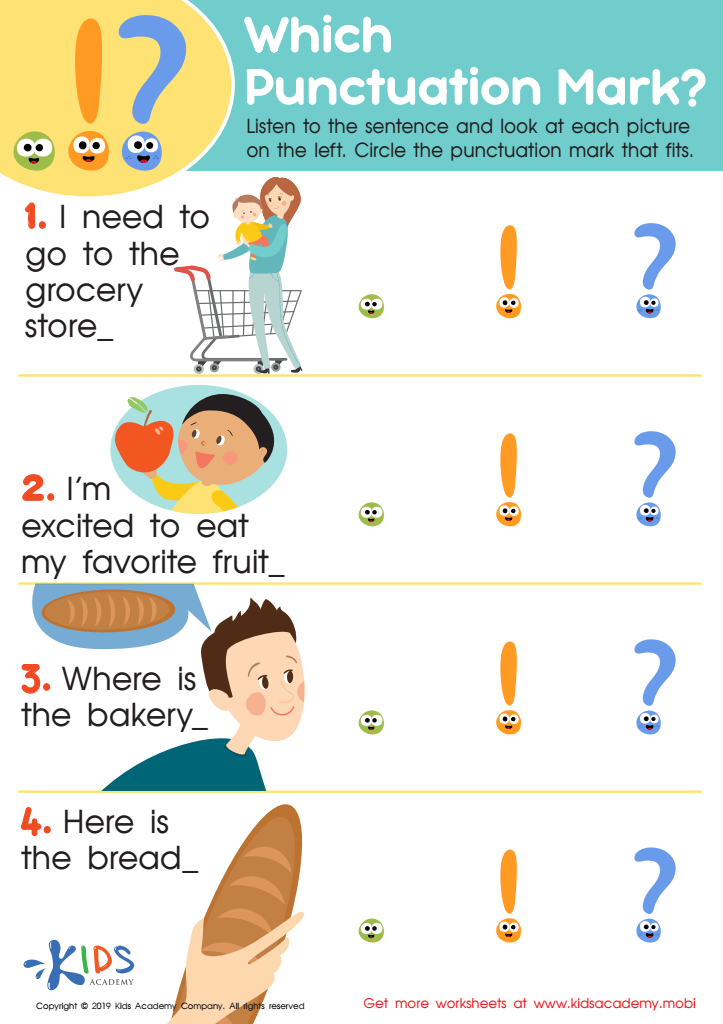
Which Punctuation Mark Worksheet
 Assign to My Students
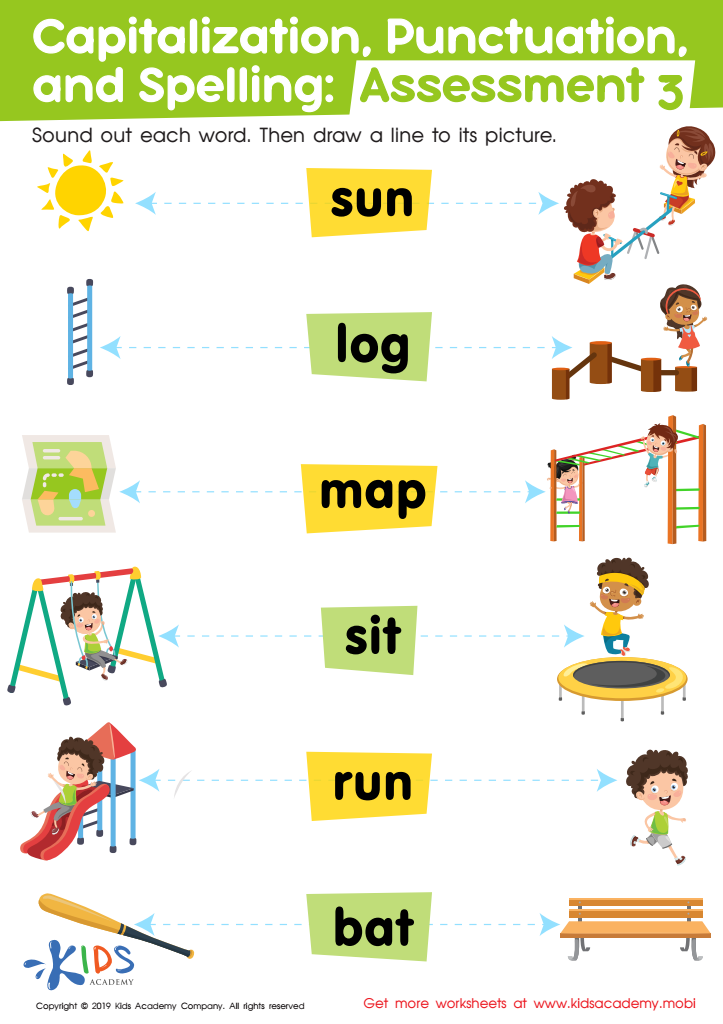
Capitalization. Punctuation. Spelling. Assessment 3 Worksheet
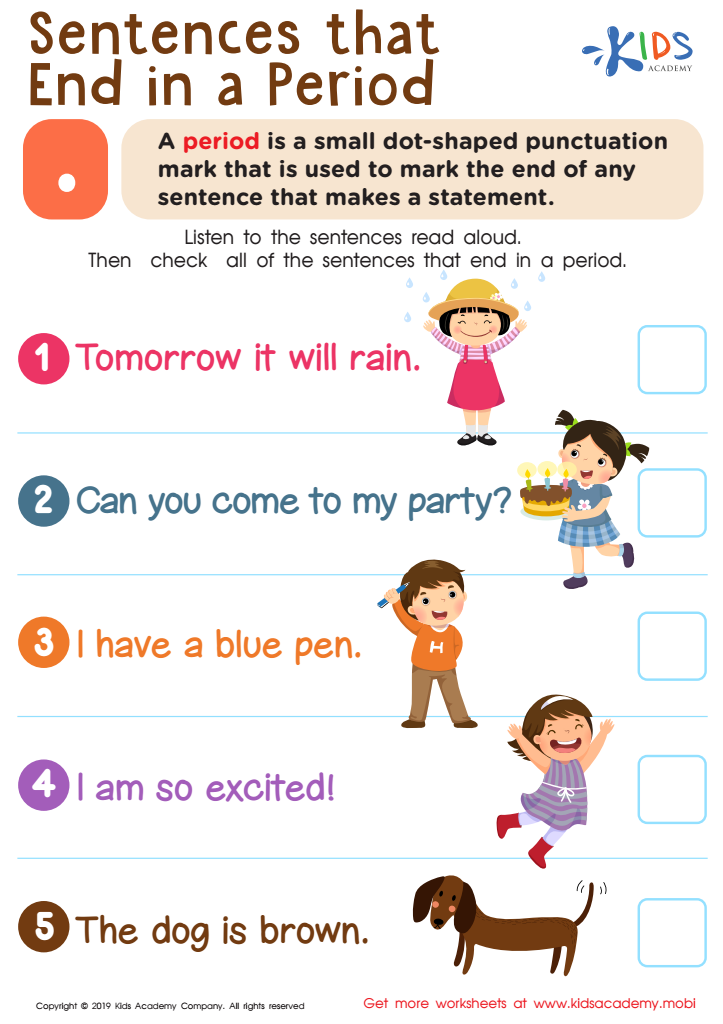
Sentences That End in a Period Worksheet
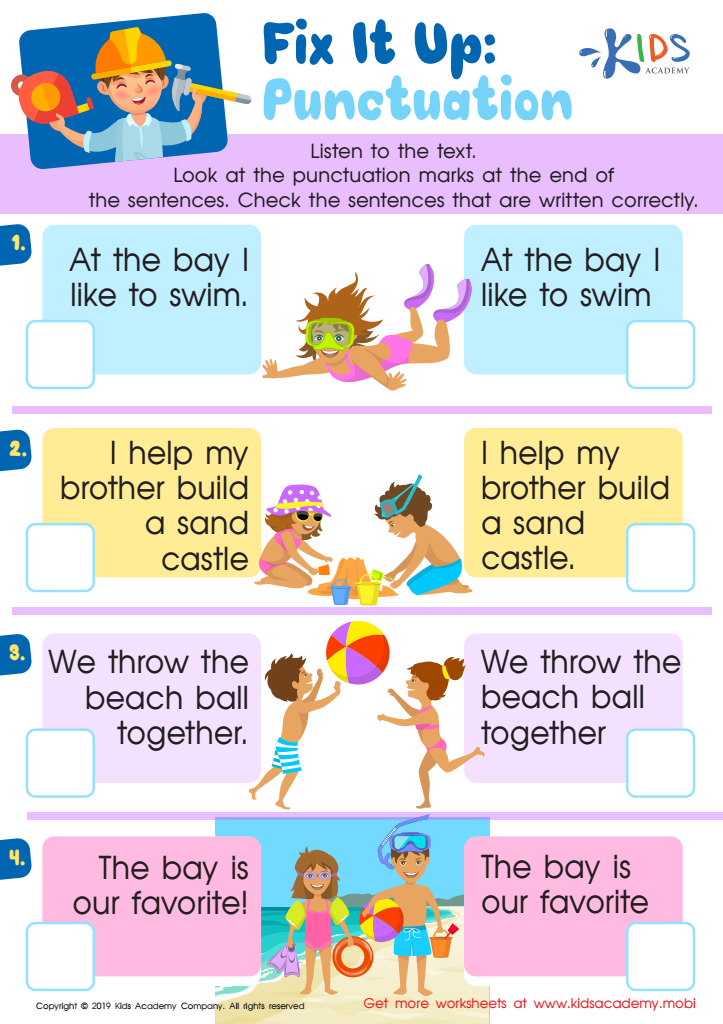
Fix Punctuation Worksheet







Punctuation understanding is crucial for children aged 4-5 as it lays the foundation for effective communication. At this early stage, children begin to explore written language, and comprehension of punctuation marks, such as periods, question marks, and commas, helps them grasp the structure and flow of sentences. Recognizing these symbols supports their ability to read fluently and express ideas clearly.
Parents and teachers play a vital role in nurturing this understanding. Engaging children with stories that use varied punctuation not only captivates their interest but also illustrates how punctuation changes meaning and emotion. For instance, a question mark indicates inquiry, while a period represents completion. This awareness fosters early literacy skills, encouraging children to become confident readers and writers.
Moreover, when children understand punctuation, they are better equipped to comprehend more complex texts as they progress in school. It enhances their listening and speaking skills, allowing them to articulate thoughts with clarity.
Ultimately, a strong foundation in punctuation contributes significantly to children's overall communication abilities, setting them up for lifelong success in reading and writing. Therefore, it's essential for parents and teachers to prioritize punctuation in early education.








