Recognizing shapes Worksheets for Ages 4-5
8 filtered results
-
From - To
Enhance your child's learning journey with our engaging Recognizing Shapes Worksheets for Ages 4-5. These interactive printables make learning fun by helping young learners identify and comprehend various shapes. Designed specifically for preschoolers, our worksheets sharpen critical early learning skills such as pattern recognition, fine motor coordination, and spatial awareness. Through activities like tracing, matching, and coloring, children learn to recognize basic shapes such as circles, squares, triangles, and more. Our grade-appropriate resources foster a love for modern learning while laying a solid foundation for future mathematical concepts. Download now to boost your child's shape recognition skills!
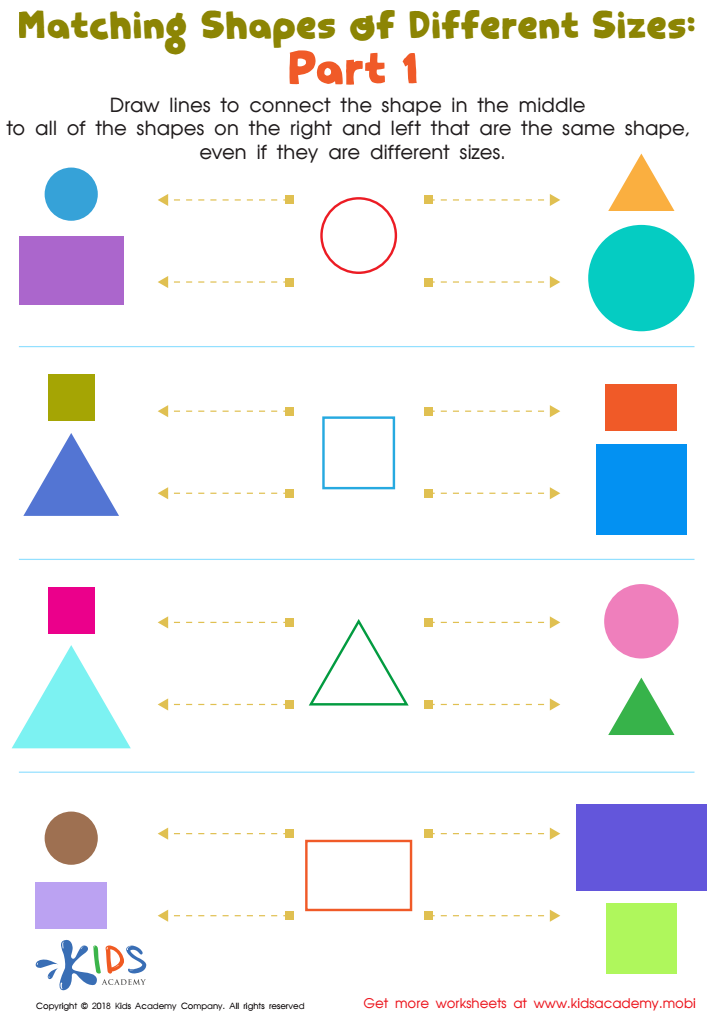
Geometry: part 1 Worksheet
 Assign to My Students
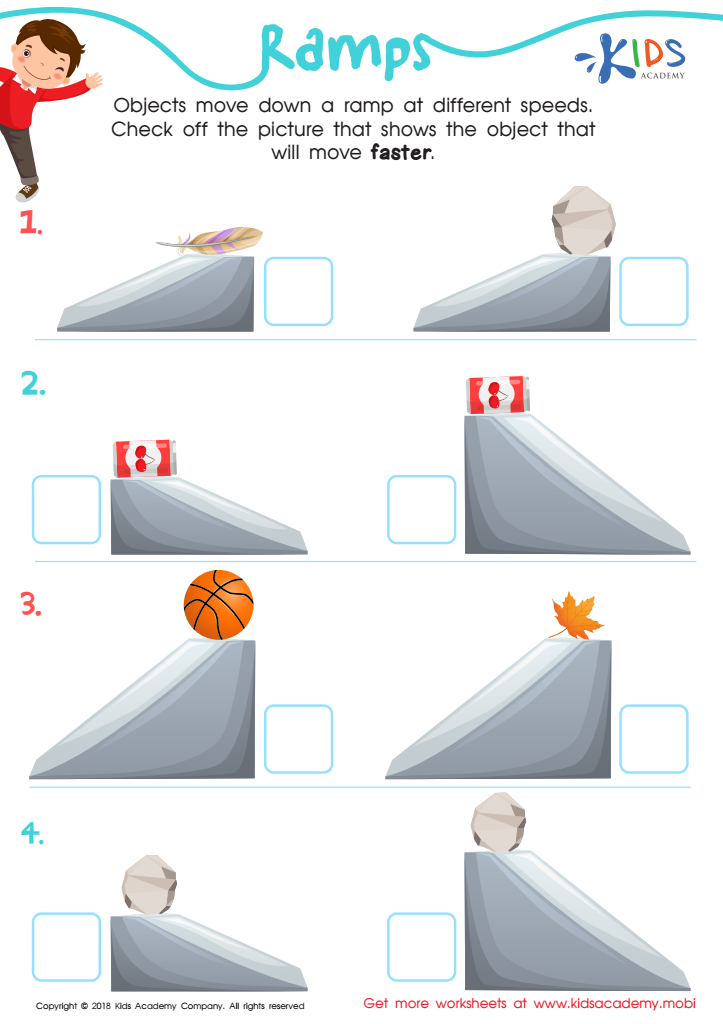
Ramps Worksheet
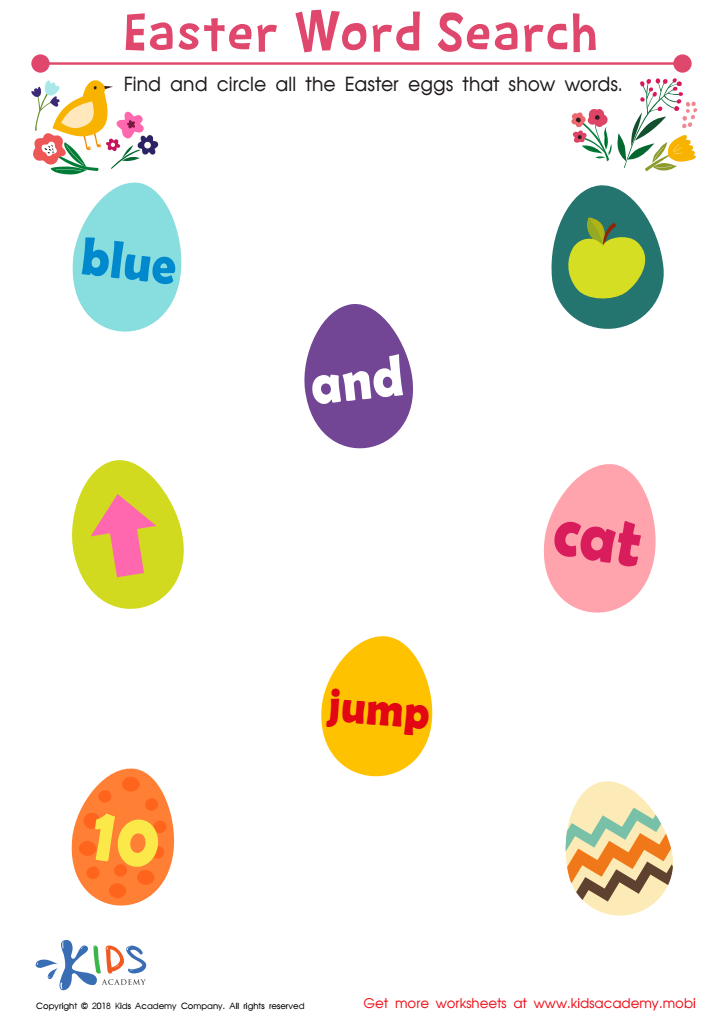
Easter Word Search Worksheet
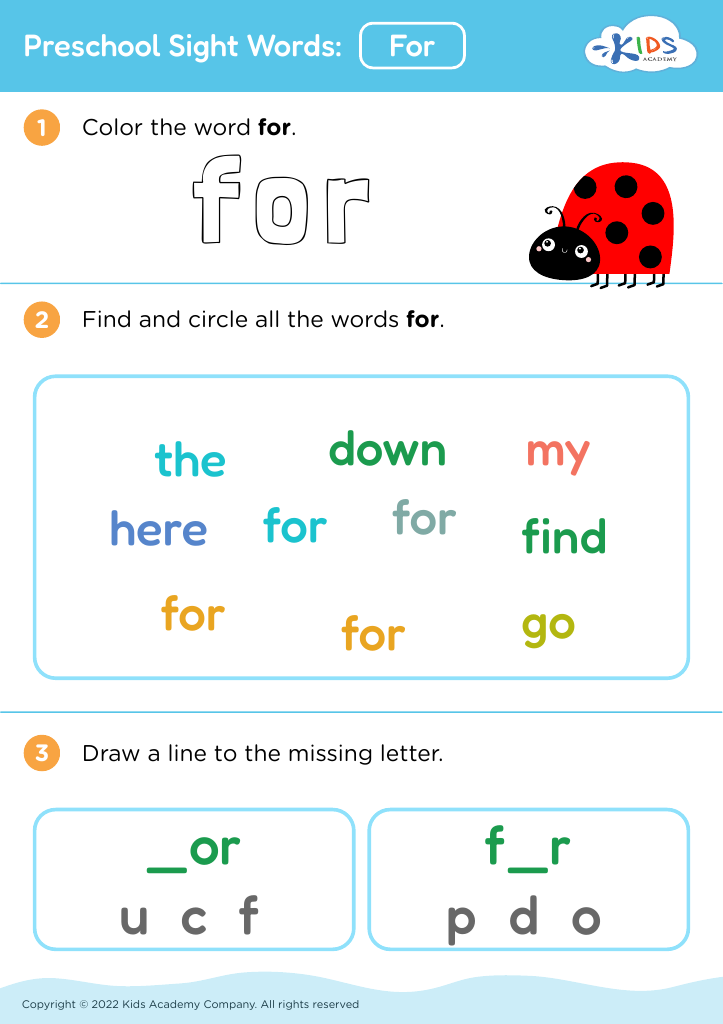







Recognizing shapes is a fundamental skill for children ages 4-5, playing a crucial role in developing their cognitive and motor abilities. At this formative stage, shape recognition primes kids for future learning in mathematics, literacy, and problem-solving. When children identify and differentiate between shapes, they build basic math skills, such as understanding geometric properties and spatial orientation, which are foundational for more complex concepts like geometry and algebra introduced in later academic years.
Moreover, shape recognition helps improve fine motor skills and hand-eye coordination as children engage in activities like drawing and assembling puzzles. These activities refine their physical dexterity, which is essential for writing, cutting, and other tasks requiring precise hand movements.
Cognitively, recognizing and categorizing shapes enhance analytical and critical thinking abilities. Children learn to observe, compare, and sort objects based on their attributes, leading to better logical thinking and reasoning skills.
Equally important, shapes are omnipresent in the environment— road signs, building structures, and everyday objects, to name a few. Familiarity with shapes provides children with tools to interpret and make sense of the world around them, fostering confidence and independence.
Thus, integrating shape recognition into early education is not merely about learning shapes but nurturing a wide array of developmental milestones essential for a child's overall growth.








